Home Blog Page 313

Samsung Begins Mass Producing World’s Fastest 4GB HBM2 DRAM

World's Fastest 4GB HBM2 DRAM

Samsung Electronics has announced that it will begin mass producing the industry’s first 4 GB DRAM package based on the second-generation High Bandwidth Memory (HBM2) interface for use in high-performance computing (HPC), advanced graphics and network systems, as well as enterprise servers.

Also Read : A Study Says That Samsung Mobiles Is The Most Attractive Brand In India

 LogBook : Fastest 4GB HBM2 DRAM from Samsung

 It calls the industry’s first 4GB DRAM package based on the second-generation High Bandwidth Memory (HBM2) interface.

 Samsung said to offer DRAM performance that is “seven times faster than the current DRAM performance limit”.

 The new RAM is meant for use in high performance computing (HPC), advanced graphics and network systems, as well as enterprise servers.

 “By mass producing next-generation HBM2 DRAM, we can contribute much more to the rapid adoption of next-generation HPC systems by global IT companies,” said Sewon Chun, senior vice president, Memory Marketing, Samsung Electronics in a statement.

4GB HBM2 DRAM
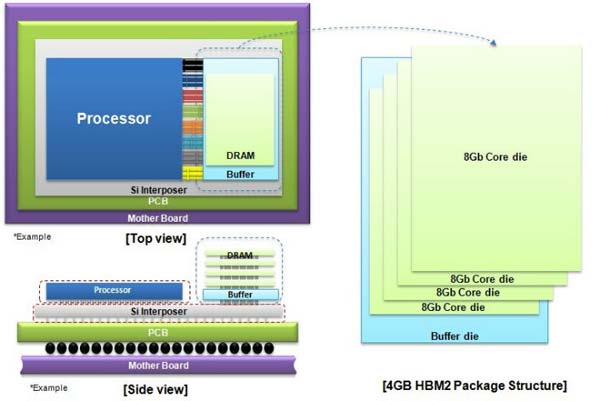
Samsung 4GB RAM: How it is created.

Also Read : Samsung Going To Power Next Generation Smartphones With 6GB RAM Chips

 Newly introduced 4GB HBM2 DRAM based on the company’s 20-nanometer process.

 The new DRAM features 256GBps of bandwidth, which is double that of a HBM1 DRAM package.

 Samsung’s 4GB HBM2 also enables enhanced power efficiency by doubling the bandwidth per watt over a 4Gb-GDDR5-based solution, and embeds ECC (error-correcting code) functionality to offer high reliability.

 Samsung plans to produce an 8GB HBM2 DRAM package later in 2016, the company disclosed.

 By specifying 8GB HBM2 DRAM in graphics cards, designers will be able to enjoy a space savings of more than 95%, compared to using GDDR5 DRAM, offering more optimal solutions for compact devices that require high-level graphics computing capabilities, the company said.

Also Read : LG, Samsung to Supply OLED Display to Apple iPhone 7, Says Report

With Google’s New Compression Algorithm Chrome is Going to Get a Lot Faster

New Compression Algorithm Chrome

Happy news, your favourite browser is going to boost its browsing speed, yes Chrome is going to implement a new compression algorithm from Google to load web pages a lot faster than you’ve experienced up until now.

Also Read : All Available Google Chrome Shortcuts List For Windows,Mac And Linux Users

LogBook: New Compression Algorithm in Chrome

The new compression algorithm called Brotli, which Google introduced last September.

Using compression algorithm Brotli, Chrome will be able to compress data up to 26 percent more than its existing compression engine, which is an impressive jump.

The existing compression algorithm in Chrome is called Zopfli, that was launched just over three years ago.

While Zopfli is Deflate-compatible, Brotli is a whole new data format.

Also Read : With this Chrome Extension Learn New Languages Just by Browsing the Web

Google says that Brotli is a “whole new data format” that squeezes in more data than other compression formats, while decompressing at comparable speeds.

As a result, “the smaller compressed size allows for better space utilization and faster page loads,” according to the team.

The company added that mobile users will also benefit from “lower data transfer fees and reduced battery use,” which should help those who eat up their data allowance all too quickly.

According to Google’s web performance engineer Ilya Grigorik, Brotli is ready to roll out, so Chrome users should expect to see a bump in load times once the next version of Chrome is released.

Google also hopes that other browsers will eventually support Brotli.

Firefox will be the first non-Chrome browser to use the algorithm, as it has said it will adopt Brotli in a future update, Firefox 44.

Also Read : Watch How Chrome Dominates Over Internet Explorer and Other Browsers in Last Seven Years

A Serious Vulnerability in the Linux Kernel Hits Millions of PCs, Servers and Android Devices

Vulnerability in the Linux Kernel

A new, previously undiscovered serious vulnerability in the Linux kernel could have allowed an attacker  to take full control over Linux-based PCs, servers, Android phones and other embedded devices.

The vulnerability, tracked as CVE-2016-0728, was found and reported to the Linux kernel security team and several Linux distribution maintainers by researchers from an Israeli threat defense start-up called Perception Point.

Also Read : PlayStation 4 Hacked to Run Linux

Serious Flaw in Linux Kernel

The flaw, said to date back to 2012, affects Linux kernel versions 3.8 and higher, which extends to devices running Android KitKat 4.4 and higher. The vulnerability is in the keyring facility, baked into the core of the Linux software. If exploited, an attacker would be able to execute code on the Linux kernel, and extract cached security data, which can include in some cases encryption and authentication keys.

In short, the flaw allows an attacker to gain root level privileges by running a piece of malware on an affected device. With that elevation of privileges the attacker could then take complete control of a device and its data.

Also Read : Pictures of Female Facebook Users in India Being Used to Promote Porn Sites

Perception Point is not aware of any attack exploiting this vulnerability in the wild, but the company believes that computers emergency response teams and larger security vendors might be in a better position to discover if such attacks have happened.

Linux distributions will release security patches for this vulnerability this week, so users should update their Linux kernel as soon as possible. However, some systems will likely remain vulnerable for some time to come, if not indefinitely.

Also Read : Ransom32 is First JavaScript-Based Ransomware Affecting Windows, Mac and Linux

Microsoft Reportedly to Launch Its ‘Last Lumia’, the Lumia 650 on February 1

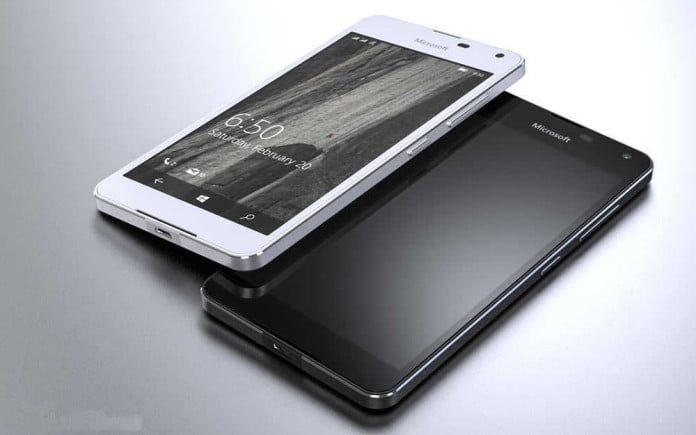
Last Lumia the Lumia 650

Microsoft is reportedly gearing to launch its next and what is believed to be the “last Lumia” smartphone, the Lumia 650 on February 1.

After the launch of the Lumia 650 smartphone, the Redmond giant is said to concentrate on its Windows 10 Mobile-based Surface Phone range and will no longer launch smartphones under the Lumia moniker. Windows Central reports that it has heard “multiple times” that the Lumia 650 may be the last Lumia.

This is not the first time we have heard about the Surface Phone series from Microsoft. Last month, Chris Capossela, Chief Marketing Officer of Microsoft, tipped that the company may reveal the ‘Surface’ branded smartphone in the second-half of 2016. The new phone range is said to be powered by Intel processors instead of the Qualcomm chipsets.

Also Read : iPhone 7 Plus May Feature 256GB Storage Option and Larger Battery

If this comes out to be true then this will be an end of era for Microsoft that launched its Lumia range of smartphone to compete other brands and platforms.

The report also said that the Microsoft Lumia 650 smartphone with Windows 10 Mobile will be revealed via an official blog post entry. The company will announce the availability and pricing of the Lumia 650 as well.

All these leaks should be taken with a pinch of salt as Microsoft has not mentioned anything about its last Lumia phone and the legitimacy of the leaks remains questionable.

Also Read : OnePlus Devs Post Official Guide to Root OnePlus Smartphones

According to the preliminary leaks, the Lumia 650 smartphone is said to run Windows 10 Mobile and feature a 5-inch HD display; powered by a Qualcomm Snapdragon 210 or 212 processor; 1GB of RAM; 8GB of inbuilt storage; expandable storage via microSD card; 8-megapixel rear camera with LED flash; 5-megapixel front-facing camera, and a 2000mAh battery. The handset is said to come in White and Black colours. Some of the other features hinted for the smartphone are Qualcomm Quick Charge 2.0, dual-SIM configurations, Bluetooth 4.1, NFC, HD Voice, and Wi-Fi calling.

Recently, the Lumia 650 was also leaked via a listing by a smartphone distributed in the Czech Republic. According to the distributor, the Lumia 650 will be priced at CZK 5,491 (approximately Rs. 15,000) in the Czech Republic for the unlocked version.

Also Read : Meet World’s First Android Smartphone With Massive 10000 mAh Battery

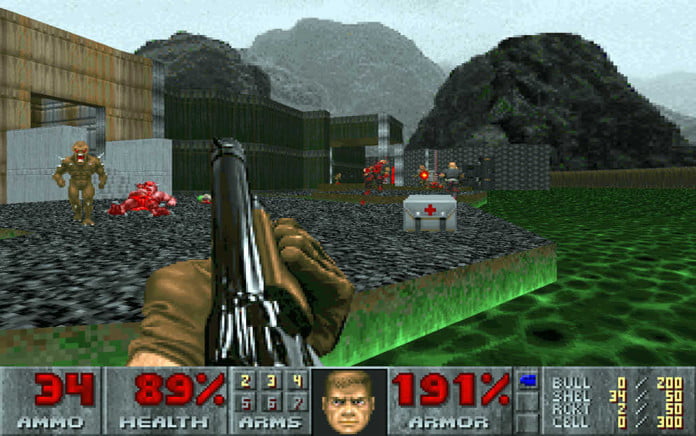
After 21 Years Doom Gets a New Level from its Co-Creator John Romero

After 21 Years Doom Gets a New Level from its Co-Creator John Romero

After 21 years of release, the popular seminal first person shooter, Doom gets a new level from its co-creator John Romero.

There are a huge number of dedicated fans are still engaged, with the DoomWorld modding community continuing to live on after two decades. These fans have been playing with and modding the original game for years, but now they’re about to get brand new level from its own co-creator.

Also Read : After 6,607 Failed Attempts, A Gamer Made Super Mario To Save The Princess In Less Than 5 Minutes

John Romero, who was a developer on Doom, Doom-2, and Final Doom, has decided to return to the franchise that made him famous and created a brand new level for the original game. As he posted on Twitter, the new level is called E1M8B, which is his version of E1M8, Phobos Anomaly, the final level of Doom’s first episode, Knee-Deep in the Dead. John Romero never made a map for Doom after 1995.

Also Read : 7-Year-Old Spends $6,000 Playing Jurassic World on Dad’s iPad

In the game’s readme file, Romero describes it as “My Boss level replacement for e1m8…22 years later.” Romero says that he made the level in two weeks during his spare time.

The level was created using Doom WAD, which is the modding tools Id Software released with Doom back in the 90’s. The level itself is available via this Dropbox link. You’ll need to own the original Doom and use ZDoom (or something similar) in order to play it. Additional instructions can be found here.

A new Doom game is set to be released later this year on PC, PlayStation 4, and Xbox One. John Romero is not involved with this upcoming game — he’s too busy making levels in the original Doom.

Also Read : The End of Pirated Games – Games Expected to Become Uncrackable by 2018

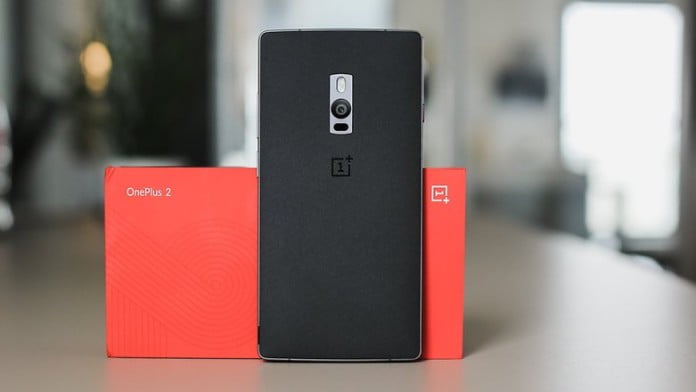
OnePlus Devs Post Official Guide to Root OnePlus Smartphones

How to root OnePlus smartphones

Do you think its the time to root OnePlus 2 smartphone in your hand. But don’t know how ? Don’t worry OnePlus Devs are here to help you to root OnePlus 2.

We all know that rooting is the ultimate way to unlock your Android phone’s full capabilities. One would usually need to browse around forums and sites to find working tutorials to do this task. But first time a manufacture has become a tutor to help their customers to root their phones.

OnePlus was stepped forward with such a bold move to help you by posting a video on YouTube that will guide you root OnePlus 2. It’s also worth mentioning that this method works for any OnePlus handset, so no customer is left behind here.

Also Read : Ocean is a Smartphone-Sized Powerful Linux Server thats Runs on Battery

The video lasts a bit over 8 minutes and provides step-by-step from absolute scratch, even making it easy for users who have never rooted a phone before. By the end of it, your phone has an unlocked bootloader, custom recovery loaded and SuperSU installed to give apps root from within Android. In this state, of course, the phone is ready to give custom ROMs a go. Just remember to keep a backup.

How to Root OnePlus Smartphones

The steps, in detail, are as follows. Keep in mind the files provided are for Windows. Mac and Linux users will need to get ADB going on their own before following along with the rest of the class. For starters, you’ll have to enable developer options on your phone.

In Settings, go to About Phone and click on Build Number repeatedly to unlock developer option.

Once you’ve unlocked the Developer Options menu, there are two options in there you’ll want to enable; OEM Unlock and USB Debugging.

• With those in gear, use the package provided by OnePlus on the video to install the Android SDK. This enables you to use ADB, the Android Debug Bridge.

Plug your phone into your computer via USB and open up a terminal window by typing “cmd” into the start menu.

Also Read : On 10th Anniversary of jQuery, jQuery 3.0 Beta Released

From there, you’ll be guided on using ADB to back up your phone and push the remaining files to it, then reboot. Keep in mind, this step will totally wipe your phone.

Once the files are all in place, you’re guided through booting Android into recovery and flashing the zip file for SuperSU.

Reboot, sign in and load up whatever you need from your backup and you’ll be good to go!

If you’d like to give it a spin, check out the youtube video below :

So happy rooting your OnePlus smartphone.

Also Read : Meet World’s Biggest SSD With 13TB Of Storage

On 10th Anniversary of jQuery, jQuery 3.0 Beta Released

10th Anniversary of jQuery, jQuery 3.0 Beta Released

Celebrating 10th anniversary,  popular JavaScript library jQuery has gone into a beta release stage with jQuery 3.0 version on 14th January 2016.

Among key features in version 3.0 is an updating of .data() implementation to more closely match the HTML5 dataset specification. “All keys are now converted from kebab-case to camelCase, regardless of access method, and digits no longer participate in the conversion,” said jQuery Core team member Timmy Willison in a blog post. JQuery.Deferred objects, meanwhile, have been updated to be compatible with the Promises/A+ and ECMAScript 2015 promises. This required changes to the .then() method.

Also Read : Soon Twitter will have 10,000-Character Tweets

Also, there have been “massive speedups” for some jQuery custom selectors. “Thanks to some detective work by Paul Irish at Google, we identified some cases where we could skip a bunch of extra work when custom selectors like :visible are used many times in the same document. That particular case is up to 17 times faster now,” said Willison.

Another change involves .show and .hide methods. Developers with jQuery 3.0 alpha had experimented with treating these methods like an inline-display-none-remover (.show()) and inline-display-none-adder (.hide()). “This had the advantage of simplifying these methods greatly and improving performance — it required much fewer calculations. However, this proved to be problematic for our users,” Willison said. “Removing inline display:none did not always show the element (if the element was hidden from the stylesheet, for example), and that is far too common. We realized we couldn’t provide a simple way for jQuery plug-ins, especially, to ensure that an element was shown.” Thusly, jQuery developers have reverted that change; changes that have been kept for show and hide methods should have less impact on code, he said.

Also Read : China Reportedly Starts Testing 5G Technology, will Commercialise it by 2020

A jQuery Migrate 3.0 plug-in is planned, to help identify compatibility issues in code. Developers anticipate some breaking changes with the upgrade, and jQuery’s builders dropped support for jQuery Compat to offer compatibility with more browsers but possibly at the expense of file size and performance. “On January 12, Microsoft dropped support for IE8, IE9, and IE10. We’re not going to go that far just yet, but we are dropping support for IE8. And with IE8, so goes jQuery Compat, gone before we even released a final version. There will only be one jQuery from now on,” Willison said.

Also Read : Hike Adds Quora And WordPress Founders as Investors and Advisors to Grow its User Base

Wikipedia Turns 15 Years Old Today

Wikipedia Turns 15 Years Old Today

The popular online encyclopedia, Wikipedia turns 15 years old today. In line with the celebration, founder Jimmy Wales envisions the service to be a ‘sum of all human knowledge.’ Wales stated that the aim of the free encyclopedia that can be edited by anyone is to “build a high quality record” of human history that “opens up a world of knowledge” to users. Wales further stated:

“When you think of the university-aged kids now, they haven’t known a world without Wikipedia, to them we are part of the infrastructure of the world.”

Also Read : The End of Pirated Games – Games Expected to Become Uncrackable by 2018

Wikipedia started as a complementary project for Nupedia in the year 2000, a free online encyclopedia where articles written and reviewed by the company’s experts can be found. And on January 15, 2001, Wikipedia was formally announced, with only one language supported, which was English. The number of articles available grew over time, which also paved the way for other languages to be supported.

By mid-2009, the service hosted over three million articles. Today, Wikipedia is home to more than 38 million articles, in over 290 different languages. According to the Wikimedia foundation, over 7,000 articles are created every day. Lastly, the service is non-profit, and only earns funds through donations. More recently, it has also started accepting Bitcoins, earning $140,000 in the first week.

Also Read : Microsoft Published Official Way to Hide Windows 10 Upgrade Prompts in Windows 7 and Windows 8.1

“It’s important that we sustain Wikipedia for the world, it’s a community project,” Wales said, talking about the future of the online encyclopedia. “There are billions more people coming online for the first time and we need to meet their needs. Many of them will do so using a mobile device, so we are investing in mobile because we need to be there for them.”