Home Blog Page 320

Recent Reports Says Ad Blockers Are A Huge Threat To Ad Revenue

ad blockers

Mobile websites are facing a new threat as millions download ad blockers to their phones and tablets, removing pesky adverts but potentially wiping out billions of dollars in advertising revenue.

There were close to 200-million downloads of ad-blocking software by the middle of this year, according to research firm PageFair, but only 1.6% of the blocking was done on mobile devices rather than computers. That could be changing as mobile ad-blocking software becomes increasingly popular across the globe, particularly after the move by Apple to incorporate it directly into its latest iPhone and iPad operating system iOS9. The software tends to be cheap and effective. Quickly installed, it reduces the clutter on web pages, speeds up performance and spares users some of the click-bait that many find hard to stomach.

Also Read : This New Computer Chip Can Self Destruct In 5 Seconds

While the Chinese government trawls websites for politically sensitive content, they remain littered with pop-up advertising, forcing millions to buy apps such as 360 Mobilephone Guard. In Hong Kong, mobile ad blockers Purify Blocker and Crystal recently entered the top 30 paid-for iPhone apps.

A study by Adobe and PageFair in August said the losses for websites that rely on advertising could be huge — an estimated $21.8bn this year and rising to $41bn next year.

ad blockers

Also Read : Facebook Allows Anyone To See All Photos You Ever Liked By A Simple Search

There is particular concern that Apple’s promotion of ad blocking may bring it into the mainstream, where once it was reserved for more tech-savvy users.

“It’s dangerous because it democratizes ad blocking and we know how good Apple is at making these things simple for users,”  —  said Hicham Berrada, head of France de Teads, a video advertising firm.

Apple has little to lose, given that it does not rely on advertising revenue, as competitors such as Google and Facebook do. Google has been reluctant to embrace ad-blocking apps, although some third-party developers are offering them for Google’s Android cellphones, with one app boasting more than half a million downloads.

Also Read : [Infographic] A Sweet Journey Of Android From HTC Dream to Marshmallow

Google doesn’t make it easy because it makes most of its money from advertising,Silicon Valley analyst Rob Enderle said.

“If advertisers get the sense everyone is blocking ads, they are going to stop funding content. There is a big concern. A lot of publishers can’t take another readjustment in ad revenue. The folks who make the primary money on advertising are concerned.”

Digital media advertising had been forecast to grow 15.7% this year, according to analysis agency Carat, but that could soon look like a peak. “We were in an extremely favorable situation because mobile opened up a huge range of functions that were not available on the web,” said Sophie Poncin, head of an internet advertisers’ union in France, highlighting the particular value of GPS positioning for advertisers.

The ad men are already reacting to the new environment and calling for change. Mr Berrada’s firm recently published a manifesto urging less annoying ads: an end to pop-up videos that fill the screen. They are also appealing to users to recognize the importance of advertising in keeping the internet free.

Also Read : Microsoft Pays $24,000 To A Hacker For Hacking Outlook Account
This New Computer Chip Can Self Destruct In 5 Seconds

Computer Chip Can Self Destruct

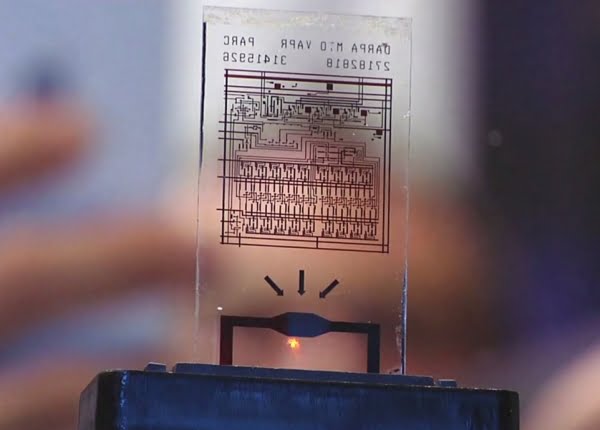
Researchers of Novel Electronics Group at PARC, a Xerox company has developed a new tempered glass-made computer chip can self destruct in 5 seconds. Researchers says that this new technology can keep sensitive date more secure than before because computer chip can self destruct in 5 seconds when remotely triggered. The chip was put on display at the DARPA organised ‘Wait, What? Technology Forum’ in St. Louis.

The chip uses silicon computer wafers integrated with a piece of tempered glass. This glass can be breaks into small pieces when heated in one spot. Gregory Whiting, a materials scientist and manager of the Novel Electronics Group that produced the chip at California-based PARC company, said, the heat can be turned on using a remote that could conceivably be triggered by anything from Wi-Fi to a radio-frequency signal. The new technology could allow for easier recycling of electronics, or help ensure that data on stolen electronics remains secure, Whiting said.

Whiting told Live Science that the team was initially aim to use off-the-shelf products to create self-destructing chip. Then the researchers considered a number of methods of destruction, from vaporization to dissolving before finalizing with the tempered glass.

Also Read : A Smart Glove That Translates Sign Language Into Text And Speech

 computer chip can self destruct made of tempered glass
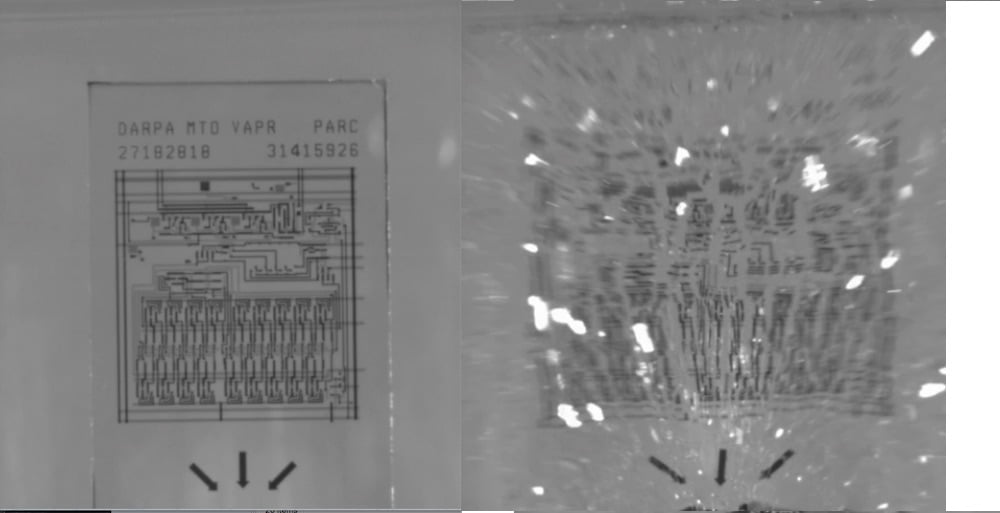
A new computer chip made of tempered glass can self destruct with the click of a button. On the left, an image of the computer chip before its self-destruction, while the image on the right shows the chip shattering into smithereens. Credit: PARC, a Xerox company  | Image Source : Livescience

The team came upon the idea of tempered glass, an extra strength material also known as safety glass. Normally, people temper glass by cooling the edges: The glass exterior shrinks, putting the exterior into compression while the warmer interior maintains incredible tensile stress. Though the glass is stronger than normal.

“if you break a piece of safety glass, it kind of explodes, shatters explosively into little pieces,”  —  Whiting said.

Also Read : Aston Martin Racing 808 Smartphone Is The Phone James Bond Should Have

As glass is a poor temperature conductor, the heat-tempering process takes place only pieces of glass that are at least 0.03 inches thick, whereas producing tiny particles requires thinner materials.

To temper the glass the team came forward with a new method called ion exchange. The researchers started with a thin piece of glass that was rich in sodium ions, or atoms of sodium with one electron stripped off. They then put the glass into a hot bath of potassium nitrate. Potassium ions then try to swap places with the sodium ions, but because the heftier potassium ions must squeeze into place within the silicon matrix, this creates enormous tension in the glass, Whiting said.

Also Read : Pakistani Researchers Developed Solar-Powered Emergency Mobile Network

The new method lets the chip makers to put silicon wafers directly on the glass, and the resulting product looks like a piece of glass with thin metallic lines. In order to destroy the chip, the team triggers the chip with a tiny heating element, which causes a thermal shock that creates a fracture that spreads throughout the glass. The current demonstration uses a piece of glass that is 250 micrometers thick, but theoretically, any size glass could be used, Whiting said.

The new technology of computer chip can self destruct in 5 seconds provide an extra advanced layer of protection to sensitive data because the self-destruction technique not only erases all the data from the chip but also alters the tiny bits that make it almost impossible to put together.

Also Read : Samsung’s Dual-Screen Foldable Smartphone Might Launch In January

Aston Martin Racing 808 Smartphone Is The Phone James Bond Should Have

Aston Martin Racing 808 smartphone

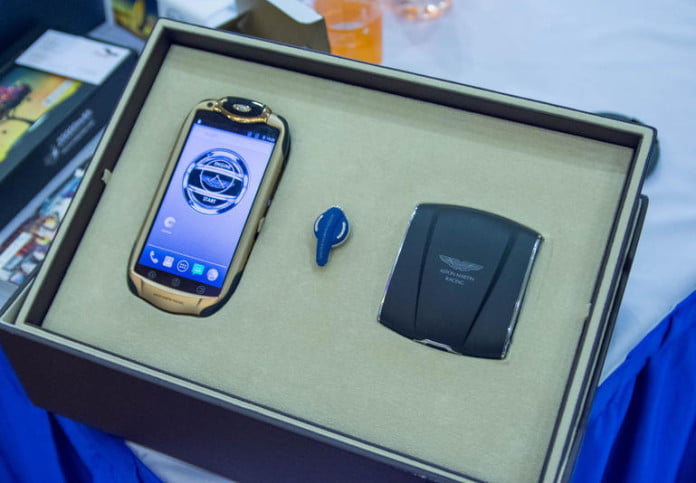
Want to be a British superspy but can’t exactly afford an Aston Martin supercar? How about something less expensive, such as this licensed Aston Martin Racing 808 smartphone , with a starting price tag of $6,000 USD.

I think its a good deal cheaper than a supercar, but it’s still quite a hefty amount for a smartphone, and that’s really only for the base model. If you’re feeling up to splurging, an 18-karat gold and diamond version can be purchased for a whopping $30,000 USD.

Also Read : Fab Forms-New Modelling System To Make 3D Printing Easier And Faster

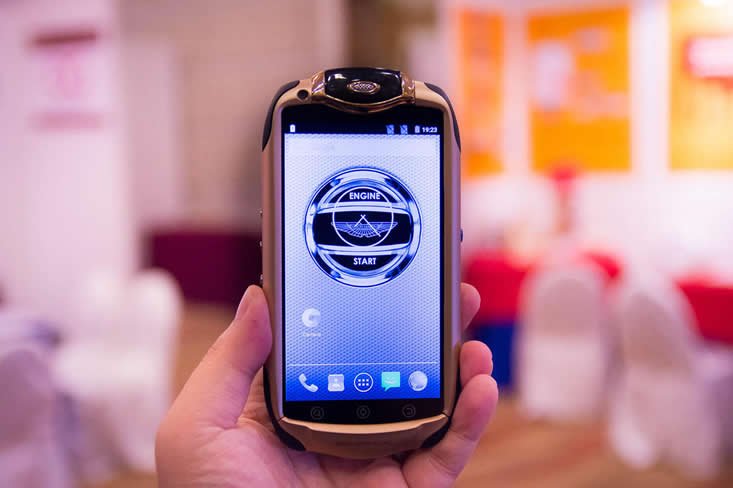
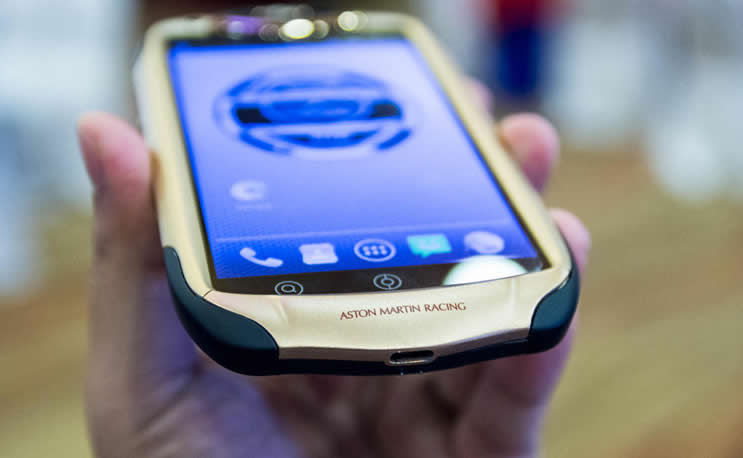
Aston Martin Racing 808 Smartphone (AMR 808) features a quad-core Qualcomm Snapdragon 801 processor clocked at 2.5GHz, a middling 2GB of RAM and 32GB of onboard storage. While the 4.7-inch display only has a 1,280×720-pixel resolution, it uses an expensive sapphire glass screen for protection. It have 13-megapixel rear camera, a 2,000mAh battery and dual-SIM LTE support. The AMR 808 runs Android 5.0, which appears to be the stock version of Google’s mobile software. Beyond a gimmicky wallpaper that says “Engine start” but obviously does nothing of the sort, there’s no bundled software.

Aston Martin Racing 808 smartphone
(Image credit: Aloysius Low/CNET)

This isn’t the first time an Aston Martin Racing-licensed phone has been made available. The maker of the phone, Hong Kong-based Primo Mobile, first released an Aston Martin smartphone back in 2012 called the Aspire 668. The phone didn’t exactly set the world on fire, but the newer AMR 808 is already set to go places when it launches on December 15.

Also Read : [Infographic] A Sweet Journey Of Android From HTC Dream to Marshmallow

Aston Martin Racing 808 smartphone
(Image credit: Aloysius Low/CNET)

The Aston Martin Racing 808 Smartphone (AMR 808) will be available at high-end department store Selfridges in London, and sold online on the Singapore Airlines website. There are also plans to launch the phone in Hong Kong, Dubai, Singapore and China in early December.Given the competition it faces from other luxury smartphones, such as the Vertu New Signature Touch, the Aston Martin Racing 808 has its work cut out for it to reach the finish line.

Also Read : Top 10 Programming Language That Will Help You to Get Dream Job

Microsoft Pays $24,000 To A Hacker For Hacking Outlook Account
hacking outlook account

A security researcher, Wesley Wineberg at Synack, rewarded $24,000 from Microsoft for hacking Outlook Account. He find a critical flaw in its Live.com authentication system. It is a kind of outlook worm that could allow hackers to gain access to a user’s complete Outlook account or other Microsoft services.

Microsoft’s Live.com is the authentication system that everyone go through while attempting to authenticate to Outlook.com and a large number of other Microsoft services, including OneDrive, Windows Phone, Skype, and Xbox LIVE.

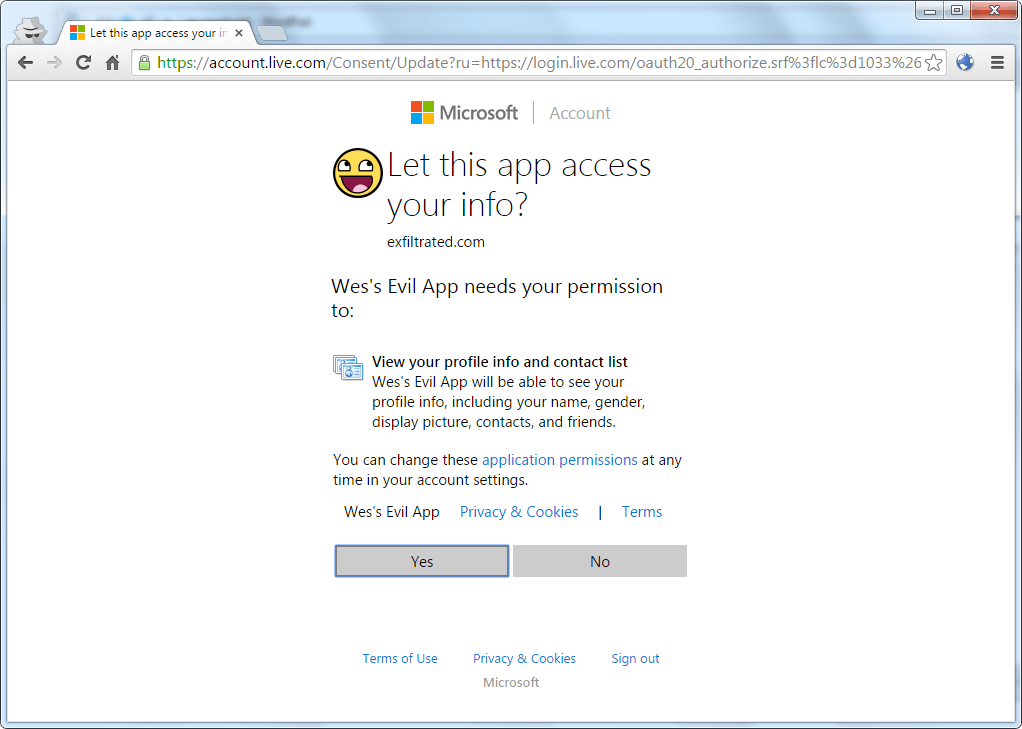
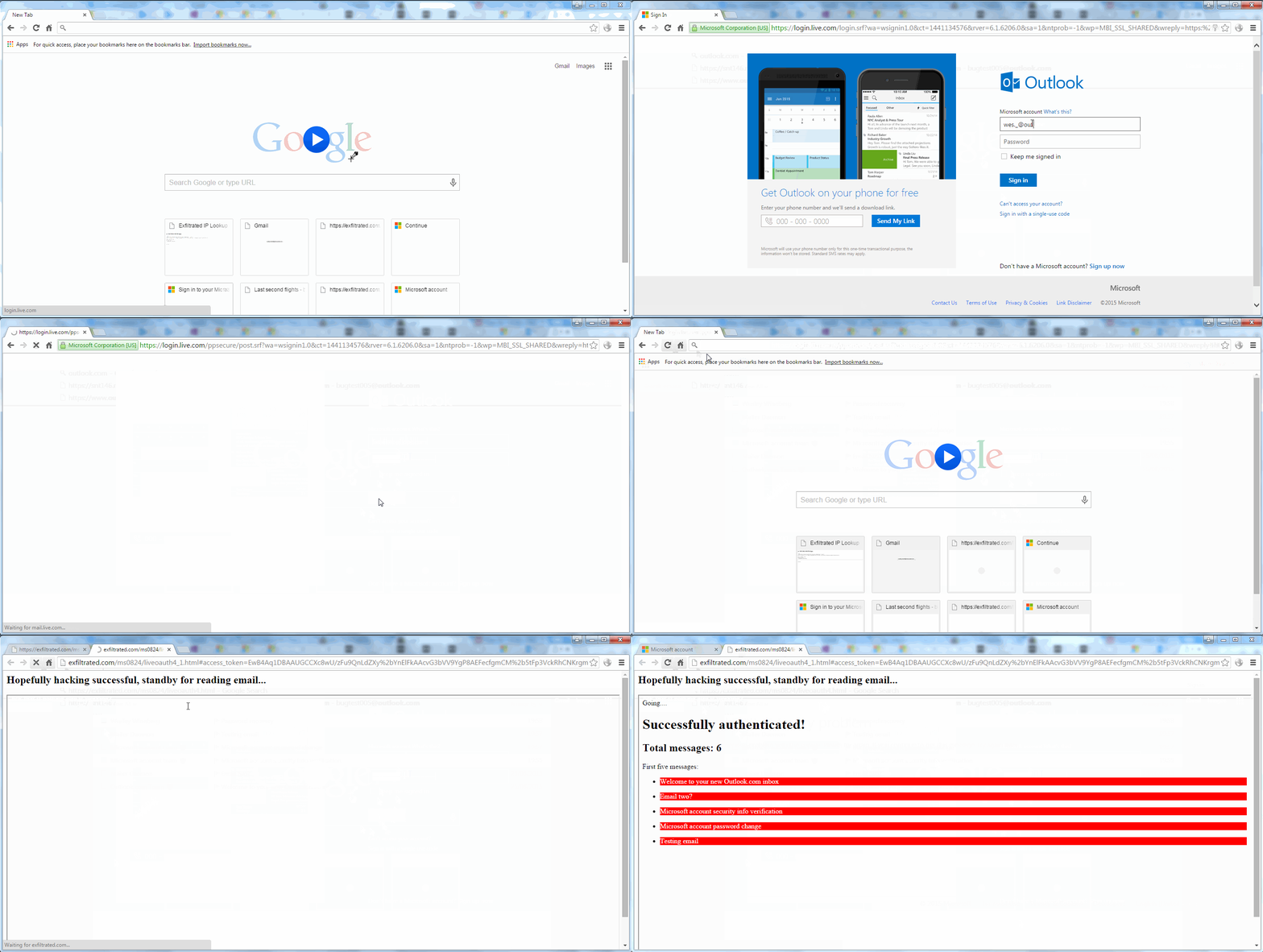
Wineberg first analysed the way in which Outlook allowed other apps to access it, using a standard set of authentication code known as OAuth. He discovered he could create an “evil app” containing an OAuth bypass, only needing to trick a user to visiting a website and they would effectively grant that naughty software access to everything in their account.

Also Read : More Than 50 Pakistani Websites Got Hacked By Indian Hackers As A Revenge For Hacking Kerala Govt. Website

 Hacking Outlook Account
Image Source : Synack

But for most hackers, this kind of vulnerability, known as a cross-site request forgery (CSRF), is all too common across the web. Typically, these attacks end as soon as the legitimate user logs out, but in the case of Outlook anyone abusing Wineberg’s vulnerability would have permanent access to the account, Wineberg said. Most concerning of all, it could have been abused to create a nasty email worm, he added.

“The real danger of this vulnerability is that it would be very easy to turn into the classic email worm of decades past. After the first victim is compromised, this vulnerability could be used to email every one of their contacts with a link that would then compromise those users’ accounts as well”

Checkout the below video created by Wineberg to demonstrate how the attack is done.

Also Read : Microsoft Loves Linux : Microsoft Developed A Linux-Based Operating System

 Hacking Outlook Account
Image Source : Synack

As can be seen in the video, all that is really necessary is to get the victim to visit your malicious webpage. Using this as a targeted attack definitely has a high impact, but this is also the perfect type of vulnerability to turn into a worm. With IMAP and contact book access, a worm could easily email all of a user’s contacts (or at least the ones who use Hotmail, Outlook.com, etc), with something enticing, “ILOVEYOU” virus style, and spread to every user who clicks the link.

The vulnerability was first discovered on August 23, 2015. And then he reported to Microsoft on August 25, 2015. And on September 15, 2015 Microsoft releases fix for issue, and pays $24,000 bounty to Wesley Wineberg.

Also Read : Top 15 Favourite Operating Systems Of Hackers

Facebook Being Testing ‘Sad’ , ‘Angry’ And Four Other Types Of Buttons To Express Your Emotions

Buttons To Express Your Emotions

Sometimes “Like” just doesn’t cut it. So how about Love or Angry? Haha or Sad? Or just Yay or Wow? So Facebook is preparing more buttons to express your emotions. Facebook will begin testing a new feature allowing users to express a range of emotions on posts in Ireland and Spain from Friday but there will be no “dislike” button, the social network said.

But Chris Cox, Facebook’s chief product officer, says in a post that the company plans to use the feedback from the test run to make improvements, with the hope of launching the buttons globally “soon.” So wait for buttons to express your emotions

“We are testing Reactions, an extension of the ‘like’ button, to give you more ways to share your reaction to a Facebook post in a quick and easy way,”  —  Facebook said in a statement.

Also Read : [p2p type=”slug” value=”world-wide-web-inventor-advices-to-just-say-no-to-facebook-internet-org” attributes=”target=’_blank'”]World Wide Web Inventor Advices To ‘Just Say No’ To Facebook’s Internet.org[/p2p]

Many Facebook users have been clamoring for the company to add a “Dislike” button for years, arguing that hitting the “Like” button in many instances—such as in reaction to a tragic news event—can seem a bit shallow, or even inappropriate. At the same time, typing out a thoughtful comment on a phone isn’t always easy.

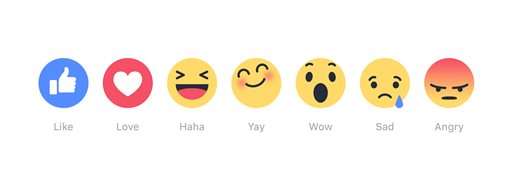
During the trial, users in Ireland and Spain will be able to select six emotions, as well as the like button, as they consider how they feel about posts.The options for the trial are: “love,” “yay,” “wow,” “haha,” “sad,” and “angry,” and are similar to emojis used in text messaging. Each expression comes with a correspondingly themed emoji.

Also Read :[p2p type=”slug” value=”facebook-allows-anyone-to-see-all-photos-you-ever-liked-by-a-simple-search” attributes=”target=’_blank'”] Facebook Allows Anyone To See All Photos You Ever Liked By A Simple Search[/p2p]

Buttons To Express Your Emotions

Chris Toss, Facebook product manager, said Reactions would give users greater ways of engaging with stories and content. “It’s a much broader range of human emotions you can express,” he told Irish national broadcaster RTE, speaking from California. A spokesman had no information on the length of the trial or when it might be extended to Facebook users outside Ireland and Spain. Toss also said the social network decided a “dislike” button would not add value to the site.

Also Read : n[p2p type=”slug” value=”new-improved-facebook-profiles-has-been-unveiled” attributes=”target=’_blank'”][/p2p]

“Liking” something on Facebook also plays a key role in the social network’s algorithm, allowing users to see content they regularly engage with and enabling targeted advertising. The new range of empathy buttons could eventually be used for similar purposes, but not during the trial, according to Toss.

“If you’re coming for humorous content and you’re saying ‘ha ha’ to lots of funny cat videos, down the road we might use that to show you more cat videos, but as of the initial test you won’t see any of that,”   —  Toss said.

Also Read : [p2p type=”slug” value=”top-15-favourite-operating-systems-of-hackers” attributes=”target=’_blank'”]Top 15 Favourite Operating Systems Of Hackers[/p2p]

World Wide Web Inventor Advices To ‘Just Say No’ To Facebook’s Internet.org

Tim Berners-Lee says no to internet.org

Tim Berners-Lee – the man commonly known as the inventor of the World Wide Web – says that consumers should say no to initiatives such as Free Basics (formerly Internet.org), and added that if something that is being offered in the name of the Internet and isn’t the full Internet, then it’s not really free and public.

In a report published in The Guardian, Berners-Lee was speaking about the importance of privacy and the dangers of government snooping, before moving on to talk about attempts to offer access to cut-down versions of the Web, to which he says customers should “just say no”. This was part of his statement on dangers of government snooping, speaking at the the 800th anniversary of the signing of Magna Carta.

“In the particular case of somebody who’s offering … something which is branded internet, it’s not internet, then you just say no. No it isn’t free, no it isn’t in the public domain, there are other ways of reducing the price of internet connectivity and giving something … [only] giving people data connectivity to part of the network deliberately, I think is a step backwards.”

internet.org or free basics

While Facebook’s CEO Mark Zuckerberg had appeared to be a net neutrality supporter, he has pitched his Internet.Org, as critical to getting India online.Free Basics, as the name suggests, offers free access to Reliance users to some applications and websites (including Facebook) to India’s poorest. However, it does so at the cost of creating a precedent that Internet access can be twisted and remodeled based on how a company sees it.

Since India has not formally established a stance on net neutrality, this can be a milestone for companies like Airtel, which can in the future “break the internet” – by offering people products like Whatsapp packs, YouTube packs and email packs, without letting them freely use the data they’ve paid for.

“There is this big struggle, debate in India now on how you balance these two things and this is an incredibly important debate because India is the country in the world with the most unconnected people,” — had had said.

Facebook Allows Anyone To See All Photos You Ever Liked By A Simple Search

facebook allows any one to see photos

Facebook has a public but slightly hidden feature that lets anyone see all of the photos you ever liked by a simple search keyword.

By just heading to the search bar at the top and searching for “Photos liked by” a certain person, you can see all of the pictures that person has given the thumbs up to, through all of their history on Facebook.

Also See : [p2p type=”slug” value=”coming-soon-facebook-dislike-button” attributes=”target=’_blank'”]Soon There Will Be A Facebook Dislike Button[/p2p]

The same tool can be used on yourself, by typing “Photos liked by me”. Or it can be used for other things entirely — typing to look for friends who like a certain group will show everyone who is a fan of a certain page, for instance.Graph search mostly uses natural language, which means that you can search in the way that you’d expect if you were talking to a real human being.

Also See :[p2p type=”slug” value=”a-developer-filed-lawsuit-with-fraud-charges-against-facebook-ceo-mark-zuckerberg” attributes=”target=’_blank'”] A Developer Filed Lawsuit With Fraud Charges Against Facebook CEO Mark Zuckerberg In Silicon Valley Land Case[/p2p]

The tool only shows information that is otherwise publicly available elsewhere. But like the recent discovery of the potentially embarrassing “Favourite Quotes” section, Facebook has such a huge collection of often very old data about people that dredging it back up could still be embarrassing or against people’s wishes.

Also See : [p2p type=”slug” value=”new-improved-facebook-profiles-has-been-unveiled” attributes=”target=’_blank'”]New Improved Facebook Profiles Has Been Unveiled[/p2p]

India Is Becoming Strategic Target For Cyber Criminals

cyber criminals

India is fast becoming a “strategic target” for cyber-criminals with an estimated 38 per cent of organisations exposed to targeted attacks in the first half of 2015, a report said.

Security solutions firm FireEye’s ‘1H 2015 Regional Advanced Threat Report for Asia Pacific’ found that 38 per cent of organisations in India were exposed to targeted advanced persistent attacks in the first half of the year, a 23 per cent increase from the previous year.

“India is fast becoming a strategic target, in part because of the potentially sensitive information that is expected to be digitised through ambitious and high-profile projects such as Digital India,” — Report Says

Also See : [p2p type=”slug” value=”indian-scientists-developed-a-new-algorithm-to-prevent-cybercrime” attributes=”target=’_blank'”]Indian Scientists Developed A New Algorithm To Prevent Cybercrime[/p2p]

The focus on the country is reflected in the report that ranks India fourth in Asia-Pacific countries exhibiting the most command-and-control (CnC) infection callbacks. This indicates the presence of compromised systems that are actively communicating with the advanced persistent threat (APT) groups’ command-and-control infrastructure.

“As India embarks on ambitious technology projects, attackers are exploiting gaps to compromise critical networks. Indian organisations are more likely to be exposed to attacks than the global average,” —  FireEye Chief Technology Officer (APAC) Bryce Boland said.“In the future, India’s growing economic clout and rising regional influence are likely to make it a more attractive target to threat groups” — he added.

Also See : [p2p type=”slug” value=”indian-it-firms-are-one-of-the-top-10-worst-paymasters-in-the-world” attributes=”target=’_blank'”]Indian IT Firms Are One Of The Top 10 Worst Paymasters In The World[/p2p]

cyber criminals

In the first half of 2015, FireEye revealed two attacks likely conducted by China-based threat actors on Indian organisations.‘APT30’ conducted a decade-long cyber-espionage campaign that compromised, among others, an Indian aerospace and defence company, it said.

The ‘WATERMAIN’ campaign targeted India and its neighbouring countries and appeared to target information about ongoing border disputes and other diplomatic matters, it added. The report found over 50 per cent of telecommunications firms and government organisations have faced APT, with education and the high-tech industry not far behind across the APAC region.

“Geopolitical tensions in the region have steadily ratcheted up in recent months, and cyber activity reflects this. Organisations in every geography in APAC, including India, experienced a higher or equal rate to APT groups than the global average of 20 per cent,” — it said.

FireEye said Indian organisations should ensure existing security tools are up to date and should implement an adaptive defence security model that can help shorten the time it takes between finding a breach and stopping it. Organisations also need to develop new ways to collaborate with other corporations, trade groups, and governments to share threat intelligence, it added.

Also See :[p2p type=”slug” value=”pakistani-websites-got-hacked-by-indian-hackers” attributes=”target=’_blank'”] More Than 50 Pakistani Websites Got Hacked By Indian Hackers As A Revenge For Hacking Kerala Govt. Website[/p2p]