Home Blog Page 158

Logitech G and Tencent Games Are Working On Handheld Cloud Gaming Console

Logitech G and Tencent Games Handheld Cloud Gaming Console

Logitech G and Tencent Games have announced a partnership to bring a new portable cloud gaming console to market. According to the company blog, the device should be on the market before the end of 2022.

It is known that during the implementation of the project, the knowledge of the Logitech G gaming division in the field of creating hardware solutions and the experience of Tencent Games in the software services industry will be combined.

The console will work on the basis of cloud technologies. Users will not need to download and install games — as Logitech G and Tencent are collaborating with the Microsoft and Nvidia teams to give access to streaming services Xbox Cloud Gaming and Nvidia GeForce NOW.

The technical details and design of the handheld console are still being kept under wraps.

Linus Torvalds Used Apple Silicon MacBook To Release The Latest Linux Kernel 5.19

Linus Torvalds stories

Linus Torvalds announced the availability of a new version of Linux 5.19. In the announcement as a “personal note” he writes that the release took place under Asahi Linux and an unspecified Apple laptop.

Torvalds has long g been a supporter of the idea of ​​an ARM device for development so that ARM could also be established as a server platform. Up until now, however, there were basically no devices that would have satisfied Torvalds’ claim, and he used x86 devices.

He writes, “I did the release (and am writing this) on an arm64 laptop. It’s something I’ve been waiting for for a _loong_ time, and it’s finally reality, thanks to the Asahi team. We’ve had arm64 hardware around running Linux for a long time, but none of it has really been usable as a development platform until now.”

As some of you know, not too long ago, the Asahi Linux team announced that they had successfully completed the development of the first distribution 100% compatible with the Apple Silicon platform. In fact, with the publication of the new version of the Linux Kernel, Torvalds himself has congratulated them for their work.

So far, however, Torvalds hasn’t used Apple’s ARM laptop running Asahi Linux for “real work,” just for test builds, launches, and release tagging. On his next trip, however, Torvalds wants to make full use of the ARM64 laptop and test the kernel’s architecture support himself.

For the Linux founder, it is now the third time that he uses Apple hardware. This has happened before with a PowerPC machine and with the thin and light MacBook Air more than a decade ago.

In this new version of Linux 5.19, there are many new features, and the developers additionally promise performance improvements. New features include LoongArch support for AMD Zen 4 processors, work on AMD RDNA3 and Intel DG2/Alchemist, Intel Idle driver support for Alder Lake, etc.

How XR Technology Influences Manufacturing Industry

XR Technology

Even in the manufacturing industry, an increasing number of companies have introduced XR technology to promote digitization. XR technology, which refers to Extended Reality that includes VR and AR, is moving beyond the temporary boom stage to the practical stage.

Therefore, in this article, we will introduce how XR technology is used, focusing on its use in the manufacturing industry.

What is XR?

XR is a general term for technologies that allow you to express and experience things that do not exist in the real world. By fusing the real world and the virtual world, we realize new experiences and problem-solving that has never been experienced before.

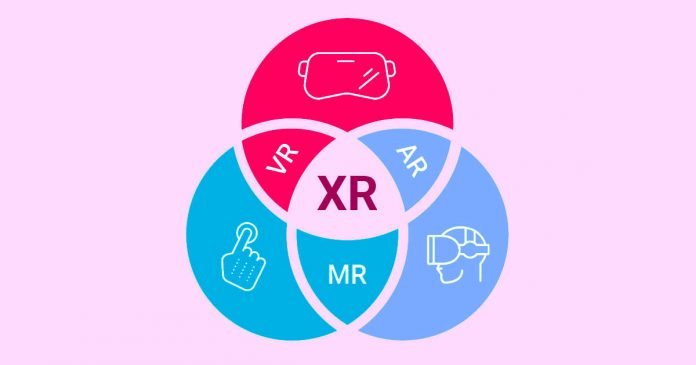
The XR stands for variables representing different technologies. There are three main types of technologies included in XR:

  • VR (Virtual Reality)
  • AR (augmented reality)
  • MR (Mixed Reality)

VR and AR are already kind of familiar technologies to us. Still, let’s take a quick look at the features of each technology.

VR (Virtual Reality)

VR is an abbreviation for “Virtual Reality”. This is a technology that allows you to feel as if you are actually in a particular space by projecting images in the entire field of view with special goggles.

There are two types of VR — a viewing type where you just watch the moving image, and a participation type where you can freely walk around in the image using a controller and touch and experience things.

Examples of the viewing type include watching sports and education, and examples of the participatory type include games and real estate viewing experiences.

AR (Augmented Reality)

AR stands for “Augmented Reality”. It is a technology that allows you to experience the virtual world superimposed on the real world. By superimposing a virtual image on the real-world image can be seen through a smartphone or dedicated goggles, like text can be displayed to supplement information, or 3D data can appear to add information.

Smartphone applications are a typical example of the use of AR. It is used in games that make images of characters appear in the real world, and apps that can simulate a room by making images of life-size furniture appear.

MR (Mixed Reality)

MR stands for “Mixed Reality”. It is the same technology as AR in which it superimposes the image of the virtual world on the real world with a technology that has further evolved AR. In the case of MR, by superimposing the coordinates of the real world and the virtual world more accurately, you can experience the virtual world image as if it were actually in front of you.

For example, in MR, you can go around the object displayed in the centre of the room and view it from any angle from top to bottom and front to back. In addition, since multiple people can view the same video at the same time, it is possible to have a meeting while viewing the same design data from a remote location.

Compared to VR and AR, MR still has few practical examples, and the technology is expected to develop. If MR becomes popular, new experiences that have never existed before will be created one after another.

Examples Of VR/AR Utilization In The Manufacturing Industry

Here are some examples of the use of VR and AR in the manufacturing industry.

A typical example is a design review that utilizes VR. In the past, we reviewed products designed using paper media such as drawings and specifications, but there were problems such as difficulty in sharing images and easy oversight of problems. However, if the design data is projected on the virtual space in VR, it will be easier to share the image. In addition, you can review the product as if you were looking at the actual product, making it easier to find and improve problems. This will greatly reduce the designing man-hours and the cost of prototyping.

One may also can experience a manufacturing site using VR. By reproducing the manufacturing site in a virtual space. It will be useful for safety measures and reviewing the manufacturing line. You can also use it to visit overseas factories while staying in your country, so you can improve manufacturing sites.

In addition, some companies are using VR and AR to train workers by showing complicated workflows in images and reproducing the movements of skilled workers for easier learning.

Next, let’s look at an example of using AR in the manufacturing industry.

First, an increasing number of companies are using AR for work support. For example, when performing maintenance work, a tablet or special goggles are used, and information on the work procedure and the place to be inspected is superimposed on the object. It eliminates the need to carry a large number of manuals. AR is also used in applications where skilled workers support work performed in remote areas.

Simulation by AR is also a method of utilization with many benefits for the manufacturing industry. By calling up 3D data and superimposing it on the real world, the manufacturing site can check the layout after equipment installation and the operating range of the product. Also, when selling products, by displaying products in AR, customers will be able to get a complete image.

If the manufacturing industry utilizes XR technologies such as VR, AR, and MR, various merits such as productivity improvement and technology inheritance can be obtained. Like IoT and AI, XR technology will become an indispensable digital technology for the manufacturing industry. 

What is Database-as-a-Service?

server room and devices

Database-as-a-Service or DBaaS has been growing substantially in the past few years. According to a comprehensive report by Market Research Future, DBaaS will continue growing at a CAGR of 36.9% and will reach over $61.42 billion by 2030. The report also attributes this notable growth to the many organizations adopting DBaaS to gain a larger competitive advantage. But what exactly is DBaaS, and what does it bring to the table?

Defining Database-as-a-Service

Before we go into DBaaS, we must first understand its connection to big data technologies and cloud computing. Fact.MR points out that rapid digitalization in sectors such as finance, manufacturing, telecommunication, and many others influenced the widespread movement to the cloud. Of course, the COVID-19 pandemic also played a part in the urgency of this movement. Cloud computing, however, has helped organizations make sense of the vast amount of data generated and allowed them to organize information into databases.

Now we can move on to defining DBaaS and its purpose. DBaaS is essentially a cloud computing service model. Its primary goal is to provide users with access to a database without the need for physical servers, installing software, or setting up for performance. In most cases, all administrative tasks and maintenance are shouldered by the service provider. This allows the user or application owner to focus more on developing the application itself and expanding their enterprise.

Main Characteristics of DBaaS

DBaaS is a service that organizes, manages, and administers your data within the cloud. In conjunction with that, it also includes services for hardware provisioning and backup. These services are on-demand and dynamic, meaning you pay for a database platform that is tailored to the needs of your enterprise based on the resources available to you. Again, it also specializes in automating database administration and monitoring for convenience.

Main Benefits of DBaaS

Depending on your purpose of use, your methods, how much you’re willing to invest in it, and other factors, there are many benefits to using a DBaaS. Here are some of the most prominent ones:

1. Ease of Use

DBaaS streamlines database management tasks via one-click operations and eliminates time-consuming tasks. This article on how to create a database in MongoDB demonstrates how easy it can be with the help of Atlas, MongoDB’s DBaaS offering. Once you have a database, it’s only a matter of time before you learn how to create more complex collections and insert documents.

2. Improved Security

When you move your information to the cloud, you run the risk of data leaks and security breaches. However, according to a study published on ResearchGate, DBaaS providers prevent such instances from occurring through state-of-the-art backups, disaster recovery, and safety measures. It also upgrades your security for you via automatic patches updates as well as routine database maintenance.

3. Cost Efficiency

As we highlighted in our article ‘Could Your Business Benefit from Cloud Storage?’ business owners often struggle with working out which services and solutions to invest in. The use of DBaaS, however, is significantly cheaper than other cloud-based services. Most DBaaS companies also offer free tiers and flexible packages. Individuals can view investing in DBaaS as a good ROI strategy that will help their business grow.

Conclusion

Overall, DBaaS is a versatile service that is chosen by a wide variety of organizations. It’s also a rapidly evolving branch of cloud computing, so businesses that have adopted this particular technology earlier on will certainly gain an edge on their competitors. For organizations that are looking for investments and upgrades that will help them expand and modernize, DBaaS is a smart option to go with.

New YouTube Tool Turns Long Videos Into Shorts

Youtube Shorts

YouTube has announced a new tool that will allow any video on the platform to become a Short. Thus, the company wants to increase the number of short videos on the platform in order to compete more effectively with TikTok.

To publish Shorts, the user needs to select a video excerpt up to 60 seconds long using familiar editing tools. YouTube believes that short videos will increase the audience of vloggers or creators and draw attention to their content since Shorts will contain a link to the original.

Turn Long Videos Into YouTube Shorts

This feature will only be available to content creators themselves. That is, you will be able to create short videos from your videos, but other content creators will not be able to use them. And vice versa, you will not be able to use YouTube videos that are not yours to create new Shorts.

The new tool is available on the YouTube app for iOS and Android devices.

According to Google, around 1.5 billion people a month watch short videos from the YouTube Shorts section. YouTube’s short video audience has caught up with TikTok, as the TikTok audience in March 2022 was 1.6 billion people.

Amazon Drive Will Die In December 2023

Amazon Drive will die in December 2023

Amazon is discontinuing its Amazon Drive cloud offering. Fortunately, users of the service have some time to secure files saved in the cloud in other services or locally — the end-of-life date is scheduled for December 31, 2023.

Amazon Drive started out as Amazon Cloud Drive in 2011, and the cloud storage was founded as a competitor to Google Drive, Onedrive, iCloud Drive and Dropbox.

The goal of this change, as Amazon explains, is to focus on storing photos and videos with Amazon Photos, so users will lose the ability to upload other types of files. Prime members get unlimited storage space for full-resolution photos plus 5 GB of video storage space. In the future, Amazon will also market unlimited photo storage space for non-Prime customers. It costs $12 a year and also includes 5GB of data storage for other file types. A three-month free trial period is also offered.

Amazon does not provide a file migration tool. Instead, users must manually download each file they wish to extract from Amazon Drive from the website before the service becomes inaccessible.

The Amazon Drive app will stop receiving updates and will be removed from the iOS and Android app stores on October 31, 2022. On January 31, 2023, Amazon will stop supporting file uploads.

How to Make Your Business Resistant to Phishing Attacks

phishing mails protection

Phishing is a technique that involves using emails, texts, or websites to trick people into giving away valuable information. While phishing attacks can happen to anyone, they’re more likely to target companies, especially financial institutions, because they have access to valuable data and often have vast IT resources.

If a phishing attack hits your business, it can lead to loss of intellectual property, financial damage, or even identity theft! In this article, we’ll look at what constitutes phishing and how you can protect your business from falling victim to them.

What Is Phishing?

Phishing is a scam in which cybercriminals try to trick people into revealing personal information, such as passwords and credit card numbers. Phishing is also known as “spoofing” and “brand spoofing.”

It’s carried out by email or instant message, where the attacker sends an email that appears to come from a legitimate source, e.g., your bank or social network, but contains links or attachments designed to trick you into downloading malware onto your computer.

It might also be sent through mobile apps like WhatsApp or Facebook Messenger if they appear to come from someone you know. In these cases, the attacker may have hacked the app, which then has access to all of their contacts’ phone numbers and names—allowing them to send more convincing-looking messages containing malicious links that look like they come from real friends.

The number of phishing attacks is increasing significantly, especially post Covid-19. According to the FBI, there has been an 800% hike in phishing attempts. Hence, there’s a strong need for businesses to prevent attacks.

How Do You Protect Your Business From Phishing Attacks?

While anyone can become a target of a phishing attack, businesses usually face this problem the most. If you are a business owner or a cybersecurity employee, there are many ways to defend your company against phishing attacks. Here are some approaches you can adopt.

Deploy Advanced Threat Protection Solution

An Advanced Threat Protection (ATP) solution is security software that protects your organization’s data from being stolen, compromised, or misused by cybercriminals. ATP solutions detect and block malware before it can enter the network. This provides a layer of defense against phishing attacks, allowing you to focus on other parts of the business rather than solely being concerned about cybersecurity.

If you are facing a lot of phishing attempts, you need to focus on getting an email security ATP that can scan and detect potential phishing attacks. These solutions are powered by Artificial Intelligence and Machine Learning to identify spam emails based on historical data. Moreover, they can also scan the email and URL to ensure that the email has come from a legit source.

How Does an ATP Solution Work?

An ATP solution automatically collects information about emails to flag suspicious messages for further inspection by human users. When an email is identified as malicious, it will contain indicators such as embedded URLs that do not belong in an email chain or attachments with large file sizes that are too big for the message itself.

The system then blocks these messages from entering your inboxes while providing detailed reports on how many spam emails were caught so you can make informed decisions about what constitutes a legitimate message versus one that should be treated with suspicion through various filters or policies set up by administrators (or other staff members).

Create a Culture of Security

Your culture of security is the environment you create for your employees, partners, and customers. It can be a defining factor in how successful your business will be against phishing attacks.

Here are some ways to strengthen this culture:

  • Educate employees about phishing attacks and how they work. Provide them with guidelines on what to do when they receive an email that looks suspicious and how to report suspicious emails or other suspicious activity they encounter daily.
  • Create an employee handbook that outlines acceptable use policies regarding email and internet usage.

Create and Enforce a Password Policy

Having a password is the first line of defense against phishing attacks. If your systems don’t have strong passwords, the adversaries will simply penetrate your systems and gain access to sensitive information.

  • Create and enforce a password policy. Password managers are the best way to manage your company’s passwords and can help you implement a strong password policy.
  • Use unique passwords for every account. This is obvious, but it bears repeating: use different passwords for each account and make sure those aren’t easy to guess. If you have accounts that require re-verification via an email address, don’t reuse that email address across multiple sites. It only takes one weak link in your security chain to compromise all of them.

Train Employees on Scams and Phishing Techniques

Human error is the top factor leading to cyberattacks. Since humans are the weakest link in your security system, training them is the best way to prevent attacks on your company. Training is the best way to ensure employees don’t fall for phishing attacks.

Employees should be trained not only on what a phish looks like but also on how to recognize the signs of one and avoid them. They should go over what types of phishing attacks are most common in their industry, how they work, and how they might trick your employees into giving up sensitive information or clicking on malicious links.

Employees should also be given real-world examples of recent scams that have targeted businesses similar to yours, so they know what kind of language scammers use in their emails and phone calls. To test whether or not employees are paying attention during this training session, send out fake phishing emails after your class has ended. If any employee clicks on those links or gives out sensitive information without asking first, then you’ll know who needs more training before he or she can defend against real-world attacks!

Activate Multi-Factor Authentication (MFA)

Anything requiring multiple login methods—like a text message, a phone call, or an app—is considered multi-factor. The idea is that by requiring more than just a username and password to log in, you’re making it harder for phishing emails or websites to trick your employees into giving up sensitive information.

MFA can mean something as simple as sending out secure emails with an attachment that only opens when the recipient types in a password sent via text message. Some companies have even gone so far as to require employees to use PINs on their phones before accessing any data remotely through apps like Dropbox or Google Drive.

You may also want to consider using biometrics like fingerprint scans instead of depending solely on passwords or questions based on personal information that hackers could easily guess. A good rule of thumb: no matter what kind of security you implement at work, don’t share critical info about your company online with anyone who doesn’t need access!

Establish Best Practices Around Email Usage

The most common way to get phished is via email, so it’s important to establish best practices around how employees use email. These best practices should include:

  • Each employee should only use one email address
  • Employees should not share passwords with each other or with anyone outside the company, even if they are family members or spouses

To help prevent phishing attacks conducted via your company’s website, you can also:

  • Ensure that any links provided by sites within your domain are safe by visiting them before presenting them on your site
  • Use a third-party tool like Google’s Safe Browsing API to ensure that any external links you show on your site are safe

Conclusion

The reality is that phishing attacks are a severe threat to businesses and can cost your business a lot of money. They can lead to identity theft, the loss of confidential information, customer data, and corporate reputation damage. Just because phishing attacks are more common doesn’t mean you should ignore them, but rather work proactively to create a culture of security at your company.


Intel Closes Its Optane Memory Business

Intel Closes Its Optane Memory Business

Intel has decided to close its Optane memory business and will now be forced to write off $559 million in inventory impairment. Intel introduced it in 2017 with the aim of burying the traditional hard drive and making it difficult for even the popular SSD drives.

Under the Optane brand, Intel combines NVDIMMs (Optane Memory) and SSDs that rely on the 3D XPoint phase change memory that was developed with ex-partner Micron. As the cost of Optane drives is higher than SSDs and performance is also inferior — losses were recorded every year — forcing Intel to close the project.

Businesses have been known to shut down due to the industry’s transition to CXL (Compute Express Link). This is a technology that is designed for data centers. It is designed to remove technical limitations, at least in the data transfer rate. The fast connection technology should also accelerate memory access.

The news came on the sidelines of Intel’s bad quarterly figure of Q2 2022. Intel only made around $15.3 billion in the second quarter of 2022, compared to $19.6 billion a year earlier. And instead of a profit in the billions, the books are currently in the red with a loss of 454 million US dollars.