Home Blog Page 171

Why CRM is Important in Real Estate Business

CRM System Help With Optimization of Your Business

A real estate CRM is a customer relationship management system that allows you to manage all your real estate activities effectively. It reduces the communication gap among all clients.

If you are using CRM, you can manage your real estate leads, campaigns, contacts, and all documents. Being a real estate businessman, you have to travel more but if you have a CRM, you can access all information remotely whether you are at home or on a business tour. 

It allows you to access many other real estate websites with one click. You can manage your business effectively and efficiently with the help of CRM. In the following blog, I will tell you about the importance of having CRM in the real estate business.

You can organize data

By using the CRM, you can organize all your data. Because you have data on cloud space. In the real estate business, you have to manage multiple documents in this business. You need multiple spaces in your office to manage the documents but if you have software, you can manage the data in one place and can get access whenever you need it. CRM for real estate agents is necessary to get an organized record of the clients.

24/7 Availability 

You can communicate with the clients anytime. Because like other software, you can use this software on your mobile. If you are on a business trip, you can contact any of your contacts and clients.

But with the traditional work, you do this work with employees and face many delays. but this is very user-friendly and highly available at your service.

Manage your leads

As you know, if you are doing a real estate business you have to manage many leads. If you are not recording them according to the sequence, you may lose the lead.

You know most real estate websites allow their clients to communicate with their team. Any client can communicate with a customer service representative for any query regarding properties. But if you have CRM software, you can communicate with their clients. Software screens your potential clients and keeps them in a specific place on the software in this way, you can focus more on them.

You can also record the future queries of your clients and can solve their problems and fulfill their demands in near future.

Handle your market campaigns

Like other businesses, the real estate business also markets its product and services through different social media platforms. If you want to run a marketing campaign, CRM will help you in this regard. It can track your campaign and records all data which you get through the campaign.

It also suggests the type of campaign which will suit you best. In this way, it provides ease in choosing the campaign. As you know, most people don’t know how to run campaigns. They outsource the agencies to run their campaigns but if you have a CRM, you do not need to hire an external agency to run your campaigns.

CRM analytics helps you

You have many clients in the real estate business with different preferences and demands. It tells you about the potential clients and does things better according to their demands.

CRM helps in learning which clients are more profitable. So, you can allocate more facilities to those clients to retain them. In this way, you can make the right decisions for your right clients on a regular basis.

Easy to track property

Being a client or buyer, you search on the internet for purchasing houses. But if you have a CRM, you don’t need to view several websites because it is linked with many websites and sources, allowing you to gain access to property data and real estate market predictions.

With iPadOS 16, iPad Will Behave More Like A Mac

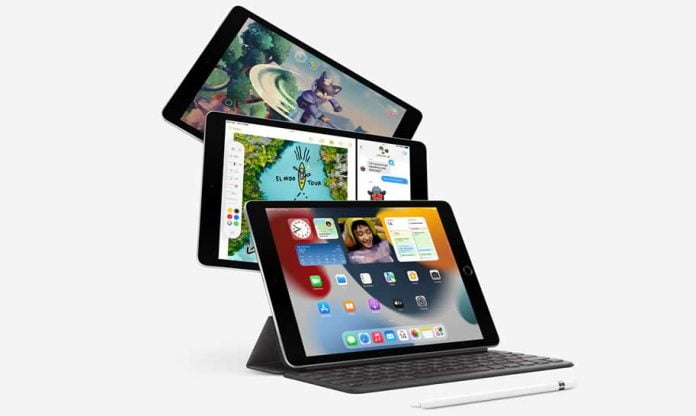
Ninth-generation iPad

According to Bloomberg’s Mark Gurman, the upcoming iPadOS 16 will bring a massive multitasking update that will make the iPad interface closer to macOS.

This will allow you to see which applications are open and easily switch between them. For example, it will be a great advantage for those who use iPads as a productivity tool and manage many applications at the same time. In addition iPadOS 16 will also have the ability to change the size of the windows of open applications.

According to the source, the Cupertino company will announce significant changes to the iPadOS next week at its World Wide Developers Conference (WWDC).

It should be noted that Apple has not made reference to these possible improvements to iPadOS 16. The Cupertino company tries to avoid leaks at all costs.

Beyond iPadOS 16, Apple is also preparing updates to the rest of its operating systems — iOS 16 and macOS 13.

The First Step Towards Quantum Internet: Researchers Succeed In Quantum Teleportation Between Unconnected Nodes

Quantum Teleportation Between Unconnected Nodes

Dutch physicists at the QuTech research institute demonstrated for the first time that quantum information, Qubits, can be reliably transferred between network nodes that are not directly connected to each other by building the first multi-node quantum network. An article about it appeared in the journal Nature.

This project is an important step toward the quantum internet. The quantum internet, which many scientists want to create, is based on the ability to transfer qubits between the nodes of the network. This will enable all of the options available on the regular internet, including the secure exchange of sensitive information, the linking of multiple quantum computers to increase computing power, and the use of high-precision coupled quantum sensors.

The nodes of such a quantum network consist of small quantum processors. Transferring quantum information between these processors is a difficult task.

In quantum teleportation, qubits disappear on the sender side and reappear on the receiver side without crossing the intermediate space — thus, the possibility of their loss is excluded. Teleportation, however, requires https://techlog360.com/ibm-eagle-127-qubit-quantum-processor/a quantum complex connection between the sender and receiver, a reliable method for reading quantum processors, and a capacity for the temporary storage of qubits.

In 2021, the same team of researchers succeeded in creating the world’s first three-node quantum network (a network that connects three quantum processors). These nodes were located at a distance from each other, in the same building; one of them (named Bob) had a physical connection (via fiber) to two others (Alice and Charlie), which allowed them to establish an entanglement link with each of them (each node had a communication qubit). Bob had an extra qubit to act as a memory — it could store the previously created quantum bond while a new bond was being established.

After the Alice-Bob and Bob-Charlie quantum links were established, a set of quantum operations created the Alice-Charlie quantum link. QuTech researchers have established entanglement between three nodes and demonstrated the possibility of teleporting qubits between two neighbouring nodes.

This time, for the first time, they achieved teleportation between non-adjacent nodes — they teleported qubits from Charlie’s node to Alice’s node using Bob’s intermediate node.

It took three steps. First, quantum entanglement had to be established between Alice and Charlie. Then it was necessary to create a teleportable qubit. This was followed by a teleportation step from Charlie to Alice — the researchers jointly measured Charlie’s qubit (sender) and its half of the entangled state (Alice had the other half). This measurement caused the teleportation of the quantum state of the qubit, i.e. the information disappeared from Charlie’s side and immediately reappeared on Alice’s (the recipient’s) side.

To achieve this teleportation, the researchers improved their experimental setup in several ways, starting with a detection system. Previously, signals indicating entanglement came from the same photodetectors that detected the photons used for entanglement, which could lead to false signals. This time, the team installed an additional detection path to eliminate these false signals. They also improved the qubit reading procedure and implemented active protection of memory qubits during entanglement generation.

The team now plans to increase the number of memory qubits to run more complex protocols. They are also planning to launch the system outside the laboratory, including through the optical fibers of a real network.

What is Augmented Reality and How it Works in Education?

Augmented Reality in Education

Augmented Reality is the future of teaching, and it’s already available.

Augmented reality (or AR) is a combination of virtual displays and real-world backgrounds. This is not VR, which completely substituted the view. Instead, a headset is used to view the real world with virtual additions. Combining the two worlds is a great opportunity!

AR overlays digital objects onto the real world using screens and cameras. It is ideal for schools because it creates virtual items that are not only affordable but also safe to have in the classroom. People who work in the educational industry, especially thesis writers at https://www.thesishelpers.com/ can prove that teaching needs a lot of showcases. But it’s really hard to have all the materials. And where to store them?

Augmented reality adds digital elements to the real world to create 3D textbooks or transform a classroom into an escape room. Augmented reality can also be used to transform large spaces such as gyms into areas with structures that students can explore.

This article will cover all aspects of augmented reality in education.

What is augmented reality?

Augmented reality, as its name implies, is the process of overlaying digital objects in the real world to create augmented reality. It requires a screen and displays to function. Although it is the best way to experience this, a headset like Microsoft Hololens is still the best option.

There are more augmented reality headsets available with built-in cameras that can feed in your environment and overlay digital objects. Virtual reality is a different type of reality. The background can also be digital.

For tablets and smartphones, there are more augmented reality apps. This kind of software development has become easier ever since Apple’s ARKit was launched. You can do what used to require huge amounts of processing power on older devices.

Augmented reality allows you to place a virtual character into a room, bring a book alive with videos, touch and interact with virtual experiments, and many other uses.

What can augmented reality do for education?

As you can see, Augmented Reality can enhance students’ learning experience in classrooms. An app can be used in conjunction with a textbook to bring the content to life. The app can display images from the book in a 3D format right in front of students. It can be used to allow students to interact with the object and manipulate it to see its effect.

There are many options, from learning about human anatomy and the star systems to conducting a virtual experiment. Imagine a class of students being able to conduct physics experiments without any equipment. Each student uses their own device.

This can not only save money but also time and valuable storage space. This can allow you to experiment with things that are not feasible in a school setting. This can make learning more fun for students. Just imagine the best PowerPoint presentation writing services abilities, when from the slide the dinosaur is roaring!

Another option is to explore and build virtual worlds that are overlayed in real space. Students can use building blocks to create their creations and then scale them up and walk around the finished products. Students can discover ancient civilizations that aren’t possible to reach with Sandbox AR.

You can manipulate parts in a virtual machine and see data overlayed on them. Follow the guide to learn how to operate an AR display. There are endless possibilities and they continue to grow.

How can schools become augmented reality-ready?

Schools have the option to purchase headsets in bulk, which can be used by entire classes. Many headsets come with software that guides students through the virtual world.

There are cheaper options, like using pre-owned hardware, including smartphones that students or schools have, as well as tablets. It should be capable of running augmented reality as long as it has a screen and a camera, and is not older than five years. Many AR apps are free and available to help teachers and students get started.

Qualcomm Is Considering The Partial Acquisition Of ARM

Qualcomm Modem vulnerability

After NVIDIA’s failed purchase of ARM, major players in the semiconductor industry are keeping an eye on the future of the British chip design firm.

Now Softbank has prepared the stock market launch of ARM for 2023, and Qualcomm is the first company to come forward showing interest in buying ARM — but not in the way you think.

Cristiano Amon, president and CEO of Qualcomm, told the Financial Times that he would like to buy ARM. He emphasized that “many companies would have to get involved” in order to preserve ARM’s independence.

Qualcomm welcomes joining forces with other chip manufacturers — that is, its rivals — and forming a consortium to acquire ARM and for each member to obtain a portion of the company. Thus, he assures that the neutrality of the company that today remains based in the United Kingdom but that belongs to the Japanese SoftBank would be maintained.

According to Cristiano Amon, one idea is for licensees or partners to join forces to buy at least a portion of ARM from Softbank. In addition to Qualcomm, these include Ampere, Apple, AWS, Huawei, Marvell, Mediatek, Microchip, Micron, Nvidia, NXP, Phison, Rockchip, Samsung, SK Hynix, Texas Instruments, Toshiba and Western Digital. It is not known whether and which of these companies are interested in such an approach.

Digital Assets: What Are They and How Are They Used?

Digital Assets

In order to become a digital asset, a digital file must belong to a business or organization, it is discoverable, and provides unique value to the said organization.

Therefore, you can’t consider a text document that contains your company name and contact details a digital asset. However, if the same information is stored as a graphic file that can be printed as a business card, it becomes a digital asset.

Also, some pieces of Intellectual Property (IP) such as logos, ad copy, and graphics of trademarks (just to name a few) are part of the digital assets category. So you can see how these can be valuable to a business.

A Good Management System

We mentioned that a digital asset needs to be discoverable – this means that the file has specific characteristics (also known as metadata) that allow a user to find it with a simple database search.

However, as companies start using and creating more digital asset files, it becomes more difficult to keep track of all of them without a proper management system.

Here is where Digital Asset Management (DAM) software comes in. This piece of software was specially created to keep these files well-organized and easy to find by anyone with the proper access rights. 

The best DAM software also helps improve marketing campaign productivity and brand consistency since it keeps digital assets discoverable. This is because a specialized system allows you to set varying levels of user access to files and put automated workflows in place that take care of updates, maintenance, and backup.

How to Use Digital Assets

In most cases, digital assets are valuable because they help improve online marketing strategies. For instance, a high-quality image you created during a photoshoot can be used to raise brand awareness on social media (this is a digital asset).

On the other hand, a screenshot of your desktop or phone screen to show a colleague or business partner something is not a digital asset. So, the best use for digital assets is in media campaigns or with business partners where you share or collaborate on various valuable digital files. 

Wrap Up

In conclusion, digital assets are valuable digital files that you should organize for optimal use and protect against any intrusions. In fact, when working with such valuable items it is crucial that you avoid any cybersecurity blunders and keep a tight grip on who uses your work network and how.

Designing a healthcare app – where to start and how to do it?

Designing a healthcare app

The spread of wearable gadgets and the global pandemics are fuelling the growth of the need for healthcare apps such as telecommunication tools, online workouts and tracking apps. To tap into the industry, you should first learn how to develop a healthcare app and here is a set of steps you can take.

Make sufficient market research

Modern mHealth apps are highly diverse but all of them can be categorised by their target users.

Apps providing healthcare, fitness or wellness assistance are dedicated to patients. Medical professionals are using apps helping them to offer such services to patients while medical institutions rely on tools designed for management and organisation.

Remember to study the products offered by your competitors which will help you to create a unique app and avoid the flaws of the existing projects. Note that successful healthcare apps are focused on very specific niches rather than aiming to tackle all possible healthcare issues.

Consider how to develop a healthcare app compatible with innovative technologies

Depending on the exact purpose of your mHealth app and its target group, you will need to use some of the modern technologies which will depend on the age, gender, geographical location and income of your audience.

Choosing a platform and proper functionality for your app, such as GPS or a camera is the first step. For mHealth apps integration with other technologies, for example, with wearable devices is also significant. Additionally, your audience might benefit from some innovative approaches including IoT, blockchain, AI, AR and VR.

Pick your model for monetisation

Of course, not all of the apps can be or should be monetised, for instance, it is untypical for the products created for medical institutions. Yet, in many other cases, you can successfully adopt one of the strategies for monetising, even if your app will be free. In any situation, it is better to think about this point before you start developing your product.

Respect the expectations of your target group

Since you are wondering how to develop a healthcare app which will be popular among users, its design should meet their common expectations such as high usability and great user experience designed in the compliance with WCAG. Pay great attention to the users with possible disabilities who are one of the major groups of mHealth app users.

Provide your users with security and encryption necessary for payments and processing sensitive information. Add helpful functionality such as tracking, scheduling, charting and reporting as well as generating reminders and push notifications.

Conclusions: let your MVP grow

Work on smaller and more specific apps to provide the best solution for a well-defined problem, however, do not wait for creating a perfect product. Develop your MVP and launch it as soon as possible. Its first users will guide you through the upgrading process and help you to understand their needs better.

ElectroVoxels: Self-Configuring Robotic Cubes Can Assemble Themselves Into Almost Any Shape

ElectroVoxels

Researchers from the Computer Science and Artificial Intelligence Laboratory (CSAIL) at the Massachusetts Institute of Technology (MIT) and the University of Calgary in Canada have developed a system of modular robots that can be organized in different ways.

They are called ElectroVoxels in reference to voxels, which are volumetric pixels. ElectroVoxels are self-configuring robotic cubes that come together semi-autonomously to create larger objects, and that would serve as moldable tools in space. They have no motors or moving parts. Instead, they use electromagnets to cross each other.

The ElectroVoxel cubes have a side length of about 60 millimetres that consist of magnets made up of a ferrite core wrapped in copper wire, and the production price per piece is just 60 cents. Inside each cube, researchers housed a microcontroller and integrated circuits that send electricity in the correct direction through the correct electromagnet.

ElectroVoxels Self-reconfiguring robotic cubes

In addition, the researchers created software that allows control of up to a thousand cubes with a few clicks, being able to alter the speed and avoid collisions. ElectroVoxels simultaneously uses a wireless communication system to communicate with the software.

These little cubes have been put to the test on the famous “Vomit Comet”, the NASA plane where researchers test their projects in zero gravity. With the freedom that lack of gravity brings, it reduces reliance on fuel and thus addresses challenges related to launching mass and volume.

Unlike traditional hinges that require mechanical connections between two elements, the ElectroVoxels are completely wireless, making them much easier to maintain and manufacture for a large-scale system.

The project is progressing, but it is a technology that is still in its infancy for what is expected of it.