Home Blog Page 73

Microsoft Releases Phone Link App for iOS, Allowing iPhone Users to Connect with Windows 11

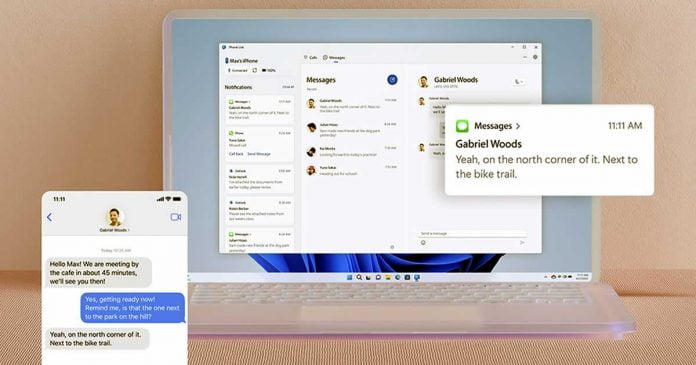
Microsoft Phone Link for iOS

Windows 11 users who own iPhones can now stay connected with their friends and family through their PC, thanks to the Phone Link app for iOS released by Microsoft. The app allows iPhone users to make and receive phone calls, send and receive messages via iMessage, access contacts, and view notifications on their Windows PC. The app was previously available in preview versions of Windows but lacked iOS support.

The lack of iOS support may have deterred some users from using Windows, but the new update of the Phone Link app for Windows 11 aims to solve this issue. To use the feature, iPhone users must install and configure Link to Windows on their devices, which is supported on iOS 14 and later.

For business professionals, Phone Link provides an advantage in answering text messages, monitoring calls, and viewing incoming notifications during a meeting, where using an iPhone might look unprofessional. iPhone users can also receive calls, text messages, and notifications through their Windows PC while the smartphone is charging, making it more convenient to use both devices simultaneously.

The Phone Link setup procedure is straightforward and just entails connecting the iPhone to the PC over Bluetooth. After scanning the QR code and validating the phone, the pairing is completed with a permissions request, allowing users to sync material to their PC, get phone notifications, and exchange contacts.

However, Phone Link has some limitations in terms of functionality. Replying to group messages, for example, or sending media in messages, are not supported. Also, the messages will only come when the phone is directly connected to the PC. Notifications will be provided to the PC via the Windows Notifications interface, where they may be inspected, pinned, and deleted using Windows tools.

The Phone Link app will be rolled out in 85 markets with 39 languages, which could take several weeks. The latest version of the app will come pre-installed with Windows 11 or available for download from the App Store. It’s worth noting that support for iPad (iPadOS) or macOS is currently unavailable.
Apple Set to Release AI-Powered Health Coaches and Mood-Tracking Tools with iOS 17

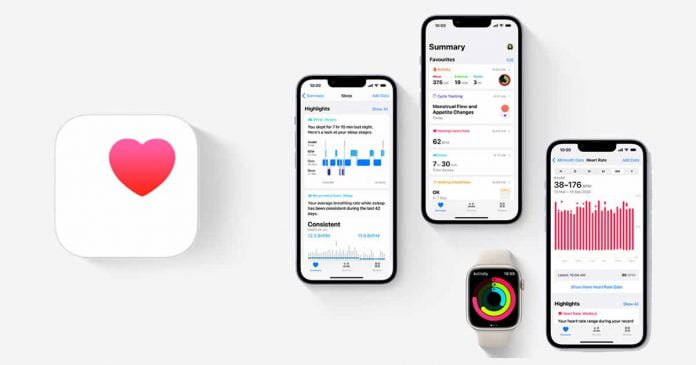
Apple Health app

Apple is a company that has long been invested in the health and wellness space. With the release of iOS 17, the tech giant is planning to take things to the next level. 

According to a new Bloomberg report, Apple is working on AI-powered health coaches and mood-tracking tools. Additionally, the Health app may finally be available for the iPad.

Mark Gurman, a well-known leaker, has revealed that Apple is working on an internal effort to enhance its health offerings. The coaching service, codenamed “Quartz,” is designed to help people use their Apple Watch to improve their sleep, exercise, and eating habits. The service is expected to be tailored to each individual’s needs and preferences, offering personalized coaching programs.

The Health app, which has been available on iPhones for some time, may finally be coming to the iPad with the release of iPadOS 17. This move is expected to attract healthcare professionals who use iPads for work. The effort is being led by several divisions within Apple, including the services division, health, Siri, and AI teams.

New features in the Health app are also in the works, including tools to track emotions and eye problems. The Emotion Tracker, for example, will allow users to record their moods, answer daily questions, and compare their results over time. In the future, Apple plans to have algorithms built into the iPhone to infer a user’s mood from their speech, typing, and other data stored on their device.

The rumoured Apple headset may also come with health-related features, such as meditation aids and a version of the Fitness+ workout program. Apple is also reportedly working on adding more advanced health features, such as blood pressure monitoring and non-invasive glucose monitoring, to the Apple Watch. These features will help Apple Watch owners better understand their physical health.

Overall, it’s clear that Apple is taking health and wellness seriously. With the release of iOS 17 and the Health app’s potential availability on the iPad, the company is poised to expand its offerings in this space. The AI-powered health coaches and mood-tracking tools, along with the other features in the works, have the potential to be transformative for users looking to improve their health and well-being.

Microsoft Edge Browser URL Leak Raises Privacy Concerns

Microsoft Edge has recently come under scrutiny as users discovered that the browser sends the URLs of the websites they visit the Bing API website. This was first noticed by Reddit users who found that the latest version of the Edge browser was sending requests to “bingapis.com” with the full URL of almost every page visited by the user.

Many users are now left trying to figure out why their online movements are being tracked, and it seems that the issue may stem from a feature called Creator Subscription. This feature allows users to follow their favourite creators on YouTube and social media and receive notifications when latest content is available. However, security experts have discovered that URLs are no longer sent to “bingapis.com” after disabling this feature.

Raphael River, a programmer and one of the developers of the EarTrumpet app for Windows 10, shed some light on the situation, stating, “Microsoft Edge now has a subscription to authors feature, which is enabled by default. The feature seems to notify Bing when the user is on certain pages, such as YouTube, The Verge, or Reddit. But the feature doesn’t seem to work correctly, instead sending almost every domain you visit to Bing.”

Although Microsoft has not yet explained why the list of visited websites is sent to “bingapis.com,” the company has issued a statement saying, “We are aware of incoming messages. We are investigating and will take appropriate action to resolve any issues.” It is believed that this issue may simply be due to a configuration error.

Cybersecurity experts advise temporarily removing the subscription to creators function until Microsoft works out how to implement it appropriately. This may be accomplished by putting “creators” into the search bar and disabling the appropriate item in the Edge browser settings.

This incident highlights the importance of privacy and data protection, especially as more and more users rely on technology for their daily activities. Tech companies must prioritize user privacy and take appropriate measures to protect their users’ personal information.

Google Authenticator Cloud Sync Feature Lacks End-to-End Encryption

Google Authenticator Cloud Sync

Google has launched a new feature to its Google Authenticator app called Cloud Sync, which allows users to sync their two-factor authentication (2FA) tokens across various devices. While this was a much-anticipated innovation, it lacks end-to-end encryption (E2EE), leaving users susceptible to possible security breaches.

Mysk security researcher discovered that Google Authenticator information was not end-to-end encrypted when syncing between devices, making it easy for attackers to access this information and control the 2FA code. Additionally, QR codes for 2FA usually contain other information, such as account name and service name, which Google can see, potentially using this information for personalized advertising.

However, Google has acknowledged users’ concerns and stated that it would add E2EE to future versions of Google Authenticator. Google Group Product Manager Christiaan Brand said they are careful to roll out this feature in their products, as E2EE can lock users out of their data.

While Google Authenticator encrypts data in transit and at rest, users should be cautious when using the sync feature and consider using the app without signing in or syncing secrets. Additionally, Google already offers E2EE in some services, such as Google Chrome, where users can set a passphrase to encrypt data synced with their Google account.

The convenience of syncing 2FA codes across devices comes at the cost of privacy, but Google is taking steps to address this issue and prioritize user security and safety. Users need to stay informed about the security features of their online accounts and take necessary precautions to protect their personal information.

Microsoft Consolidates Cloud Services into a Single New Domain

Microsoft Cloud Services Domain

Microsoft has announced its plans to migrate Microsoft 365 cloud services for documents and communications to a new cloud.microsoft domain. 

The move aims to combine all of the company’s office solutions and greatly simplify access to the suite of office applications and related products. The new system will allow users to use URLs such as outlook.cloud.microsoft and teams.cloud.microsoft to access the app they want, making it easier for users to access the needed services.

Currently, Microsoft’s Office apps are spread across various domains, making it difficult for users to locate specific services unless they have memorized or bookmarked them. By migrating to a single domain, Microsoft aims to streamline the user experience by reducing the number of login requests, redirects, and delays when navigating through applications.

Consolidating all services and applications into one domain will replace domains such as .sharpoint.com, .microsoft.com, .office.com, and many more. This transition is expected to significantly improve the user experience, making it easier for users to access the services they need.

However, there is a catch. Users should not expect to be able to use .cloud.microsoft right away, as only new applications will work on it initially. Existing services will be gradually moved to the new domain over time. Microsoft has not yet given an exact date for the transition.

GM Partners with Samsung to Invest $3 Billion to Build Battery Cell Plant for EVs

GM Partners with Samsung

General Motors (GM) and Samsung SDI, the South Korean battery maker, have announced a partnership to construct a battery cell manufacturing plant in the United States. The $3 billion investment will contribute to more than 30 GWh production and bring GM’s total production capacity in the US to about 160 GWh.

GM’s partnership with LG for most of its battery cell supply has brought three battery plants into production and construction in Ohio, Tennessee, and Michigan. The two companies had been negotiating a fourth US battery plant, but talks stalled, leading GM to partner with Samsung SDI instead.

Interestingly, the new battery plant will produce “nickel-rich prismatic and cylindrical cells.” This partnership will enable GM to integrate cells directly into battery packs and reduce weight, complexity, and cost. Recently Samsung announced its plans to integrate EV battery tech into future Samsung flagship smartphones.

GM’s Executive Vice President, Doug Parks, stated that this partnership with Samsung SDI would allow the company to scale up production and optimize pouch cell chemistries for performance, range, and cost. He also added that having multiple strong cell partners would enable GM to grow its electric vehicle business faster than it could do alone.

The partnership’s battery production plant’s location is yet to be announced, and operations are set to begin in 2026. GM’s partnership with Samsung SDI to construct a battery cell manufacturing plant for EVs is a significant change for the automaker, which has been heavily investing in battery manufacturing in the US to support the transition to electric vehicles.

Opera Introduced Opera One Browser with Contextual Tab Grouping and Focused on AI

Opera One

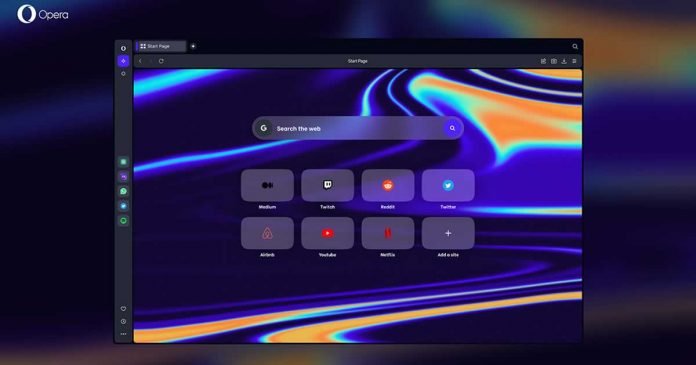
Opera has announced the release of its new browser, Opera One, which is set to replace its current default browser. According to the developers, Opera One comes with elements that make it ready for a “generative future based on artificial intelligence.” While the exact meaning of this statement remains unclear, the browser’s innovative features are already turning heads.

One of the most significant changes in Opera One is the modified concept of grouping tabs called “Tab Islands.” This feature automatically groups open tabs based on their context, making it easier for users to manage their browsing experience. For example, when a user is looking for a place to have dinner, the browser will group different catering establishment tabs together. Similarly, when interacting with different Google documents, the tabs will be combined to make it easier for the user to work with them.

Each group of tabs is marked with a vertical bar of a particular colour, and users can expand or collapse a group with just one click. When collapsed, each group of tabs is complemented by hints, making it easy for users to find their desired island of tabs. Opera has noted that the new approach to grouping tabs is “a natural way to organize tabs into contextual groups.”

Another notable feature of Opera One is the browser’s new engine, which provides smooth rendering of complex web animations using the device’s graphics accelerator. This improves performance when interacting with tab groups and other features appearing in the new browser later.

While Opera has remained tight-lipped about the browser’s AI-focused features, it has been revealed that Opera One will receive integration with ChatGPT and ChatSonic. These AI-powered chatbots can assist users with various tasks, including answering questions and generating creative prompts, just like Bing AI chatbot in Edge browser.

Opera One also boasts a modular architecture that automatically adjusts elements when new features are added to the sidebar or when new tabs are opened. The sidebar includes workspaces, multiplayer with built-in widgets for popular music streaming services, and a block with messaging apps such as WhatsApp and Telegram. The generative AI block, which includes ChatGPT, AI Prompts, and ChatSonic, is also available in the sidebar.

Opera One is already available in a preview version for developers, and the final release is scheduled for later this year. With its innovative features and AI integration, Opera One promises to be a game-changer in browsing.

UK Regulator Halt Microsoft’s Acquisition of Activision Blizzard Over Cloud Gaming Concerns

Microsoft Buys Activision Blizzard

The Competition and Markets Authority (CMA) of the United Kingdom has reaffirmed its intention to halt Microsoft’s large acquisition of Activision Blizzard, citing worries about the impact on competition in the cloud gaming sector. Microsoft would become the world’s third-largest gaming firm, with direct control over major games like Call of Duty and World of Warcraft.

The CMA has been investigating the merger since July 2021 and has expressed concerns about higher prices, less choice, and less innovation for UK gamers. In its latest statement, the CMA concluded that acquiring Activision’s gaming portfolio would “significantly reduce competition” in the cloud gaming market and that Microsoft would be incentivised to withhold games from competing platforms.

The CMA also noted that Microsoft’s proposed remedy for the situation did not address various areas, including the business models of various cloud game services and providers who wanted to offer games on non-Windows operating systems.

The acquisition has also drawn criticism in other regions of the world. The US Federal Trade Commission (FTC) has filed a lawsuit to block the acquisition. Still, Microsoft recently won another private antitrust lawsuit filed by a gamer to be dismissed. In Europe, a detailed investigation has been under consideration for some time, and early reports suggest that Europe may allow the deal after Microsoft offers further relief.

However, the UK’s decision to block the merger sets a precedent for the future, and Microsoft has contested the decision, saying it would “disrupt investment, competition and job creation across the UK gaming industry.” Microsoft’s vice chairman and president Brad Smith also wrote on Twitter that the decision “appears to reflect a flawed understanding of how this market and related cloud technologies actually work.”

The UK’s decision to block Microsoft’s acquisition of Activision Blizzard highlights the importance of competition and innovation in the cloud gaming market. The CMA’s worries about the impact on competition and choice for UK gamers must be taken seriously. How Microsoft will respond to the ruling and the consequences for the gaming industry’s future remains to be seen.