Home Blog Page 109

Microsoft Acquires Fungible to Boost Data Center Efficiency and Performance

Microsoft Acquires Fungible

Microsoft has announced its acquisition of Fungible, a California-based company specialising in developing various forms of hardware and software to improve data centre efficiency. 

This move demonstrates Microsoft’s commitment to innovative data centres. The company has not only opened new data centres around the world recently but has also released tools such as System Center 2022 to further improve the data centre management experience.

Fungible developed the Data Processing Unit (DPU) in 2016 with the goal of improving the computational efficiency of data-centric operations within server nodes in scale-out data centres. Microsoft believes that the improvements made by Fungible through the development of the DPU will allow the company’s team, along with Microsoft’s own infrastructure engineering team, to innovate data centre infrastructure and ensure improved network and storage performance.

In a press release, the Fungible team expressed their hopes regarding the acquisition, stating that they are “proud to be part of a company that shares Fungible’s vision and will leverage the Fungible DPU and software to enhance its storage and networking offerings.” They also thanked their employees, customers, partners, and investors for their support.

Security, reliability, and scalability will continue to be key focuses as Microsoft adds to its long-term data centre innovation-focused investment portfolio. By acquiring Fungible and its innovative technologies, Microsoft is positioning itself to further improve the efficiency and performance of its data centres, ensuring that it can meet the growing demand for data storage and processing.

Intel Releases the 4th Generation Xeon CPU “Sapphire Rapids” and GPU “Ponte Vecchio Max” Series

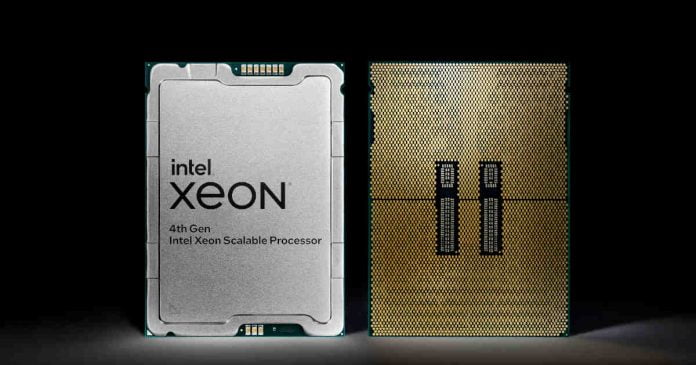
4th Generation Xeon CPU Sapphire Rapids

Intel has officially unveiled its 4th Gen Xeon Scalable Sapphire Rapids CPUs and Ponte Vecchio Max series GPUs for data centres. This new portfolio of 52 CPUs will compete with AMD’s EPYC Genoa line, which launched last year. Intel will also launch the final product line of its Optane persistent memory DIMMs.

AMD’s chips currently have up to 96 cores per chip, whereas Intel’s Sapphire Rapids chips have up to 60 cores, which is 50% more than the 3rd Gen 40 cores Ice Lake Xeon. Intel claims this will improve the overall computing performance by 53% compared to the previous generation chip, but no direct comparison was made with AMD chips at launch.

Sapphire Rapids is taking a big step forward with new acceleration technology. These dedicated accelerator regions are designed to significantly improve performance for tasks requiring separate accelerators, such as compression, encryption, data movement, and data analytics.

AMD leads in core count, but Genoa processors don’t have the same acceleration characteristics. With the new accelerator, Intel claims to improve 2.9x average performance per watt over the previous generation model. It also promises a 10x improvement in AI training and inference and a 3x improvement in data analytics workloads.

Built using the Intel 7 process, Intel Sapphire Rapids also supports new connectivity technologies such as PCIe 5.0, DDR5 memory, and CXL 1.1 interfaces (Type 1 and Type 2 devices). The new processors also support AVX-512, Deep Leaning Boost (DLBoost), and new Advanced Matrix Extensions (AMX) instructions that use a new two-dimensional register set called tiles to improve the efficiency of AI work.

The new processors are divided into “performance” and “mainstream” dual-socket chips for general-purpose models and speciality models for systems such as liquid cooling, single-socket, networking, cloud, HPC and storage/HCI. As a result, there are specialized chips for almost every workload, but with a complex lineup.

Sapphire Rapids chips have several active accelerator devices and different numbers of the accelerator “devices” available, resulting in different performances. A new pay-as-you-go mechanism called Intel On-Demand lets you enable acceleration later.

Traditionally, Intel’s 4th Gen Xeon Scalable platform supports 1, 2, 4 and 8 socket configurations, while rival AMD’s Genoa can only scale to 2 sockets. However, AMD offers more PCIe connectivity options with up to 128 lanes of PCIe 5.0 connectivity compared to Sapphire Rapids’ 80 lanes of PCIe 5.0 connectivity. Sapphire Rapids supports up to 1.5 TB of DDR5-4800 memory with 8 channels per socket, while AMD’s Genoa supports up to 6 TB of DDR5-4800 memory with 12 channels per socket.

Despite limitations with PCIe connectivity, Intel’s Sapphire Rapids processors offer a variety of features designed to boost performance in specific workloads. For example, new acceleration technologies are specifically designed to improve the performance of tasks such as compression, encryption, data movement, and data analysis. This can greatly benefit businesses that rely on these types of workloads, as it can lead to significant performance improvements and cost savings.

Another benefit of Sapphire Rapids is support for new connectivity technologies such as PCIe 5.0, DDR5 memory and CXL 1.1 interfaces. These technologies are designed to improve data transfer speeds and overall system performance, making the processors well-suited for demanding workloads such as high-performance computing, artificial intelligence, and machine learning.

Sapphire Rapids also has new Advanced Matrix Extensions (AMX) instructions to make your AI work more efficiently. A new set of two-dimensional records called tiles can dramatically improve load performance. AMX implementations are primarily used to improve the performance of AI inference and training operations.

In conclusion, Intel Sapphire Rapids processors offer a range of features designed to improve performance on specific workloads. New acceleration technologies, support for new connectivity technologies, and AMX instructions greatly benefit businesses that rely on these workloads. Furthermore, the processor’s scalability and customization make it suitable for a wide range of business requirements. AMD leads in core count, but Intel’s technology can provide better performance for certain workloads.

Cybersecurity Researchers Discover Flaws in Telematics Systems of Popular Car Brands, Including Ferrari, Mercedes-Benz, and BMW

Flaws in Telematics Systems of Popular Car

Ferrari owners, beware: you may not be the only one with control over your luxury car. Cybersecurity researchers have discovered vulnerabilities in the telematics systems of multiple popular car brands, including Mercedes-Benz, BMW, Rolls Royce, Ferrari, Ford, Porsche, Toyota, Jaguar, and Land Rover, as well as fleet management company Spireon. These vulnerabilities could potentially allow attackers to control the affected vehicles completely.

Spireon, which owns many GPS car tracking and fleet management brands and covers 15 million linked vehicles, was discovered to have multiple problems in its system, including SQL injection and RCE authentication bypass vulnerabilities that may give attackers complete access to any vehicle. 

These flaws could potentially give hackers access to the administration panel of the entire Spireon company, allowing them to send arbitrary commands to all 15 million cars, such as opening doors, activating the horn, starting the engine, and disabling starters. This could be particularly dangerous if attackers could disable the starters of emergency vehicles, police cars, ambulances, and law enforcement vehicles in major cities.

Ferrari’s systems were found to have exposed JavaScript code to several internal applications, which contained API keys and credentials that could allow attackers to take over or delete their accounts. It was also possible to set superuser rights or become the owner of a Ferrari through a POST request. The lack of access control in these systems could also allow cyber criminals to create and delete employee back-office administrator accounts and modify websites owned by Ferrari, including its CMS system.

BMW and Rolls Royce were found to have a misconfigured single sign-on (SSO) system that allowed hackers to access the internal dealer portal, request a VIN, and obtain all documents for the sale of a car. A misconfigured SSO system at Mercedes-Benz allowed researchers to create a user account on a car service site and request tools and parts. They could also access Mercedes GitHub, which held internal documentation and source code for different firm initiatives, including the Me Connect app, which consumers use to remotely connect to their automobiles. Hackers could even infiltrate the Slack communication channel and impersonate a company employee, using social engineering to increase their privileges in the Mercedes-Benz infrastructure.

Vulnerabilities in Porsche and Toyota systems allowed for the remote location and sending of commands to Porsche vehicles and the discovery of the name, phone number, email address, and credit status of Toyota Motor Credit customers.

Fortunately, these vulnerabilities have been reported to the affected automakers and have since been corrected. However, this serves as a reminder of the importance of regularly updating and patching telematics systems to ensure the safety and security of connected vehicles.

Disney and Amazon Unveil “Hey Disney”: A Voice Assistant for Entertainment and Practicality

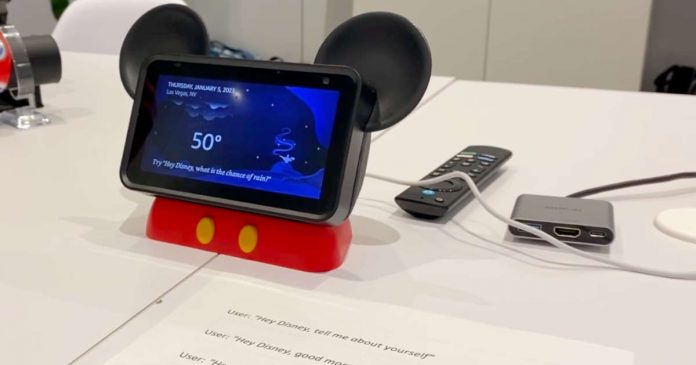
Hey Disney voice assistant

Amazon and Disney announced a new voice assistant called Hey Disney at CES 2023. The voice assistant will give users access to a wide range of Disney entertainment options through Echo devices at home and as a free service at select Disney Resort hotels.

To develop this experience, Disney used Alexa Unique Assistant, a speech-based artificial intelligence framework that allows to quickly build their own voice assistant that coexists with Alexa. The Hey Disney service will be available for sale in the US soon and will be included in an Amazon Kids + subscription.

Hey Disney is the voice of a new voice assistant called “Disney’s Magical Companion,” based on Alexa Custom Assistant. The service will be available in selected Disney Resort hotels, where it will coexist with Alexa.

Hey Disney can provide parking information in these hotels or turn the MagicBand+ into a game show-style buzzer with light and vibration effects. Hey Disney will also be available in US homes, where it can be activated by saying “Hey Disney” to an Echo speaker. When activated, Hey Disney will provide access to over 20 Disney, Pixar, or Star Wars characters, who can tell jokes, play quizzes, give the weather forecast, or play background sounds from films.

Hey Disney will also focus on storytelling, with the company’s team working on an introduction to the service that will provide hints on how to best access various functions. Hey Disney is designed to allow users to continue a storyline with a character when they return home from a vacation or return to their hotel room at the end of the day.

The first, Hey Disney devices, have already been installed in some rooms of Disney’s Polynesian Village Resort and will be available in the Alexa Skills Store in the US. It is currently unclear if Hey Disney will be available in other countries.

In addition to providing entertainment and storytelling options, Hey Disney is also designed to help users make the most of their vacations by providing helpful information and assistance. For example, Hey Disney can provide information about park hours, dining options, and attraction wait times. It can also help users make reservations for dining or activities and provide directions to various locations within the resort.

Hey Disney is just one of the many voice assistants currently available on the market, but it offers a unique combination of entertainment and practicality. By leveraging the popularity of Disney characters and storylines, Hey Disney is likely to appeal to a wide range of users, including children and adults.

It remains to be seen whether Hey Disney will be successful in the US and whether it will be expanded to other countries. Still, it is certainly an interesting development in the world of voice assistants.

Qualcomm Unveils Concept Car Featuring Snapdragon Ride Flex

Snapdragon Ride Flex

Qualcomm has demonstrated its technology’s potential in the automotive industry with the unveiling of a “concept car” at a recent event. The car, which is not intended for sale to the public, is based on Qualcomm’s Snapdragon Ride Flex platform, which is specialized in advanced driving assistance systems and even some autonomous driving capabilities. The platform is used in conjunction with the Snapdragon Cockpit, which handles the infotainment system and integrates 5G connectivity.

The objective of the Flex platform is to create a more centralized architecture for all aspects of driving, replacing the systems currently dispersed throughout the vehicle. This will allow manufacturers to offer a highly personalized experience to drivers using data in the cloud and artificial intelligence. 

To demonstrate the platform’s capabilities, Qualcomm’s concept car includes facial recognition, which can detect each occupant and adjust preferences such as seat position and climate control, as well as personalized content on the screens. The car also has “audio zones” with noise and echo cancellation for each seat, allowing each person to hear what they want.

Qualcomm Snapdragon Ride Flex

In addition to these features, the concept car also has a giant three-part screen that spans the entire width of the dashboard and can be used for gaming, streaming, and making video calls. Qualcomm has stated that the screen is unnecessary, as the car can be controlled using voice control with the assistance of Soundhound. 

While Qualcomm’s concept car will not be sold to the public, the company’s first-generation Snapdragon Ride is already being used in some models from manufacturers such as Cadillac.

The launch of Qualcomm’s concept car provides a view into the automotive industry’s future, where technology firms like Qualcomm will play a critical role in designing electric automobiles that satisfy the demands of current drivers. Incorporating advanced driving assistance systems and even some autonomous driving capabilities will make driving safer and more convenient for drivers. Using data in the cloud and artificial intelligence will also allow for a highly personalized experience for each driver, with features such as facial recognition and personalized screen content.

While Qualcomm’s concept car may not be hitting the market anytime soon, we will likely see these technologies applied to future models from various manufacturers. The potential for technology brands like Qualcomm to transform the automotive industry is immense, and it will be interesting to see how they continue to innovate and shape the future of transportation.

NVIDIA to Release AI-Optimized Driver with Up to 30% Performance Boost

Nvidia news and stories

NVIDIA, as a major GPU manufacturer, is always seeking methods to increase the performance of its graphics cards. According to recent reports, the company may be working on a new driver that uses artificial intelligence to optimize graphics card performance by up to 30%.

The news was shared by frame rate analysis software company CapFrameX, which stated that NVIDIA is integrating AI into its display driver optimization process to optimize “instructions, throughput, hardware utilization, threading, and settings.” While the average performance improvement is expected to be around 10%, some games may see even greater increases in performance.

It’s worth noting that these reports are unconfirmed at the moment, but it wouldn’t be surprising if NVIDIA was using AI to optimize its drivers. The company has recently been at the forefront of AI technology and has deployed it in various applications. If the reports are true, NVIDIA could have a significant advantage over its competitors, such as Intel and AMD, in driver optimization.

While the release date for this AI-optimized driver is not yet known, it is expected to be released in the first quarter of this year. This could be a game-changer for gamers and graphics professionals who rely on high-performance graphics cards to run their applications.

Overall, the news of an AI-optimized driver from NVIDIA is exciting and has the potential to significantly boost graphics card performance. Whether or not the reports turn out to be true remains to be seen, but it’s clear that NVIDIA is always looking for ways to improve its products and stay ahead of the competition.

Project Leonardo: Sony Introduces a Game Controller for People with Disabilities

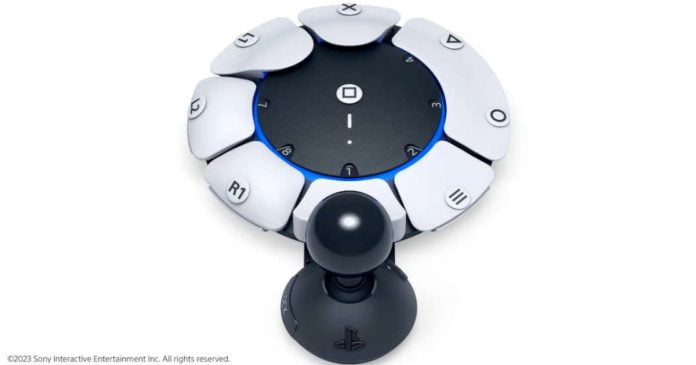
Project Leonardo

Sony Interactive Entertainment has unveiled Project Leonardo, a game controller designed for people with disabilities, at CES 2023. 

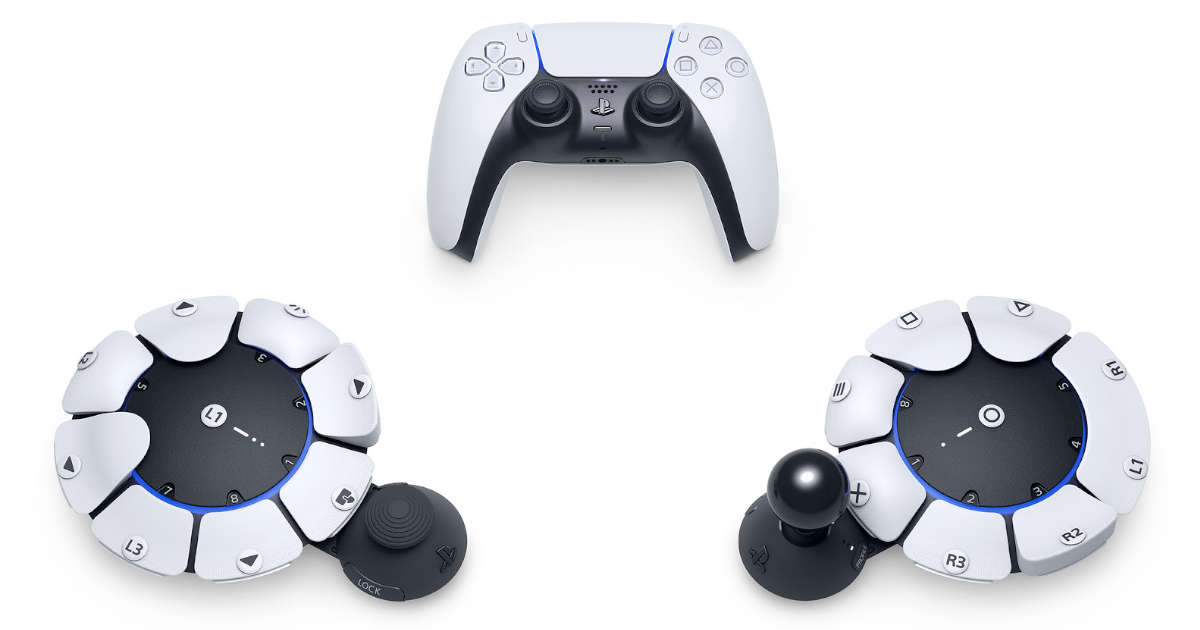
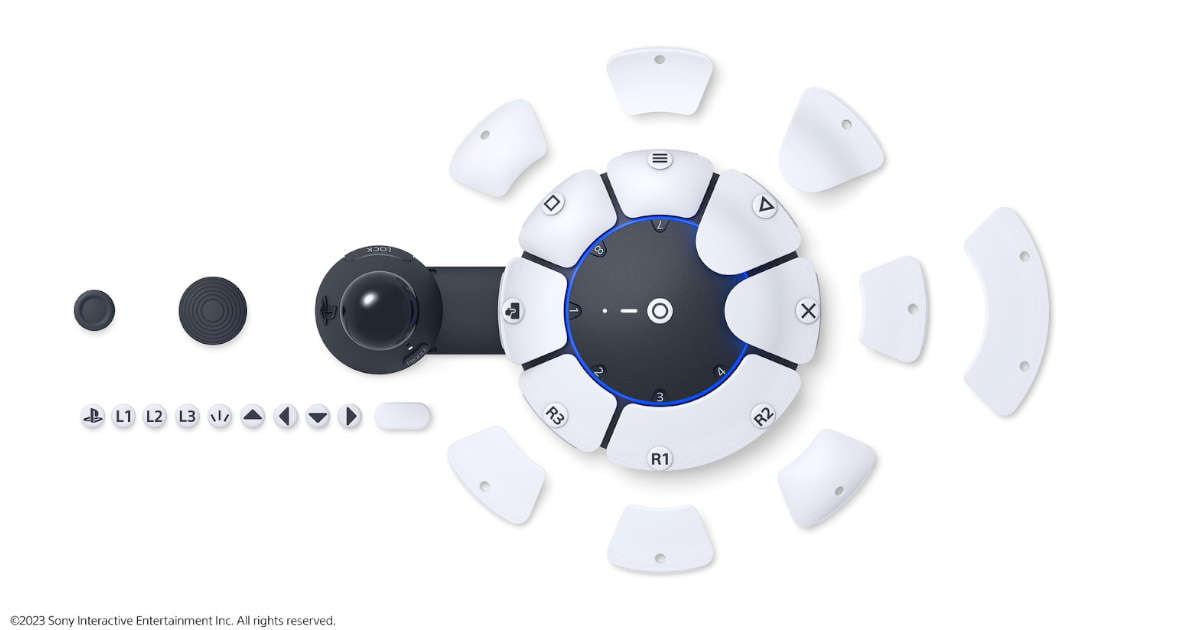
The new device consists of two circle-shaped parts, each with a joystick and a set of oversized buttons. Project Leonardo can be used immediately or customized to the individual needs of a gamer using interchangeable components and software functions.

At CES 2023, Sony presented Project Leonardo’s prototype, designed for maximum configurability. Players can exchange key caps, assign them freely, and have multiple functions on one key. The controller can be used with the DualSense standard controller of the PlayStation 5 or with additional external accessories connected through 3.5 mm jacks. The connected input devices can also be switched on and off dynamically.

Sony Project Leonardo Prototype

Project Leonardo is an important development for the gaming industry, as it allows for greater accessibility for players with disabilities. Because the controller’s components are configurable and replaceable, it can be adjusted to the unique demands of different players, making it simpler for them to enjoy video games.

Sony has a reputation for making their games accessible, with features like detailed targeting and visual assistance, switchable audio, and directional aids in games like The Last of Us and God of War. Project Leonardo differs from the Xbox Adaptive Controller, which was released by Microsoft in 2018 and featured very large control elements and the ability to connect additional peripheral devices through 19 connections.

Sony Project Leonardo

Sony has not yet announced a release date or price for Project Leonardo. The company is still working on the hardware and is seeking suggestions and feedback.

Overall, Sony’s commitment to accessibility and innovation in the gaming industry is demonstrated through the development of Project Leonardo and its exploration of cloud gaming. These advancements can potentially make video games more accessible and enjoyable for a wider audience.

MKBHD Explains Why iPhone Cameras May be Getting Worse with Each New Model

MKBHD Explains Why iPhone Cameras May be Getting Worse

Tech vlogger Marques Brownlee, also known as MKBHD, has released a video explaining why he believes iPhone cameras are getting worse yearly.

According to Brownlee, the quality of a photo is largely determined by the sensor, which captures light and details from the environment. However, the sensors in smartphones, including the iPhone, are much smaller than those in SLR cameras due to the size constraints of the devices. To compensate for this, manufacturers rely on post-processing to improve the quality of the photos.

The iPhone uses a technology called Smart HDR, which combines multiple photos in an attempt to improve the overall quality. However, this can sometimes result in unrealistic photos, particularly in complex scenes with differing textures and colours. In these situations, the iPhone may struggle to apply the appropriate settings, resulting in “artificial” looking photos. Brownlee also pointed out that the iPhone tends to exaggerate the sharpness of images compared to its competitors.

These issues are particularly evident when comparing the iPhone’s camera performance to other smartphones in challenging conditions. In last year’s annual smartphone camera blind test run by MKBHD, the ultra-cheap Pixel 6a‘s camera outperformed the more expensive iPhone 14 Pro.

While it is not uncommon for smartphone manufacturers to rely on post-processing to improve the quality of their photos, the iPhone seems to struggle more than others in this regard. This is likely due to the small size of its sensors and the limitations that come with it. It remains to be seen if Apple can address these issues and improve the performance of its cameras in future models.