Home Blog Page 110

How to bring your offshore software development in-house?

Create a Business Name
Photo by Jason Goodman on Unsplash

Over the past decade, offshore software development has become a popular option for businesses. It offers a way to get high-quality software at a fraction of the cost of hiring developers in-house. However, there are some risks associated with this type of arrangement that businesses need to be aware of. In this blog post, we will discuss how to bring your offshore software development in-house and avoid these risks. 

How to Choose The Right Team for Your In-house Project

There are a few things to consider when choosing the right team for your in-house project. 

  • First, you need to decide what size team you need. This will depend on the scope of the project and the timeline. If you have a small project with a tight deadline, you may only need a few developers. However, if you have a large project that will take several months to complete, you may need a team of 20 or more developers. 
  • Second, you need to consider the skill set of the teamOffshore software development centers typically have a wide range of skillsets available, so you can find a team that has the perfect mix of skills for your project. 
  • Finally, you need to consider the cost. Offshore development centers typically charge by the hour, so you need to get a quote from several different providers before making a decision.

Steps on How to Bring Offshore Software Development In-house

1. Find the right developers

The first step in bringing your offshore software development in-house is to find the right developers. You need to find developers who have the skills and experience necessary to meet your specific needs. In addition, you need to find developers who are willing to work in an environment that is unfamiliar to them.

2. Create a development plan

The development plan should include the specific goals you want to achieve and the timeline for achieving them. It should also include a budget for the project. Once you have created a development plan, you need to find a way to monitor the progress of the project. This can be done by using a project management tool or by hiring a project manager.

3. Communicate with your team

In this case, communication should be clear and concise. You need to let your team know what you expect from them and how they can help you achieve your goals. In addition, you need to provide feedback on their progress.

4. Monitor the project progress

The fourth and final step is to monitor the progress of the project. This can be done by using a project management tool or by hiring a project manager. It is important to keep track of the project’s progress so that you can make changes as necessary.

5. Make sure you are happy with the results.

The fifth step is to make sure you are happy with the results. This means that you need to test the software before it is released. You also need to be sure that the developers have followed your development plan. If you are not happy with the results, you should consider hiring a new team of developers.

Bringing your offshore software development in-house can be a challenge, but it is possible. By following these steps, you can avoid the risks associated with this type of arrangement. You can also ensure that you are getting the high-quality software you need at a price you can afford. 

Common challenges when bringing your offshore software development in-house

1. Lack of understanding of the process

One of the biggest challenges businesses face when bringing their offshore software development in-house is a lack of understanding of the process. This can lead to unrealistic expectations and a feeling of being “ripped off” when things don’t go as planned. It’s important to remember that offshore software development is a complex process, and there will always be some degree of risk involved.

To avoid this, businesses must do their research and take the time to understand how offshore software development works before making the decision to bring it in-house. This will help ensure that they have realistic expectations and are prepared for any challenges that may arise.

Additionally, businesses should consider working with an experienced offshore software development partner that can help them navigate the process and avoid common pitfalls.

2. Managing Expectations

Another challenge is managing expectations. Offshore software development is a complex process, and there will always be some degree of risk involved. It’s important to set realistic expectations with your team and your offshore partner to avoid disappointment later on.

3. High cost

Finally, you need to consider the cost. Offshore developers are often cheaper than hiring in-house staff, but you need to factor in the cost of setting up and maintaining communication channels, as well as any travel costs associated with meeting face-to-face.

Conclusion

Overall, bringing your offshore software development in-house can be a great way to get high-quality software at a lower cost. However, it’s important to do your research and understand the process before making a decision. You should also consider working with an experienced offshore partner to help you navigate the challenges involved.

WhatsApp Introduces Support for Proxy Servers to Bypass Geo-Blocking and Censorship

Connect to WhatsApp

WhatsApp, the popular messaging application with over 2 billion daily users, has introduced a new feature that allows users to connect to the messenger through a proxy server.

This is especially useful for users in countries where WhatsApp is restricted or blocked and in situations with connection failures. The feature, which can be found in the “Data and storage” section under “Proxy,” allows users to enter a proxy address and connect to WhatsApp.

The feature is available on both iOS and Android systems, and developers have stated that connecting through a proxy will not affect the privacy and security measures already in place, such as end-to-end encryption. However, it is worth noting that the IP address may be available to the proxy provider, not WhatsApp.

Proxy servers have long been a tool for bypassing internet censorship, and WhatsApp’s introduction of this feature will allow users in restricted countries to access the messenger. However, users need to find a reliable proxy server, as not all proxies may work, and some may even pose a security risk. WhatsApp has stated that a proxy should only be necessary if a direct connection to WhatsApp servers is impossible.

It is worth noting that while proxy servers can be a useful tool for bypassing geo-blocking and censorship, they may not be the most secure option. VPNs (Virtual Private Networks) are often a more secure choice, as they encrypt the user’s internet connection and protect their privacy. However, VPNs may not always be an option in restricted countries where proxy servers can be useful.

Twitter Hit With Massive Data Breach Affecting Over 200 Million Users

Twitter Safety Mode

Twitter has been hit with one of the largest data breaches in history, with the email addresses of more than 200 million users being leaked online.

The number of affected users is unclear, with some estimates putting the figure at 235 million. The data breach is believed to have occurred in late 2021, and the information is now being sold on hacker websites.

The hackers are reportedly targeting popular users, accounts related to cryptocurrency, and accounts with attractive usernames that can be monetized. The leak is expected to increase account hacking and phishing scams, as well as the exposure of personal information. Twitter has yet to officially comment on the breach.

The data leak was discovered by Israeli cybersecurity firm Hudson Rock, which found that an attacker was selling the data of 400 million Twitter users. The private database includes detailed information such as high-profile Twitter users’ email addresses and phone numbers. The hackers are reportedly selling email address information for $2. The data was published as a 59 GB archive comprising six text files containing the email address, name, alias, number of followers, and account creation date for each Twitter user.

Twitter has yet to release an official statement on the data breach. The social media giant has faced criticism for handling user data in the past. It remains to be seen how the company will address this latest breach and protect the personal data of its users.

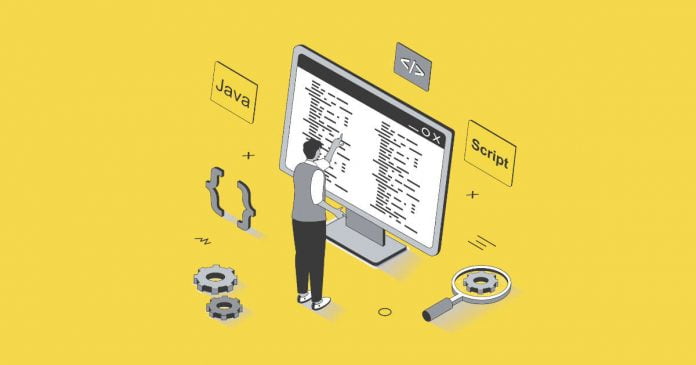
Can Java be Used for Automation?

Java Automation

The java programming language is an open-source framework, this framework is used for creating and running automated tests. The java Automation technique deals with that code which can be used to control the execution of specific user interface operations in the java programming language. 

So we can clearly understand that java can be used for automation, so today in this article we will learn how we can use java for automation with the help of specific points and examples in this article.

Scope of the article

  • In this article, we will learn how and why we should use the java language for automation testing.
  • We will learn about the different techniques for automating a java application.
  • We will learn about the main sources of errors that are decided to streamline or otherwise improve the three key areas.

Introduction

We know that java is widely used by us for many years and now there are many readily available frameworks, plugins, APIS, and libraries present there which support java for automation. The java virtual machine(JVM) is used to make the java language a platform-independent language. 

We can run the java program on any machine where the JVM is installed in the operating system. To make benefit from these functionalities we need to specify the type of application in java while launching the application modeler wizard. Java testing offers a more comprehensive package and it is a useful test case that helps to take care of every element of the application. This is why we use java for automation.

Now let us read about the different approaches which can be used for automation in java:

Different ways of automation in java:

Three ways can be used for automation in java. They are:

  • We can use the robot class to automate in java
  • We can use the reflection to launch the application
  • We can inject our code into another application for java automation.

Now that we know that all these three processes are used for java automation, so let us see now learn about each of these methods in detail:

How we can use the robot class to automate in java

Since we know that robot is one of the classes which is provided by the Java programming language to simulate mouse click/keyboard events. We can use this in any class to automate not only Java but any application.

Lets us read more about the automation possible scenarios using the robot class technique in java:

  • We know that the screen resolution is the same across all the desktops.
  • In this process, each application opens with a fixed width and height or the application opens in maximized state.
  • The user should not perform any other operation while the automation is running.

Now let us read about the advantages and disadvantages of this process:

Advantages

  • This process performs a mouse click at the specified location.
  • In this process, we can assume that the focus is already present in the required field.

Now let us read about the disadvantages of this process:

Disadvantages

  • When the application is moved to the screen then this cannot method cannot be used.
  • The user needs to wait till the operation is completed.
  • Retrieving values from any field is not possible in this process.

Now the next process is:

Using Reflection

The reflection process in java is used to inspect and change the behavior of a program at the time of execution of the program. This is used to manipulate how the java applications are executed using the JVM. Using reflection API, we can inspect classes, constructors, modifiers, fields, methods, and interfaces at runtime. 

The Java programming language provides us with a feature called Reflection which allows us to modify the runtime behavior of a class or field or method at runtime. Hence we can say that reflection can be defined as a technique of inspecting and modifying the runtime behavior of an unknown object at run time. An object can either be a class or a field or a method.

Now let us read about the automation possible scenarios of this automation process:

How we can use reflection to automate java

We can run a simple command which is java –jar UIApplication.jar while running heavy and thick applications in java. With the reflection API in java, we can implement the reflection on the entities like the field, class, constructor, and modifier. The Applet applications with the help of a simple tag <Applet class=” my.applet.example.ClassName” width=”500” height==”300” /> can be automated. If the applet tag is generated using the JSP or if it is retrieved from the application server after a few steps then it becomes difficult.

Now let us read about the advantages and disadvantages of this method of automation:

Advantages of this process

  • In this process background processing is possible.
  • We do not need to depend on the screen resolution/position of the application on the screen.
  • We can Retrieve values from specified objects in this process which were not possible in the robot class process.

Disadvantages of this process

  • In this process, the applets cannot be automated.
  • The jar files wrapped as exe cannot be automated using this process.
  • In this process, the thick client apps with complex launching logic will be difficult to automate.

Now let us read about the third method and the last method of automation in java:

The process of injecting Code into a running java virtual machine:

This is one of the best-suited methods for automation in java. There are two approaches to injecting the code into the java virtual machine they are the Agentmain method and the remaining method. The class java.lang.instrument.Instrumentation can be used to inject code in running a java virtual machine.

Now let us read about them in detail:

We can use the main method:

The main method is a mechanism in java that is associated with java. lang.instrument package, which is used for the loading of agents that make the byte-code changes in Java programs and java a platform-independent language. The automation-related code is executed from the main method. These two run in the same java virtual machine so that automation code can get hold of UI objects easily.

Automation possible scenarios of this method

Before launching the app, we need an environment variable JAVA_TOOL_OPTIONS is required to set with value as –javaagent:”<PATH TO JAVAAGENT>”.

Advantages of this method

  • We can click the mouse click for the specified object using this method.
  • The jar files wrapped as exe can be automated using this process which was not possible using the reflection method.
  • In this method, all the Java Network Launch Protocol (JNLP) Support applications can be automated.
  • In this method all the applet applications can be automated which was not possible using the reflection method.
  • In this method, two or more applets embedded in one HTML can also be automated.

Disadvantages of this method

  • This method requires extra permission for the socket connection.
  • This method also depends on the app which may require giving all permission as well.

Usage of the pre-defined environment variables for automation

To access this We will have to add the Java Agent along with the application and to do this, we need to pass the JVM parameter ‘-javaagent:<Java agent path>’. The environment variables do not work in a few scenarios, like if Java Network Launch Protocol (JNLP) Support applications itself has the JVM argument set, then this will be ignored.

Conclusion

  • We can separate each test from every other test.
  • We should avoid making irrational claims.
  • The process of injecting code into a third-party application using java instrumentation is the best-suited approach for automating Java applications that we have read.
  • We have read about the different processes of automating any kind of Java applications and in the process, we have identified and overcome the various hurdles faced in the path and lastly concluded that we can use java for automation.


Qualcomm Introduces Snapdragon Satellite to Connect Android Smartphones to Satellites

Qualcomm Snapdragon Satellite

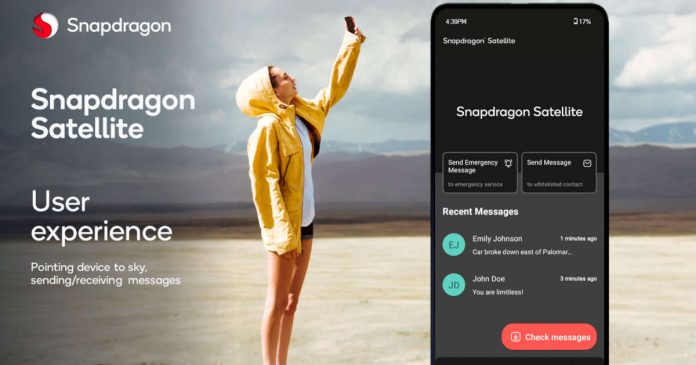
Qualcomm announced a new feature called Snapdragon Satellite at CES 2023, which allows mobile phones to connect to a satellite and send messages in an emergency. This is similar to the feature introduced by Apple in the iPhone 14, but Qualcomm aims to take it further and not limit its use to just emergency communications. 

The Snapdragon Satellite feature will be available on Android phones with the Snapdragon 8 Gen 2 processor and the X70 modem, which handles 5G, location, and satellite connections. It is not yet known which smartphones will be the first to have this feature, but Qualcomm has said they will be available in the second half of 2023. Google also confirmed that Android 14 would support satellite connectivity.

The Snapdragon Satellite feature will operate through the Iridium satellite network, which has been operating since the 1990s and serves satellite phones, messengers, and tracking devices. Qualcomm will have an advantage over Apple, as it can use an already established and developed infrastructure to quickly achieve a global rollout. On the other hand, Apple has chosen to work with Globalstar and given it $450 million to develop and deploy new satellites in return for 85% of its current and future satellite network.

When a person gets lost or has an incident in a place without WiFi or mobile signal, they can activate the Snapdragon Satellite feature to find a satellite and send an emergency message. The feature will show instructions on the mobile screen to detect the nearest satellite, and Qualcomm claims that it will not always be necessary to point the smartphone at the sky to establish the connection. The company says that the phone will be able to predict the route of the Iridium satellites months in advance, which will make the process easier.

Initially, the Snapdragon Satellite feature will only allow users to send messages in emergencies, but Qualcomm plans to expand the service to function as a regular communication platform, allowing users to send and receive text messages at any time and place without worrying about lack of cell coverage. 

However, it remains to be seen how this will be implemented and the cost of satellite connectivity for regular messaging. Qualcomm has said that using the Snapdragon Satellite feature for emergencies will be free or very cheap, but it is unclear what the cost will be for regular messaging.

It is worth noting that satellite-based connectivity is not a new concept, as satellite phones have been around for decades. However, the ability to use a regular smartphone to connect to a satellite and send messages in an emergency or for regular communication is a significant advancement. This technology could be especially useful in remote or hard-to-reach areas where cell coverage is limited or non-existent. It could also be beneficial in disaster situations where traditional communication networks are down or overloaded.

The competition between Qualcomm and Apple in this area will be interesting to watch, as Apple has already patented a function allowing calls and web browsing through its satellite connection.

Instinct MI300: AMD Reveals Next-Generation Data Center APU

Instinct MI300

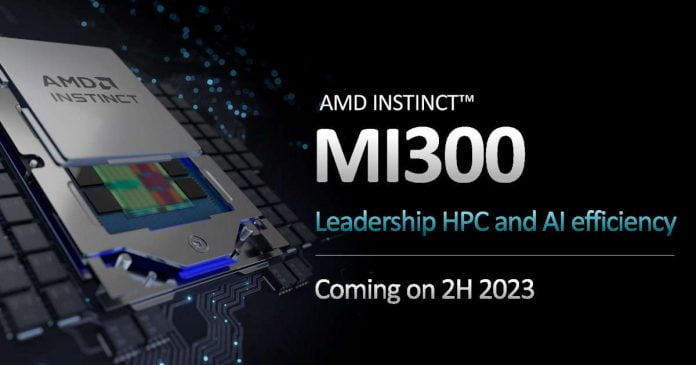
AMD has recently revealed some details about the “Instinct MI300”, a next-generation data centre APU currently under development. 

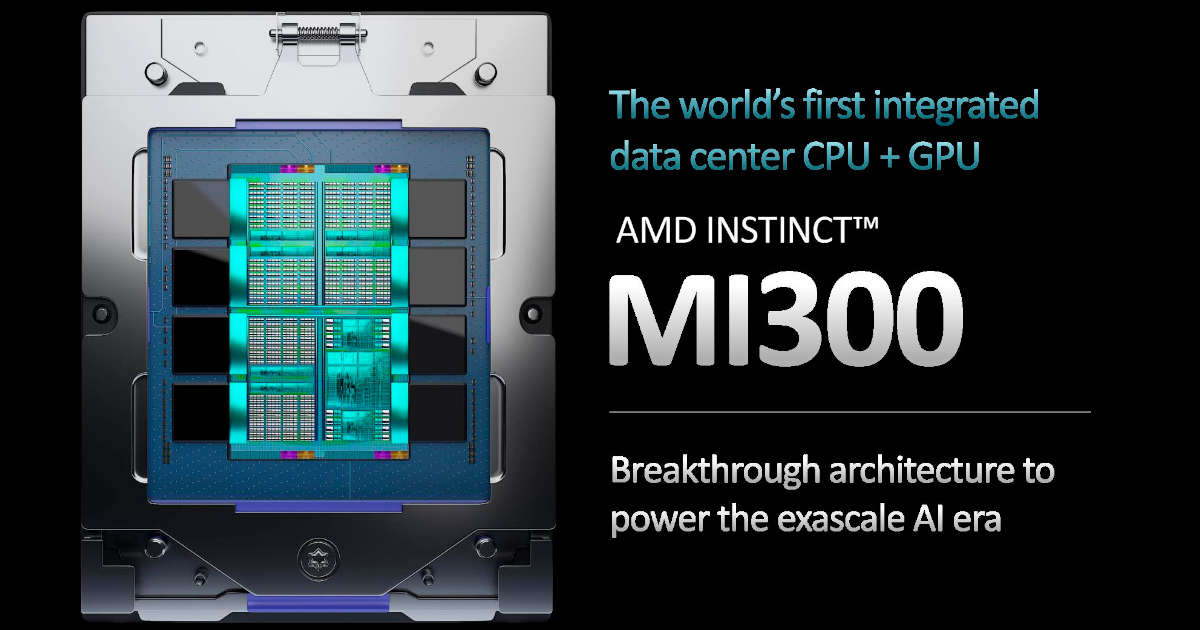
CEO Lisa Su held the silicon chip in her hand and provided some basic specifications, reiterating AMD’s desire to lead the HPC market. It utilizes multiple chiplets fabricated on TSMC’s 5nm process, stacked on top of each other and connected with on-package HBM memory, which is intended to maximize available memory bandwidth.

The Instinct MI300 is a massive 146 billion transistor chip, the largest and most complex AMD has ever built. This is significantly more than the 100 billion transistors Xeon Max GPU from Intel or the 80 billion transistor GH100 GPU from NVIDIA. The MI300 will feature 24 AMD Zen 4 CPU cores and an as-yet-unannounced CDNA 3 architecture GPU with 128GB of HBM3 memory. It will be built with nine 5nm chiplets and four 6nm chiplets, with the 5nm chiplets likely being Compute Logic chipsets (i.e. CPU and GPU chiplets). The MI300 is expected to offer improved AI performance per watt and AI training performance compared to the MI250X.

One of the key advantages of the Instinct MI300 is its ability to share a high-speed, low-latency unified memory space between the CPU and GPU cores. This enables fast and easy data transfer between the two and allows each to perform the types of computing at which they excel.

AMD Instinct MI300

In addition to its impressive technical specifications, the MI300 also represents a significant shift in AMD’s strategy for the data centre market. The company has traditionally relied on a combination of its EPYC CPUs and discrete MI250X GPUs for its HPC offerings. The MI300 marks the first time AMD has attempted to bring these two components together in a single package. This should simplify operations for customers, as they will no longer have to manage two separate components and deal with the challenges of connecting them through MCM wiring.

Using chiplets and 3D die stacking also allows AMD to take advantage of the latest advances in manufacturing technology, resulting in a more efficient and powerful processor. The combination of 5nm and 6nm chiplets should provide the perfect balance of performance and power consumption. At the same time, the on-package HBM memory should enable much higher memory bandwidth than what is currently possible with traditional memory interfaces.

Overall, the MI300 looks to be a very promising offering from AMD and could potentially shake up the data centre market if it can deliver on its performance and efficiency promises. The company’s decision to focus on HPC and AI applications is a smart move, as these areas are expected to see significant growth in the coming years. With the MI300 set to launch in 2023, we should have a better idea of its capabilities soon.

AetherSX2: PS2 Emulator Development Suspended Indefinitely Due to Constant Complaints and Death Threats

AetherSX2 PS2 Emulator Development Suspended

The development of the AetherSX2 emulator, which allows for the emulation of games from the Sony PlayStation 2 console on Android devices, has been suspended indefinitely due to constant complaints, demands, and death threats. 

The program developer, Tahlreth, announced this on the project’s website. Tahlreth stated that while developing the emulator was an exciting hobby for him, it was not a source of income. The developer also warned users of scammers on the network who may pose as representatives of AetherSX2 and urged caution.

Tahlreth has received daily emails with aggressive requests to improve the PlayStation 2 emulator or release a version of the PlayStation 3 emulator. These requests have become increasingly aggressive, leading to death threats against the developer. Tahlreth is “tired” of this behaviour and does not see the point in continuing to work on a project that no longer pleases him.

The AetherSX2 emulator was released in 2020 and allowed for the emulation of games from the Sony PlayStation 2 console, released in 2000, on Android devices. The suspension of its development is a significant blow to gamers using the emulator to play their favourite games on their Android devices.

It is unclear if the emulator’s development will resume in the future. Tahlreth’s decision to suspend the development of the AetherSX2 emulator has received widespread attention, with many in the gaming community expressing their disappointment and support for the developer. Some have even called for a boycott of the emulator in light of the constant complaints and death threats that Tahlreth has received.

The incident highlights the importance of respectful and supportive behaviour within the gaming community. While it is understandable that gamers may have strong feelings about their favourite games and consoles, it is never acceptable to threaten or harass developers. Tahlreth’s decision to suspend the development of the AetherSX2 emulator serves as a reminder of the impact that such behaviour can have on the gaming industry.

It is important to remember that developers work hard to create the games and experiences we enjoy. They deserve to be treated with respect and appreciation.

AFEELA: Sony With Honda Ready to Launch First Electric Car Powered By Qualcomm and Epic Games

AFEELA-Sony With Honda

At CES 2023, Sony and Honda unveiled their joint automotive brand, AFEELA, along with the prototype of their first electric car. The car is set to go on sale in 2026, with pre-orders starting in 2025. It will initially be available in the US before being released in Japan and Europe.

The prototype has 45 cameras, and Qualcomm Snapdragon processors will power sensors for better safety and the car’s electronics. The user interface will be based on Epic Games’ Unreal Engine. Sony will incorporate artificial intelligence, entertainment, and virtual and augmented reality into the car, while Honda will handle the automotive aspect. The new electric car is expected to compete with premium cars from brands such as Mercedes-Benz, BMW, Volvo, and Audi.

The partnership between Sony and Honda was announced in March 2022 to develop an electric and autonomous vehicle capable of competing in the premium market. The CEO of the Sony Honda Mobility joint venture, Yasuhide Mizuno, explained that the term ‘AFEELA’ incorporates the English verb “feel” to insinuate the brand’s focus — the mobility experience it will offer to its customers. Sony will develop the necessary technology for intelligent, connected, and autonomous mobility, while Honda will contribute its experience in the automotive sector and its manufacturing infrastructure.

During his presentation, Mizuno explained that the prototype incorporates 45 sensors using various technologies, such as ultrasound, cameras, ToF sensors, and radars, to ensure maximum safety and implement advanced driving assistance technologies.

Sony AFEELA exterior sensors

Qualcomm and Epic Games are among the companies supporting Sony in developing the technologies required for the electric car. Qualcomm is contributing its microprocessors and collaborating with Sony on developing autonomous driving technology, while Epic Games is providing the Unreal Engine to be used in the car’s user interface.

In addition to its advanced technology and capabilities, the AFEELA electric car also boasts a sleek and stylish design. According to Mizuno, the exterior design was inspired by a sports car’s sleek lines and curves, while the interior was designed with comfort and convenience. The car will feature spacious and comfortable seating and a state-of-the-art infotainment system.

Sony AFEELA prototype

One of the unique features of the Afeela electric car is its use of virtual and augmented reality technology. Sony’s expertise in this field will allow the car to offer a fully immersive and interactive driving experience. For example, the car’s augmented reality windshield will display real-time information and alerts. In contrast, the virtual reality headrests will allow passengers to watch movies or TV shows in a fully immersive environment.

In terms of performance, the AFEELA electric car is expected to deliver impressive acceleration and handling. It will be equipped with a powerful electric motor and a high-capacity battery pack, allowing long-distance travel on a single charge. The car will also feature advanced traction control and stability systems, ensuring a smooth and safe ride.

The AFEELA electric car will be produced at one of Honda’s 12 plants in the US. It is expected to be a major player in the electric and autonomous vehicle market, competing with other premium brands. With Sony’s expertise in artificial intelligence and entertainment and Honda’s knowledge in the automotive industry, the partnership is well-equipped to bring a high-quality and innovative product to market.