Home Blog Page 236

Qualcomm Presents New Smartphone For Snapdragon Insiders

Smartphone For Snapdragon Insiders

Instead of just supplying processors and other chipsets to smartphone manufacturers, Qualcomm wants to bring its own smartphone onto the market. In March 2021, Qualcomm launched the Snapdragon Insiders community, and now the company presents its own smartphone produced by Asus for Snapdragon Insiders. A mobile designed, manufactured and sold by ASUS that comes with a lot of desire to become one of the most powerful on the market.

The smartphone for Snapdragon Insiders is a 6.78-inch model with a blue and black color scheme; it measures 173 x 77 x 9.55 mm at 210 grams. The OLED panel comes from Samsung and has a resolution of 2,448 x 1,080 pixels at 144 Hz, and the brightness is 800 candelas per square meter with up to 1,200 nits in the top for about HDR10 + material.

On the back — and not under the display — is the 3D Sonic Sensor Gen2, as Qualcomm calls the improved version of the ultrasound-based fingerprint sensor. Above it sits a white illuminated Snapdragon fireball logo that can be switched off. There are also three cameras: one with 64 megapixels (Sony IMX686), a 12-megapixel ultra-wide model (Sony IMX363) and an 8-megapixel telephoto camera with 3x optical zoom.

Inside, a Snapdragon 888 has 16 GB of LPDDR5 memory, and there is also 512 GB of storage (UFS 3.1) for Android 11, as well as applications and data to be backed up. Also in the SoC is the 5G modem, which is supported by mmWave and sub-6 GHz antennas, which is not a matter of course. There is also dual SIM functionality and WiFi-6E with 2×2 MIMO.

In addition to the camera equipment, Qualcomm also attaches great importance to the sound, so there are four microphones plus two stereo speakers and Snapdragon Sound is supported. Here, the manufacturer combines various hardware and software of its own in order to guarantee high quality with low latency via Bluetooth and Aptx codec.

Snapdragon Sound

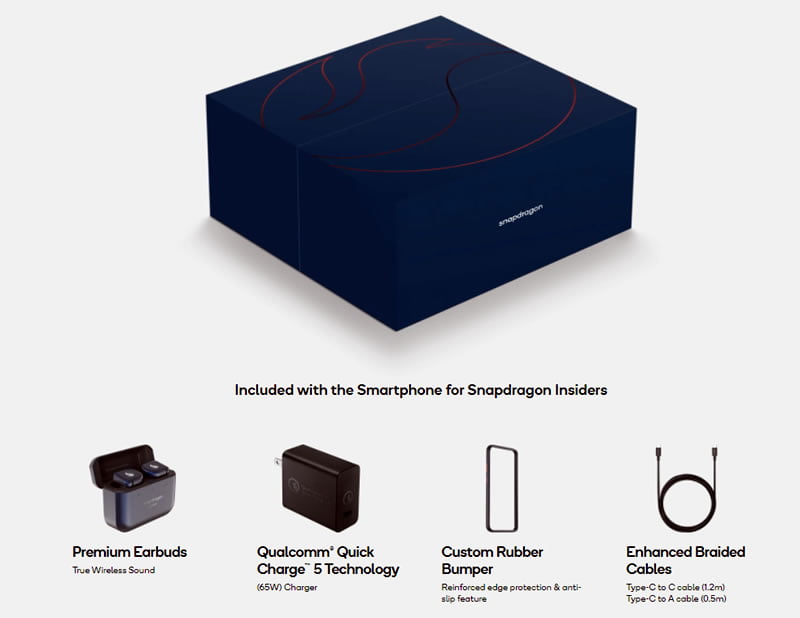
Qualcomm also includes branded ANC earplugs (MW08) from Master & Dynamic with a charging case with the Smartphone for Snapdragon Insiders. The other accessories include a 65-watt Quickcharge 5 power supply unit for the 4,000 mAh battery, a protective cover and two 1 m USB-C cables. 

Smartphone For Snapdragon Insiders out of the box

However, the smartphone is not offered exclusively for Snapdragon Insiders. It is slated to go on sale in August via Asus’ online store at a price of $1,499 in the United States, China, Germany, the United Kingdom, Japan, South Korea and, later, India. 

A Comprehensive Guide To Becoming An IT Consultant

IT consultant

Becoming an information technology (IT) consultant is easier nowadays. With the advent of technology, anyone can study and eventually work as a certified IT consultant. However, as simple as it may sound, the road to becoming one requires various steps.

You have to get a degree, certification, and experience. That way, your potential clients can see you as an authority in your industry. Imagine hiring someone who claims to be an expert in a certain field. You’ll want them to be able to show proof of their skills and background, right? Well, that’s how it works if you want to succeed in the IT consultancy field. 

What Does An IT Consultant Do?

An IT consultant doesn’t only provide businesses with advice. Rather, IT consultants like those from Spectrumwise IT Consulting and similar companies help clients fulfill their targets and goals more efficiently using IT. Generally, you do this by integrating IT into their businesses through your technical specialization.

Moreover, being an IT consultant means synchronizing staff members and the technical team to meet the business’ strategy and model requirements. Part of your responsibility is to develop solutions to a company’s issues as well. This means you should have strong analytical skills and high standards in order to come up with effective strategies.

IT consultants can have a specialization and be any of the following:

  • IT Security Consultant: With this type of consultancy, you’ll deal with the cybersecurity of a company or business. This is one niche of IT consultancy that’s in demand because of the rampant cyberattacks that many companies face. What’s more, cybercriminals target any business: big or small, public or private, state or federal. If you choose this area of expertise, then your responsibilities include providing solutions and advice on protecting businesses’ digital assets. An IT security consultant’s role is crucial for companies in many ways, from preventing hacking attempts to securing networks to installing virus protection.
  • Maintenance And Repair Consultant: Aside from cyberattacks, software or hardware issues can also disrupt business operations. Thus, companies hire regular maintenance and repair consultants whom they can call immediately to avoid having to stop their business operations. You’ll provide support for software or hardware problems on their network or machines.
  • Project Management Consultant: An exciting way to provide IT advice is to become a project management consultant. You’ll provide IT solutions and answers to business owners’ projects, and your primary focus is IT solutions, including their details, scope, and cost analysis. This is vital as businesses nowadays require technology to grow or expand.

Benefits Of Being An IT Consultant

One reason that IT consultancy is a popular career is because it’s in demand. As mentioned, many businesses require your expertise in IT because buying technology is a waste if it can’t be used efficiently. Aside from that, you can enjoy the following benefits:

  • Work When Needed: This means you’ll enjoy applying your expertise to a specific area of a project where your skills are required. You don’t have to spend your time on the project from start to finish. Thus, you won’t be stuck in a project that may drag on for months.
  • Receive What You Deserve: IT consultants are often compensated handsomely, especially if you follow the steps outlined below. Most clients will even pay a premium for the privilege of hiring your expertise if you’re an experienced consultant.
  • Learn What’s New: You may be a seasoned IT expert, but your job requires being on the loop with the latest IT platforms, software, and technologies your clients use. This will help you experience working with various solutions so you can be an even better IT consultant and serve your clients well for years to come. 
  • Enjoy Flexibility: As mentioned, you only work on a specific area of a project. Thus, you can work for various companies at a time if you wish. You can enjoy flexible working arrangements while learning new strategies in each project. As a result, you can expand your skills since working with different businesses exposes you to various IT issues you might not encounter if you kept providing your services to the same company.
IT consultant jobs

Steps To Become An IT Consultant

If the benefits above have convinced you to start pursuing an IT consultancy job, then you’re in for a treat. Here are some of the things you need to do so you can be part of one of the most lucrative branches of consultancy:

1. Complete A Degree In IT

While you can become an IT expert without finishing tertiary education, having a degree may be advantageous. Whether you spend it in an online school or a traditional learning institution, an IT-related course can be a good starting point before you start a career in IT. Pursuing a degree will allow you to learn aspects of IT you may not be able to discover or understand on your own.

Since there are various niches of IT consultancy, you have the following options when it comes to the degree you can obtain: 

  • Database Management Systems: As its name suggests, this course will let you create, edit, and manage a database system through practical activities and concepts. The program will help you understand information concepts and their importance to relational data models, from terminologies to characteristics to database system classifications. Thus, you can be well adept on the interface of multi-user database management system (DBMS) packages and desktop DBMS using SQL and designing data models. 
  • Networking Foundations: If you want to focus on networking fundamentals, this course will allow you to do just that. The program includes OSI models, WLAN, LANs and PANs, TCP/IP models, and network security layers. You’ll also understand how to use networking devices like switches, routers, NICs, and hubs. Moreover, you get to differentiate between point-to-multipoint networks and point-to-point networks.
  • Information Technology: This course is one of the essential programs in any IT degree. You’ll learn skills and computer concepts necessary to apply in a computerized world. From computer programming to cybersecurity, software applications to 3D design, digital animation to desktop publishing, the course covers a broad range of topics.
  • Basic Computer Operations: In this course, the focus is on basic computer programs, operating systems, computer hardware, and computer software. What’s interesting about this is you get to have hands-on laboratory courses.

2. Acquire Certifications

A degree is only a stepping-stone; the next thing you should do is to acquire various IT-related certifications. These will show that you’re continuously expanding your knowledge and honing your skills. That way, potential clients will see that you’re well versed in the services or technologies they’re using.

The more capabilities you have, the more likely clients are going to hire you. Some, like government entities, even require that certain certifications and credentials be included in your proposal or application.

However, there are certifications that may not be considered valuable credentials. For instance, you have a certification in Microsoft Azure, but your clients are using a different service. Even if you ace a program and have years of experience with it, clients who aren’t using that platform won’t appreciate your knowledge on it. Thus, you may need to look for a relevant audience. Either that or just work on developing the existing skills you’re using with your current clients.

3. Attain IT Experience

Another factor that most clients will look into is your experience. It may be difficult to find clients not requiring years of practice in the IT industry; some even want experience in a specific IT field. That’s why you may not become an IT consultant right after you finish an IT degree.

You want to prove to your clients that you can give them the advice and solutions they need because you learned the ropes through years of experience. Although you can always apply for companies, your chances of getting hired might be slim. As such, you may want to do one or all of the following to gain the kind of IT experience most clients require:

  • Freelancing: If you don’t want to work for a company for the long term, you may opt to freelance. Many clients seek pay-per-project employees for their IT needs, and freelancers are the perfect candidates for such arrangements. If you take this route, you can gain experience, receive feedback, and weigh what specific IT roles are to your liking.

Since it can take anywhere from a day to a few months, you can easily change your specialization after completing a project if you don’t like what you’ve experienced. Or you may even find a client you want to work with full-time. What’s important is to build a work history you can add to your resume.

  • Volunteering: Another way to boost your experience level is to connect with professional and student organizations that need your help. Volunteer your expertise and ask them for feedback. That way, you’ll know if your solutions are effective or if you need more training. Also, you can make a positive impression on potential clients if you volunteer regularly.
  • Internships: Looking for a job that would allow you to gain experience in the IT industry may be challenging. This is because most employers are looking for professionals who already have experience. If you’re a fresh graduate, then doing internships can help you. You’ll get hands-on experience even if you might only be given a small stipend or salary. If you do a great job, then the employer may even hire you. You can also use the company you intern for as a reference when you’re seeking employment.

4. Build Your Network

While gaining relevant experience is advisable, you must also grow your network. It’s best to start connecting with other professionals and even people from different industries. That way, they can turn to you if they ever need your expertise in the future. Instead of posting IT jobs, they may remember you and contact you for such.

You can start by attending professional networking events related to your field. These can help you become more familiar with projects other professionals are working on, trends that have to do with IT solutions, and IT matters you may not yet know about. You may even have the opportunity to find a mentor who can guide you in your career development.

You can also use digital platforms to connect with like-minded professionals. Add them to your following list, comment on their posts, or contact them for professional advice. That way, you can establish a good relationship with them. 

By becoming engaged with other professionals, you can come up with a list of potential clients. Or they may refer you to their friends, especially if they know what your capabilities are.

Volunteering your services to organizations in need will help bolster your network opportunities as well. Many businesses and professionals may find it appealing if you give back to the community and not just think about making money.

5. Advance Your Career

After years of experience, you’ll learn which specific field you excel in or enjoy doing in the IT industry. If you’re doing especially well in one area, then it may be best to upskill until you become an expert on it. In doing so, you can easily prove that your potential clients will receive nothing but high-quality IT consultancy services from you.

On the other hand, you may end up not excelling in the field you enjoy most. Attend training that’s meant specifically for that area until you improve. You can also ask your mentor for tips and suggestions on how to better yourself as a professional.

What’s important is to become an expert in one field. While it’s good to become knowledgeable in every IT-related area, it’s still best to have a niche. That’s because many IT consultant positions are specific. Thus, it’s advisable to hone your skills in a particular niche since clients are more likely to search for specialists rather than generalists. 

Another way to further your career is to finish a master’s degree or postgraduate IT-related program. However, this degree must highlight your niche. Avoid finishing one that’s not focused on the services you’re offering, unless you want to switch to a different niche. When you have a postgraduate degree, your potential clients will feel more secure knowing they’ll hire someone who has advanced credentials for their expertise.

Conclusion

Becoming an IT consultant doesn’t happen overnight. It requires education, hard work, and years of experience before clients may acknowledge you as an expert they should hire. An IT-related degree may help you land a job but not in the consultancy field. Thus, you need to have more certifications and experience to show that you can provide IT solutions that will enhance every client’s business. It may be a long road, but soon, it’ll pay off. Start your journey now.

Midnight Patrol: Tencent Is Now Blocking Underage Gamers At Night Using Facial Recognition

Fun And Educational Android Games For Kids

Gaming is becoming more and more regulated in China. If you are not yet 18 years old and want to play the extremely popular Honor of Kings on your smartphone at night in China, you have a problem — the device’s face recognition.

A system is now active in over 60 Tencent mobile games to prevent minors from excessive gaming between 10 p.m. and 8 a.m.

The system is called Midnight Patrol, and it uses the facial recognition built into many smartphones to control the addiction of games among underaged gamers. The recorded data would be compared with the state databases. The Shanghai-based technology group Tencent is currently the world’s largest publisher of computer games.

Tencent has already built the feature into more than 60 games, including “Honor of Kings”, which is reminiscent of League of Legends, and “Game for Peace”, which is a copy of PUBG Mobile. More titles are to follow gradually. 

If the players are not clearly identified as adults, Midnight Patrol assumes that it is a child or a teenager and block the game. In China, gamers have been required to register with their ID number to access games for years.

In the fight against excessive video game consumption, China introduced regulations in autumn 2019 that limit playtime for children and young people under the age of 18 to 90 minutes on working days. They are not allowed to play between 10 p.m. and 8 a.m. 

How I Got Addicted to Coding

Best Tools To Improve Your Programming And Coding Skills

Learning new things brought me to writing my first lines of code. I was curious enough to learn how to bring my rudimentary idea into software that others could actually use. It took me a while before I could code that simple piece of software, but it was more than enough to keep me going.

Back then, the goal was to master a programming language that I could regularly use to bring ideas to life and start a dedicated software development team and assemble a community like this platform. When I completed my third software project, I started making money with my code. That was the final piece of the puzzle. For the first time, the code I wrote affected the lives of many people.

From Simple Programs to Scrapers

Simple programs were always the most beautiful. You have to understand complexities in a way that lets you simplify the user experience with your software. It was very challenging, especially since I focused primarily on C before moving on to Java and other programming languages.

Simple programs that make money, however, are the best. Being able to write code that automatically calculated installments for lenders or a web service where users could convert their video files to a compressed version for easier sharing, all of which generated revenue, was one of the best things about being a coder.

I was completely hooked. Coding was no longer about learning new things and turning my ideas into software that others can use. It was more about solving real-world problems and making money in the process. That was when I started turning to data-processing runtimes, especially with data becoming more valuable.

I had been coding for around 10 years when I first wrote my own data scraper. The demand for capable data scrapers was on the rise, and the one I created was designed to collect and process data in a more efficient and targeted way. It was a big hit, and it didn’t take long before marketers and businesses started buying the scraper that I made.

The success of the data scraper brought another realization – the time I had spent crafting the data scraper and writing each line of code to make it work was actually time that had monetary value. Every line of code generated income. As more people used the scraper, that number got higher. There is an addictive aspect to the experience that I cannot explain in words.

An Addictive Experience Indeed

The sensation of solving real-world problems with lines of codes and the money that I generated from that code was a killer combination. The two made me addicted to coding almost instantly. In fact, earning money and solving problems were the reasons why I started exploring more programming languages and mastering them, all for the purpose of writing better code.

When machine learning came into play, I started exploring Python and Go as the primary programming languages. Sure, you can create an AI entity using C, but Python, with its modules and frameworks – mostly designed for AI development – was a lot more efficient for the apps that I developed. The same is true with Swift, which is specifically designed to make coding for the Apple ecosystem easier.

Data scraping remains a big focus of mine. Data is only getting more valuable, but there are more data sources to tap into. Users willingly share their data, usage information, and other details online, and it only takes a few lines of code to collect and process these details into valuable insights for customers. The tools that are available for developing complex scraping routines are also getting better.

Once I went down this route, there was no stopping me. I learned new languages, wrote new (and better) code, and solved more problems. I earned money by completing the cycle, and I started the process all over again. I even started looking at things like marketing and promotions from a programmer’s standpoint, with data and logic being the driving forces.

Addiction to programming is not a serious issue if you keep it in check. Fail to control the urge to code, however, and you will start abandoning your social life entirely. I know because I went through that phase at some point. Knowing that I could make money from my code, I opted to stay home and create software rather than to go out with my friends.

A Powerful Motivation

Addiction aside, there is no doubt that making money from the codes you write is powerful motivation. When you start realizing how the lines of code you write are actually revenue-generating products, you will take being a coder much more seriously.

This motivation also keeps you going. I’m still learning how to write better code in different languages simply because there are still so many revenue streams that I haven’t accessed. You can use money and accomplishment as your sources of motivation too.

New Nintendo Switch OLED IS Here With A Renewed Design For Better Gaming

Nintendo Switch OLED

Nintendo, completely unexpectedly, has presented its new Nintendo Switch with OLED screen. A new model that comes with a renewed design and general improvements.

A launch that has been practically by surprise since many of us expected that Nintendo would take advantage of its last Nintendo Direct in the context of E3 to present the console. This new model has been officially announced on the company’s YouTube channel.

The new Switch is equipped with a 7-inch OLED display, which, according to the manufacturer, should deliver intense colors and high contrast. The model offered so far comes with a 6.2-inch LC display. The resolution remains unchanged at 1,280 × 720 pixels.

The dimensions of the game console itself, including the Joy-Con controllers, are marginally larger and are now 242 × 102 × 13.9 mm (W × H × D) — previously, it was 239 mm in width, the other details are the same. The new weight is 320 instead of 297 grams, with Joy-Con controllers 420 instead of 398 grams.

Another novelty of the new Nintendo Switch OLED is table mode that is implemented using a new stand on the rear. This takes up the entire width of the housing and covers a larger angle that can be freely adjusted by the user by using a small stand that could be opened.

Nintendo Switch OLED design

For the 4310 mAh battery, Nintendo still gives 4.5 to 9 hours of battery life, depending on which game is being played — The Legend of Zelda: Breath of the Wild is 5.5 hours.

A new dock is also included. It offers two USB connections, an HDMI port and, recently, a full-fledged LAN connection, which should ensure a stable Internet connection in TV mode when games are played online or when major downloads are pending.

Whether Nintendo is installing a stronger Nvidia Tegra chip, which, according to rumours, should support DLSS for up to 4K, is not clear from the information so far. However, the fact that a maximum of 1080p60 can still be output in TV mode speaks against this. However, Nintendo has expanded the memory, which is now twice as large at 64 GB. Nintendo has also improved the integrated stereo speakers. The new Switch will be available in white or neon blue/neon red. Rumours from the run-up to a new processor are officially rejected.

With the new Nintendo Switch OLED, we can play all the Nintendo Switch games available, and the Joy-Con continue to use the same rail system from the last generation. Thanks to this, users can continue to use their Joy-Con with the new console without having to adapt to a new system.

The new Nintendo Switch OLED will be launched worldwide on October 8 of this year, so we will still have to wait a few months to buy it. Its price will be in the United States at $350.

Uninstall These Apps Now: Google Removes 9 Apps For Stealing Facebook Passwords

Google Play News and Stories

Google has removed nine apps from the Play Store after they were found to steal users’ Facebook passwords. These nine applications — added about 6 million downloads in the Google Play Store — hid Trojans with which they stole access credentials and passwords for the social network Facebook.

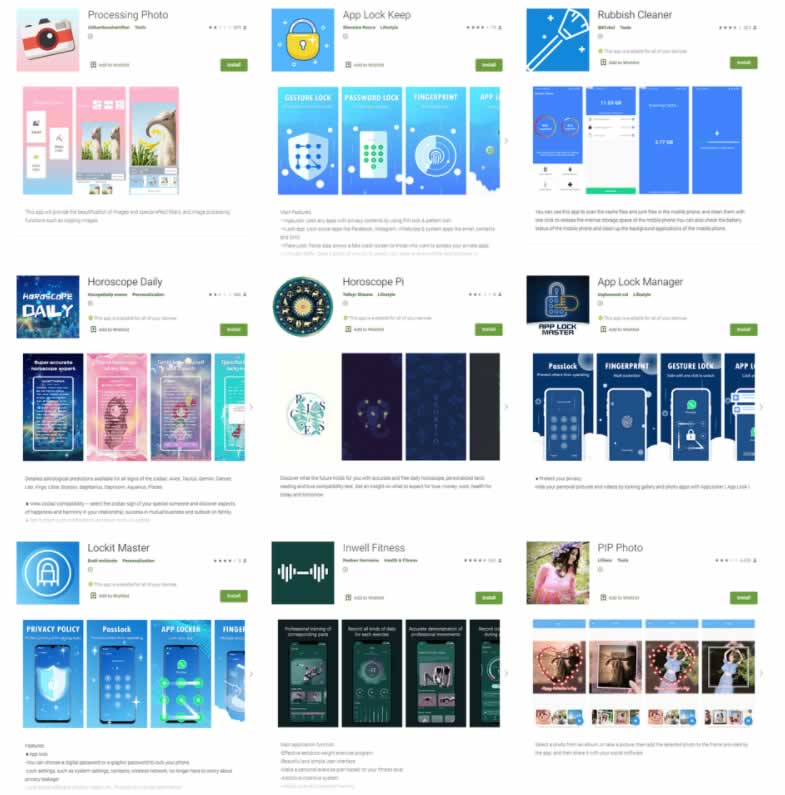
Doctor Web’s malware analysts discovered the Trojan in a total of 10 applications, although nine were distributed through the Play Store. The titles of the nine apps were:

  • Horoscope Daily
  • Rubbish Cleaner
  • Processing Photo
  • App Lock Keep
  • Horoscope Pi
  • App Lock Manager
  • Lockit Master
  • Inwell Fitness
  • Pip Photo
Google Removes Apps For Stealing Facebook Passwords

Unlike other malicious applications, these apps were fully functional and allowed users to carry out the functions that they advertised in their profile on Google Play. Although within them, a “feature” was introduced — to eliminate the ads for free, simply by logging in to their Facebook accounts.

This gesture, which for many users did not raise any suspicion, was the moment in which the user’s login data was transferred to a command and control server. The attackers were able to obtain the email addresses and passwords of users’ Facebook accounts in this way.

Google has removed the nine applications immediately, following the report received by the Doctor Web researchers, so that it is now impossible to download the applications from the Play Store. Although it is possible that there are Android users still with them installed. In this case, it is recommended to uninstall them and change the password of your Facebook account or add two-step verification.

How Automated Pre-Hire Testing Have Come to Dominate the Hiring Process

Business Networking

Once upon a time ago, hiring managers had to rely on CVs, interviews, and at best, an in-house devised pre-hire test. Employers found themselves stuck in a revolving door or hire and fire, wasting precious time, money, and company resources. 

While CV’s are helpful as a first filter in the hiring process, it is easy for candidates to manipulate them through exaggerations, omissions, or right-out lies. True, a good interviewer can often uncover the truth, but they can also cover their tracks if the interviewee comes prepared.

It is for this reason that pre-hire automated tests are so necessary! 

  1. It is much harder to fake your way through a test; you either have the knowledge and skills, or you don’t.  
  2. Sitting and manually grading in-house pre-hire tests is an exhaustive process, taking staff away from more important projects; thus, the automotive element is also essential. 

In fact, pre-hire psychometric tests have become so central that 80% of Fortune 500 companies now employ them as part of their hiring processes.

So, lets take a brief tour of two popular leading test providers for Aptitude & Cognitive Ability and Personality & Behavioral (among 14 major test providers) to provide both candidates and hiring managers a better understanding of their purpose and applicability.

The CCAT test for Aptitude & Cognitive Ability

The test is designed to measure the following skills:

  • Critical Thinking
  • Problem Solving 
  • Learning & Applying information

The CCAT has become one of the most popular cognitive aptitude tests across the United States. Its questions are designed to weed out poor performers and slow learners while advancing those with a much higher chance of success in the hiring process. 

How does this work?

The company first tested using a sampling of 985 workers from a wide spectrum of positions, including: Managers, technicians, customer service, sales, and other related positions. The developers of the CCAT test found a high level of “Predictive Validity”, meaning that those who did well on the exam proved to be great problem-solvers, critical thinkers, fast learners, and demonstrated a high level of verbal and mathematical reasoning on the job. This holds true for a wide range of positions in both finance and technological fields.

The Score Breakdown 

In short, the CCAT takes your raw score (number of correct answers) and converts it to a percentile ranking (each score compared to all other test takers.) 

Each candidate is additionally graded on each subcategory, including; logic and math, verbal ability, and spatial reasoning. This is important, as each subcategory highlights an additional capacity and skill-sets related to the position at hand. 

  • Logic and Math – This segment dives into analytical thinking and the ability to take advantage of numerical concepts on the job.
  • Verbal Reasoning – This section shows off your attention to details, the comprehension of words, constructive thinking, and reasoning skills.
  • Spatial Reasoning – Here is how you prove you can problem solve, have the ability to make spatial judgments, and visualize. 

It’s important to note that each profession has its score range for job consideration. For instance, those in accounting and finance will be automatically disqualified by scoring less a 24, while a front desk position starts from a score of 18. Remember, scoring at the lower end of the range may not be enough because the score is in relation to the performance of other candidates – it’s a rat race!

The Benefit for Employers and Job Seekers Alike

The benefits for employees are obvious as they can administer a test that has been tried and proven over 5 million times, while the job seeker understands prior to the interview that hiring managers are now playing hardball. It is in their best interest to fully prepare for tests like the CCAT.

Hogan Assessment for Personality & Behavioral 

There is a reason why a whopping 75% of Fortune 500 companies have turned to the Hogan Personality tests! They have been proven to help employers reduce turnover, choose long-term employees, and better uncover precisely how the candidates will approach and tackle every issue while helping the company prepare for the long run.

Let’s look at two different tests Hogan offers HPI and HDI. The employees and job seekers reading this will better understand why this test is provided and take the appropriate steps to either administer or pass it.

Hogan (HPI)

This test measures what the company calls “Brightside Personality traits.” These are broken down into seven scales, which can be aligned with six different occupational skill-sets, that e will list a little further below, including:

Brightside Personality:

  • Adjustment – Tolerance to pressure, confidence, and self-esteem.
  • Ambition – Competitiveness and leadership
  • Sociability – Extroversion
  • Interpersonal – relational maintenance and social skills
  • Prudence – Attention to details, discipline, and responsibility
  • Inquisitive -Creativity, curiosity, and imagination
  • Learning Approach – Excitement for learning and drive for more.

These personality traits are then used to predict your behavior on the job, including:

  • Service Orientation
  • Stress Tolerance
  • Reliability
  • Clerical Potential
  • Sales Potential
  • Managerial Potential

Bottom Line: This test shows how the employee will perform when they are at their best, but what happens when they are at their worst? Let’s find out with the next test called HDS.

Hogan HDS

As mentioned above, this test tackles your “dark-side personality” how you react to stressful situations, which can obviously harm both your work, team, and client. It is this test that is an accurate indicator of your personality even more than the Brightside.

Darkside uses 11 different metrics or scales, which are very telling about the type of person you are behind the smile.

  • Excitability: Frustration, irritation, mood swings, and not seeing the job all the way through. 
  • Skepticism: Ability to detect unethical or bad behavior of co-workers and ability to call them out.
  • Caution: Avoidance of criticism, aversion to risk, and fear of failure.
  • Reservation: Lack of empathy and aloofness.
  • Leisurely: Self-serving and Stubbornness.
  • Boldness: Over-confidence with an inability to admit mistakes.
  • Mischievous: Risk-seeking, limit-testing, and adventurous.
  • Colorful: Fun and entertaining to keep in the limelight.
  • Imaginative: Sometimes self-absorbed and eccentric behavior.
  • ·Diligent: Maintaining high standards of performance for self/others, while staying detailed oriented.
  • Dutiful: Viewed as loyal and dependable by employees and staff.

While some of these traits can and are very good, when put under pressure, they can backfire and become traits that harm the productivity of the worker and eventually the company.

 For instance, if the worker is a very confident individual, is aloof, and has no fear of failure, that can be great under normal circumstances. Those are qualities that make killer salespeople, for instance. But that only remains true when the employee can withstand pressure. Under pressure, the same individual can make decisions that create a hazard for himself and the company.

The Score Breakdown 

The score is broken down as follows:

  • No-Risk 0-39
  • Low Risk 40-69
  • Moderate Risk 70-89
  • High Risk 90+

Employers will know where their candidates stand by the end of the test by getting instant score results. No need to waste precious time by grading the test.

Final Word:

These tests represent just a small sampling of exams used across the job market for hiring processes across the board. 

Wishing you much success on your coming job hunt or hiring round!

Worrying signs your manufacturing efficiency is holding your business back

manufacturing efficiency

In an ideal world, your manufacturing process should reflect your quality and your dedication to client satisfaction. When a manufacturing process is at its best, OEMs can expect a rise in revenue, efficient inventory handling, high-quality end products, and many satisfied employees, customers, and manufacturing partners.

Unfortunately, when your manufacturing efficiency leaves a lot to be desired, it continues to pave the way for frustration and failure, holding you back from your true potential. Recognising the signs of poor manufacturing efficiency means allowing your OEM enterprise to take back control of its mismanagement and hands you the information you need to maintain high levels of competence within this crucial stage of production. Want to know more? Read on to discover the worrying signs your manufacturing efficiency is holding your business back.   

Your BOM Is Confusing and Inaccurate

Establishing efficient manufacturing processes starts way before your raw materials even hit the production line. It starts with your procurement team and your BOM. Your Bill of Materials is the document used to record the required components and the instructions for assembly of said materials and components. You’ll find a range of capacitor parts available here. Correct management of this document ensures that the correct parts are ordered and that the highest standards of quality are met, all within the agreed price range.

If your BOM is being mismanaged, then OEMs can expect all kinds of issues. From the ordering of incorrect electrical components, duplicate orders costing your business thousands in wasted revenue and surplus inventory, poor quality components ordered due to a lack of choice or delivery time-slot options, and poor interdepartmental communications. When you move your search for components online and utilise a BOM tool to source the parts you need, you can expect the efficiency and accuracy of your manufacturing process to improve.

Too Many Errors on the line

Another sign your manufacturing efficiency is holding your business back is the frequency of errors occurring on the production line. Whether it’s the wrong components, staff errors during assembly or confusion over the products, when your line is plagued by mistakes, it’s only a matter of time before it impacts your business growth.

Costs Are Spiralling

Are your costs spiralling out of control? Poor production efficiency is costing your business thousands, and not just due to slow manufacturing times, but when the wrong parts are ordered, your inventory is short, or if injuries and staff sickness becomes a problem due to a lack of training, then you can expect costs to spiral out of control.

There’s Too Much Downtime

From shift changeovers and cleaning periods, component changes and machine issues, downtime is sometimes necessary on a production line, but when it starts costing you money and affects the satisfaction of your clients, you need to take a closer look at the overall efficiency of your line and highlight the issues that are holding you back.

Final thoughts…

Is your production efficiency holding your business back? Consider these points above to make some vital changes to your production approach.