Home Blog Page 264

Online Security In 2021: What Do We Really Know?

Simplicity of KSM and the Security of HSM

Today’s digital landscapes are expansive, and the technologies which run them are incredibly complex. As the Internet evolves, digital threats are increasing as well. For businesses and individual Internet-goers alike, there are plenty of pitfalls to be concerned about. Today’s online world is packed with viruses, malicious links, and trojans.

Meanwhile, businesses face more cybersecurity breaches than ever: A single click, if it’s the wrong one, can cost a commercial establishment millions in lost data.

The Big Picture

It’s tough to pin down the many intricacies which create and define our modern digital experiences, but it’s still possible to glean insights. The fact of the matter is, we don’t know everything there is to know about cybersecurity. There are simply too many components to comprehend adequately. Similarly, we can create digital strategies to avoid ransomware—but companies still face considerable security problems. 

In both cases, one truth seems to prevail; however, knowledge is needed to increase one’s cyber-defenses regardless of the digital tools they use. Poor digital defense strategies, over time, can significantly reduce one’s networking capabilities in best-case scenarios. In worst-case scenarios, forgetting to log out of any given website can result in data theft.

To make the most out of your own digital sessions, check out the following ‘core truths’ about today’s digital experiences. They’re important to understand for practical application—but they’re also capable of dispelling preconceptions about today’s world of cybersecurity itself. 

Let’s check out these truths:

One: Mobile Phones Can Compromise Businesses

Many assume smartphones to be ironclad digitally. Unfortunately, this isn’t the case: They’re vulnerable to cyberthreats, just like regular computers. They do tend to be much more resilient to cyberattacks, certainly, but they’re still limited by the current digital technologies they’re run with. It isn’t uncommon to see attacks against smartphones via digital wallet apps. This said, learning which smartphone wallet apps to use ahead of time is a great way to learn more about these types of apps. And the more you learn about them, the safer you’ll be. 

More companies are turning to smartphones to manage in-house operations, too. Because of this, smartphones have become a new endpoint for hackers to target. Without applying the right cybersecurity measures within a business’s networking design, a single device can put the entire company at risk—quickly so.

Two: Emails are Still Dangerous

For many of us, emails used to be places of primary concern for potential hackers. Even though modern email software is far safer, phishing attacks via email still occur. In fact, commercial security measures that don’t properly implement email security frequently face phishing attacks.

Phishing emails themselves are big targets because they contain a company’s valuable information. By uploading malware into an organization’s network, a malicious user can further compromise any system. In doing so, they can acquire enough information to launch digital ransom assaults.

Three: The Internet of Things Has Security Issues

It’s always tough to remember the Internet of Things, or IoT, as it spans across the many things we use in day-to-day life. Unfortunately, any device with an Internet connection can be compromised. Seeing as the near future seems to be leaning towards more IoT implementations, we’ll likely see even more threats attempting to exploit them. The IoT, after all, continuously seeks deeper, comprehensive connections. And the more connected a network is, the harder it falls.

Four: You Need Antivirus Software

Antivirus software suites protect users against most of today’s digital threats, spanning from malware to extended botnet attacks. Even though the antivirus technologies our devices arrive with are quite powerful, they still don’t cover every base. For this reason, we need to be proactive about the way we engage the Internet in general. Ransomware continues to be one of the biggest threats of all, as it’s incredibly difficult to identify before engaging it is unavoidable.

Five: You Need a VPN

Virtual Private Networks, or VPNs, have quickly become the new standard for comprehensive device security. Rerouting a device user’s IP address through nonlocal servers can effectively ‘cloak’ such devices before they encounter threats. Not only do they have numerous servers around the globe to choose from—but they also offer some of the most powerful encryption tools around. It’s pretty easy to start using a VPN for yourself, too. 

Safe Web-Surfing in 2021

When it comes to protecting vital information, the data powering said information must never be compromised. To equip the tools you can, like antivirus software suits and an industry-leading VPN. These tools are much more affordable than they used to be. And the level of protection they offer, these days, is the most significant.

What UX Means for a SaaS Platform

Advantages of designing the user experience

Whether you’re doing work, playing games, or just scrolling on your phone, you want your activities to be as efficient as possible. In today’s busy world, no one has time to deal with issues like an unresponsive device or a slow interface. 

How well a customer can enhance their experience using a product and how efficiently they can complete their tasks are some of the most critical factors in deciding if the product will be sustainable for a long term audience. 

The User experience or UX is what determines their overall impression, and this is a factor that needs to be taken into consideration for software as a service platform.  

Why SaaS Platforms Rely on Good UX

The key points of entry for a customer to their tasks are dealt with in the user interface, and the user experience is all about how efficiently those tasks can be completed. UX is defined by how a consumer actually feels about the product they use. Is it accessible? Is it practical? Do they feel their time is being used wisely? The more seamlessly the consumer can operate the device, the better their experience will be overall, and developers take special care to prioritize this. 

For SaaS platforms, a UX needs to be as strong as possible because the same interface will be used in multiple different devices and by multiple people for different reasons as well. SaaS platforms collaborate data and share files across the cloud, so it’s important that each task is completed as efficiently as it can be. 

An employee has a list of tasks they need to accomplish everyday and typically relies on SaaS platforms like document drives and office apps to get them done. The UX in this example, must help them complete the task as efficiently as they can, and developers aim to create the best SaaS UX design possible to make that happen. 

What Makes a Good UX

Not only does a UX determine how well users are able to complete these tasks, but it also has a hand in determining if they will continue to do so afterward. You’ve probably experienced some bad user experiences for yourself, for example, a site where you go through hoops to find a certain option or a video that plays automatically with audio that distracts you from what you’re doing. 

No company strives to provide a bad experience, but sometimes issues slip through the cracks that can have massive repercussions that affect how much a person is comfortable using a service as they move forward. 

What separates a good UX from a bad one is the overall look, usability, and feel that a consumer will have once the product or service is being used. The lasting impression they have is the main factor in determining if they will be willing to come back for more. 

In almost every area of software operation, a good user experience can make a huge difference when it comes to the efficiency of completing a task, and it shapes how a consumer and a service interact. 

Biometrics In 2021: Advantages And Disadvantages

Biometrics

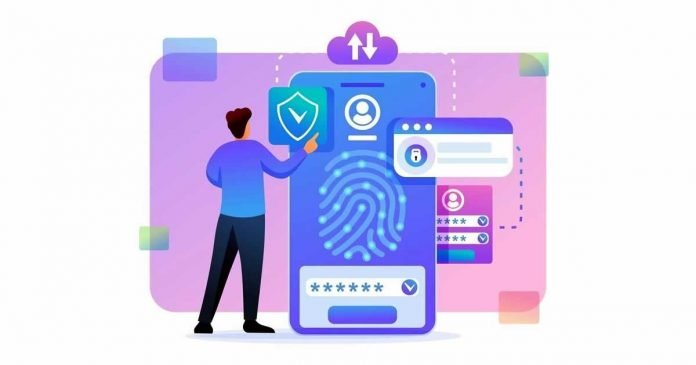
Currently, biometrics remains to be the strongest strategy for verifying personal identity and authenticity. Instead of relying on details that can be easily memorized, such as tokens or passwords, a person is verified by his or her unique physical features. You can read more about biometrics here.

While the idea of biometrics seems to be a fairly complex solution to a simple problem, it solves the common vulnerabilities and issues that exist on common authentication methods like passwords. Biometrics rely on inherently immutable pieces of information about a person.

Advantages of biometrics:

Let’s take a closer look at some prominent advantages of the technology.

Integrity and Non-Repudiation

Textual or numerical pieces of information like passwords or two-factor tokens can easily be memorized by anyone. If a user is operating in a compromised network, attackers can potentially extract them by keylogging, session hijacking, or intercepting traffic.

However, biometrics rely on a person’s physiological features, which are very difficult to replicate and falsify. This ensures that the original person is always present in the verification process.

Improves User Experience

Combined with the security benefits of biometric systems, they also improve the overall user experience. Even if the entire verification process seems complex under the hood, users find it quick and easy to get themselves verified simply by their own presence.

Another reason for the adoption of biometric systems is due to their inclusivity. Anyone can benefit from it, including older adults and individuals who are not highly familiar with the technology.

Disadvantages of biometrics:

However, the idea leads to a certain problem. Even if a system attempts to verify a person’s identity with a very high level of integrity, this strategy is only as secure and effective as the system that implements it.

Tradeoffs of Immutability

Because biometrics will require very specific details about a person, a compromised system that implements biometrics can potentially expose even more sensitive information. 

Because of biometric information’s immutability, there are only very few ways a person can protect himself or herself once the information has been stolen by an attacker.

Easy to Break if Not Well-Implemented

While the difficulty of replicating the specific information about a person’s eyes seems impossible, even sophisticated identity verification systems are only as secure as the device which implements it.

If iris recognition systems are also not well-implemented, anyone can break it by simply having access to a person’s personal picture. In 2017, a group called Chaos Computer Clubs (CCC) managed to fool the Samsung Galaxy S8’s iris recognition system with a dummy eye.

State of Biometrics

While the disadvantages seem to be a sufficient basis to deem biometrics as unreliable, it is still considered as the standard way of verifying personal identity in 2020, and the biometrics market is still expected to grow even further in 2021. This includes the wide adoption of e-passports.

The reason for this growth is due to large and continuous efforts to make biometric systems reliable by implementing end-to-end security. For many institutions, cities, and large businesses, biometrics speed up logistics, and they provide security, reliability, and convenience in a single package.

To see how the state of biometrics may grow in 2021, we need to look at the research, innovations, and progress in the technology within 2020.

AI and Deep Learning Integration

We also see consistent efforts in making biometric systems more and more sophisticated in 2020. For instance, companies in India are attempting to supplement biometric cameras with deep learning algorithms for video surveillance.

Some researchers are also trying to improve the system by combining information about multiple physiological traits (multimodal biometrics) with the assistance of convolutional neural networks, a type of neural network that is commonly applied in object recognition.

Gait Analysis

There is also continuous progress in other strategies, such as gait analysis. In gait analysis, a person is verified according to his or her locomotion. In other words, each person is distinguished by the way they walk.

While gait analysis seems to be only applicable in the context of city-wide surveillance, we are also currently seeing its adoption on the consumer-end

Fingerprint Analysis

However, COVID-19 Pandemic has a severe impact on the fingerprint recognition systems market. The sales in the global market fell down significantly by 22%.

This decrease is aided by the slow transition of businesses and the public sector towards contactless biometric systems. Despite all this, the fingerprint market is still projected to recover by 2021 and grow significantly by 2025.

Conclusion

While the perfections of biometric systems come with certain disadvantages and flaws, biometric systems are still here to stay, and we still see continuous developments in the technology in 2020. 

The market is still expected to grow by 2021, especially due to the slowly growing adoption of contactless biometric systems. They are highly crucial for many industries to stay in momentum, and there are consistent efforts and researches being made to make it as secure as possible.

17 Best YouTube Channels To Learn Web Development In 2021

Best YouTube Channels To Learn Web Development

Are you ready to begin a career in web development but don’t know where to start ?

Don’t worry !

Because today we are going to share 17 awesome YouTube channels where you could learn web development. These channels could be a good partner in your web developing journey.

So start learn how to develop a website :

Best YouTube Channels To Learn Web Development :

1. CSS Tricks — This channel help you to learn some awesome tricks in CSS.

2. Google Web Designer — This channel is all about web designing using Google Web Designer Tools.

3. Code-Course — This channel will help you to learn PHP implementation in websites.

4. Coder’s Guide — This channel teaches HTML web development, cross-platform Java programming, beginner .net programming with Visual Basic and client sided JavaScript web development.

5. Dev Tips — This channel let you learn web design and development. Each video quickly covers a topic to help us all become more awesome at internet.

6. Code Geek — This channel share events, tutorials, courses, talks, webinar, code talk related to AngularJs, NodeJS, Javascript, NodeJs Frameworks, PHP, Python, MongoDb, NoSQL, Couchbase, SQL Server and more.

7. TUTS+ Web Design  Teaches web designing in an easy way.

8. thenewboston — Perfect place to start learn coding and develop your career.

Also Read : Programmer vs Hacker vs Developer — What They Do ? How They Related To Each Other ?

9. Google Chrome Developers — This channel will explain the fundamentals and how to use web applications.

10. Level up TUTS — This channel helps you to learn web development in-depth in easy to follow tutorials.

11. Adam KHOURY — Learn to code and design like a professional online free. Master development technologies like JavaScript, PHP, SQL, HTML, CSS, ActionScript and more.

12. Brad Hussy — Teaches you Bootstrap,jQuery,Php etc.

13. Derek BANAS — You can find videos about programming in so many languages on this YouTube Channel.You can learn Dart Swift and Visual C here.

14. Starhere.fm — One of the best channel to start to build a career in web development.

15. Mackenzie Child — This channels covers various topics from coding and design to making web applications.

16. J-REAM — Get tutorials related to PHP, MySQL, JavaScript, jQuery, Python, Linux, Photoshop, Illustrator, and other things similar.

17. Learn Code-Academy — Learn web development, web site design tutorials and more.

How To Install Windows 10 Or Linux On Mac With Apple M1

Install Windows 10 Or Linux On Mac With Apple M1

Installing Windows 10 on an Apple M1 or on popular GNU / Linux distributions is now possible through virtualization.

Ever since the Apple M1 SoC of Silicon family made an appearance, modding enthusiasts have been waiting to open the new platform that the Cupertino firm has created to motorize its new Mac computers into a replacement for the Intel x86 it used until now. We have already seen how a developer managed to run windows on Mac with M1, and there are also projects for Linux on the way.

Windows 10 or Linux on an Apple M1

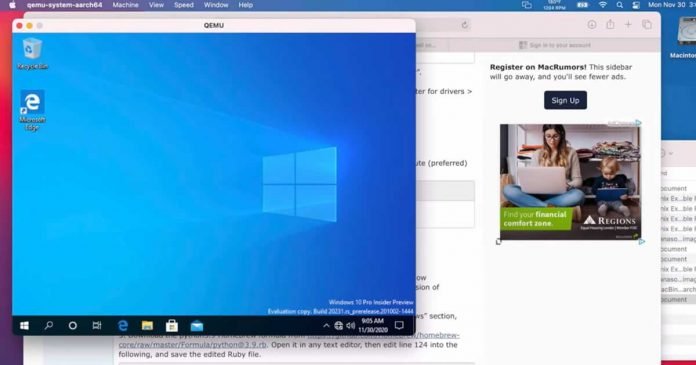
Thanks to the efforts of various developers, it is now possible to boot Windows 10 and Linux on an ARM Mac, albeit through virtualization. Alexander Graf, an engineer at Amazon Web Services, has been toying with the popular open-source machine virtualizer and emulator QEMU to add Apple Silicon support.

He has worked to patch the Hypervisor framework needed in the QEMU codebase to run Linux and Windows as guests on M1 Macs. The development has come a long way and is now at a point where almost all basic functions work, including virtualized audio and network interfaces.

What’s even more interesting is that traditional Win32 apps built for the x86 architecture work fine on the Windows 10 virtual machine, thanks to the WoW emulation layer for ARM64. Other developers have come together to fix bugs or develop an installation process that is easier to use. The result has been translated into a very interesting video tutorial for those who want to try it.

Installing a virtualized instance of Windows 10 on a Mac with Apple Silicon doesn’t remove the main installed operating system, so you don’t have to worry about breaking anything.

Apple has the most closed hardware-software platform on the market and does not want to hear or talk about installing alternative operating systems to the installed macOS. And this is so because these Macs are going to serve as an experiment for the development of a common and universal system that can govern any of their devices. Plus a unique App Store and a unique development platform.

So much so that Apple has no plans to support BootCamp — the official software for installing Windows 10 — on its Macs with the M1 SoC. The idea of ​​Linux or Windows running on a low-power yet competent ARM platform is intriguing to any developer and competitors.

Microsoft’s attempts with ARM on PCs haven’t worked so far, and — they say — Windows 10 on ARM runs better on an Apple M1 than on proprietary devices like the Surface Pro X. The possibilities of a GNU/Linux distro on a Mac ARM are just as interesting and welcomed by even Linus Torvalds.

How Should A Designer Get Inspiration?

well-qualified and talented programmers

Of course, the area of graphic design, one way or another, is related to art, but design in the pure form of art is not. Unlike painting and poetry, the design is not an art for art. Design is not a goal but a means to promote certain goods and services. Therefore, do not depend entirely on the tides of inspiration; the customer will not wait for you.

When we talk about the inspiration for the design, we mean sources of creative ideas or illustrative examples like mockups of successful works that will help us perform a certain task.

Inspiration is the driving force behind the creative career of designers on the planet. Often the flow of creativity and ideas is replaced by emptiness and idle time. Where to get inspiration to the designer, if the project requires an urgent decision?

1. Websites – portfolio

For the development of the designer is very important what he sees every day. We need a visual flow of information, which would form a taste and orientate in modern trends. For this purpose, there are two well-known but no less useful resources: Behance and Dribble.

On the first site, you will find illustrations (like free envelope mockup), branding, web design, and much more. On the second site, you will find mainly user interfaces and illustrations. The main convenience of resources — in forming your own ribbon of what you like. Subscribe to your favorite authors, see a selection of the most popular, and form your own ribbon.

And if you are interested in 3D graphics, you should definitely look through https://cgsociety.org/. Here you will find a dental level of work, a lot of cool concepts for computer games, movies, and fan art.

Not the most obvious, but very useful resource – Pinterest. On it you can find great artboards of leading designers. And it is also an excellent service for the selection of references and ideas: one image will immediately pull dozens of related pictures on the subject.

2. Websites of festivals and contests

In addition to festivals, once a year calling the best works, some contests have moved to the format of daily updates and have become full-fledged information resources.

The main ones – Awwwards and The FWA – publish “Site of the day” every day. The resources work both as catalogs of sites on topics and as collections of projects of designers and studios. Visit the nominee section and enjoy the boldest and most diverse solutions. Or explore collections on topics that interest you.

3. Thematic communities

While portfolio sites and festival sites are more working tools, communities need more to inspire and find ideas.

Muz.li is the current pulse of web design in the collections from InVision. Unlike the usual dribble collections, there are no such twists, and the content is selected manually by the editorial team. Install the application to Chrome and let it be your first screen. By the way, our agency several times, got into the issue of Muz.li, which gave a tangible influx of users in a short time.

On Hudsandguis, you can explore fictional interfaces in the movies. Many of these projects are initially carefully thought out to keep the logic from film to film. Suitable for those who like to pay attention to details.

Designyoutrust is a full-fledged magazine about the most different areas of design.

The most stylish public with beautiful daily minimalistic picture posts is, of course, Designcollector. And a little crazy ELLO updates its ribbon more often and more daring visuals, so they complement each other well.

Of course, most of the information we get from the Internet. But there are so many possibilities to find inspiration around us that we cannot ignore these sources. Look for new ideas in art: visit exhibitions, watch movies, go to theaters. Pay attention to what is around you: nature, architecture, technology. Finally, communicate as much as possible – it is often people who inspire us and reveal our creative abilities. Do not limit yourself in your search and learn to absorb as much as possible. And then your projects will be really strong.

How MVPs Can Improve SaaS Releases

IT Support and business

When utilizing the software you use every day; you might have noticed that there are always updates and features being added constantly. Some of these updates were actually requested a long time ago before the product you’re using was even in your hands. Occasionally, businesses will release early versions of their programs and use those trial runs to gather information on future iterations and releases so that their final product could be all the more enticing to potential consumers.

By releasing an MVP, or minimum viable product, a service can get real-time usage by consumers who can evaluate the features and respond with feedback on what to add or improve, and the development team can take these ideas and results into account when plotting the full product release.

How Developers See Gains

The development of a SaaS product would especially benefit from this release format because they are long time offerings where businesses encourage consumers to stick around and subscribe for as long as possible. Typically, an untested product launch could have some unforeseen pitfalls, such as glitches that were undiscovered beforehand or security flaws that could be potentially exploitable. We’ve all seen headlines about phones overheating, game consoles crashing, and software accidentally deleting files, and no one wants to have that be their launch day headline. 

SaaS MVP has significant advantages, however, because businesses and developers can release versions of their product that work well enough to be used by consumers, and any kinds of errors can be dealt with before they become a widespread problem. The issues that might have sprung up can be addressed, and businesses can learn what aspects of the service require more focus as development moves forward into the next iteration or final launch.

Providing Room for Iteration

Consumers who were looking forward to the product can also try it out with the basic features that they were promised beforehand. While an MVP will not include the full suite of features that are aimed for by the developers, it will contain everything a consumer would need in order to perform the base functions of the software. For example, if it was a storage software, the MVP release would at least let consumers store and re-download their files, maybe without as much storage space or organization features that the final release would have.

An MVP release not only gets a product out the door faster, but it can help establish the development timeline for the rest of the product as the initial feedback from the release can help developers plot their course, all the while consumers will benefit because they get to try out services faster, and can provide their replies in a meaningful manner which will help deliver a more optimized release in time. 

At the end of the day, a service is only as good as its offerings, and by releasing an MVP, a business can get a glimpse into what the future of their release will be, and they will afford more than enough time to further improve what they build.

Tips For Solving Slow Queries And Proper SQL Server Performance Tuning

Binary target

There can be many culprits behind sub-standard SQL Server performance, and if poorly optimized queries are not pulling their weight, this should be at the top of your troubleshooting to-do list.

To that end, here are some tips that will help you remedy query complications and some advice on how best to handle performance tuning more generally in an SQL Server environment.

Use the right monitoring software

One of the biggest hurdles to efficient SQL Server query optimization is being able to pinpoint the queries that are causing problems in the first place. The best way to do this is with the right monitoring software, of which there are many competing options to consider.

The assets to look for in SQL Server performance tuning solutions are nicely covered here, and as you might expect, the identification of slow queries can be automated, which makes the life of the administrator much easier. Furthermore, the software should let you see a graphical representation of execution plans for queries so that those which are creating congestion can be tuned in a jiffy.

Consider locking priorities

Query conflicts can create sluggish SQL Server performance if too many processes are trying to simultaneously use the same resources.

The over-use of exclusive locks can exacerbate this issue, although it is also worth remembering that blocking is an entirely normal and ultimately essential part of the way that this type of database operates. Because of this, you should focus your attention on any deadlocks that occur, as this is indicative of a more serious issue and in this context, one of the two competing processes will be terminated, which is clearly suboptimal.

Indexes may be the issue

Queries taking too long to execute could be caused by an excess of indexes in your database, so by staying on top of your administrative responsibilities in this area, you could tune performance and avoid having to spend a lot of time rewriting the queries themselves when they are not at fault.

If possible, unnecessary indexes should either be deleted altogether or merged. Also remember that indexes can add to the efficiency of a database in the right circumstances; it is all about balancing this to avoid unwanted slow-down.

Limit records returned

The larger the database, the more information a given query may return when it is run, which of course means more processing time is required.

Because of this, it may make sense to explicitly limit the number of records that are called up by a query using the appropriately named LIMIT statement. You can set the limit to as many or as few records as you see fit, but it is another example of how solving slow SQL Server queries is not necessarily a hugely complex process, even if it is one which lots of DBAs need to address on a regular basis to keep up with their maintenance and optimization responsibilities.