Home Blog Page 278

5 Technologies to Study More Effectively

Students and technology

With the advent of the internet, educational technologies have also enjoyed rapid growth. Knowledge sharing and development used to be the domain for a privileged few, but contemporary technologies have changed the way students learn and grow.

Teachers and students can now connect far more effectively over long distances to support learning. Technological progress has made it possible to access a variety of tools to aid the learning process, improving efficiencies on both ends. Five favorite tech tools are covered below.

World Wide Web

A vast number of sources are provided by the World Wide Web, making student learning that much easier. Students are encouraged to search for credible sources to support their learning. Reliable sources on the internet encompass peer-reviewed academic journals, government and educational sites, and those that specialize in certain subjects.

Specialized websites are populated with articles written by experts in their field. These include medicine, psychology, business leaders, and the like. Reliable websites have gained a certain level of popularity, and are likely to be highly ranked by Google.

Students can look out for those run by experts in their fields and UK. EduBirdie is a great suggestion here. Use this essay writing service located in the UK which has native writers to help you with your writing work. From essays to dissertations, theses to term papers, they do it professionally.

Smartphone technology

Mobile phones have gained significantly in popularity for a variety of purposes. As many students possess mobile phones but don’t all have PCs, mobile learning has become a useful technology to support students. Adding to the mobile knowledge accumulation experience is the plethora of learning apps available.

Students can access software apps designed to improve mathematical skills, language learning, and many others. Most of these tools aid students to pass exams when access to textbooks and supportive material in hard copy is not available.

Collective learning is aided by social media sites

Social media sites and those like LinkedIn have expanded the way students learn and access information. Collaboration is now possible over these sites, helping students connect with others when they hit a roadblock in their understanding of a concept. Social media channels enable rapid connections to get the answers you need—either from a fellow student or a teacher.

Learning new skills and more about the world we live in has also become commonplace, through these sites, and many others. Register on a social media site to speak to professionals in their field, or collaborate on joint projects with student peers or professionals to acquire in-depth knowledge about the subject matter.

Enhanced connectivity through email and chat apps

Connections between people with PCs, tablets, or smartphones is virtually instantaneous, dependent on your Wi-Fi connection and data.

Applications such as WhatsApp, iMessage, Skype, and Google Chat have changed the way that students and their teachers connect with each other. Group chats are possible on some of these apps, allowing for single communications, rather than repetitions to individuals.

Rapid communication technologies are effortless, making connections over vast distances possible. Add video conferencing to the equation, and you have real-time discussions between curious individuals. There is no longer a need to meet face-to-face with the multitude of technologies present that enables student learning.

Another benefit presented by social media is personal branding. Individuals can begin building networks on sites like LinkedIn before they complete their studies. Network building and personal branding go a long way toward finding the ideal job, once you’re qualified.

Free online software

Advancements have exponentially increased the potential for the use of technology in education. Free study aids like plagiarism checkers and grammar tools aid students in submitting work that proves their work hasn’t been copied or with errors. Exam and study aids are offered on sites such as SparkNotes and the Khan Academy.

Valuable help is also provided by educational sites such as Quizlet and Evernote. Students who have internet access really have no excuse to fail, provided they have sufficient data and a relevant device to access all of these educational sources.

Conclusion

Effective student study has grown exponentially since the internet was made available to the man in the street. Technological products have developed as a result of this invention, making access to knowledge and information a simple process. Rapid connectivity, social media sites, and a variety of apps make individual and collaborative learning in real-time, an exciting reality. If students have a PC, tablet, or smartphone, and the will to learn, they can make the most of their potential with modern technologies.

Critical Overview of Universal Serial Bus Design

USB4 is ready now

A computer is a complex system that is made up of millions of elementary electronic components. Universal serial buses are an important element of any modern computer.

You need to understand the multilevel nature of complex systems. This affects both their description and their design. At each level, its structure and function are analyzed in the bus. Here are some important elements of a universal serial bus design:

  • Structure: The way the components are interrelated
  • Function: The operation of each component as part of the structure

The bus-type interconnection structure is considered to be highly important. Newark has more detail in this whitepaper.

Introduction to The History Of Universal Serial Buses

Although the bus plays a very elementary role in the operation of a computer system, the development of the PC bus represents one of the darkest chapters in the history of the PC. IBM unsuccessfully tried to achieve an open system and make all kinds of information public. However, it failed to properly document the exact steps of the bus signals, probably because the engineers were operating under the assumption that nobody would need this information.

The bus represents a series of cables through which data can be loaded into memory and then transported to the CPU. The bus is essentially the data highway within the PC since it communicates all the components of the computer with the microprocessor. The bus is controlled and operated from the CPU. This created a need for d-sub connectors.

The purpose of connecting a card to an expansion bus is to make it work as if it were directly connected to the processor. To make these characteristics feasible, the XT expansion bus had the same bus width (8 bits) and operated at the same clock speed (4.77 MHz) as the 8088 processor itself.

With the evolution of processors, a brand-new type of bus was designed. In 1984, IBM introduced the AT PC (with the Intel 80286 processor), which severed the relationship between bus and microprocessor. This was a big deal at the time since was believed to be impossible. The clock processor of these PCs theoretically worked at the same speed as their bus clocks. However, the new change IBM implemented created the possibility for PC clocks to run faster than bus clocks. So, the bus that incorporated the AT used 16 bits of bandwidth and was working at 8.33 Mhz. This unofficial design approach was officially named ISA (Industry Standard Architecture) in 1988.

Since the ISA bus had some limitations, IBM developed another type of bus that operated at 10 Mhz and supported 32-bit bandwidth. This bus was mounted in the PS/2 range. The big problem with this bus is that it was not compatible with the previous ones and needed expansion cards specially designed for its structure.

As the market needed an ISA compatible bus that was faster, most manufacturers established the specifications of the EISA (Extended ISA) bus that expanded the data path up to 32 bits. However, the need for ISA compatibility made this new bus had to carry the basic transfer rate of ISA (8.33 Mhz).

But the great revolution was about to come. Intel 80486 processors had a major impact on the market. On the other hand, a new generation of graphic systems like Windows created a greater demand for new buses. When handling color graphics, users encountered major bottlenecks when switching from the processor to the ISA bus (the 80486 worked at 33 Mhz and the ISA bus at 8.33 Mhz). The only solution was to link the graphics adapter and other selected peripherals directly to the microprocessor. This is where the local buses come in. VESA introduced the first type of local bus. It was called VESA LOCAL BUS (VLB). This type of bus revolutionized the market since it allowed a speed of up to 50 Mhz and a bandwidth of 32-bits (although in its 2.0 specification it is 64-bit).

In 1992, Intel introduced a new local bus called PCI. This new bus did not improve VLB performance. However, it overcame the shortcomings of 80486 processors. The PCI was a newer and more reliable bus. The speed of this bus was initially 20 Mhz. The next generation of PCI buses had bandwidth 32 bits. Currently, the transfer speed is 33 Mhz and its bandwidth reaches 64 bits. Another characteristic of this type of bus is the possibility of connecting cards that work at different voltages.

Why Linux boots and shutdown faster than Windows

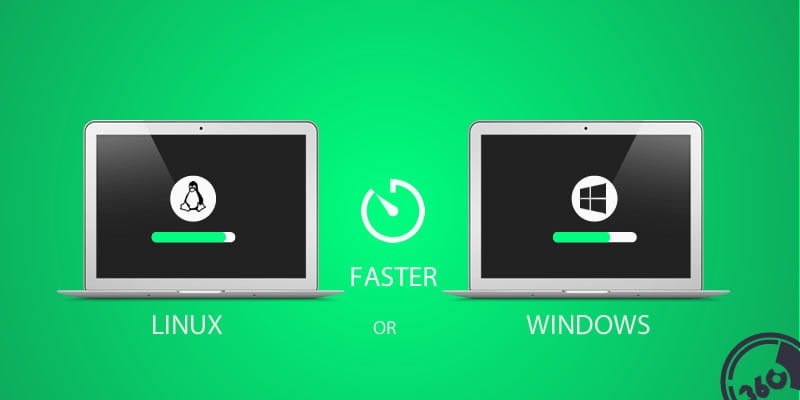
Linux boot and shutdown faster than Windows

Do you ever wonder why Linux based operating systems like Ubuntu, Linux Mint, Elementary OS, Kali Linux, etc boots and shutdown faster than Windows operating system?

No!

In this article we are going to break down it for you.

Why Linux Boots Faster than Windows?

First we are going to discuss why Linux boots faster than windows .

A lot factors affect the boot time of both Linux and Windows. Some of the notable reasons are :

Kernel

Kernel is the nucleus of an operating system. It has complete control over everything that occurs in the system.

Linux Kernel is monolithic — means it holds all functionality,even drivers ,memory management, task scheduler and file system. So while booting Kernel loads all these functions at once.

And Windows NT kernel is like a micro-kernel which only holds basic features during boot process, then loads other functions,drivers and file systems. Which makes Windows to boot a bit slower than Linux.

Services and Programs

In Windows many services auto-starts during start up along with many programs like Antivirus which makes booting process slow. While in case of Linux it is limited.

Backward compatibility

Backward compatibility allows software systems to successfully use interfaces and data from earlier versions of the system or with other systems.

And Windows has a long history and they support old software frameworks, so during boot time, Windows have to load these libraries to make the Windows experience smoother.

While Linux distributions doesn’t have backward compatibility feature.

Fragmentation

Fragmentation means the storing of a file in several separate areas of memory scattered throughout a hard disk.

In Windows files are fragmented. So hard disk takes more time for read and write during start up. And also when you installs more programs in Windows, then system takes more time to load. You can notices these by delay in boot time with new and used Windows system.

And in Linux filesystem used is EXT, which doesn’t requires fragmentation. Because Linux allocates files in a more intelligent way. Instead of placing multiple files near each other on the hard disk, Linux file systems scatter different files all over the disk, leaving a large amount of free space between them. So  read and write during start up is faster.

Desktop Environment

Another main reason behind faster Linux boot is its Desktop Environment (DE). Which is quite faster than Windows.

Why Linux Shutdown Faster than Windows?

Now we are going to discuss why Linux shutdown faster than Windows.

Services in Windows delays shutdown

During Windows shutdown, most services will generate at least one event on terminating. Sometimes each service may have many events.

Eg “NTP Service terminating”, “Printer Driver got signal to terminate”, “Printer Driver is flushing the queue” “Printer Driver Exiting”. These Events are “objects” and are slow to create and destroy, which adds up to shutdown time.

However, during shutdown on Linux, most processes simply print a line on the console or/var/log/messages and exit. Which makes a smoother shutdown.

Cache

Windows may cache many things and these caches have to be flushed to filesystem on shutdown. But caches are handled better in Linux, with periodic “fsync” executions, on better filesystems.

GUI

Graphical User Interface (GUI) in Windows saves a lot of state information most of which is stored as objects. Which affect shutdown time.

While in case of Linux, Command Line Interface (CLI) has almost nothing to save, except for the shell history file. Most state information is in simple text files.

Process & Programs

Like services, some process and programs in Windows a lot more time to exit during shutdown and it will hung up and sometimes we have to forcibly terminate the task.

And Linux takes less time to each process to exit, and most programs may respond quickly and exit faster during shutdown.

However unlike previous Windows versions, Windows 10 some what improved its boot and shutdown time but still doesn’t faster than Linux.

5 Things to do before dual booting Linux with Windows

5 Things to do before dual booting Linux with Windows

We love Linux but most of us want to keep our Windows too. So usually we go for dual booting Linux with Windows to resolve that problem. But if you are an absolute beginner you could have a lot of doubts about dual booting Linux with Windows.

Majority of novice users face some after installation trouble — missing GRUB, GRUB rescue,brick system — while they try to dual boot Linux with Windows. This usually happens because they forget to do some essential settings before dual dual booting Linux.

In this article we are going to list 5 such important things you have to do before dual booting Linux with Windows.

Also Read : How To Dual Boot Kali Linux v2.0 With Windows 10

5 Things to do before dual booting Linux with Windows:

1. Disable Secure Boot

This is the most important step you have to do if you are planning to dual boot Linux with Windows — Disable Secure Boot.

Secure Boot helps to make sure that your PC boots using only firmware that is trusted by the manufacturer which usually only supports OS Microsoft Windows 8.1 and higher. And you have to disable Secure Boot to run some  PC graphics cards, hardware, or operating systems such as Linux or previous version of Windows.

So how to disable Secure Boot ? — All you have to do is to open the PC BIOS menu (access this menu by pressing a key during the bootup sequence, such as F1, F2, F12, or Esc — different for different manufactures) and find the Secure Boot setting and set it to Disabled.

If you using Windows 8.1 or Windows 10, then you can disable Secure Boot without entering BIOS. You just have to hold the Shift key while selecting Restart. Go to Troubleshoot > Advanced Options: UEFI Firmware Settings and choose disable option for Secure Boot settings.

**NOTE : In some cases, you may need to change other settings in the firmware, such as enabling a Compatibility Support Module (CSM) to disable Secure Boot. To use a CSM, you may also need to reformat the hard drive using the Master Boot Record (MBR) format, and then reinstall Windows.

2. Disable Fast Startup

Majority of users forget to disable Fast Boot or Fast Startup before dual booting Linux with Windows — which results system to boot into Windows after Linux insatallation without showing the GRUB menu. Fast Startup is a setting that helps your PC start up faster after shutdown and by default it is enabled in Windows.

How to disable Fast Startup ? —  Unlike Secure Boot you don’t have to enter in BIOS to disable Fast Startup you can do it by going into Power Options in Control Panel like as follows :

  • Open Control Panel change view by “Large icons/Small icons”
  • Click Power Options.
  • Click Choose what the power buttons do.
  • Click Change settings that are currently unavailable.
  • Scroll down to Shutdown settings and uncheck Turn on fast startup.
  • Click Save changes.

3. Create New Partition for Linux

This is not important but it would be better if you create a separate partition for Linux before installing. Yes I know you can create it during installation process but if you accidentally messes up with wrong partition during installation process may wipe your hard disk. So always create a new partition before dual booting Linux with Windows.

4. Install Windows first

Sure you can install Linux and Windows in any order but highly recommend that you should install Windows first because setting up the Windows boot loader to load Linux is a challenging task. Because after installation Windows completely overwrites any boot loader that is already there, so if you have Linux installed already you can no longer boot Linux without playing around for hours or reinstalling Grub from a boot CD.

So it would be better and less complicated if you install Linux after Windows because most of the popular Linux distros automatically add Windows installation to its GRUB loader so that you can choose either Linux or Windows during system startup.

5. Live Boot then Install

An interesting unique feature of popular Linux distributions is that you can try them without being installed.  So if you are new to Linux then you could be confused to choose your first Linux distro — that time just create bootable USB of your Linux distro and live boot it.Live booting helps you to lookup the features of that Linux distro.

Once you installed a Linux distribution along with Windows and you didn’t liked its features — it will be a royal pain in the butt to uninstall that Linux without messing Windows Master Boot Record (MBR). So always live boot to choose right Linux distro for you.

Why You Should Tweak Android Devices?

why tweak Android

Why you should tweak Android device? — Tweaking Android means “fine-tuning your Android smartphone to improve its performance, and looks by using a little know-how and the right choice of apps”.

The majority of the population now owns Google’s Android as their mobile platform, and if you are a proud owner of Android, then, you must know the vast possibilities of Android functionality. Android is based on the Linux kernel, so it’s open-sourced and the best ready-made, low-cost and customizable operating system for high-tech devices.

Now about Android customization. One of the best things about Android is that it offers you a wide variety of options for setting up your smartphone the way you want it to be. Customizing your Android phone will make it unique in performance and UI. In short, if you are a proud owner of Android device then there is no limitation to tweak Android device from top to bottom with the help of some best customization apps in the market.

When we hear about Android tweaking, another word that comes to our mind is rooting. Rooting Android phones means to grant some advanced admin privileges to the stock Android so that, it can do more customization and improvement. However a lot of newbies are afraid to root their smartphone thinking, it will brick their device — in fact, it’s true! But with right instructions and tools, anyone can root their smartphone. We will soon publish a detailed article regarding rooting.

Am not saying that, only rooted Android phone gives the best customization options. In fact, you can tweak Android devices without root permission too. In the upcoming articles, you can see how to beautifully set up your Android devices even if it’s rooted or not.

Reasons Why You Should Tweak Android Devices?

Without further ado, check out the reasons why you have to tweak the Android smartphone.

1. Fresh Unique Look:

Unlike other mobile platforms, Android gives us the opportunity to make every phone look unique by installing some cool launchers and widgets. This customization option will help you a lot in case you have an old Android smartphone since you might be quite bored by using the same interface.

Along with launchers, there are also a lot of other apps which will provide a wide variety of wallpapers, screensavers, icons, lock screens, etc.

2. Improvement In Performance:

You can also improve your Android phone’s performance by installing the right apps. You can control data usage or auto kill RAM hogging apps or manage storage by installing suitable apps.

However rooted phones guarantee more tweak in performance than a non-rooted phone. Because there are some special apps with advanced options — exclusively available to rooted devices — to tweak Android settings to get more efficiency in its functionality.

3. Usability:

Tweaking Android will also help you to ease the usability of the device. There are a lot of apps available in play store to make your Android device more user-friendly by making some necessary settings readily available in the notification area or home screen.

4. Save Battery Life:

Did you know? — Some color combinations of wallpapers and screensavers can save your phone’s battery life. So selecting wallpapers using wallpaper tweak apps is going to solve that problem. Check out some hacks and tweaks to save battery life on Android.

Soon you are going to see a lot more Android tweaking ideas in our new section — Android Tweaks. Until then check out some of our best collections of tweaks without rooting your phone.

How to Spy on An iPhone without Software?

Spy on An iPhone without Software

All of us are all familiar with how much an iPhone is secure when it comes to smartphones. People usually prefer an iPhone due to its fast and attractive user interface. Now most of us must have wished to spy on the iPhone device of our friends or any family member. Spying on the iPhone does not walk in the park due to its advanced security mechanisms.

Now some people like professional hackers claim to hack on any iPhone with any software. Hacking on an iPhone by installing software on the phone or PC doesn’t sound smart and easy. For any novice user, spying on an iPhone is like impossible. What if you get to know that you can actually track any iPhone device without learning any kind of skills?

Yes, this is totally possible for you to spy on an iPhone device without requiring any software or app installation. People usually perform different risky techniques or tricks to break into the iPhone but those tricks won’t work. Using a phone spying app will let you spy on any iPhone device without any installation or learning. Let’s discuss one of the best phone spy apps.

Spyic- An Innovative Spy App

Spyic is one of the popular and professional spying apps in the World right now. This app is the trust of millions, people are using Spyic on a daily basis. Parents, employees, companies, and almost everyone. No one would have imagined that spying app like Spyic can be used to spy on an iPhone without software. There is no risk or problems involved in the use of Spyic for iPhone monitoring. Some spying apps ask users to perform Jailbreak before spying on an iPhone but that’s not the case with Spyic. You don’t have to root your Android or Jailbreak your iPhone device to perform phone spying.

Spy on an iPhone without Software

Although Spyic is an app, this is a web-based app that you can operate from any web browser on any device either PC or phone. You would not have to install Spyic on your iPhone to perform phone monitoring. The best thing about Spyic is that this app runs on stealth mode which means no one can detect you spying on an iPhone device. This app is more easy and simple to use beyond your expectations. Going through the whole Spyic review will clear most of your misconceptions about this phone spy app.

You would be surprised to know that there are more than 30 spying features added in this spying app. All features have been designed according to the requirements of users in this modern world of technology. Let’s get to know the main spy features of this brilliant phone spy app.

  • Call Tracking: An amazing spy feature that gives you complete monitoring control over call records of the target iPhone device.
  • SMS Tracking: Access all text messages of an iPhone you want to monitor, reading sent, received, and even deleted messages is possible.
  • Location Tracking: Track an iPhone’s location on the basis of GPS or WiFi along with full access to geographical address coordinates.

Besides these three, there are many other spying features waiting for you to explore them once you sign up for Spyic. Facebook, Instagram, WhatsApp, and all installed third-party apps can be tracked without getting detected. So, social media apps, web browser history, and almost everything can be monitored on an iPhone device through this spectacular phone spying app.

All spy features can be used right from your Spyic account’s dashboard screen. Now, most of you would be feeling curious to know how to spy on an iPhone remotely using Spyic? The wait is over, we are going to view all steps we need to follow in order to start iPhone tracking with Spyic.

How to Spy on an iPhone Remotely using Spyic

Some of you might be thinking that spying on the iPhone using Spyic would be very difficult. Well, spying on an iPhone has never been this much easy and fast like it is now. All you have to do is to follow all required steps and then you are ready to go.

Remember you will not have to physically access an iPhone to perform phone monitoring. Let’s have a look at all those steps that we need to follow in order to track an iPhone device.

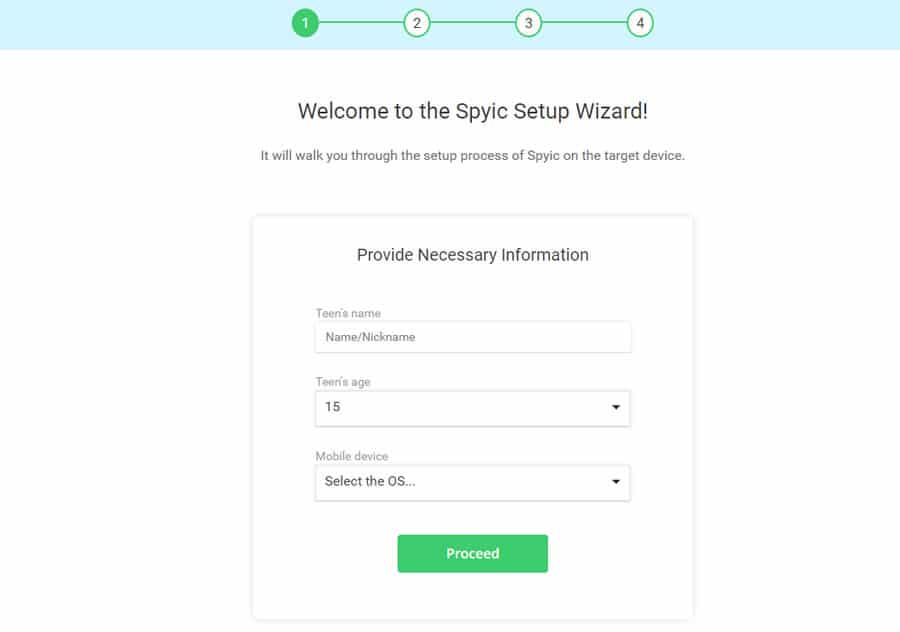
Step 1

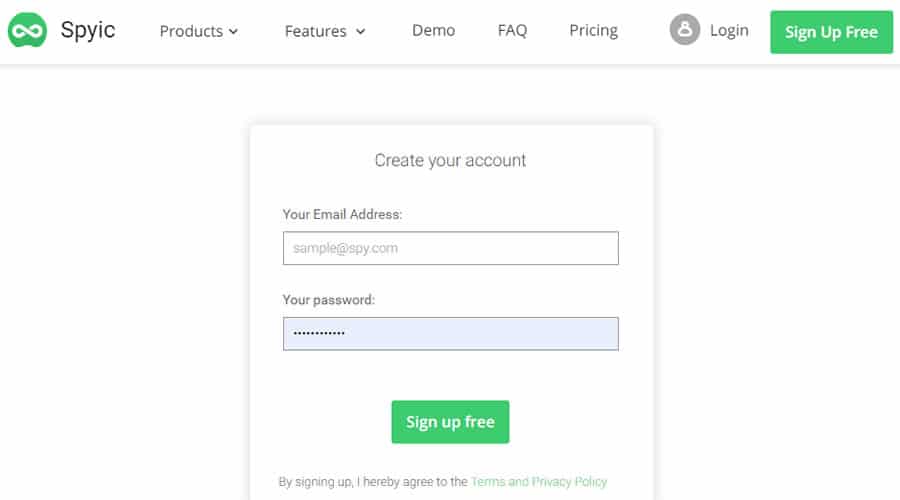
At first, you have to open your web browser and visit the official website of Spyic. Now click on the Signup button to start creating an account by entering Email and Password.

Spy on An iPhone without Software

Step 2

You would be given two options, Android and iOS. Select iOS because you are going to track an iPhone device.

Spy on An iPhone without Software

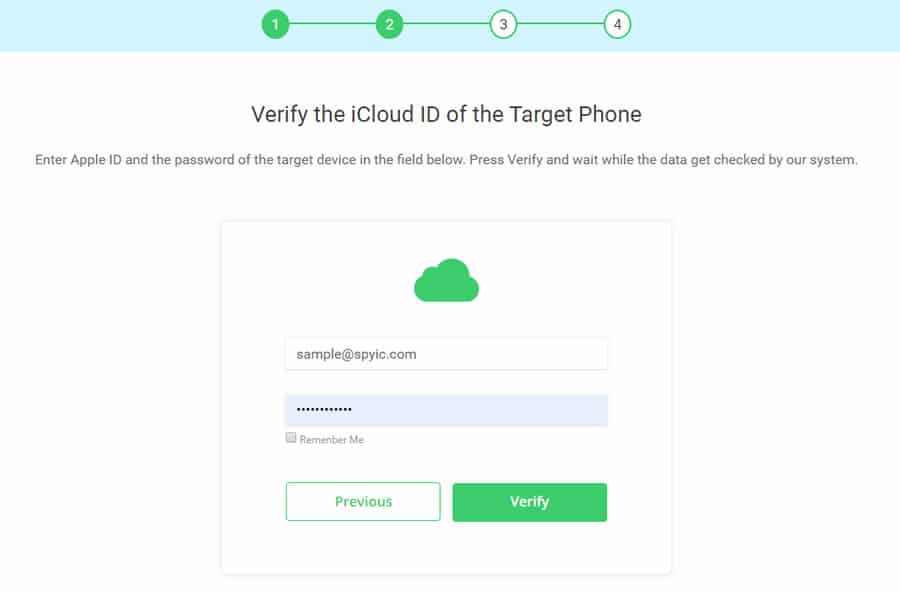
Step 3

Now you have to enter the credentials of an iCloud account that is logged in on the same iPhone device you want to target.

Spy on An iPhone without Software

Step 4

Wait for a few seconds to let the system verify the iCloud account. After following some onscreen instructions you would complete the account creation process.

Congratulations, you have managed to create an account on Spyic. Now open any web browser, sign in to your newly created Spyic account and start tracking that configured iPhone device. All spy features would be listed on the left side of the dashboard screen of your Spyic’s account.

Some people don’t get satisfied by reading reviews about any app, they always want to try that thing by themselves. Following this issue, Spyic is offering an online ‘Demo’ version that you can avail by click on the Demo tab on Spyic’s official website. This online demo version of Spyic will give you overall access to let you know how the Spyic app works.

Conclusion

We’ve reviewed the whole Spyic phone spy app in details, we can say that no spy app is better than Spyic in terms of quality and professional spying services. Every feature and service of Spyic is up to the expectations of the people.

There are no risks involved and no need to perform Root or Jailbreak sort of activities to start phone tracking. The stealth mode of the Spyic app is what gives a guarantee to users that no one will detect them spying on an iPhone device. So what are you waiting for? Visit the Spyic’s site and start tracking an iPhone device according to your needs.

Best course in Hadoop for the beginners

hadoop-beginners-course

We all are aware of the momentum shown by Hadoop in the present market. It is almost next to unstoppable. The significant reason behind its energy is its open-source nature of the operation that helps it to grow widely in the industry.

As compared to the traditional approach, it brings a unique and most updated strategy for the organization to store, analyze, and share big data. Let us now jump into the advantages of using Hadoop and how it is beneficial for small and big organizations.

A deep dive into the present Hadoop market

A study suggests, and as per the Big Data Analytics Market Report, the Hadoop will cross $50 Billion market revenue in 2020. There is an upward trend in Hadoop’s market. Big organizations have realized the importance and significance of Hadoop in handling and managing Big Data.

Day by day, we see the data sources are increasing, and more and more data is getting created. With Hadoop in place, it is possible to handle and manage such a vast database.

According to a survey conducted by Sand Hill Group in 2013, there was a skill gap concerning Hadoop technology, and there were only a few professionals as compared to the requirement. Both these issues needed to be answered. The only way to solve these issues is by conducting Hadoop training, to enable professionals to meet the market needs.

Now that we have discussed the need to train professionals in Hadoop, we must understand why Hadoop training is necessary. Here are the reasons to answer the question.

Need for Hadoop training in the present situation

Technology is new, and the market needs skilled professionals

It is evident from the research that the implementation of Hadoop was successful. As compared to the demand for skilled professionals, there are lesser professionals equipped with the skills required to work as a Hadoop professional. The only way to fill the gap is by conducting Hadoop training.

Increase in demand for Hadoop professionals

With the emergence of digital technology, there are a lot of data sources through which data is being recorded and stored—for example, mobile apps, social media, and many more.

Now, to handle such a massive amount of data, there is a need for Big Data experts. Hadoop is the only technology that pops in our mind when Big Data is concerned.

Hadoop is a comparatively new technology, and after the emergence of Hadoop release 2.0, organizations are facing a scarcity of Hadoop professionals. They are either asking internal professionals to switch to Hadoop technology or are forced to hire external professionals. This scarcity suggests that there is a need to conduct Hadoop training.

An increasing number of professionals looking to switch their careers in Hadoop technology

It is a trend that whenever a new technology is released, and it receives excellent support from the industry, professionals tend to switch to the latest technology.

With the growth of Hadoop technology, more and more professionals from Java, Data Warehouse, Mainframe, and testing backgrounds are willing to switch to Hadoop. Professionals are ready to leave their comfort zones to learn this new technology.

The Hadoop technology has taken precedence over other technologies owing to its successful implementation.

More professionals switching to Hadoop technology can be one of the significant reasons to conduct Hadoop certification training.

Hadoop’s in-house talent

Organizations are keen to help in-house professionals to gain the necessary knowledge required to work in Hadoop technology. Professionals who are interested in switching their careers in Hadoop technology are given preference over the others.

Training in Hadoop gives you an edge over the other technologies and other technology professionals.

Professionals around the world are not at all free to attend in-class training. So companies are bound to conduct online training for Hadoop technology as well as we have seen organizations partnering with online training giants to help their in-house pool of talent to get the necessary training in Hadoop technology.

There are two reasons why someone will be pleased to attend the online training,

  • The ease of study. You can attend the online sessions at your comfort.
  • The professionals have the flexibility to attend the seminar. You can visit these seminars at any time and anywhere in the world.

Let us now take a look at how necessary online training is. And how it will help you to gain expertise in Hadoop technology.

Big Data Hadoop Certification online training gives you a hands-on experience of elements that fit with the big data lifecycle. It helps you to get awareness about several Hadoop frameworks.

The Big Data online training is designed to give you an in-depth awareness of the Big Data framework using technologies like Hadoop and Spark.

Benefits of online Big Data Training in Hadoop technology

According to research, Hadoop market revenue will cross $80 billion by 2021. There is a shortage of 1-1.9 million prominent data professionals in the USA.

Big Data Architect, Big Data Engineer, and Big Data Developer are some of the designations you will be hired on completion of the online Big Data training in Hadoop technology.

Companies like Amazon, HP, Accenture, Visa, Microsoft, American Express are hiring Big Data professionals.

Eligibility criteria for attending online Hadoop training

Big Data Hadoop online certification training is mainly designed for professionals from the IT background. Database managers, analytics professionals, software developers & architects, senior IT professionals, testing and Mainframe professionals, Business Intelligence professionals are some of the expertise usually expected before you attend the online Hadoop courses.

Pre-requisites of attending the Hadoop certification training

The professionals who intend to learn Hadoop technology must have some basic understanding of the concepts of Core Java and SQL. Hadoop certification training becomes easy for such professionals.

The Big Data Hadoop certification training will help you to get insights into the Hadoop ecosystem, methodologies, and Big Data tools to prepare you for a successful career in Big Data. It will not take more than 50 hours to complete the whole Big Data Hadoop Certification training.

How to boost your productivity when working from home

useful gadgets for remote education

Whether freelancing, taking advantage of flexible working options, or adapting to recent world events, more and more of us are now working from home. And while there are obvious benefits – no commute, no office politics, no endless meetings – you might also find that feeling isolated or distracted is hampering your motivation. But with a few tweaks and tips, you can boost your productivity at home. Read on to find out how.

Max your screen space

If you work with two or more screens in the office, you probably find it a struggle having just the one at home. Flicking backward and forwards from one application to the next is not only frustrating, but those small delays soon add up over a working week. A 2017 survey said that two monitors could increase productivity by as much as 42%, so investing in a second screen is an easy win. Having two monitors means you can keep one screen on what you’re currently working on, a Word document, for example, while the other screen can be used for internet research, emails, or spreadsheets.

Set up a workspace

It doesn’t have to be a purpose-made office, but it does help if you have an area that puts you in a ‘work’ frame of mind when you sit down. If you don’t have a spare room you can use, think about zoning off an area of an existing room, for instance, a corner of your dining room.

Keep your workspace tidy with magazine files for your paperwork and make sure you have enough light – preferably by setting your workspace near a window or buy a desk lamp with a flexible arm − to help you focus on your tasks more efficiently.

Finally, make sure that the ergonomics of your work area are correct. From ergonomic chairs to computer stands, spending a bit of time and money on getting the right equipment means you’ll be much more comfortable and thus reap the productivity benefits. Some may be more of an investment and you may have to prioritize one over the other or consider alternative funding options, but always ensure you’re able to take on any extra financial commitment.

Treat it like ‘going to work’

As tempting as it might be to crawl out of bed straight to the laptop, it’s not conducive to a productive day. A shower, breakfast, and getting properly dressed not only boosts your mood but psychologically prepares you to start work. There’s no need for suits and pencil skirts but try and aim a level up from pajamas. Think cozy, but classy; smart sweatpants, wide-leg trousers, sweatshirts and chunky knits for women and smart tracksuit bottoms, chinos, sweaters, and t-shirts for men.

Without the usual office distractions of team meetings and chats waiting for the kettle to boil, you may find that you have a tendency to power through your days without stopping, but that’s counter-productive as you’ll probably find yourself flagging by late afternoon. Break your days up with regular pit stops and incorporate some fresh air into your breaks if possible, like a walk after your lunch.

Eliminate the distractions

If you’re one of those people who compulsively checks their Twitter or Instagram feed every five minutes, then it’s best to remove the temptation entirely. Log yourself out of your social media on your desktop computer and if you don’t need it, leave your phone in a different room.

The same goes for household chores. If you’re working in the kitchen, for example, make sure the dishwasher is emptied and the washing is hung out before you start work. Starting the day with a clear workspace will ensure you don’t feel compelled to do the tasks you can see lying around the house.

Set a schedule and establish objectives

Before you start work, write down what you need to accomplish and in what order. Put the most important/difficult/boring jobs first when your energy and concentration is at its peak and save the easier or more interesting jobs for later, when you’re feeling tired and enthusiasm is waning.

Tick your tasks off as you go to keep you feeling motivated. So you don’t feel overwhelmed by large jobs, break them down into smaller chunks which can be ticked off more regularly.

These tips should help you boost your productivity at home and make it an enjoyable experience too. What tricks do you use to keep you motivated?