Home Blog Page 58

Be A Villain: 10 Android Games Where You Play As The Bad Guy

Be a villain play as the bad guy in these android games

Video games always make it possible to be animate our own alter ego. Be a villain in the virtual world — checkout these fun Android villain games, where you play as the bad guy in the story.

Everyone loves to be a villain in their life. Because we all love to break some rules, be a badass — it’s a thought that crosses every person’s mind at least once in their lifetime. Since you can’t be a villain in the real world, you search for virtual places where you can be a badass villain.

That’s why today, we are going to share some of the best Android games where you can play as the bad guy and do bad things as you wish virtually.

Most of these villain games for Android listed are not about the typical tyrant who fights superheroes, but about some games where you can be a regular bad guy. Some titles are really well known, and they will strike you instantly.

Villain Games: Play as the bad guy in these Android games:

1. Plague Inc.

Plague Inc. — This is one that we quickly recognize. It is not necessary to explain much about this Android villain game, beyond how bad we will be for creating a disease that spreads throughout the world, and that ends all humanity. It has numerous levels of difficulty in an eternal fight to improve the virus so that scientists do not find the cure. So here you can bring about the end of human history by spreading a deadly global plague and adapt the virus to be more and more dangerous as humans try to find a cure.

2. The Escapists: Prison Break

The Escapists is a unique prison escape sandbox game where you get to experience a life behind bars and barbed wire fences. The graphics are even more pixelated but more complex in its game idea. It has a lot of storyline and several scenarios to escape. Not only is it enough to find master keys or objects that allow us to leave, but we must also interact with the rest of the inmates, spying on them or may even betray them for our own benefit.

Escaping from the prison requires cunning, strategy, the right equipment, and always staying at least two steps ahead of the police guards. If your fellow inmates like you enough, recruit them and create your own badass gang. You might even take over the prison.

3. Weed Firm: RePlanted

In Weed Firm: RePlanted, is a role-playing game where we will have to build our illegal business empire to sell drugs. As the title says, this game is on the edge of legality on Google Play, since it has been out of the store for some time for its content.

4. Bio Inc – Biomedical Plague

Bio Inc is an alternative to Plague Inc, which consists of generating a specific disease for each character according to their pathologies. The idea is somewhat twisted, but we must apply different diseases to an individual who smokes and to the individual who has another different pathology. Of course, we must anticipate the doctors before they generate the cure. Here you can play as bad guy by determining the ultimate fate of a victim by developing the most lethal illness possible, upgrading diseases, boosting risk factors, and slowing down your victim’s recovery before the doctors find a cure.

5. Werewolf Tycoon

In the Werewolf Tycoon, become the big bad wolf of Werewolf Park so that you can devour the competition and consume the consumers. The game is with 2D graphics and retro aesthetics but with very sinister content. It consists of transforming ourselves into a wolf at night, to try to eat as many people as possible without being seen. Suppose there are many who witnessed you while you were busy eating, escaping might be tough. The game generates a series of nights with different elements and characters, increasingly difficult to catch.

6. Hard Time (Prison Sim)

Hard Time is another prison sim and one of the games to play as the bad guy since our villainous character will enter the game to try to survive life in prison. There will be 100 fellow inmates in the jail that has 12 unique areas, each of these areas filled with fully interactive furniture and props. In this game, you have to keep your health and mental state in control by getting proper sleep, food, watching TV, etc. But the moment you lose your mind, you will lose control over your character. The game has dialogues for characters in the story to interact.

7. Haunt the House: Terrortown

In Haunt the House: Terrortown, we must embody the figure of a ghost to scare all the people of town. Our goal is to go out every night and scare all those people, whether it’s making personal appearances or by possessing objects with our ghostly powers and breaking objects and moving lamps as we go at a museum, a hospital, a theatre, and a cruise ship. You can make them go crazy and kill each other. But the game is paid!

8. Gangstar Vegas: World of Crime

Gangstar Vegas: World of Crime is an eternal alternative to Grand Theft Auto that we love to play in our computers, embodying the skin of a great criminal who will help us to buy houses and cars. Run freely around the city, stealing cars, killing people, etc. The city of Vegas is waiting for a badass gangster like you — live like you own the city. This game is one of the best free deal you can get, with great graphics under the brand name of Gameloft.

9. Party Hard Go

Party Hard Go a very bloody and very twisted game. We play as someone who is really tired of the loud parties, so instead of calling the cops, we become the villain or murderer in the game, who will enter numerous parties to kill everyone who is on the site. However, in stealth and disguised way, so that the rest of the people do not notice. It requires a strategy to carry out since we must use the environment to our advantage to achieve those deaths. But it is a paid game.

10. Bully: Anniversary Edition

If there are games to be the real baddie, without a doubt, one of them is Bully, owned by Rockstar, yeah, the ones who brought the legendary Grand Theft Auto series to our life. This game is an adaptation to the PC version, so it retains many of the functions and things that other console versions had. Our goal is to become the badass of the institute. In short, annoying the rest of the school by standing up to bullies, get picked on by the teachers, play pranks on others, win or lose the girl and survive a year in the worst school.

We tried to include the best villain games for Android in our knowledge. I hope that you were able to become a real bad guy as per your expectations, well “VIRTUALLY“.

Yuzu: The New Nintendo Switch Emulator for Android

Yuzu Nintendo Switch Emulator for Android

Nintendo Switch enthusiasts who were left disappointed by the abandonment of the popular Skyline emulator for Android can now rejoice, as a new emulator called Yuzu has arrived to fill the void.

Developed by two dedicated individuals who worked on the Skyline project, Yuzu aims to provide Nintendo Switch emulation on the Android platform, offering a new way for gamers to enjoy their favourite Switch titles on their mobile devices.

The developer of Yuzu recently announced the release of the Android version of the emulator on their blog. The app is available for download both as a free version and as a paid early access version on the Play Store, catering to users with different preferences and needs.

However, it’s important to note that the Android version of Yuzu does not currently offer feature parity with its PC counterpart. Some features, such as multiplayer over LAN and input profiles, are not yet available in the mobile version. The developer has chosen to focus on the core functionalities initially, ensuring a stable and reliable experience for users.

The developer has also outlined the minimum requirements for running Yuzu on Android. The emulator currently requires Android 11 or higher and a Snapdragon processor with an Adreno GPU. Unfortunately, devices with SoCs like Exynos and MediaTek are not expected to work well with Yuzu in the near future, primarily due to their GPU drivers being deemed inferior to Adreno. It is recommended to have a device with ample RAM for optimal performance, with high-end devices like the Snapdragon 865 with 8GB RAM being the best-suited, while 6GB RAM is considered the minimum requirement.

According to the Yuzu team, compatibility is best achieved with Snapdragon chipsets featuring Adreno 600 series GPUs. The Snapdragon 8 Gen 1 and Gen 2, equipped with Adreno 700 series GPUs, deliver the highest graphics performance.

The Play Store page for Yuzu mentions that the emulator supports “thousands of games,” indicating a wide range of compatibility. Notable features of Yuzu include resolution scaling, texture filtering options, and mod support, allowing users to enhance their gaming experience. However, it is crucial to emphasize that users should legally own the games they wish to emulate.

As the Yuzu team continues to refine and improve the emulator, we can expect even better experiences for Android users in the future.

Windows 11 Introduces New Widgets to Monitor System Performance

Windows 11 Widgets to Monitor System Performance

Windows widgets have long been a staple feature of the operating system, offering users convenient access to information and updates on their desktop screen. However, with the release of Microsoft’s Dev Home app for Windows 11, widgets have taken a significant leap forward, allowing users to monitor CPU, memory, and GPU usage in real time.

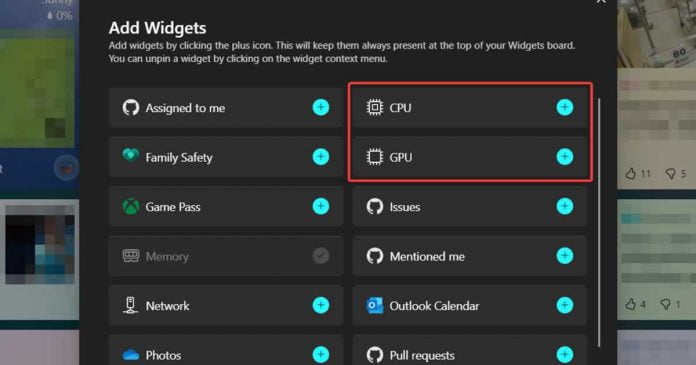
The Dev Home app, currently in preview, offers a range of new widgets that go beyond the traditional news feeds and basic functionality of previous versions. Now, users can keep a close eye on their system’s performance with widgets that display processor usage and speed, memory usage, GPU temperature and usage, and Wi-Fi or Ethernet speed. This addition brings a much-needed utility to the Windows widget experience, allowing users to monitor crucial system metrics at a glance.

While similar information can be obtained through apps like the Game Bar, Windows Task Manager, and HWiNFO64, the new widgets provide a more accessible and streamlined way to view system performance data. Users can simply invoke the widgets by pressing the Windows key + W shortcut, offering a quick and convenient way to stay informed about their system’s health.

It’s worth noting that the widgets are currently in a preview state and may exhibit some bugs or inconsistencies. Some users have reported initial freezing of the widget panel, with CPU and GPU usage not being properly recorded until a system reboot. However, these issues seem to be isolated, and once the widgets are up and running, they provide reliable performance monitoring.

Installing the Dev Home Preview app from the Microsoft Store is necessary for those eager to try out the new widgets on Windows 11. Once installed, the widgets can be accessed through the Windows Widgets section by pressing the Windows key + W, and users can easily add them to their desktop by clicking the “+” button at the top.

NVIDIA Surpasses $1 Trillion in Market Capitalization Fueled by Generative AI

NVIDIA Surpasses USD 1 Trillion

Nvidia became the first chipmaker to surpass $1 trillion in market capitalization thanks to the rise of generative AI.

Last week, NVIDIA announced in its mid-week Q1 2023 quarterly report that the company’s CEO, Jensen Huang said the company is profiting from its first investment in various AI technologies. Nearly $200 billion in market capitalization was added in a single day after pointing it out.

The company’s stock today opened at $405 and hit a high of $419, making NVIDIA the fourth company to join the Trillion Dollar Club after Apple, Microsoft, Alphabet and Amazon. NVIDIA’s market cap has risen from $900 billion last week to $1.1 trillion at the time of writing.

Over the past year, NVIDIA has doubled its investor capital. Investments in AI have made the company even more lucrative for investors.

The California-based chipmaker has been busy in recent weeks doubling down on its AI investments with announcements at Microsoft Build 2023 and Computex 2023. This includes ACE for Games, a ChatGPT-like model for NPCs in games, the announcement of the DGX-GH200 to accelerate AI computing, and new AI enhancements for RTX GPUs

For now, NVIDIA’s biggest problem is meeting the exploding demand for GPUs that have led to a shortage. It has also taken more drastic measures, such as asking Intel to manufacture its GPUs, so that supply constraints at its foundry partner TSMC won’t hamper the company’s growth.

As NVIDIA continues to ride the wave of AI advancements, the company must navigate the complexities of meeting market demand while simultaneously proving its ability to sustain its current momentum. With its strategic investments and dedication to innovation, NVIDIA remains at the forefront of the AI revolution, solidifying its position as a leader in the industry.

Intel Unveils New Details About AI-Focused VPU Silicon for Next-Gen Meteor Lake Chips

Intel Meteor Lake VPU Silicon

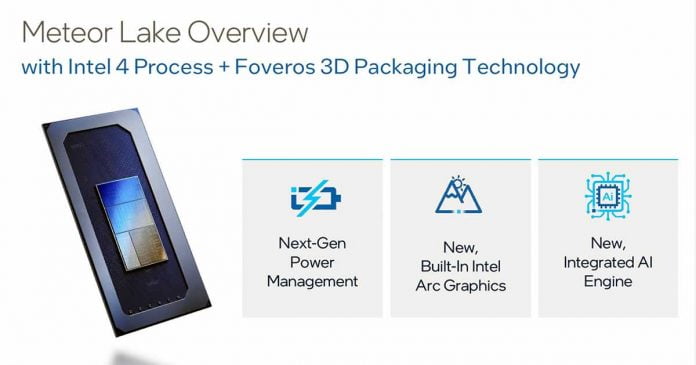
Intel has provided a sneak peek into its upcoming Meteor Lake chips, shedding light on their AI processing capabilities. The company aims to leverage AI acceleration to enhance power efficiency and performance for local AI workloads, and the chips are expected to debut in laptops before making their way to desktop PCs.

With competitors like Apple and AMD already incorporating powerful AI acceleration engines into their silicon, Intel is determined not to be left behind. Recognizing the growing demand for AI capabilities in PCs, Intel has developed a custom acceleration block for its consumer PC chips. The focus of their latest endeavour is the VPU unit, an integral component of the Meteor Lake system-on-a-chip tile.

Intel’s Meteor Lake chips employ a blended chipset-based design, which combines Intel and TSMC technologies within a single package. The VPU, along with other features such as I/O, GNA cores, and memory controllers, contributes to the overall performance of the chip. Utilizing TSMC’s N6 process for fabrication, Intel allocates approximately 30% of the die area for the VPU, even though it may take time for developers to fully exploit its potential.

The chip’s block diagram believed to reflect Meteor Lake’s design, reveals the inclusion of Intel’s low-power AI acceleration block, the Gaussian Neural Acceleration (GNA) 3.5. Furthermore, the new VPU block, based on Movidius technology, is also present. The VPU, designed for sustained AI workloads, works in conjunction with CPUs, GPUs, and GNA engines, enabling a wide range of AI tasks to be executed efficiently.

Intel emphasizes that the VPU primarily handles background tasks, with the GPU taking charge of more parallelized workloads. The CPU, on the other hand, focuses on low-latency inference work. Intel has implemented a mechanism that allows developers to target different compute layers depending on the specific requirements of the application, resulting in improved performance and reduced power consumption — an essential objective in AI acceleration.

Although Intel’s chips currently employ GNA blocks for low-power AI inference in audio and video processing, the company has already started running GNA-specific code on the VPU with promising results. This development raises the possibility of Intel fully transitioning to the VPU in future chips and discontinuing the GNA engine.

Moreover, Intel has disclosed that Meteor Lake will incorporate a coherent fabric, facilitating a unified memory subsystem and seamless data sharing between compute elements. This feature aligns with the strategies of competitors like Apple and AMD in the AI CPU space, exemplified by Apple’s M-series and AMD’s Ryzen 7040 chips.

To showcase the benefits of the VPU, Intel has presented a demo. In which the onboard VPU showcased a significant reduction in power consumption during Advanced Blur processing. In another demonstration, the VPU accelerated Stable Diffusion, an AI model generating images from text, resulting in faster artwork processing compared to running the AI model without the VPU.

The Intel chip used in the Computex 2023 demo boasts 16 cores and 22 threads. It features a base clock 3.1GHz, with an idle state of 0.37GHz. The processor is equipped with 1.6MB of L1 cache, 18MB of L2 cache, and 24MB of L3 cache.

Additionally, Intel has hinted at an embedded GPU in the Meteor Lake chips, which is anticipated to be a version of the company’s Arc graphics chip. The embedded GPU is expected to support features like DX12 Ultimate, ray tracing, and XeSS. However, the GPU’s performance in ray tracing might not match that of discrete GPUs in the market.

What is a Typical Working Day for Ethical Hackers?

Working Day for Ethical Hackers

Have you ever wondered how does an ethical hacker’s job look like? Well, it is more of the all-time access to networks and systems and ensuring security measures for the organizations that they work for. In this piece, we’ll highlight the typical working day of an ethical hacker.

Ethical Hackers: Where Do They Begin?

An expert in computers and networks who uses their knowledge to test the integrity of systems for flaws and weaknesses is known as an ethical hacker. Companies engage ethical hackers to do penetration tests on their networks to verify that these systems resist attacks directed by outside entities. 

You must know that the profession of a certified ethical hacker does not exist in its current form. Instead, an accredited ethical hacker is a term that may be obtained by passing a certification exam, specifically the Certified Ethical Hacker (CEH) certification exam that is made available by the EC-Council.

On the other hand, ethical hackers get a certification to pursue careers in a wide array of businesses and sectors, such as the government, medical care, financial services, and commerce, CyberGhost reveals.

A Thorough Look into the Typical Day Job of an Ethical Hacker

The company, an ethical hacker, works for will determine when they commence their work day. The precise list of jobs they’re required to do will rely on the company and the task they are working on. But there are specific jobs that all responsible hackers do, no matter what business they work in or where they work.

As an ethical hacker, here are some things you might have to do daily.

Performing Security Checks

It is one of the most important things an ethical hacker must do. A safety audit is a thorough look at how secure a company is. The company’s protection, including its computing networks, systems, and programs, must be examined.

A safety audit aims to find any holes or defects in a company’s safety measures. Once these factors have been found, the ethical hacker must notify the organization’s leaders about them so they can be fixed.

Attending Meetings

Ethical hackers must interact with their crew (if they have one), their bosses, or their clients daily. At these sorts of conferences, individuals can discuss how a project is going, review the outcomes of a security check, or plan for future endeavors.

Tests are decided at team conferences. According to the system ethical hackers work on, they do different evaluations.

Trying To Get Inside of Computers

One of the most significant (and interesting) things an ethical hacker will have to do is try to breach into the computer networks they protect. This method, called “pen testing” or “penetration testing,” is used to find any weak spots in an infrastructure that an attacker might utilize.

Ethical hackers are going to employ a variety of instruments and approaches in an attempt to break into a system to do this. Once they are in, they will try to raise their rights within the framework so they have access to private information or do things that, if done by an evil hacker, could hurt the system’s integrity.

If an ethical hacker can break into an infrastructure, they must inform the team what they found so that they can patch the holes.

Keeping Track of Their Duties

Ethical hackers must also keep records of their activities, which is crucial. This entails maintaining a record of security checks and penetration testing outcomes and the equipment and techniques they employ to break into systems.

This paperwork has significance because it may assist a company in improving its protection in the years to come. It can also show clients or bosses that an ethical hacker’s efforts are helpful and have assisted in making the systems safer.

Learning & Improvisation

To be successful, a cybersecurity worker who does ethical hacking ought to stay informed on the most recent security risks and holes. They must also acquire new hacking methods to be applied in future initiatives.

There are many ways to do this study and training, such as reviewing security blogs and watching security experts on social media. Ethical hackers are also required to attend security workshops and training classes to stay current on the most current cybersecurity details.

Conclusion

In a nutshell, an ethical hacker’s normal life is filled with never-ending interest, a desire to learn, and unwavering honesty. Ethical hackers have the authority to defend and safeguard. They solve difficult problems, take advantage of weaknesses well, and perform a key role in keeping the digital world secure for a better future.

NVIDIA Unveils Grace Hopper Superchip, DGX GH200 Supercomputer, and AI-Optimized Networking at Computex 2023

Grace Hopper Superchip

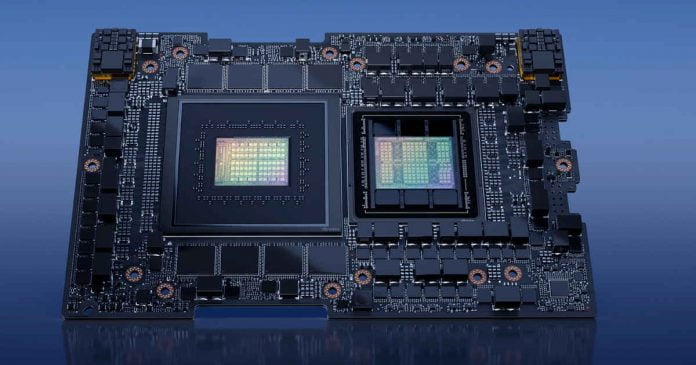
NVIDIA CEO Jensen Huang made some groundbreaking announcements at Computex 2023 in Taipei, Taiwan, revealing the company’s latest advancements in the field of artificial intelligence and supercomputing. The most notable announcement was the full production launch of NVIDIA’s Grace Hopper Superchip, a powerful chip that will drive systems running complex AI programs.

The Grace Hopper Superchip represents a significant leap forward in AI computing. It combines the Arm-based NVIDIA Grace CPU and Hopper GPU architecture using NVLink-C2C interconnect technology. With a staggering 200 billion transistors, the chip integrates a Grace 72-core CPU, Hopper GPU, 96GB of HBM3, and 512GB of LPDDR5X memory in a single package. This integration enables exceptional data bandwidth of up to 1TB/s between the CPU and GPU, providing substantial advantages for memory-bound workloads.

Building upon the Grace Hopper Superchip’s capabilities, NVIDIA also unveiled the new DGX GH200 supercomputer. The DGX series has become the gold standard for demanding AI and high-performance computing (HPC) workloads. While the current DGX A100 systems are limited to eight A100 GPUs, the DGX GH200 overcomes this limitation by leveraging a new NVLink switch system. This system incorporates 36 NVLink switches, enabling the combination of 256 GH200 Grace Hopper chips and 144TB of shared memory, effectively behaving like a massive, unified GPU. The third-generation NVLink switch system provides up to 10 times the GPU-to-GPU bandwidth compared to previous-generation systems, while the CPU-to-GPU bandwidth is boosted by a factor of seven. It also offers 5 times greater interconnect power efficiency and supports up to 128TB/s of bisection bandwidth.

In addition to the hardware advancements, NVIDIA introduced the MGX reference architecture, aimed at empowering original equipment manufacturers (OEMs) to develop AI supercomputers more efficiently. The modular design of MGX systems allows for the integration of various NVIDIA components, including CPUs, GPUs, data processing units (DPUs), and networking systems based on both x86 and Arm-based processors commonly found in today’s servers. This flexibility and scalability streamline the design and deployment process for AI-centric server solutions.

Moreover, NVIDIA showcased its new Spectrum-X Ethernet networking platform, a product of its acquisition of Mellanox. This platform highlights NVIDIA’s ability to optimize and fine-tune networking components and software to meet the demands of AI-centric environments. Marketed as “the world’s first high-performance Ethernet for AI networking platform,” Spectrum-X is specially designed to cater to AI servers and supercomputing clusters, offering superior performance and efficiency.

NVIDIA’s commitment to advancing supercomputing with the Grace Hopper Superchip is already yielding remarkable results. For instance, ASUS, a prominent computing vendor, has partnered with NVIDIA to build the Taiwania 4 supercomputer for Taiwan’s National High-Performance Computing Center. Equipped with 44 Grace CPU nodes, this supercomputer is expected to be one of Asia’s most energy-efficient when operational.

NVIDIA’s announcements at Computex 2023 showcased the company’s relentless pursuit of innovation in AI and supercomputing. The Grace Hopper Superchip, DGX GH200 supercomputer, MGX reference architecture, and Spectrum-X networking platform collectively demonstrate NVIDIA’s commitment to driving the future of AI computing and enabling groundbreaking advancements in various industries.

NVIDIA Unveils Avatar Cloud Engine (ACE) for Games, Revolutionizing NPC Interactions with Generative AI

NVIDIA ACE for Games

NVIDIA has made an exciting announcement during its presentation at Computex 2023. They introduced the Avatar Cloud Engine (ACE) for Games service, which aims to enhance non-player characters (NPCs) in video games, making them smarter and more realistic. With this new service, developers will have the ability to create their own AI models to generate natural speech and movements for NPCs, including dialogues.

Powered by NVIDIA Omniverse, ACE for Games provides optimized core AI models for speech, conversation, and character animation. It includes NVIDIA NeMo, which enables developers to create, configure, and deploy language models based on their own datasets. This allows for customization of larger language models to suit characters’ stories and backstories while ensuring safe and productive conversations with NeMo Guardrails. 

NVIDIA Riva, another component, offers automatic speech recognition and text-to-speech capabilities, enabling natural real-time conversations in games. Additionally, NVIDIA Omniverse Audio2Face enables the instant creation of expressive facial animations for game characters based on speech tracks. It integrates seamlessly with Unreal Engine 5 through Omniverse connectors, facilitating the addition of facial animation to MetaHuman characters.

Developers have the flexibility to integrate the entire ACE for Games solution or selectively use the components that best suit their needs. NVIDIA has partnered with Convai, a startup focused on developing advanced conversational AI for virtual game worlds, to showcase the capabilities of ACE for Games. Convai has integrated ACE modules into its real-time avatar platform, and in a demo called Kairos, players interact with Jin, the NPC cafe owner. Jin responds realistically to natural language queries, aligning with the game’s storyline, thanks to the power of generative AI.

NVIDIA ACE for Games offers neural networks optimized for various requirements, including size, performance, and quality. It empowers developers to fine-tune models for their games and deploy them via NVIDIA DGX cloud systems or directly to GeForce RTX PCs with real-time feedback.

With NVIDIA’s ACE for Games service and its partnerships with innovative companies, the future of NPCs in video games looks promising. The enhanced realism and interaction provided by generative AI will undoubtedly elevate the gaming experience and push the boundaries of virtual worlds.