Home Blog Page 243

First Facebook Smartwatch Would Be Launched Next Year: Equipped With Two Cameras And Heart Sensor

Facebook Smartwatch

Facebook is working on its first smartwatch. Next summer, the Facebook smartwatch will be launched, which will feature two cameras with one that can be undocked for independent use.

First, it would have a camera on the front of the smartwatch whose primary function would be for video calls, while on the back, it would be one with 1080p resolution and autofocus to record scenes when we undock it from the main body of the watch.

In fact, according to The Verge, Facebook would already be negotiating with other brands to create accessories that allow the camera to be connected to other things, such as a backpack.

It would allow LTE connectivity, it would have a heart rate sensor like the Apple Watch and it will have 3 colors: black, gold and white. Although undoubtedly the most interesting option of the Facebook smartwatch is that it would serve as an input and control device for Facebook’s mixed reality glasses.

Of course, Marc Zuckerberg wants with this new wearable device to start creating products that reach more people since it is currently impeded by the almost domination of companies such as Google or Apple.

EA Sports Has Been Hacked: Hackers Claim To Have Stolen 780 GB Of Source Code For Games And Tools, Including FIFA 21

EA sports

As with CD Projekt Red, now EA Sports has suffered data theft by hackers. Hackers claim to have stolen 780 gigabytes of source code from EA, including that of the Frostbite engine and FIFA 21. According to the publisher, player data was not accessed. But the theft also affects them.

How much data was stolen is not entirely clear. Vice reports on the basis of screenshots from partly private forums that hackers claim to have stolen 780 gigabytes of data. They are offered for sale. In addition to the source code of FIFA 21, code for matchmaking as well as EA frameworks and SDKs should also be included.

This attack comes just after the company announced an upcoming title in this series, Battlefield: 2042.

The theft has been confirmed by EA itself. The hackers have boasted of this event in cybercriminal forums. EA has confirmed to Vice that the data the hackers claimed to have stolen matched the stolen data. According to a statement from EA, the company is “investigating a recent incident of intrusion into our network where a limited amount of game source code and related tools were stolen.

EA assures that “No player data was accessed,” and they believe that there is no reason to “believe there is any risk to player privacy.” They have already taken action and made “security improvements and do not expect an impact on our games or our business.”

Shortly after the attack, hackers posted screenshots demonstrating their access to EA Sports systems. None of the aforementioned internal data has been published, although according to Vice sources, they are already trying to sell this information, which could lead to many problems for the company.

WebExtensions Community Group: Google, Apple, Microsoft and Mozilla Join Forces To Unify Extensions

WebExtensions Community Group

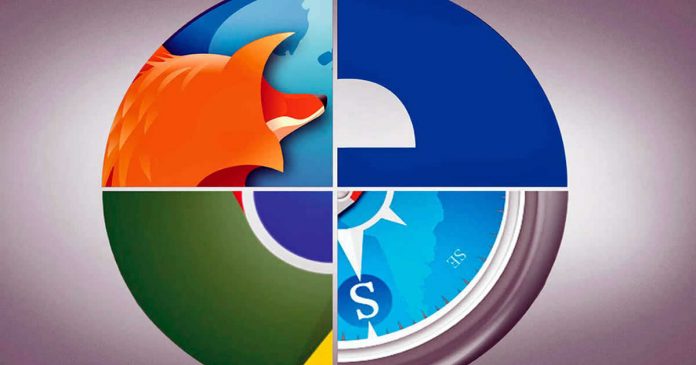
Google, Microsoft, Apple and Mozilla are the companies behind the main web browsers. Now, they have driven the creation of the WebExtensions Community Group (WECG) with a clear goal — making extension creation easier for developers along with enhancing its performance and security.

After sheathing the weapon of healthy competition, the WECG has issued a statement — “With multiple browsers adopting a broadly compatible model for extensions in the last few years, the WECG is excited to explore how browser vendors and other interested parties can work together to advance a common browser extension platform.”

Their objectives are clear, and they divide them into two branches. First, to facilitate the process of creating extensions for developers by providing a coherent model and a common core of functionalities, APIs and permissions. And second, create an architecture that improves performance and is even more secure and resistant to abuse.

Our work will be guided by a common set of HTML and W3C TAG design principles: user-centered, compatibility, performance, security, privacy, portability, maintainability, and well-defined behavior.” The intention of WECG is not to start from scratch, something that would be really expensive for both browser and extension developers.

They want to use the existing extension model and APIs supported by Chrome, Microsoft Edge, Firefox, and Safari as a foundation. And from there, go forward. “We aim to identify common ground, bring implementations into closer alignment, and chart a course for future evolution.”

This declaration of intent has also been accompanied by a clarification on what WECG will not do in the matter. “We are not aiming to specify every aspect of the web extensions platform or existing implementations. We want browsers to keep innovating and shipping APIs that may serve as the basis for further improvement of the web extensions platformEach browser vendor will continue to operate their extension store fully independently, with their own technical, review, and editorial policies.”

Huawei’s HarmonyOS 2.0 Is Already Used By Over 10 Million Users

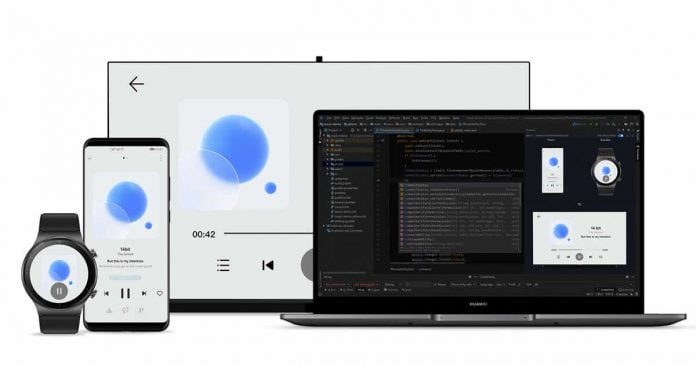
Huawei HarmonyOS 2 10 million users

Only on June 2, Huawei introduced HarmonyOS 2.0 and the first devices with its support. And according to recent reports, over 10 million users are already using HarmonyOS 2.0 in China.

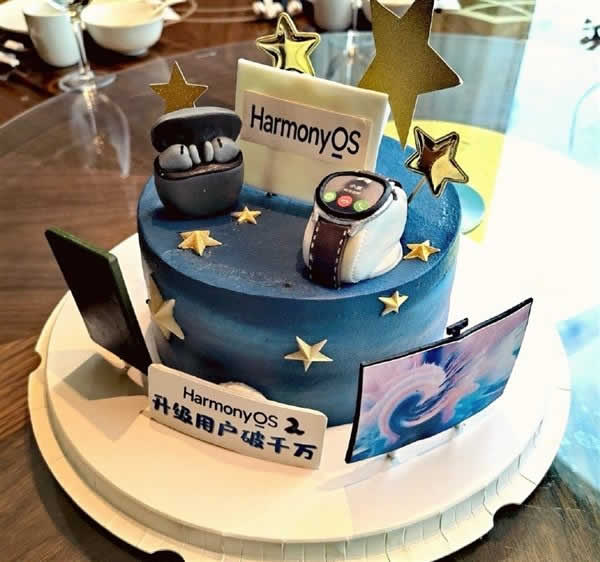
Quite an achievement shortly after it had launched its availability. Huawei celebrated this event with cakes, one of which looks very themed.

Huawei HarmonyOS 2 celebration

If everything goes like this, this Huawei operating system, launched in the heat of the bans carried out by the United States and Google, could be a real alternative to Android and even iOS.

Although we have to take a good look at the reason behind such an achievement in such a short time. In China, most of Google’s services are blocked, so users don’t have many alternatives.

And then, HarmonyOS is not going to remain as a mere operating system for mobile devices, but thanks to the fact that it can be installed in systems of few kilobytes — it will reach a wide range of all kinds of connected products. Huawei expects that by the end of the year 360 million devices will be running HarmonyOS, and the plan for next year looks absolutely fantastic — 12.3 billion devices.

At the moment, HarmonyOS 2.0 is available mainly for smartphones of the Mate 40, P40, Mate 30 series. However, it is also used in the MatePad Pro tablets. According to the latest data, internal beta testing of HarmonyOS 2.0 for Huawei P30, Honor 30 and Honor V30 will begin this month, and a public beta for these smartphones will be released in July. Also, with Huawei P50 company will bring HarmonyOS 2.0 globally.

TikTok And WeChat Will Not Be Blocked In The United States

TikTok USA conflict

United States President Joe Biden revoked the executive orders issued by his predecessor Donald Trump against the Chinese apps TikTok and WeChat.

In this way, the White House puts an end to months with permanent twists and turns on this issue. In any case, both TikTok and WeChat must meet certain requirements to remain active in the US. According to The Wall Street Journal, Biden signed a new executive order requiring them to undergo security reviews.

The new executive order signed by Biden indicates that the US Department of Commerce should periodically evaluate APPs developed by companies in foreign nations that are considered adversaries, such as China, intervening if the review process highlights problems related to US national security.

According to the Biden administration, the measure establishes guidelines for an “evidence-based” study on how user information is managed and whether there are any risks to it.

Donald Trump threatened to block TikTok’s operations in the United States at the beginning of August 2020. Days later, he signed executive orders that suspended the operation of both TikTok and WeChat (from Tencent) in the United States.

With Biden’s decision, TikTok and WeChat are taking a huge weight off their shoulders. In any case, Chinese applications will be far from having free rein to operate under the supervision of the White House.

El Salvador Become The First Country To Adopt Bitcoin As Its Official Currency

Bitcoin investment

The small country El Salvador in Central America has become the first country in the world to embrace Bitcoin as legal tender. 

The Salvadoran parliament today approved a law establishing the new status of cryptocurrency. Residents can now pay their taxes with Bitcoin. And entrepreneurs with access to the necessary technology are no longer allowed to refuse payments with cryptocurrency.

Salvadoran President Nayib Bukele announced the plan last weekend and is expected to enact the law this Wednesday morning. The idea, according to him, is to increase the dynamism of the economy and make the country more attractive to investors. President Nayib Bukele described the result of the vote as “Historic!” and sees benefits for the “financial inclusion, investment, tourism, innovation and economic development” of his country.

This is the first time that the cryptocurrency is recognized as an official legal tender. The main currency of El Salvador so far is the US dollar. After the Central American country announced its decision to use Bitcoin as legal tender, the price of a Bitcoin rose by almost 15 percent to $ 38,500.

Samsung Presents Stretchable OLED Display, Ensure Elasticity Of 30 Percent Of The Original State

Stretchable OLED Display

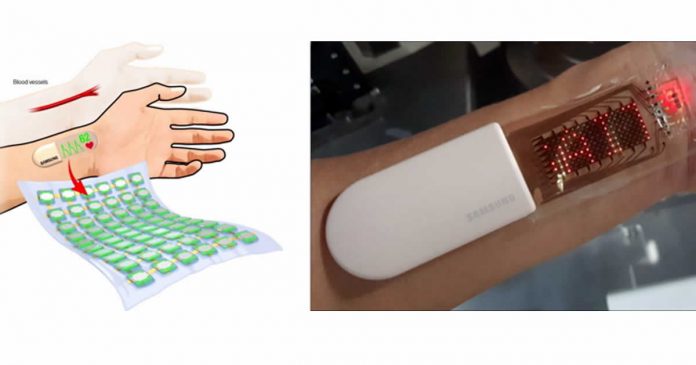
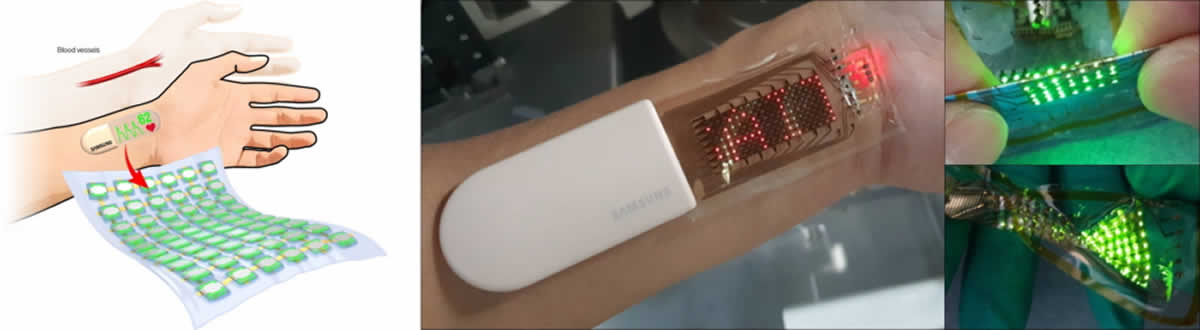
Researchers from Samsung’s Advanced Institute of Technology (SAIT) have unveiled a stretchable OLED panel. The small display was built into a blood pressure monitor that is worn like a large plaster on the inner surface of the arm.

According to scientists, the display can be stretched by up to 30 percent of its original size without breaking. This is made possible by a base material based on elastomers. This has been chemically developed by Samsung in such a way that it is less sensitive to heat — which is important when electronic components such as semiconductors are installed on it.

In addition to the OLED screen, a photoplethysmographic sensor for measuring blood pressure is built into the elastomer. Due to the elastic design, the device should be able to be worn on the arm for a longer period of time.

Samsung Stretchable OLED Display

According to Samsung, it also records the heartbeat 2.4 times more than a conventionally attached sensor. The measurement should also be more precise because the sensor cannot move as much on the skin.

To prevent the OLED pixels from deforming when they move, the scientists’ built-in so-called island structures. These electrodes between the pixels are also stretchable and are intended to take the strain caused by deformations on the OLED elements.

According to Samsung, research on stretchable OLED panels is still at an early stage. The South Korean manufacturer has been a leader in the field of foldable OLED screens for several years.

Private Relay: Apple Wants To Protect Safari Users From Tracking Via A Kind Of VPN

Apple privacy news

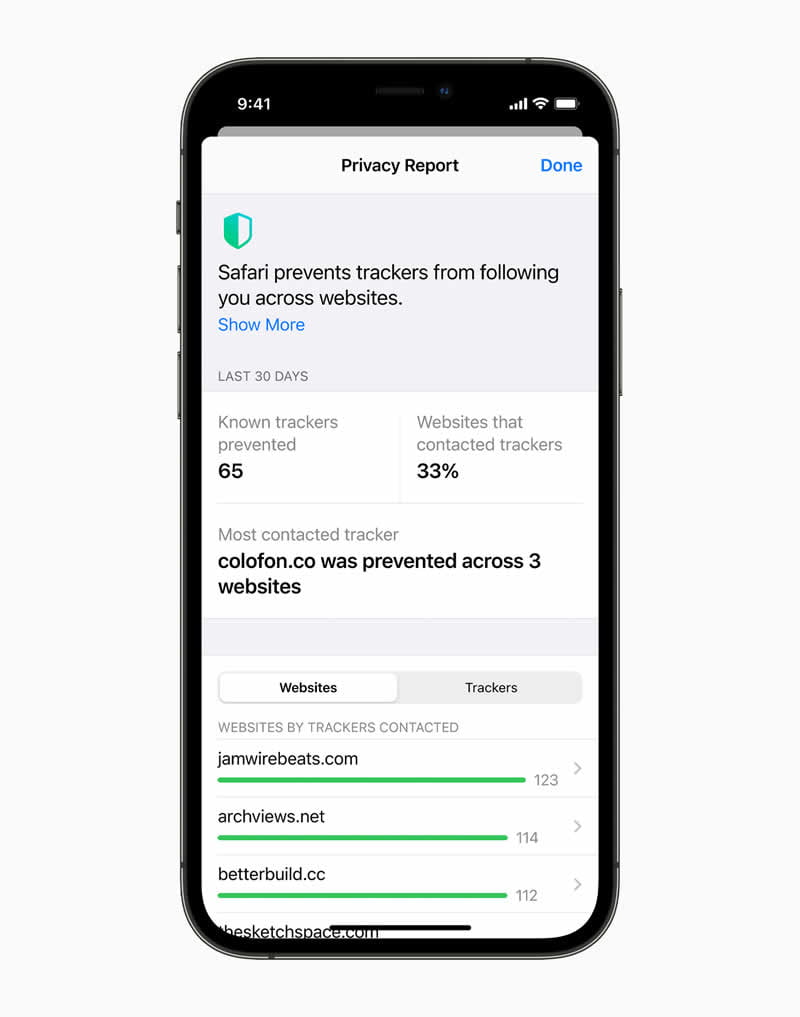
At its developer conference, WWDC 2021, the manufacturer Apple presented a kind of integrated VPN for its Safari browser. Apple simply calls the function itself Private Relay and is supposed to offer exactly what the name promises — your own browser traffic should be forwarded via Apple servers, among other things, so that third parties can no longer recognize its origin.

With the private relay, all traffic from the browser is first sent to the Apple servers in order to first detach the network traffic there from the IP addresses of the users. Apple then forwards the data to a third-party provider, who in turn assigns different temporary IP addresses and sends the data to the selected target server. The solution of the two servers is to avoid that Apple can link the information about individual users with the web pages they have surfed.

Private Relay

The new privacy function is being offered as part of a new subscription model that Apple is marketing as iCloud +. As the company has now told Reuters, among others, Private Relay is not offered in China. Users in Egypt, Belarus, Kazakhstan, Colombia, the Philippines, Saudi Arabia, South Africa, Turkmenistan and Uganda are also excluded from using the private relay. Apple refers to local regulations as a reason for the fact that the privacy functions are withheld from its users in these countries.

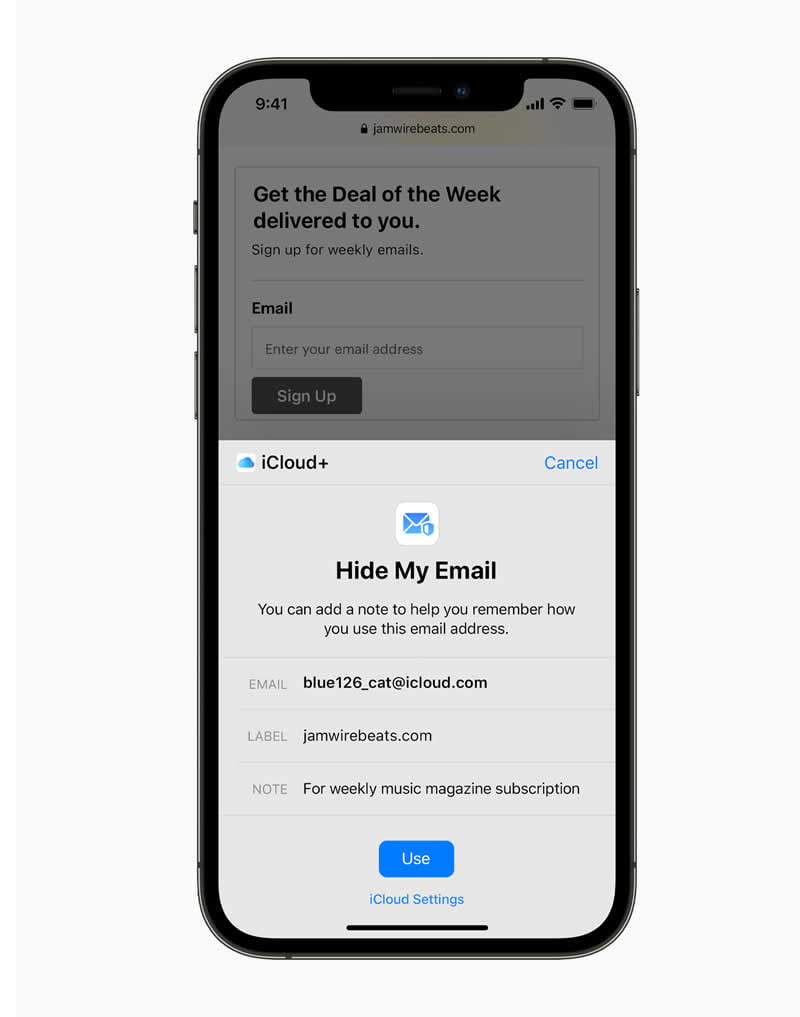
Apart from “iCloud Private Relay,” Apple also introduced “Hide My Email”. With “Hide My Email”, which extends the functions of “Sign in with Apple”, users can set up and use random email addresses that are forwarded to their personal inbox.

Apple Hide My Email

Whenever you do not want to reveal your personal email address, you can switch to a specially created forwarding. The function is integrated into Safari, the iCloud settings and Mail and allows users to create any number of email addresses and delete them at any time. It comes in Mail as part of the update to iOS 15, iPadOS 15, macOS Monterey, and iCloud.com.