Home Blog Page 289

How To Choose A Hard Drive Enclosure

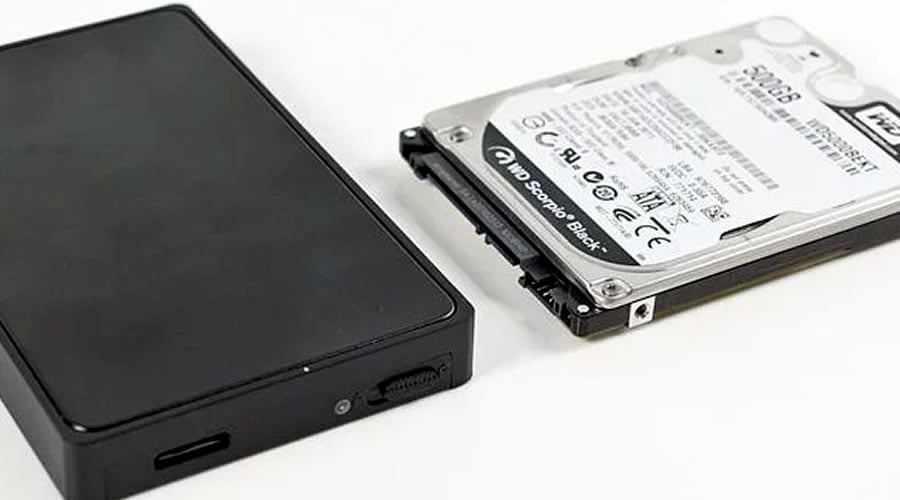
Hard Drive Enclosure

You have your best personal computer, but your storage requirements seem to increase with the quantity of work you are handling, or you need shared external storage. You need not change your old computer yet you have bought so many subscriptions of installed software on your device.

You can choose to expand your computer memory by buying an external hard drive.

However, choosing the right enclosure for your hard drive can be quite tricky if you do not have exposure to various computer parts.

First of all, let us look at a few descriptions of abbreviations we are going to use frequently in this discourse.

SSD – Solid State Device is the latest storage device where microchips are used to store data HDD –Hard Disk Drive is storage where information is transferred using writing and rewriting arms. These arms usually spin back and forth across the hard drives memory surface. It is fundamentally the hardware component in or alongside your computer that stores data.

SATA – Stands for Serial Advanced Technology Attachment; an interface used to connect ATA drives to a computer motherboard.

USB -means Universal Serial Bus

IDE – Is Integrated Drive Electronics

So what factors should you consider when shopping for the best external hard drive enclosure for your machine’s memory expansion?

Let us look at a few vital aspects you must consider when purchasing your components.

The Type Of Connection

Currently, many people prefer to use the USB connection since it is very convenient and easy to use.

Depending on your device configuration, you can choose any other connection type. It is worth noting that the USB 3.0 connectors have backward compatibility to USB 2.0 ports so you should not worry when purchasing either of these due to their matching technical properties.

More importantly, your data transfer rates depend on the type of connection you will have. For example, SATA 3.0 can transfer data at up to 6Gbps. And USB 3.0 can serve up to 5Gbps while USB 3.1 can reach 10Gbps.

Therefore, it is up to you as the final user to decide which connector will be suitable for your day-to-day activities.

The Disk Interface

You have to match your enclosure interface to your disk interface.

Unmatching these two will lead to requirements for modification so that you can easily use your enclosure without incurring more expenses to install adapters for interfaces. If your drive is SATA, IDE or M.2, you have to choose your hard drive casing accordingly.

Nonetheless, in modern SSD, it is quite challenging to find an IDE interface and its matching enclosing cover. Furthermore, IDE limits the read/write speed of SSD. It is even better if you purchased a new SSD. (If you will prefer using SSD)

The Material Used To Manufacture The Casing

The casing material greatly determines the lifespan of your memory disk.

Choosing the right material is critical to securing your data.

Remember the casing not only secures your hard drive, but it also gives it beauty and an attractive appearance. So when selecting a housing for your hard drive, it is necessary to put in mind these two vital aspects.
Your hard disk enclosure casings can either be metallic, plastic or polycarbonate.

Metallic enclosures are the commonest among the three. This type of hard disk enclosure offers high protection to your hard drive and at the same time serving as a heat sink for your storage. It is important to note that the metallic security offered, differs depending on the type of metal used. In most cases, alloys are being used to provide both excellent protection and heat transfer properties.

Plastic casings are ideal for aesthetic purposes. You will use this kind of enclosure when you are okay with compromised physical security.

Polycarbonate, commonly known as PC casing is a robust and versatile material that offers an equally protective and beautiful outlook for your HDD. PC casings can be transparent in some cases, so you can conveniently visualize the internal hard drive.

Depending on your working conditions and environment, the casing material you choose should be capable of protecting your HDD from both physical and electrostatic shocks.

Capacity Limitations

External hard drives have limited capabilities compared to internal memory disks. In most external hard drives, the inbuilt controllers restrict the size of the connected memory to about 4T to 8T. Consequently, when shopping for an appropriate casing for your hard drive, you have to put this in mind.

Price Vs. Quality

Sometimes we look at prices as guides to quality such that higher prices signify higher quality. It sometimes works but not always.

Looking at past HDD enclosure reviews would be appropriate other than speculating by price comparison and personal judgment.

Mobility

The weight and dimensions of your casing will determine the ease of portability of your hard drive. While buying your HDD housing, it is imperative to consider how easy to handle and carry around it is. The size and shape of your hard drive cover will guide you on how easy it is to arrange and organize your HDDs; especially if you have several external hard drives.

Cooling

Some hard drives require lots of cooling air. In this case, choosing an enclosure with a premounted fan would be ideal. Other storage drives will only require heat sinks. Therefore, ensure that you consider your heat transfer requirements vis-à-vis the noise dissipation by your devices. If you have several disks suspended on racks with remotely installed draft fans to minimize noise, a suitable hard disk enclosure that will allow maximum airflow and heat transfer is ideal.

Final Word

Regardless of the application, any external storage enclosure should have excellent and appealing physical and aesthetic properties. Poorly manufactured covers not only pose a danger to the user but also reduces the expected lifespan of your memory disks. Considering your needs and budget, find an appropriate compromise so that you get value for your money. Take into account the shock resistance properties, price, ruggedness, portability, shareability, and ease of organization when using a particular HDD enclosure.

Before making your order, you may want to crosscheck specific product descriptions and reviews before deciding on which casing can be ideal for your application.

A comprehensive guide on double VPNs and whether you really need one

Virtual Private Networks or vpn

Internet privacy has almost become a trend, and those working in the tech sector live by the security and privacy that is offered by using a VPN. If you’ve ever browsed through different VPN options when selecting one for yourself, you must have come across the term “Double VPN”. Whenever you do find a VPN that offers this feature, you’ll also notice that it’s a point of focus when the provider is discussing the features of the VPN.

The name is the first indication of what a Double VPN is. Basically, your data is routed through two different VPN servers as it flows between your device and the internet. All the information going to and from your device will be encrypted twice at different points in the chain of information flow, and you also change the data source IP address twice along the way. Chances are that both these tasks will happen at different geographical locations, and maybe even in two different countries altogether.

Offering enhanced VPN security, the entire process results in increased security measures and provides a double barrier to any surveillance. For normal VPNs, the process flow starts when your device encrypts your data and transmits it along the chain to the first VPN server where the data is decrypted and your device’s IP address is switched to the IP address of the first VPN server, and the data is encrypted again and transmitted to the intended destination.

Double VPNs go a step further and the first VPN sends the data (along with the first VPN’s IP address) to the second VPN where the data is once again decrypted, the IP address of the first VPN server is switched out for the IP address of the second VPN server, after which the data is then transmitted to the ultimate destination. The second VPN server only knows the IP address of the first VPN server and has no idea of your device’s original IP address, resulting in an added layer of security and a second barrier to any unauthorized surveillance.

Also, as the data traveling through both VPN servers is encrypted, anonymity is better maintained and THAT is the true goal of a Double VPN. Most people opt for a double VPN for this heightened level of anonymity and considering that they are effective in maintaining your privacy, it is completely understandable.

Advantages

The biggest advantage of a double VPN in the restriction it places on your visibility to others. Tracing virtually becomes impossible as nobody can really see where your location truly is or where your data truly ends up. For example, your ISP would think the final destination is the second VPN server and would not have any visibility beyond that.

Even if someone were to monitor your activity, they would not be getting an accurate picture. For example, let’s say you were to access a VPN server in the United Kingdom (which would be your second VPN server in this case) while sitting in Canada, through another VPN server located in India (which would be the first VPN server in the chain). If you are being watched in Canada, the surveyor would simply see you were accessing data in India. Whereas anyone tracking your activity in the United Kingdom would think you were accessing data from India.

These two relay points in the chain, along with the switching of IP addresses at both points, don’t really allow anyone to properly track your activity and location. Add to that the encryption protocols the VPN may have in place, the level of security and privacy goes up significantly.

Disadvantages

If you were to solely look at the heightened security and privacy that double VPNs offer, then it’s a no-brainer and you should opt for a VPN that has this feature. However, a look at the bigger picture shows that double VPNs have their drawbacks as well. The one that stands out the most is the effect double VPNs have on internet speed.

Even regular VPNs are known to compromise internet speed, and this would include t=even the best VPNs in the market today. With double VPNs, the activity usually involved in regular VPNs doubles and, therefore, the impact on internet speed is much stronger than regular VPNs. The first factor which affects the speed of your internet is the extra distance that your data needs to travel from the first VPN server to the second VPN server.

Another factor that affects internet speed is the congestion you would find especially when more users are logged on to the VPN. This congestion would potentially double if there’s another link in the chain of flow. There’s also the encryption and decryption process, which happens twice in double VPNs, meaning a lot more bandwidth is being used in the process, which would lead to reduced speed.

Also, every issue or bottleneck that you face when using a regular VPN potentially doubles when using a double VPN. So it should be no surprise that internet speed takes a hit. This makes double VPNs less than ideal when it comes to usage for the purposes of streaming, torrent downloading, and gaming, as all these activities require a significant amount of speed and bandwidth available to be able to function properly.

However, the above does not necessarily mean that the entire experience is compromised. You are simply limited to the activities you can indulge in when using a double VPN. Your internet will still function properly and will have state of the art encryption and security in place leading to a safer overall experience. Experts recommend that the ideal connection speed of your ISP should be 30 Mbps if you’re going to use a double VPN. Anything below that and you’re bound to face speed issues.

Examples of VPNs with double VPN feature

The three best VPN providers that offer a double VPN feature are NordVPN, SurfShark, and ibVPN. First and foremost, all thereof these providers are based in privacy-friendly countries, meaning there are no data retention laws, no government surveillance, and the right to privacy is upheld in reality (as it should be), unlike some other countries which only scream privacy when it suits them.

Secondly, all three VPN providers have a strict and verified no-logging policy, meaning your activity logs are never saved, which means nobody can ever access them! This no-logging policy, along with the level of encryption and security double VPNs offer, make them the ideal tool for maintaining anonymity and preserving data protection.

Lastly, all three of these VPN providers build the cost of the double VPN into the default price of the service, meaning you don’t have to pay anything extra. It should be noted that none of these VPNs operates on the double VPN model by default and the feature has to be activated in order for it to work. By default, all three operate as regular VPN would, plus the specific functionalities and features that each of them offers.

Expert opinions on double VPNs

Experts are mixed as to the usefulness of a double VPN. Some consider double VPNs as the standard that every provider should follow, while others think that any advantage that a double VPN could potentially provide is only theoretical. Due to limited awareness, reactions are mixed among general users as well.

From the perspective of security and encryption, experts argue that there isn’t much a double VPN could build on top, especially considering that basic 128-bit encryption (which any respectable regular VPN would have in place) would take billions of years to crack. Therefore, having double encryption doesn’t really make much of a difference as the basic encryption practically ensures that your security remains uncompromised.

However, from the perspective of maintaining privacy and anonymity, experts agree that double VPNs can be useful. When your data goes through two different servers and is attached to three different IP addresses (original device, first VPN server, and second VPN server), anyone would have a difficult time tracking you down. While a double VPN may not contribute any more to your security, it most definitely ensures that your privacy is not compromised at any point in the chain.

Conclusion

As you can see, double VPNs are absolutely beneficial when it comes to maintaining your privacy and online anonymity. However, as far as security is concerned, there is little to no difference made.

Furthermore, there is the fact that double VPNs take a significant toll on your internet speed, rendering it useless for any heavy bandwidth activity such as streaming, gaming and downloading. Considering all of this, it may not be the best option for those who use the internet as a source of entertainment only.

For those whose work is sensitive and involves a significant amount of internet usage, a double VPN may very well be beneficial as it would maintain privacy. Alternatively, if your work does not involve internet usage and is not sensitive, then a double VPN may work for you if ensuring your privacy and anonymity is the most important aspect of your internet experience and you’re happy to compromise on the speed of your internet

5 Benefits of Integrating APIs for Your Small Business

Integrating API

There’s a preconceived notion that top software solutions are only within the reach of big businesses. But that isn’t the case in today’s environment, which has become a more equitable playing ground for all types of entrepreneurs. There’s a special place, in particular, for small businesses—many of which are homegrown, offer boutique services, and whose humble beginnings can be traced to word of mouth.

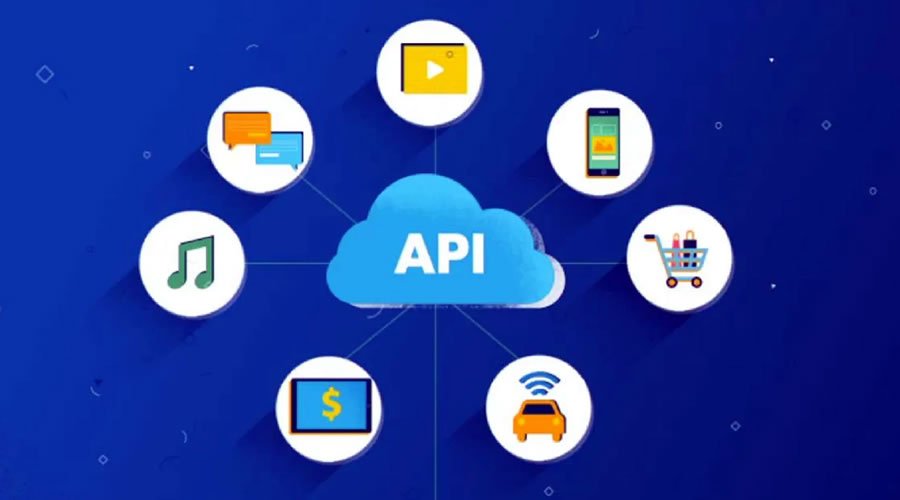
If you fall under this demographic, there’s good news for you: there are a lot of tools out there that you can use to advance your business, and one of them is the Application Programming Interface or API. APIs can be thought of as specific sets of computer code that allow two applications to interact, or “talk,” to each other. For example, if you share a new offering from your online store on Facebook, Instagram, or Twitter, you are relying on API technology for that very act.

Your use of APIs doesn’t have to stop there, however. Custom API technologies can be designed especially for you, granting your business a competitive edge it may not have achieved just yet. To better illustrate, here’s a shortlist of what’s possible when you use a complete API toolkit for teams and enterprise—or how your business could stand to increase its presence, efficiency, and profits through API integration.

1. You can increase lead generation from other channels, like social media.

Many of the most promising small businesses out there can thank social media for their success. If Facebook, Instagram, or another social media platform once served as an incubator to your business, then you’d be pleased to know that APIs can strengthen your app-to-app connections with them—and better your chances of getting crucial leads.

2. You can harness the functionality of other apps.

It’s hard to rely solely on your business infrastructure, but the fact is that you don’t necessarily need to do so all the time. API integration lets you tap into the power of the Internet’s giants, i.e. the top service providers for online payments, logins, web security, and the like. Because of your API, your customers can enjoy the full functionality of these apps when they’re transacting with you.

3. You can automate many of your business processes.

Lack of manpower is a constant issue for small businesses, but it’s possible to close the gap through automation. This is another thing that your API solution can help you with, as it can connect you to apps that automate the time-consuming parts of your workflow.

4. It can steer your business to be more data-driven.

Though your intuition may have contributed a lot to your business’s growth, it may be time to lean on more data-backed decision-making—especially if current API technologies make real-time data access and management even easier than before. Your API toolkit may surprise you in its ability to find, scour, sort through, and manage data that’s relevant to your business insight—and so, you might as well use it to make more accurate, well-informed, and responsive business decisions.

5. It will enable faster data migration when it’s time to expand.

At some point, you might consider expanding your business; for example, you may want to aspire for a branded domain name if you don’t have one yet. When the time comes to move all of your small business’s data to a new host, an API can assist you in making that transition smooth and hiccup-free.

There’s a lot being demanded even of small businesses. Customers expect you to have a mastery of cloud-based technologies, data, and social media savvy, to name just a few. If your goal is to stay relevant, competitive, and up-to-date with the most important actors in your business environment, then it may be just the right time for you to integrate with API.

Purism Librem 5 — 100% open GNU/Linux smartphone starts shipping

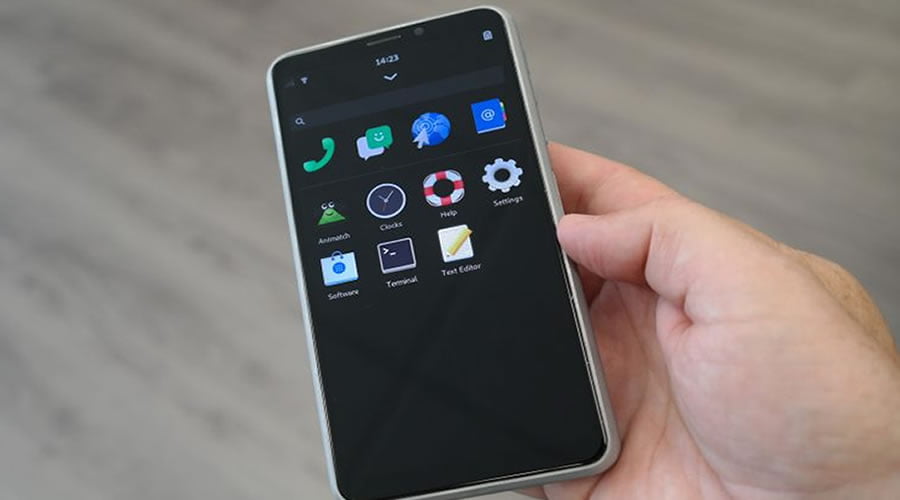
Librem 5

Purism finally starts to ship Librem 5 smartphones — the phone that focuses on security by design and privacy protection — to early backers of the crowdsourced, $699 smartphone project.

2 years ago Purism unveiled a device that respects our online privacy and gives us the full authority of its control and today they start to ship the product.

Librem 5 is not like any other smartphone available in today’s market. The important part is it is one of the only smartphones on Earth that doesn’t ship with Android, a fork of Android, or iOS. Instead, Librem 5 a phone built on PureOS — a fully free, ethical and open-source operating system and when it comes to hardware, Purism made it sure to be 100% open and secure.

So when comes to the hardware, Librem 5 is equipped with parts from some of the unfamiliar component manufacturers — only ones willing to share their code for an open-source smartphone.

And internal designing of this Linux smartphone it totally different from this generation smartphones — smartphones today are mostly a single mainboard with every component integrated into it, while the Librem 5 actually has a pair of M.2 slots that house full-size, off-the-shelf LTE and Wi-Fi cards for connectivity, just like what you would find in an old laptop and also users may be able to swap out cards to replace or upgrade wireless capabilities in the future.

As Purism couldn’t find an open provider for the cellular modem, cellular connectivity runs off the separate M.2 LTE card. And the second slot of M.2 equips Wi-Fi and Bluetooth which supports 802.11 abgn 2.4 GHz/5GHz and Bluetooth 4.

There are hardware kill switches for the camera, microphone, WiFi/Bluetooth, and baseband on the side of the phone, ensuring none of the I/O turns on unless you want it to.

When comes to the processor, Librem 5 is powered with 1.5GHz i.MX 8M Quad by NXP — in fact, we get a more powerful, more power-efficient CPU than this on today’s budget-oriented Android smartphones.

When comes to memory, Librem 5 comes with 3GB of RAM and 32 GB eMMC internal storage and includes a microSD storage expansion too.

Other specification includes 5.7″ IPS TFT screen, 8MP front camera and 13MP back camera with flash. There is a 3.5mm headphone jack and a USB-C port and powered with user-replaceable 3,500 mAh battery. Sound is provided by the earpiece, and it seems like that’s the only speaker on the phone. Other smartphone standards—like a vibration motor and 9-axis accelerometer—have made the cut.

Librem 5 is for anybody and everybody interested in protecting his/her data, communicating privately to your loved ones, or supporting a future of protecting your digital rights.

5 Proven Ways to Optimize Your Website for Voice Search

Optimize Your Website for Voice Search

The advent of technology continually affects enterprises, whether big or small, in conceptualizing marketing strategies for their products and content. Now, a consumer’s shopping journey starts with a quick search on various search engines. Since present technology aims to provide comfort and convenience to users, typing keywords is slowly being replaced with the newer feature of voice search. Apart from recording podcasts, the use of voice technology has become the centralized feature of wearable devices, smartphones, and computers. With a spoken command, you can access apps, and queries are solved in a quick and compelling manner.

Ways You Can Optimize Your Website for Voice Search

Businesses thrive when they adapt to consumers’ changing desires and their desire for exemplary customer service. If you want to integrate and optimize your website to suit the rising trend of voice search, here are five fool-proof ways to do it.

Get Listed as a Local Business

Both smartphones and wearable devices have limited display when compared to laptops or desktops. People always click on the first option a search engine displays to them. If you want to be at the top of a search engine’s results listing, you need to have your business listed as a local enterprise. Wearable technology and smartphones use integrated location services that will assess a user’s query. Then, a search engine’s algorithm will determine local businesses that are relevant if the search has local intent. Using your website visitor analytics tool, you can determine what types of devices your visitors utilized to view your page.

Elevate Your Website’s Loading Speed

In a world where speed determines the winner, both AI-powered Google Home and Google Voice Search prefers websites and pages with fast loading speed. This data is not only limited to voice searches but is applied to keyword queries as well. To monitor your website’s loading speed, you can use Google’s PageSpeed Insights. Furthermore, you can follow these tips to further lessen loading speed.

  • Coding languages such as JavaScript, HTML, and CSS can be minified with free online tools.
  • Images that are embedded in blog content and graphic designs on your pages must be optimized.

Combination of Long Form and Short Form Content

To engage with the audience and interact with prospects, you’re going to need relevant and quality content. Your website’s content answers questions and guides your customers to make their purchasing decisions. Outstanding content also drives sales numbers upwards. As statistics show, websites that have long-form content (articles or blogs that have 2000 words or more) have been consistently ranking at the top of results lists. But, bombarding your audience with long-form content doesn’t always work well. Short-form content is instrumental for making sure that your audience has answers to their queries quickly.

Increasing Social Media Presence

Entreprises know how social media platforms impact their sales, operations, and visibility. To optimize your website for the integration of voice search, you need to increase engagement on popular avenues like Instagram, Twitter, and Facebook. The use of infographics, vibrant images, and compelling graphic design can lure them into redirecting to your website since they are looking for more details. You may have noticed already that social media pages that boast a huge number of followers consistently appear on top of results listings.

Utilizing Structured Data Markup

Since businesses rely on the use of Search Engine Optimization, the term structured data markup is probably all too familiar to you. Structured Data Markup is information presented on search engines that helps answer a visitor’s query. If you type in a specific keyword, for example, “best chili in Los Angeles” on a search engine, you’ll see one small establishment with a small paragraph that indicates its address, contact number, and website. Aside from listing its name and address, you can see the establishment’s opening and closing hours, promos and more.

The continued evolution of technology has brought success, convenience, and reliability to every business on the planet. The use of this new tech maximizes sales drive and produces profitable and sustainable operations. When technology integration and adaptation are implemented effectively, customers will continue to pour in and brand loyalty will follow.

Professional Payroll – A Growing Business’ Guide to Employee Payments

Professional Payroll

As a business owner, getting your payroll right and delivered on time every month is an absolute must. Whilst this is not something that may phase a large business, growing businesses may find payroll to be challenging when things are changing and growing rapidly. The good news for growing businesses is that there is a myriad of ways in which you can simplify employee payments. In today’s article, we dedicate some time to helping you find ways to simplify your payroll process. Read on to find out more!

1. Automation Is Key

As a growing business, one of the best ways you can keep up with employee payments is to utilize the software. Automating your payroll process not just ensures that your employees get paid on time, but also saves you hours of manual labor that would otherwise be spent slaving over the payroll. Online tools are available to help people automate some of the most monotonous tasks of everyday life. Corporations have improved their performance or revenues. The PayStubCreator or automation offers this service with realistic goals of improved quality.

2. Direct Deposit

Using direct deposit as your method of paying your employees is a move that will save you significant amounts of time. As we know, time is precious, especially when your business is experiencing rapid growth. Using direct deposit as your avenue of payment is a fantastic way of eliminating pesky expenses associated with printing checks, purchasing paper, envelopes, and printer ink. You will also cut down on manual labor hours that would otherwise be spent distributing checks and printing payment slips out. Paper-free payroll not only saves you time and money but also allows you to play your part in conserving the environment and reducing the number of resources you consume as a business.

3. Outsource Your Payroll

If you’re looking to entirely rid yourself of the payroll burden, consider outsourcing your payroll. If you find that your team often ends up stressed, disorganized or overwhelmed, handing the task of payroll over to a business that specializes in payroll is the best thing you could do for your growing business. Outsourced payroll providers come equipped with all the skills and software that is needed to efficiently and professionally handle payroll. You can then rest with peace of mind knowing that your payroll is being handled by experts, leaving you more time to focus on growing your business even further.

4. Set Reminders

When it comes to payroll, you want to ensure that you’re always on time. This is why setting timely reminders is a crucial step towards ensuring that your employees are both paid on time and kept satisfied. Keeping track of deadlines is essential in the payroll process, so be sure to set up reminders for every vital deadline and payment that needs to be made. Aside from ensuring payments are sent, this also gives you some structure and helps you organize your payroll system, thus avoiding any accidental mishaps or late payments that may result in unnecessary penalties for your business.

5. Simplify Your Policies

Last but not least, simplify your payroll process by simplifying your payroll policies. Over time, policies can become muddled and more confusing than they need to be. This is why updating them and simplifying your payroll policies is so beneficial. Ensure that it is clear and concise about issues such as how employees are paid, reimbursements, leave and sick days. This will allow your employees to fully understand issues, resulting in a lower number of inquiries that may take up precious hours of your day.

We hope that this article has given you some valuable insight into how you can simplify your payroll process as the owner of a rapidly growing business.

How to Evaluate and Select an ERP System

Integrated ERP Data Systems

Today’s rapidly evolving technology environment demands that businesses also evolve in their capabilities and offerings, and ERP software can help manage these demands.

The modern version of enterprise resource planning software has expanded from the original functionality set covering accounting/finance, human resources, manufacturing or project planning, purchasing, and sales management. Modern ERP systems also include business intelligence, customer relationship management, and artificial intelligence and machine learning capabilities. The broader abilities of modern ERP software allow more automation, greater collaboration and efficiency, and higher rates of return on investment.

When you are ready to evaluate ERP systems for your business, you need to consider what features you most need.

Best Practices for Approaching ERP Software Selection

Requirements are king! The first item on your agenda should be gathering a realistic but comprehensive list of your company’s unique requirements.

This can be daunting, but it’s imperative to know precisely what your business requires now and in the foreseeable future. Using functionality templates specific to the application area you need, such as ERP for Process Manufacturing or ERP for Distribution, can give you a strong starting point from which to add or eliminate. A document such as this will also become the request-for-proposal (RFP) that you release to vendors.

Failing to gather the correct requirements list is akin to buying a wardrobe worth of clothes for someone whose preferences, needs, and measurements you don’t know – the suitability and fit are unlikely to work, and each alteration will cost time and money you hadn’t bargained for.

Virtually no company can take an ERP system right out of the box and run it without any customizations, but you want to carefully choose which customizations are essential versus which business processes can be adapted to work with the new software. Deliberate decisions about your requirements are key to selecting the right ERP system and making it work well for your business.

Other ERP Selection Factors to Consider

Along with knowing what each department truly requires from an ERP system in the way of business processes, you should also consider wider issues such as future needs, system configurability, and user-friendliness, deployment alternatives, implementation options, and ongoing support and maintenance possibilities.

As well, if the vendor has a research and development (R&D) team, how well do they plan and release their innovations? Talking to current users of the software and current or past clients of the implementation and support partners is a good way to gain insight into these types of issues.

Moving Forward with ERP Software Selection

Once you’ve finalized your requirements list, determined your overall preferences, and established a realistic budget, you need to build a shortlist of contenders based on core functionality, reputation, and suitability for your industry. Vendors you approach should react quickly to your initial inquiry and provide careful responses to your RFP. If they do not, you should either eliminate them from your shortlist or approach a local partner of theirs to see if the service you receive is a better fit for your needs.

From there, product demos will help you determine which of the ERP systems most closely align with your precise requirements and which vendor teams seem the most invested in understanding your company’s needs and realities. You can use a careful score-card approach to conduct demos.

Negotiation is the final stage of ERP selection. Many factors go into a deal as complex and expensive as ERP purchase and implementation, and while you may be brand new to the game, the vendors are not. It is usually well worth the money to hire an independent consultant to not only take you through the preceding steps of requirements gathering and solution demos but also to manage competing vendors and save you money at the negotiation stage.

Acquiring an ERP system for your business is a process that begins with planning and ends with a carefully executed deployment. These are the bookends; between are the key elements of selecting the right system by cataloging business requirements and user needs, establishing the budget, assessing configurability and upgrade potential, planning implementation, and securing a good fit with the right vendor or partner. With a good plan, strong leadership, and deliberate decisions, and typically with the help of a third-party expert, you can successfully achieve your business goals and see a healthy ROI from your ERP purchase and implementation.

Next-generation of Wi-Fi is officially launched

Wi-Fi certified 6

The Wi-Fi Alliance, the organization that oversees implementation of the Wi-Fi standard has now officially announced its certification program for the next-generation of Wi-Fi — Wi-Fi 6.

Wi-Fi 6 also known as “AX WiFi” or “802.11ax WiFi” builds to provide improved speed, better coverage, increase efficiency and reduce congestion in heavy bandwidth usage scenarios — in short, Wi-Fi certified 6 will give performance required by users today in the most demanding Wi-Fi environments.

What are the improvements in Wi-Fi certified 6?

  • Wi-Fi 6 uses both 1024 quadrature amplitude modulation mode (1024-QAM) to provide a signal packed with more data (giving you more efficiency) and a 160 MHz Channel to provide a wider channel to make your WiFi faster.
  • Wi-Fi 6 uses 8×8 uplink/downlink, MU-MIMO, OFDMA, and BSS Color to provide up to 4x larger capacity and to handle more devices.
  • With 1024-QAM, in Wi-Fi 6 each symbol carries 10 bits rather than 8 bits, improving raw speeds by 25% compared to 802.11ac 256-QAM.
  • Wi-Fi 6 expands the WiFi band from 80 MHz to 160 MHz, doubling the channel width and creating a faster connection from your router to the device.
  • With Wi-Fi 6, you can enjoy 8K movies, large file downloads, and uploads, and responsive smart home devices – all without buffering.
  • With Wi-Fi 6’s BSS Color, minimize WiFi conflicts with neighboring networks.
  • With Target Wake Time (TWT), Wi-Fi 6 reduce power consumption.
  • Wi-Fi certified 6 devices bring enhanced performance to emerging applications such as virtual and augmented reality.

Also, now tech companies can advertise their upcoming products with new Wi-Fi 6 standards and flagship devices Samsung Galaxy Note10 and Note10+ are the first Wi-Fi Certified 6 smartphones. Also recently launched iPhone 11, Pro and Pro Max also support next-gen wireless technology.