Home Blog Page 3

18 Best High Graphics Games for Android and iOS

Best High Graphics Games for Android and iOS

With powerful processors and high-resolution screens, modern smartphones offer a gaming experience like a mini gaming console. But what truly elevates this experience is the quality of graphics that today’s mobile games bring to the small screen.

Today, game developers are pushing the boundaries of what’s possible on a smartphone — delivering mobile games with realistic graphics that are visually stunning with intricate details. In this article, we’ve curated a list of some of the best mobile games with mind-blowing graphics available on both Android and iOS platforms. The graphics of these games are so captivating that they become an integral part of the gameplay experience. 

Best High Graphics Mobile Games:

1. GRID Autosport

GRID Autosport is a top-notch mobile racing game that sets a new standard for racing simulations. It offers an immersive experience with HD textures, stunning visuals, and realistic physics. The level of detail is astonishing, with reflections on the car body, tire marks from heavy braking, and realistic tire smoke that adds to the game’s realism. Customize controls and cockpit perspective for even more realism. The game also features a damage system that allows for more realistic collisions. If you’re a racing fan looking for a mobile game with breathtaking graphics, then GRID Autosport is a must-play.

2. Pascal’s Wager

Pascal’s Wager is inspired by Dark Souls that provides a similarly challenging gaming experience. The game’s dark and ominous atmosphere draws you in and keeps you on the edge of your seat. The attention to detail is outstanding, with lush vegetation appearing to come to life and additional effects like light fog and fireflies contributing to the immersive experience. The visuals are amazing, with character models and movements on par with prior-generation consoles. The game’s plot follows a gang of couriers on a trip to discover the secrets of the Gloomy Fog, a strange entity that has engulfed the globe and wreaked havoc.

3. Genshin Impact

Genshin Impact is a graphically stunning open-world mobile game that redefines the genre. This action role-playing game takes you on an epic journey through Teyvat, a world brimming with elemental magic and diverse landscapes. Even on the highest graphics settings, the game maintains a seamless 60 frames per second, a credit to its great optimization. The game employs real-time rendering and finely tuned character animations to deliver an immersive visual experience. The art style is captivating, and the lighting and weather conditions change naturally over time, adding depth and realism to the world. Every detail in the game, from the expansive landscapes to the intricate mechanisms you encounter, is designed to feast your eyes and draw you deeper into the world of Teyvat.

4. Call of Duty: Mobile

Call of Duty: Mobile is a high-quality, fast-paced FPS game optimized for mobile devices. Players may experience the game at 90 frames per second while using the highest settings. The locations in the game are extremely detailed, as are the graphics for firearms and operatives. Despite these high-quality features, the game is well-optimized and runs smoothly on various devices, including smartphones with lower-end CPUs and RAM. Gamers may select from various modes, including multiplayer, battle royale, and ranked battles, guaranteeing something for everyone.

5. eFootball

eFootball (previously known as PES Mobile) is a must-have game for soccer enthusiasts who wish to feel the thrill of a live match. The amazing graphics and lifelike animations in the game make you feel as if you’re witnessing a live match. The high-definition grass, operators and security guards, and massive stadium roof shadow are just a few factors contributing to the game’s realism. The players’ movements are also extremely convincing, making every move and tackle feel authentic. 

6. MudRunner

MudRunner is a simulation game that offers a comprehensive off-road experience with beautiful graphics and unrivalled physics. The game offers 15 immersive environments, including 6 sandbox maps and 9 challenge maps. Whether you’re navigating through difficult terrains, rivers, forests, swamps, or mountains, the game’s graphics are designed to put nature and its dangers to the test. The visual elements are not just for show — they add to the game’s overall challenge and appeal, making it a complete package for those looking for an authentic off-road simulation experience.

7. Shadowgun Legends

Shadowgun Legends is a sci-fi shooting game that boasts a thrilling story campaign with hundreds of missions spread across three diverse planets. The game pushes the boundaries of what’s possible on mobile devices, offering a visual experience that rivals console gaming. With its cutting-edge graphics and precise FPS controls, the game provides an experience that is both visually stunning and highly engaging.

8. Samorost 3

Samorost 3 is a puzzle-adventure game that takes you on a cosmic journey. The game follows a curious space gnome who uses a magical flute to traverse the cosmos, seeking its mysterious origins. With nine unique and alien worlds to explore, the game offers a rich tapestry of challenges, creatures, and surprises. Each world you visit is a canvas of imagination, filled with creatures and landscapes that look like they’ve been pulled straight out of a fantasy book. 

9. Brothers: A Tale of Two Sons

Brothers: A Tale of Two Sons is an award-winning adventure game that takes storytelling in mobile gaming to a new level. The narrative revolves around two brothers, Naia and Naiee, who embark on an epic journey to find the “Water of Life” to save their ailing father. The game is filled with puzzles, boss battles, and stunning locations that you must navigate by leveraging the unique qualities of each brother. The game is a visual masterpiece, offering an immersive experience that goes beyond ordinary mobile gaming graphics. The detailed environments and emotionally charged settings add depth to the narrative.
10. Real Racing 3

Real Racing 3 is a popular mobile racing game that provides gamers an aesthetically pleasing experience. The game features a wide array of real-world tracks and cars, offering an authentic racing experience right on your mobile device. The game is resource-intensive, requiring at least 2.5GB of free space on your device to deliver its stunning graphics. Powered by the Mint™ 3 Engine, the game features detailed car damage, fully functional rearview mirrors, and dynamic reflections, offering a truly HD racing experience. Apart from the basic racing modes, the game includes time trials, multiplayer, and events that add to the overall fun.

11. Asphalt 8

Asphalt 8 is a racing game that has garnered a massive following. The game offers an extensive collection of over 300 licensed cars and motorbikes, allowing players to immerse themselves in the thrilling world of high-speed racing. The game comes with an exceptional graphics — capturing the essence of real-world racing tracks and luxury cars. The attention to detail is remarkable, from the shimmering paint on a Lamborghini to the intricate treads on a racing tire.

12. CarX Street

CarX Street is an open-world mobile racing game with an excellent blend of arcade-style driving and realistic car control. Players may modify their cars with different improvements and engage in street races across several metropolitan environments in the game. CarX Street’s outstanding visuals provide an excellent gaming experience that will keep gamers captivated for hours. The game has various gaming types, such as time trials and drift challenges, that provide a dynamic and difficult experience for players of all skill levels.

13. Modern Combat 5

Modern Combat 5 is a mobile first-person shooter that offers a variety of modes, including Team Deathmatch, Capture the Flag, and a thrilling single-player campaign. The game offers a visual treat with high-powered guns, realistic environments, and intense action sequences. The attention to detail is impeccable, from the lighting effects to the character models, making it one of the best-looking games on mobile.

14. Traffic Tour

Traffic Tour offers a real racing experience through lifelike environments, ranging from bustling city streets to serene highways, with both day and night variations. Players can choose from a collection of 40 different customizable cars. The game features multiple gameplay modes, including Multiplayer, Endless, Career, Time Trial, and Free Run, providing a diverse gaming experience.

15. PUBG: New State Mobile

PUBG: New State Mobile is a thrilling new addition to the popular PlayerUnknown’s Battlegrounds (PUBG) genre. The game, set in the future, has upgraded visuals guaranteed to amaze gamers. With new weaponry and a range of additional gameplay aspects, New State Mobile aims to provide fans of the franchise with a new and thrilling battle royale experience. Players can anticipate fierce combat and fascinating action as they compete to be the last one standing.

16. Brothers in Arms 3

Brothers in Arms 3 takes you back to the tumultuous times of World War II. The game comes with stunning visual effects offering both indoor and outdoor settings, complete with weather and time-of-day variations. The graphics are console-like, providing a AAA gaming experience right on your mobile device. Whether you’re navigating through a war-torn city or engaging in close-quarters combat, the game’s graphics are designed to immerse you fully in the action.

17. Leo’s Fortune

Leo’s Fortune is an epic quest to recover Leo’s stolen gold by solving physics-based puzzles spread across 24 levels. The game has a stunning visual appeal where each environment you pass through is rich in detail, from the texture of the moss in the forests to the grains of sand in the deserts. The game’s art style complements its narrative, making it a complete package of good storytelling and visual allure.

18. Nitro Nation

Nitro Nation is a car racing game that offers a wide array of real licensed cars from top international brands like Audi, BMW, Chevrolet, and many more. The game is all about your driving skill and dedication. The game is powered by the CarX Physics Engine, offering the most realistic car physics on the market. Every car is designed with meticulous attention to detail, making the racing experience incredibly lifelike.

So, if you’re looking to transform your smartphone into a gaming powerhouse, these games are your ticket to a visually stunning gaming experience.

How Ukraine Built a Fully Digital Government in a Warzone

Ukraine Built a Fully Digital Government

When most people think of Ukraine these days, they think of war, resilience, and courage. But beneath the headlines, there’s another story quietly unfolding, one that deserves just as much attention. Ukraine has been building something extraordinary – a fully digital government. In fact, it’s probably the most tech-forward government in the world right now. While air-raid sirens go off, Ukrainians are renewing passports, launching businesses, and even getting war damage compensation – all through their smartphones.

You can explore all this innovation in one place through Digital State Ukraine, a global-facing platform that showcases the country’s digital breakthroughs across governance, public services, and defense tech.

Diia – A Government in Your Pocket

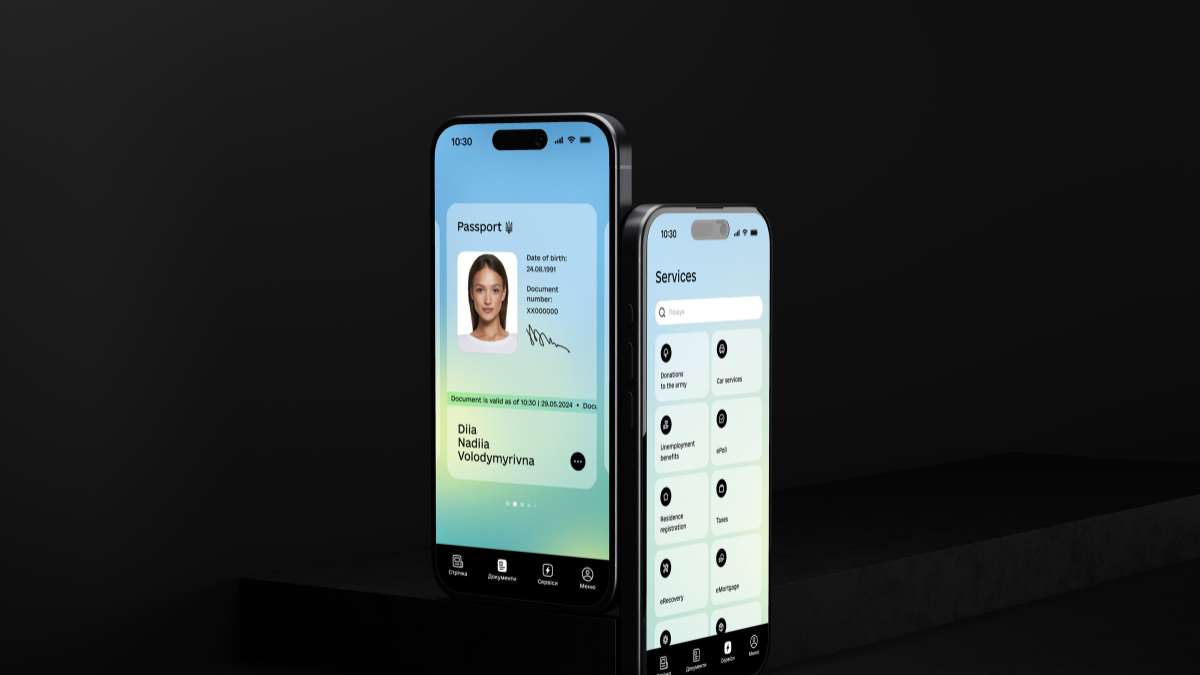
Ukraine’s most famous GovTech project, Diia, is a super app offering more than 130 public services used by over 22 million people. With this app, Ukraine became the first country in the world to introduce official digital passports and the fastest in business registration, allowing entrepreneurs to register as sole proprietors (FOPs) online in minutes.

Diia Ukraine super app

Services Diia offers:
• Digital passports and ID cards
• Business registration in minutes
• Tax payments, social aid, and more
• Military donations and war damage claims

Support for Business and Innovation

Diia.Business

Ukraine built Diia.Business, a nationwide support network for entrepreneurs. It provides free tools, templates, mentorship, and consulting to anyone looking to start or grow a business, whether in a major city or a war-displaced region.

Diia.City

Diia.City is a virtual economic zone that offers tech companies special legal and tax benefits. It has already attracted hundreds of companies by creating a modern, startup-friendly legal environment.

Education, Careers, and Fast Development

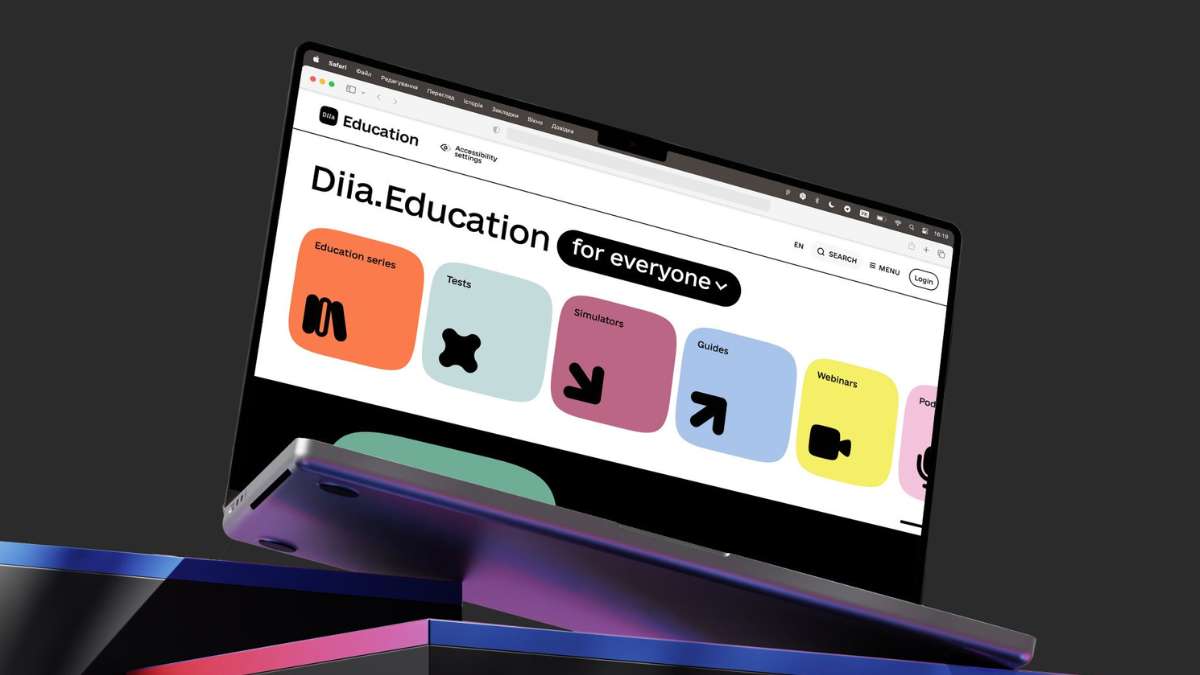
Diia.Education

For displaced individuals or anyone looking to upskill, Diia.Education offers online micro-courses, job simulators, and career tools – all free. It’s helping millions adapt to the changing job market.

Diia Education

Diia.Engine

Behind many of these tools is Diia.Engine, a low-code builder adopted by over 20 ministries to create government e-services quickly and efficiently.

Building Trust Through Transparency

To fight corruption and bring transparency to public money, Ukraine relies on Prozorro, its award-winning e-procurement system, and Prozorro.Sale, which auctions off public assets and seized properties. Together, they’ve saved billions and restored trust in government dealings.

Defense Powered by Tech

On the defense front, Ukraine created Brave1, a government-backed hub for military startups developing drones, AI tools, and tactical software. Another standout is Delta, a real-time battlefield coordination system that fuses satellite, drone, and intelligence data, giving troops better decision-making tools on the front lines.

Digital Democracy in Action

Even civic engagement is going digital. Through platforms for public petitions, budget participation, and citizen consultations, people are raising their voices on issues that matter – and getting real responses from officials. More than 31,000 public issues have already been addressed through these tools.

All of this is happening under extraordinary pressure. And yet, Ukraine isn’t just surviving – it’s setting a global standard for how digital government can work, even in wartime.

What is Immutable Linux Systems?: 10 Best Immutable Linux Distributions

Immutable Linux

A new trend is capturing the attention of tech enthusiasts and professionals alike — immutable Linux systems. This concept, though not entirely new, is gaining traction, especially with Ubuntu, announcing its own immutable version. But what exactly is an immutable system, and why is it becoming increasingly popular?

What is Immutable Linux Systems?

In an immutable Linux system, the core components of the operating system are set to be read-only. This means that once the system is installed, these elements cannot be altered, either by the user or through external influences like software updates or malware. Some distributions take this a step further by deleting any changes upon system reboot.

While the core system is read-only, users still maintain the ability to perform typical tasks like installing applications, creating, and managing documents. This is usually facilitated through specific directories allocated for user data and applications, which have standard read-write permissions. The separation of the core system and user space ensures that while users can add and modify their data and applications, they cannot alter the fundamental system components.

This concept represents a significant departure from the traditional Linux ethos, which has always been celebrated for its flexibility and user control over the system. The immutable model pivots towards a setup where the most crucial system files don’t require alterations, barring perhaps security updates. Consequently, these parts of Linux are strictly read-only. This shift aims to mitigate issues by restricting user modifications to these critical components.

Pros and Cons of Immutable Linux Systems:

Advantages of Immutable Linux SystemsDisadvantages of Immutable Linux Systems
Enhanced Security: The read-only nature of core system components significantly reduces the risk of unauthorized changes, making the system more resistant to malware and other security threats.Reduced Flexibility: Users lose the ability to modify core system components, which can be a significant drawback for those who rely on custom configurations or need to tweak system files for specific purposes.
Increased Stability: With core components locked, the chances of system crashes or performance issues due to software conflicts or misconfigurations are minimized.Storage Requirements: Complete image updates, as opposed to incremental file updates, can lead to increased storage requirements over time.
Simplified Maintenance: Updating systems becomes more straightforward with complete image updates, ensuring consistency and ease of deployment, especially in networked environments.Compatibility Issues: Some applications that require modifications to system files may not be compatible with an immutable system, limiting the choice of software.
Consistency Across Systems: In environments with multiple machines, such as server farms or cloud-based services, immutable systems ensure that all machines run the same configuration, reducing the complexity of system management.Learning Curve: Users accustomed to traditional Linux systems may face a learning curve in adapting to the immutable environment, where standard practices like direct system file editing are not possible.
Predictable Behavior: The system behaves predictably over time, as changes are not made to the core components, making it easier to manage and troubleshoot.Limited Customization: The immutable nature of the system limits the extent to which users can customize their operating environment, which can be a drawback for power users.

Use Cases of Immutable Linux Systems:

1. Better Security and Stability:

A big reason why immutable Linux systems are popular is because they are very secure and stable. In these systems, the main parts of the operating system can’t be changed, which means it’s harder for hackers to do damage. This is really important nowadays when there are a lot of cyber threats. Also, because the main parts of the system don’t change, the system works more reliably.

2. Easier to Take Care Of:

Immutable systems make it easier to look after a lot of computers at the same time. Since everything is based on one main image file, updating and backing up is simpler. This is great for people who have to manage lots of computers and want to save time and effort.

3. Good for Cloud Computing and Containers:

Cloud computing and containers are also reasons why immutable Linux systems are getting more attention. In the cloud, where it’s important for things to work smoothly and reliably, these systems are a solid base. They work really well for container apps, which need a stable and predictable environment.

4. Useful for Developers:

Developers like immutable Linux systems because they are consistent and predictable. This is really helpful when they are making and testing new apps. They can be sure that the operating system won’t change while they are working, which makes testing more accurate.

5. Special Uses and Embedded Systems:

Immutable Linux systems are also being used in special areas and in embedded systems, like in machines or IoT devices. Here, it’s really important for the system to be stable and secure.

6. Meeting Changing Needs:

Lastly, the popularity of these systems shows that what users need and want is changing. As technology gets more complicated, people are starting to like systems that are simple, secure, and don’t need a lot of changes.

Best Immutable Linux Distributions:

The concept of immutability has given rise to a variety of distributions, each offering unique features and capabilities. Whether you’re a developer, a system administrator, or an enthusiast, understanding the nuances of these distributions can help you choose the right fit for your specific needs and projects.

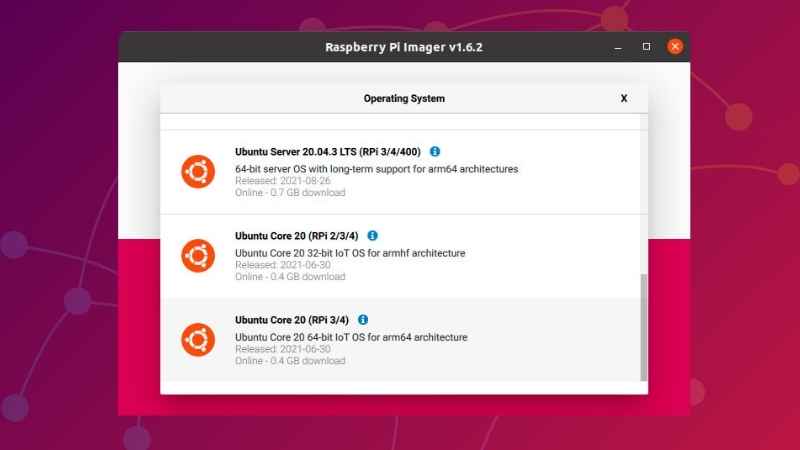
1. Ubuntu Core

Ubuntu Core - Immutable Linux Distributions

Ubuntu Core is a minimal, robust, and secure version of Ubuntu designed specifically for IoT devices and large-scale deployments. It is built around the concept of ‘snaps’ — containerized software packages that are isolated from the underlying system, ensuring security and allowing for easy updates and rollbacks. This makes Ubuntu Core particularly suitable for IoT applications where stability and security are critical. The OS is designed to run on a wide range of devices, from IoT gadgets to cloud containers. Its small footprint and transactional nature make it ideal for secure, scalable, and resilient device deployments. Ubuntu Core is maintained by Canonical, the company behind Ubuntu, ensuring regular updates and professional support.

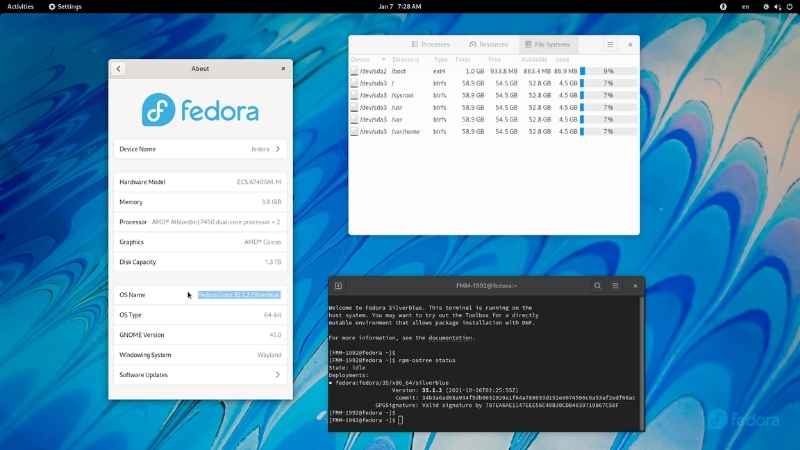
2. Fedora Silverblue

Fedora Silverblue - Immutable Linux Distributions

Fedora Silverblue is an immutable desktop operating system that delivers the familiar GNOME desktop experience. It stands out for its reliable update system, where each version is maintained for approximately 13 months, and updates take effect upon the next reboot, ensuring system consistency. The system updates are atomic, meaning they happen in one go and will not apply if there’s an issue, ensuring you always have a working computer. A previous version of your system is always kept, allowing you to revert if necessary. 

Silverblue is developer-friendly, with graphical applications installed via Flatpak, which separates them from the base system and allows fine-grained control over permissions. It also features Toolbx for neatly organizing development tools, ensuring they remain independent from changes to the base system. Fedora Silverblue is private, trusted, and built on open-source technologies, backed by Red Hat. It uses rpm-ostree, a hybrid image/package system, for atomic and safe upgrades with local RPM package layering.

3. Fedora CoreOS

Fedora CoreOS is designed as a minimal, container-optimized operating system, focusing on automatic updates, scalability, and security. It is specifically tailored to run containerized applications, offering an optimal container host. Fedora CoreOS is characterized by its minimalistic design, keeping the base image as lean as possible. Despite its minimal nature, it remains flexible, supporting a wide variety of installation methods. It is available on multiple platforms, with plans for expansion. This OS is ideal for those looking for a secure, scalable solution for container-based workloads.

4. blendOS

blendOS - Immutable Linux Distributions

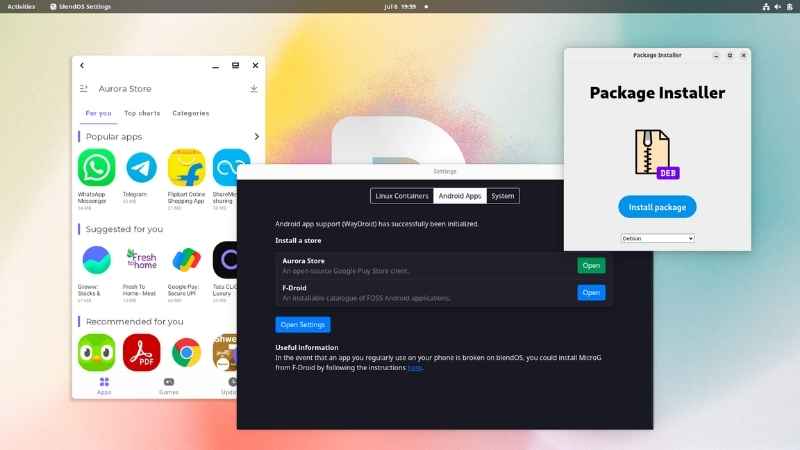
blendOS is an innovative operating system that combines the best of Linux distributions, Android apps, and web apps into a seamless experience. It offers native support for Android and Linux apps from various distributions like Debian, Ubuntu, Fedora, Arch Linux, Kali Linux, AlmaLinux, Rocky Linux, and more, providing access to a vast array of applications. The OS is particularly gamer-friendly, supporting platforms like Steam and Heroic. Developers can benefit from its support for popular IDEs and the ability to set up containerized development environments. For Android app testing and development, blendOS uses WayDroid, ensuring Android apps run smoothly.

Key features include an atomic update system, ensuring seamless background updates, and an immutable OS structure, enhancing stability. blendOS supports multiple desktop environments, catering to different user preferences. It also facilitates reproducible setups, allowing users to easily transfer their configurations across machines.

5. Endless OS

Endless OS - Immutable Linux Distributions

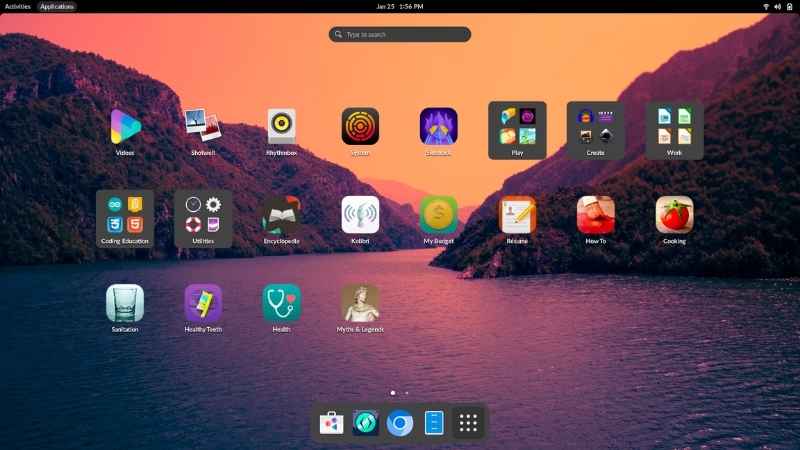
Endless OS is an immutable Linux distro that emphasizes education and accessibility. It is designed with a focus on providing a wealth of content, tools, and capabilities to enhance work productivity. Endless OS stands out for its extensive range of pre-installed software, which includes office productivity tools like LibreOffice and GIMP for graphic design. The operating system is tailored to cater to a global audience, particularly those facing challenges such as limited financial resources and unreliable internet connectivity. The OS is particularly beneficial for communities in need, offering resources for learning and discovery, and is designed to be accessible and affordable, making it a suitable choice for offline communities or those with unstable internet access.

6. Flatcar Container Linux

Flatcar Container Linux is a specialized Linux distribution designed for container workloads, focusing on high security and low maintenance. It’s tailored for cloud-native infrastructure, featuring a minimal OS image that includes only essential tools for running containers, thereby eliminating the need for a package manager and preventing configuration drift. One of its core attributes is the immutable filesystem, significantly enhancing security by eliminating many vulnerabilities. 

The OS is scalable, equipped with tools for managing large-scale infrastructure, and its minimal design reduces complexity and the attack surface. Security is a priority, with automated updates ensuring the latest patches are applied. Flatcar Container Linux, a derivative of CoreOS, offers seamless migration for CoreOS users and employs a reliable update mechanism akin to Google’s ChromeOS for safe and automated system updates. Its Nebraska update server allows for controlled update management, making it an ideal choice for those seeking a secure, scalable, and easy-to-maintain container-optimized Linux distribution.

7. Talos Linux

Talos Linux is a specialized operating system designed specifically for Kubernetes, focusing on security, immutability, and minimalism. It supports various platforms, including cloud, bare metal, and virtualization platforms. Unique to Talos Linux is its system management approach, which is entirely API-driven, eliminating traditional access methods like SSH, shell, or console. This design makes it suitable for large-scale Kubernetes clusters. Talos is also a security-focused Linux distro with a minimal and hardened design, including mutual TLS for API access and a read-only root filesystem.

8. Vanilla OS

Vanilla OS - Immutable Linux Distributions

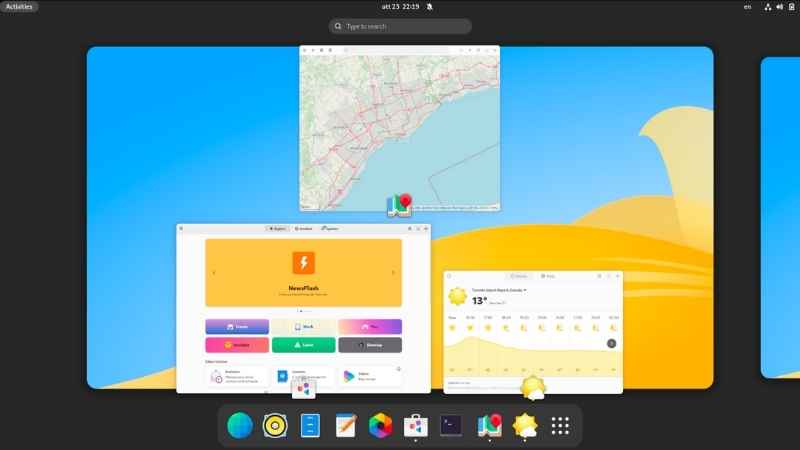
Vanilla OS is a Linux distribution known for its simplicity and minimalism. It typically focuses on providing a basic, unmodified experience of the Linux environment, often resembling the ‘vanilla’ versions of software — that is, software in its original, unaltered state. This approach is favored by users who prefer a clean, straightforward operating system without additional layers of customization or pre-installed software that is often found in other distributions. Vanilla OS is generally suitable for users who want to build their system from the ground up, adding only the applications and tools they need, thus ensuring a lightweight and efficient computing experience.

9. Photon OS

Photon OS is designed specifically for cloud and edge applications with a focus on security and enterprise-grade performance. It’s versatile, supporting applications on bare metal, various hypervisors like VMware ESXi, and public clouds such as AWS, GCE, and Azure. Optimized as a lightweight container host, Photon OS is ideal for running containers and building Kubernetes clusters. It emphasizes security, following the Kernel Self-Protection Project guidelines to ensure a hardened, secure kernel from the start. The OS also supports real-time applications, catering to deployments that require ultra-low latency. Available in both ISO and OVA formats, Photon OS is a robust choice for developers and enterprises seeking a secure, efficient, and flexible operating system for modern cloud and edge computing needs.

10. openSUSE MicroOS

openSUSE MicroOS - Immutable Linux Distributions

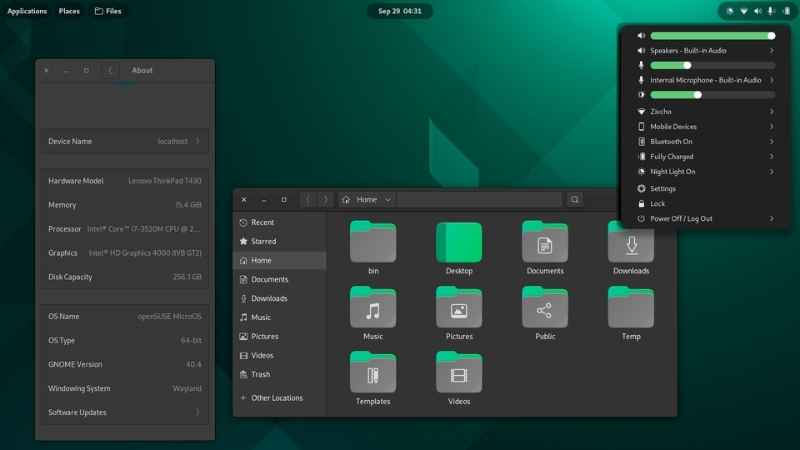
openSUSE MicroOS is a modern immutable Linux operating system designed to be compact, scalable, and consistently up-to-date, making it ideal for container hosts and edge devices, especially in large deployments. It inherits the robustness of openSUSE Tumbleweed and SUSE Linux Enterprise, focusing on a read-only root filesystem to prevent accidental modifications and employing transactional updates using btrfs snapshots to ensure system integrity. 

The OS features a health-checker for post-update verifications and automatic rollbacks if needed. It supports cloud-init and Combustion/Ignition for initial configurations and offers Podman Container Runtime for containerized applications. With its rolling release model, openSUSE MicroOS stays current with the latest features and security updates.

Is Immutable Linux Suitable for You?

Determining whether an immutable Linux system is right for you hinges on your specific needs and computing environment. This section delves into various aspects to consider, helping you make an informed decision.

  • High-Security Requirement: Ideal for environments where security is a top priority, such as in software development, cloud computing, and server management.
  • Stability and Reliability: Offers consistent performance over time, minimizing system instability or performance issues due to software changes.
  • Ease of Maintenance: Simplifies updating and backing up systems, especially beneficial for IT departments managing multiple machines.
  • Personal Computing Use: May not offer significant benefits for everyday tasks like web browsing or document creation; could feel restrictive for those who enjoy customizing their OS.
  • Software Compatibility: Important to consider if your essential applications require modifications to system files, which might not be possible on an immutable system.
  • Disk Space Usage: Tends to use more disk space over time due to updates being implemented through complete image files.
  • User Skill Level: More suited for users with a moderate to advanced understanding of Linux; beginners might find the system management challenging.
  • Future Trends: The concept of immutability might become more common, influencing software development and compatibility.
  • Community Support: Engaging with the Linux community can provide valuable support and resources for adapting to an immutable system.

Is Altseason Around the Corner? A July 2025 Crypto Market Breakdown

Altseason Around the Corner

As we step into July 2025, the crypto market finds itself at a crossroads. While Bitcoin continues to hold its dominance, subtle signals are beginning to stir conversations about the potential arrival of an altcoin season — analysts at Bitzo Crypto News, widely regarded for its timely crypto market insights, have flagged these early indicators. But is it really happening — or is it just a false alarm?

Let’s break it down using market data, historical patterns, and macroeconomic context to make sense of where we stand.

What’s the Market Telling Us?

Bitcoin Dominance (BTC.D): Still Too Strong?

Bitcoin currently dominates around 64% of the total crypto market. Historically, altcoin seasons tend to emerge when BTC.D drops below 60%, signaling that investors are rotating funds into alternative crypto assets. Until Bitcoin loses that grip, altcoins may struggle to outperform in any sustained way.

Altcoin Market Cap: Eyes on the $1.3 Trillion Mark

The total altcoin market cap hovers near $1.1 trillion. A breakout above $1.3 trillion could unlock new investor confidence and potentially trigger an altcoin rally. This level acts as both psychological and technical resistance.

RSI Levels: Oversold Means Opportunity?

A large number of altcoins are currently showing RSI levels below 30, which indicates they’re oversold. If buying interest returns, we may witness sharp reversals, especially in solid projects that have been beaten down.

Macro Tailwinds: Liquidity May Be Coming

On the macroeconomic front, delays in global tariff implementations and speculation around potential quantitative easing (QE) are increasing the odds of excess liquidity entering the markets. In such scenarios, risk assets, including altcoins, usually benefit first.

High Bitcoin dominance suggests most capital is still playing it safe. And unlike past altseasons, institutional investors are now a big part of the picture. Many of them are turning toward crypto equities and tokenized assets, not necessarily meme coins or speculative alts.

In short, if we do see an altseason in 2025, it may be more selective — rewarding projects with strong fundamentals (like real-world use cases, solid teams, and steady adoption) rather than speculative tokens with hype alone.

Lessons from Past Altcoin Seasons

Understanding previous alt seasons can help set expectations for the months ahead.

2017–2018: ICO Boom and Bitcoin Weakness

This cycle saw Bitcoin dominance crash from 86% to below 39%. As Bitcoin’s price fell, ICOs flooded the market. New altcoins were being launched almost daily, giving retail investors a chance to participate early and profit big. Many tokens saw 10x to 100x gains, although most later faded into obscurity.

2020–2021: Pandemic-Fueled Speculation and NFTs

Bitcoin dominance again declined sharply, from 70% to 38%. This time, meme coins like Dogecoin and Shiba Inu, along with NFT-based projects, took the spotlight. Retail enthusiasm, aided by social media and easy access via exchanges, led to a frenzy. The Altcoin Season Index hit a record high of 98 in April 2021.

How to Know If Altseason Has Actually Begun

By the time the average investor realizes it’s an altseason, they’ve usually already missed the best opportunities. So, what early clues can you look for?

Altcoin Dominance on the Rise

Watch for a steady increase in altcoin dominance relative to Bitcoin. When more capital starts flowing into alts across sectors — from gaming tokens to layer-2 solutions — it’s usually the first sign.

Spike in Trading Volume

When trading volumes surge across a wide range of altcoins — not just the top 10 — that’s a strong indicator that investor interest is shifting. Liquidity begets more liquidity, often pushing prices higher quickly.

Early Momentum in Narratives

Every altseason has its “hot narrative.” Whether it’s AI tokens, real-world asset (RWA) projects, or decentralized social platforms, the first movers in these categories often lead the wave. Keep an eye on where developers and early adopters are showing up.
So… When Is the Next Altseason?

The honest answer? Nobody can say for sure. But we do know what conditions make it more likely:
  • A decline in Bitcoin dominance
  • U.S. Fed rate cuts or other liquidity-friendly moves
  • Strong performance from Ethereum, often a bellwether for broader altcoin strength
  • A compelling narrative shift that gets retail and institutional capital excited again

If rate cuts or QE become reality in the second half of 2025, and Bitcoin consolidates or cools off, we could very well see altcoins take center stage by late Q3 or early Q4.

How to Prepare for Altcoin Season

Here’s how a smart investor might approach it:

1. Do Your Research (DYOR)

Before you buy, know the project fundamentals — team strength, use case, tokenomics, roadmap. Avoid shiny distractions and meme hype unless you’re in early and willing to take the risk.

2. Use Technical Tools

Tools like support/resistance lines, volume analysis, and RSI can help you find strong entry points. Be patient — don’t chase pumps.

3. Diversify Your Portfolio

Don’t go all-in on one coin. Spread your capital across sectors like DeFi, AI, gaming, and infrastructure plays. Balance blue-chip alts with a few high-upside small caps.

4. Get In Early on New Projects

Participating in presales, launchpads, or early staking events can offer outsized returns — but remember: higher reward usually comes with higher risk.

Altcoin season isn’t guaranteed, but July 2025 is shaping up to be an important inflection point. The ingredients are on the table — oversold alts, elevated Bitcoin dominance, and a macroeconomic backdrop that could shift quickly. All it takes is the right catalyst.

15 Best Offline Android Music Players: Enjoy Your Music Anytime, Anywhere

Offline Android Music Players

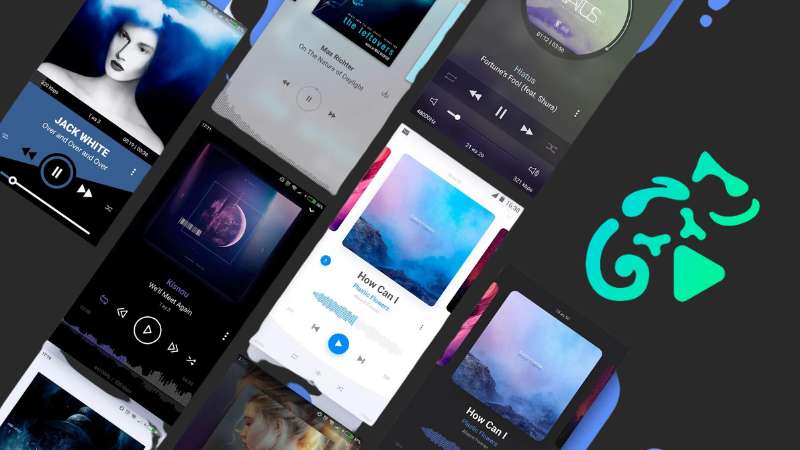
Some people prefer to stream music online through platforms like Spotify and Resso, while others prefer to keep their favourite songs on their Android smartphones’ internal memory and enjoy it offline. Now you may think, in an era where everyone prefers online platforms to stream media content, why would anyone choose offline music player apps to play music? It’s difficult to say whether offline Android music players are better than online ones, as it largely depends on individual preferences and use cases.

Using offline Android music player apps, users can store music on their smartphones and play it without an internet connection. This is handy for people who don’t always have Wi-Fi or cellular internet connectivity or who want to reduce their data usage. Offline music players also feature higher sound quality and don’t suffer from buffering or interruptions. That’s why we’ve compiled a list of the top offline Android music players available on the Google Play Store.

Best Offline Android Music Players:

1. Poweramp

Poweramp Music Player

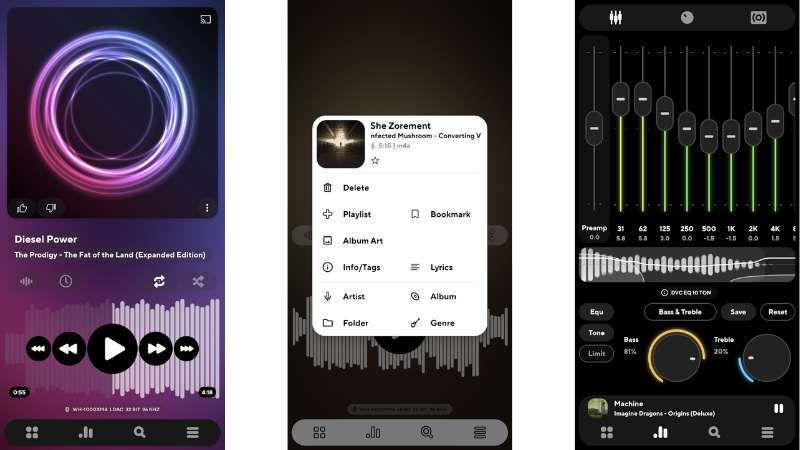
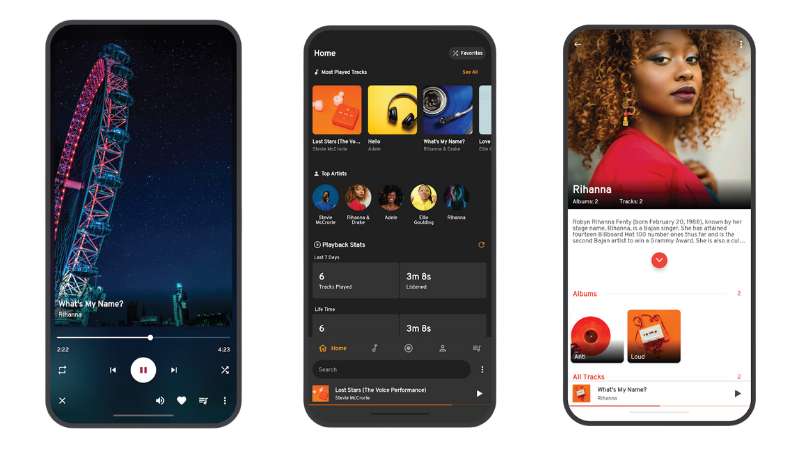
Poweramp Music Player is one of the most popular offline Android music players for good reasons. It offers a smooth, user-friendly interface and a comprehensive set of features that set it apart from the competition. Poweramp allows you to personalize your music playback experience with a 10-band equalizer, crossfade, gapless playback, and other features. It also supports a variety of file types, such as MP3, FLAC, WAV, and more.

2. BlackPlayer

BlackPlayer Music Player

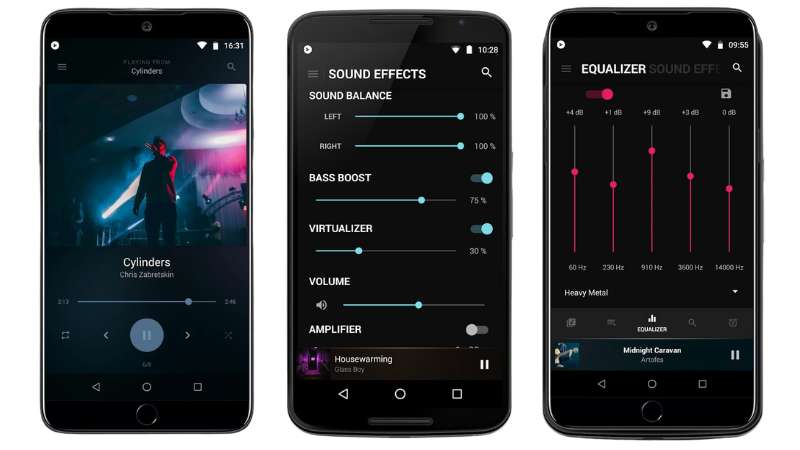
BlackPlayer comes with a highly customizable, smooth and snappy modern minimalistic Material design. The app lets you enjoy local music files with elegant, tasteful animations throughout the interface. It contains a 5-band equalizer, bass boost, and 3D surround virtualizer and amplifier, allowing you to personalize your music playback experience.

3. Stellio

Stellio - Music and mp3 Player

Stellio Player has an aesthetically pleasing user interface with the highest quality sound and features. For a better sound experience, Stellio offers a powerful audio engine which controls a 12-band equalizer and a wide variety of audio effects. The player gives complete freedom for experimentation, using it manually or by presets and also supports Android Wear. The app also allows you to manage your music library by creating playlists, editing metadata, and searching for songs.

4. Pi Music Player

Pi Music Player_ Offline Music

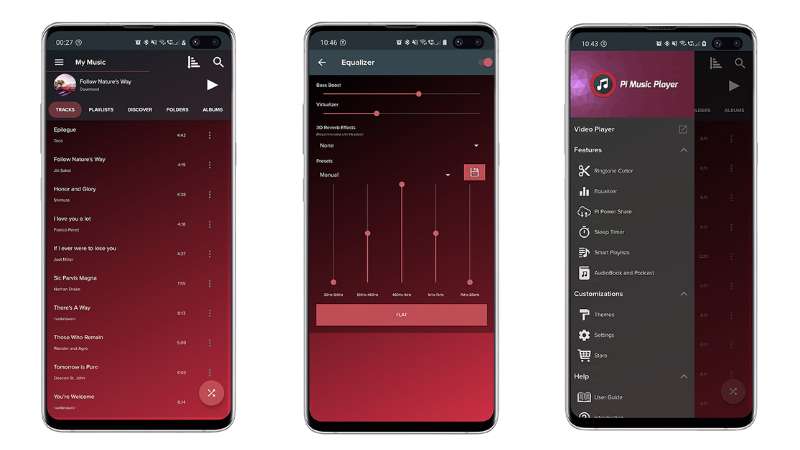
Pi Music Player is one of the highest-rated music players for Android. Pi Music Player is beautifully crafted with material design in mind and packed with some extraordinary powerful features. The more attractive and intuitive user interface combined with the crisp and clean layouts will give you the best user experience. It includes a 5-band equalizer, bass enhancement, and 3D surround sound, among other things. It also supports all major audio formats and allows you to create playlists. Pi Music Player also has a ringtone cutter, which allows you to make custom ringtones from your favourite music.

5. PlayerPro

PlayerPro Music Player

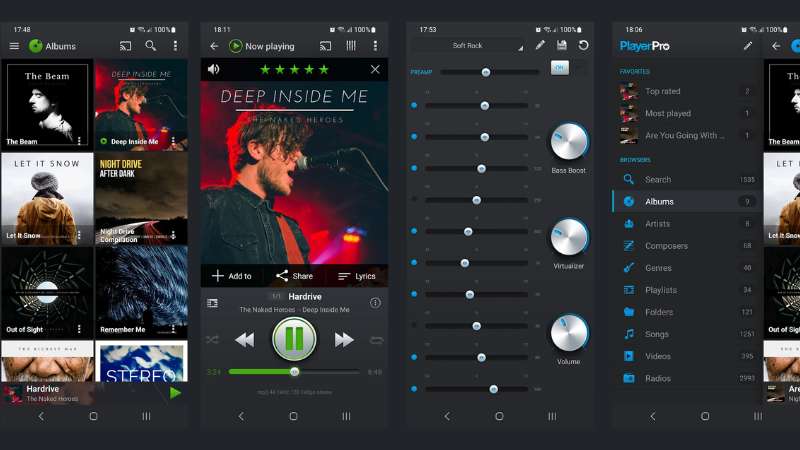
PlayerPro Music Player has a beautiful, fast, and easy-to-use interface, as well as intelligent audio configuration capabilities. There is also a selection of free plugins to supplement it. It offers a 10-band equalizer with 20 default presets, crossfade, and gapless playback, and it can play a variety of file formats. It also has a tag editor, allowing you to simply update the metadata of your music files.

6. Shuttle

Shuttle Music Player

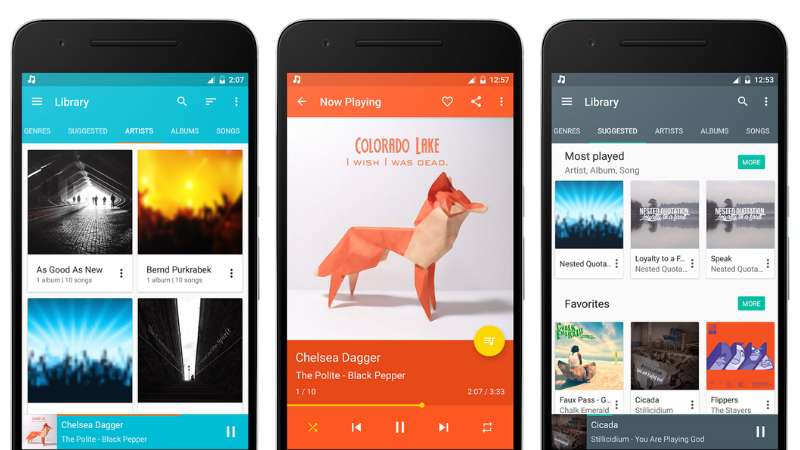
Shuttle Music Player is one of the best lightweight and powerful open-source music players for Android users to enjoy music offline. It is a simple music player app with a nice material design UI. It contains a 6-band equalizer, gapless playback, and a wide range of file types supported. You can also change the theme and colour scheme of the app’s UI.

7. jetAudio HD Music Player

jetAudio Hi-Res Music Player

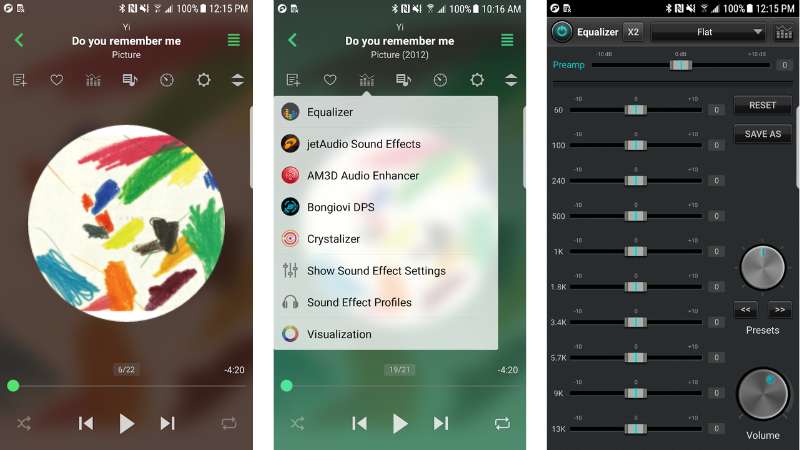
jetAudio is a feature-rich offline music player for Android phones. It has a 10-band equalizer, sound effects, and crossfade capability, among other audio upgrades. MP3, WAV, FLAC, and other music formats are supported by the app. jetAudio HD Music Player also has a gorgeous and simple user interface.

8. Neutron

Neutron Music Player

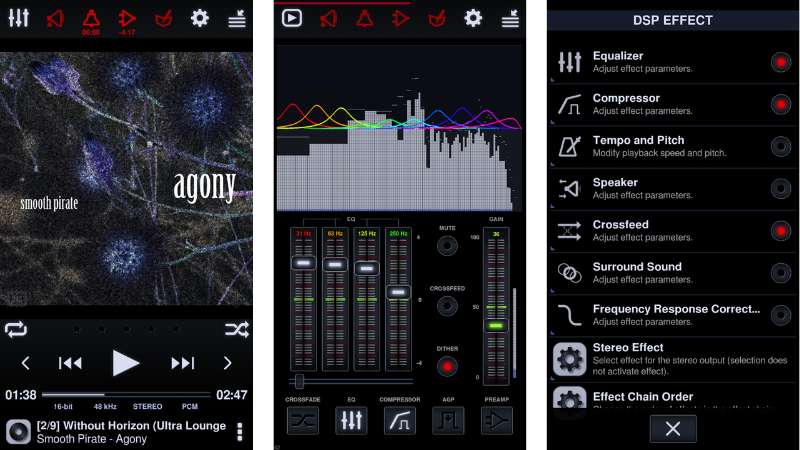
Neutron Player is a high-end Android music player aimed at audiophiles. It includes a 32/64-bit audio rendering engine for high-quality sound playback. It also has a 10-band parametric equalizer, crossfeed, and a variety of file formats. It has a sophisticated user interface with advanced media library features that audiophiles and music lovers from all around the world enjoy.

9. Musicolet

Musicolet Music Player

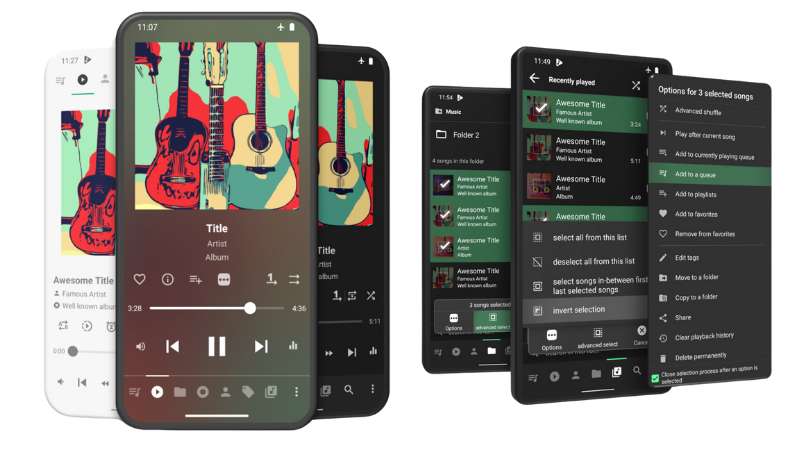
Musicolet is a free, ad-free, and lightweight offline Android music player that provides a simple yet powerful user experience. It supports a variety of audio formats, including mp3, mp4, and wav, and has features like as a tag editor, lyrics support, and a sleep timer. With its simple interface, you can effortlessly navigate through your music library and build playlists on the move.

10. Lark Player

Lark Player_Music Player & MP3

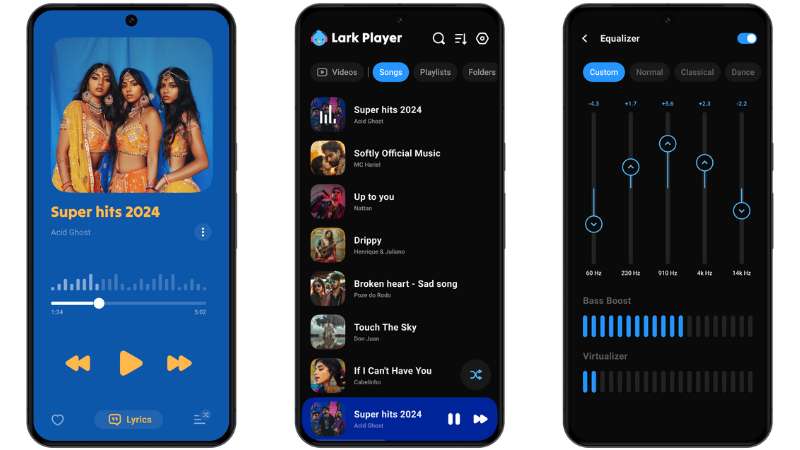
Lark Player is a stylish and free offline music player and video player for Andriod. It supports playing all major formats of offline music and videos. It will fetch all kinds of saved content on your Android device and will even let you play YouTube music videos as well. There are tons of screen and music controls, making it a must-have music player for Android. The app also includes features such as a sleep timer, equalizer, and support for multiple file formats. It has been rated highly by users and has a large number of downloads on the Google Play Store.

11. Pulsar

Pulsar Music Player

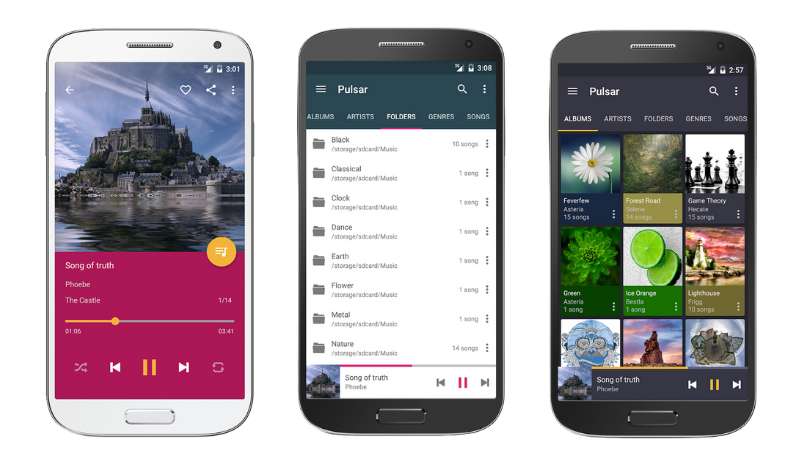
Pulsar is an offline Android audio player without advertisements with a gorgeous user interface that matches every single detail of the material design guidelines. Pulsar is a feature-packed music player that supports various audio formats, including mp3, aac, and flac, and has features like gapless playback, crossfade, and a sleep timer. 

12. MediaMonkey

MediaMonkey

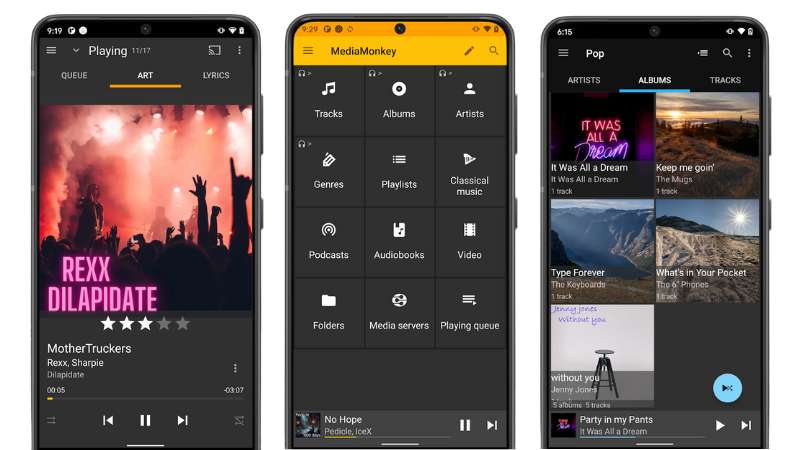
MediaMonkey is a robust music player with a plethora of features. You may use its tag editor to organize your music library and replace missing album images and lyrics. In addition, MediaMonkey includes a 10-band equalizer, crossfade, and gapless playback. MP3, FLAC, and OGG are among the audio formats supported by the application. A paid version of MediaMonkey is also available, which unlocks extra capabilities such as Wi-Fi syncing and cloud storage support.

13. Musicana

Musicana Music Player

Musicana is an innovative music player for Android. It comes with a superior 5-band equalizer, lyrics finder, online music streaming, fast song recognition & much more features that will give you an always-impressive music listening experience.

14. Retro Music Player

Retro Music Player

Retro Music Player is crafted in a hybrid design that matches the material guidelines with iOS in mind. The app offers an easy-to-understand user interface without overloaded menus where you can choose between three different main themes: white, dark and black for AMOLED displays. The app features more than 10 now playing themes, gapless playback, drive mode, carousel effect for the album cover, sleep timer, tag editor and more.

15. Eon

Eon Music Player

Eon Music Player is a minimalist, feature-rich, extremely customizable, and one of the cleanest Material design offline Android music players available. The app supports Android Auto and offers a powerful equalizer that allows users to fine-tune their music playback to suit their preferences. Eon Music Player gives you easy-to-use navigation, quick controls, and nicely formatted drop-down menus. You don’t have to wander around in complex menus to find anything, and everything is right where you need/expect it to be.

Having the right offline music player on your Android device can help you enjoy your music anytime, anywhere. We hope that this article has helped you find the best offline Android music players for your needs. Whether you prefer a feature-packed music player or a simple one, there is an option for you in the Google Play Store.

12 Best Mobile Party Games for Family Gatherings and Friend Hangouts

Best Mobile Party Games

Looking to add some excitement to your family meals and parties with friends? Mobile party games are the perfect solution! With a variety of engaging and fun options available for Android and iOS, these games can turn any gathering into a memorable event. In this article, we will explore the best party games you can download on your smartphone or tablet to bring more fun and laughter to your gatherings. Whether you’re at home with family or hanging out with friends, these games are sure to spice up your time together.

Best Party Games for Android and iOS:

Warning: These games might spark some friendly rivalries!

1. 1 2 3 4 Player Games

Want to play offline party games with friends on the same device? This app offers a variety of fun mini-games for up to 4 players. Compete in multiplayer PvP, 2v2, or challenge the AI in single-player mode. Enjoy a wide range of games like Snakes, Tic Tac Toe, Pool, Paint Fight, and Spinner War. You’ll also find classics like Archery, Tug of War, and Whack-a-Mole, as well as brain games and racing duels.

Download 1 2 3 4 Player Games: Android |   iOS

2. Dark Stories

Dark Stories

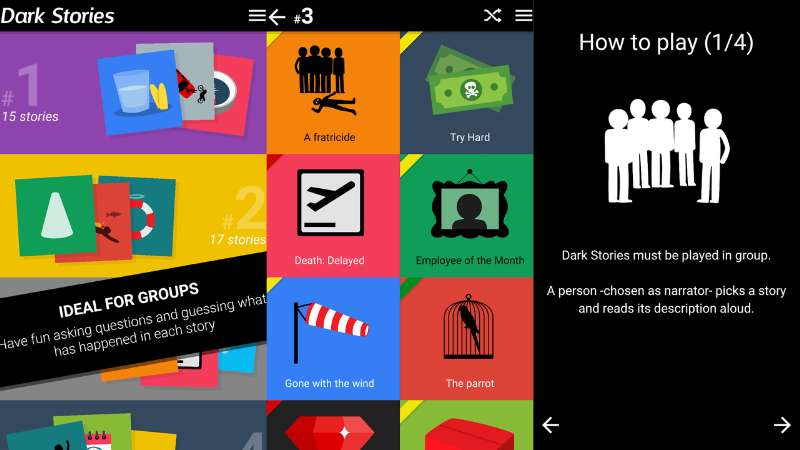
This popular game is especially enjoyable when played with a group. The narrator reads out a story, often one that ends with a crime, and the other players have to figure out what happened. The narrator can only respond to their questions with a simple “YES” or “NO.”

Download Dark Stories: Android |   iOS

3. Charades App/Guess Up/Heads Up

CharadesApp is a perfect choice for parties and family gatherings. It’s simple to play and guarantees plenty of fun moments. The idea is to hold the phone above your head, which will display a word that your friends can see. They’ll help you guess the word by answering questions or making gestures.

There are several similar games available on the Play Store, all inspired by the popular “charades” concept. Another options are GuessUp and Heads Up, a similar game that I tried some time ago and really enjoyed. Both are worth checking out!

Download Charades App: Android  |   iOS

Download Guess Up: Android  |   iOS

Download Heads Up: Android  |   iOS

4. Wavelength

Wavelength is a cooperative game where players work together to guess where clues fall on a spectrum, such as “hot or cold.” The objective is to read each other’s minds and place the answer on a dial accurately. You can play with 2-10+ players, whether you’re together in person or remotely, and the game is available on both Android and iOS.

The app offers over 450 spectrum cards, with 300+ cards exclusive to the mobile version. The gameplay is interactive, allowing real-time dial movements and fun emoji reactions. Whether you’re hosting a remote game night or playing with friends in person, Wavelength offers a fresh, engaging experience.

Download Wavelength: Android  |   iOS

5. Undercover

Undercover is a group game, playable online or offline, where players must figure out each other’s identities using secret words. Perfect for parties, gatherings, or any social event, Undercover guarantees laughs and active participation.

Players can either be Civilians, Undercover (Impostors), or Mr. White. Civilians get the same secret word, Undercover players get a slightly different word, and Mr. White gets no word at all. Players take turns describing their word, and after a round of discussion, everyone votes to eliminate someone who seems suspicious. Mr. White wins if they correctly guess the Civilians’ word.

With a mix of creative thinking, strategy, and surprise twists, Undercover is sure to be one of the most entertaining party games you’ll play this year!

Download Undercover: Android  |   iOS

6. 2 Player Games

Challenge your friends is a multiplayer game where two players can compete on the same device in a series of fun, quick mini-games. It features a variety of challenges like color puzzles, space adventures, basketball, ping pong, and more, with a 3D design for a realistic experience. You can play in 2-player mode to compete with friends or in 1-player mode against AI. The game is perfect for offline play, making it ideal for parties or casual gaming anywhere.

Download 2 Player Games: Android  |   iOS

7. Ludo Offline

Ludo Offline Dice Board Game

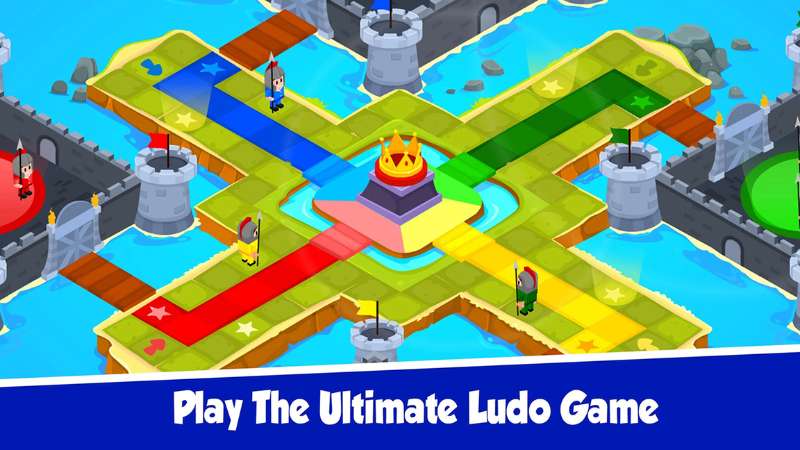
Ludo Game offers a fresh take on the classic board game with a unique new look. Perfect for both kids and adults, it allows you to play in multiplayer mode, either offline with friends or against the computer. With engaging gameplay, fun animations, and 3D effects, this version of Ludo adds an exciting twist to the traditional game. Challenge your opponents, roll the dice, and claim the crown in this fun and updated version of a childhood favorite.

Download Ludo Offline: Android  |   iOS

8. Draw With Friends

Draw with Friends is an exciting multiplayer drawing game where players draw words and guess each other’s artwork, similar to Pictionary. Party Mode offers non-stop action with unlimited players, where one draws and others guess as fast as possible. Whether you’re showcasing your art in the in-game art book or just enjoying some casual fun, Draw with Friends is all about creativity, no matter your skill level.

Download Draw With Friends: Android  |   iOS

9. Taboo

Taboo is a mobile version of the famous party game where players split into two teams and try to describe words without using certain “taboo” words on the card. It’s a game of quick thinking and creativity, where one player gives clues and the team must guess as many words as possible before time runs out. If the clue-giver accidentally uses a taboo word, the opposing team buzzes, and they lose points.

Download Taboo: Android  |   iOS

10. Boomit – Who’s Most Likely

Boomit - Who's Most Likely

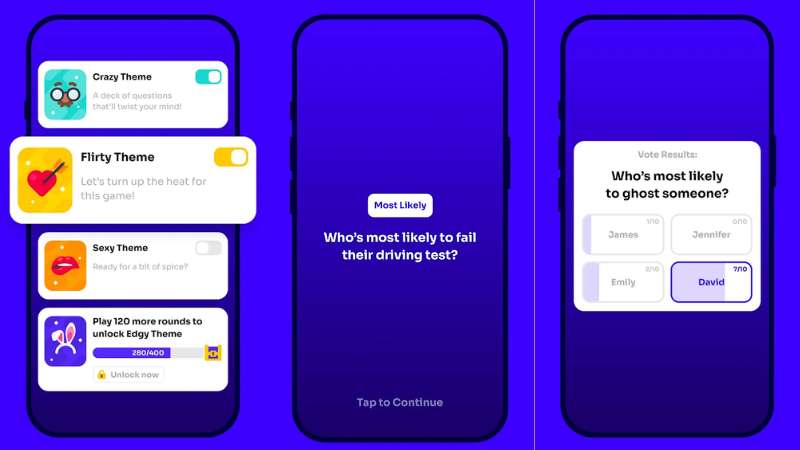
Boomit – Who’s Most Likely is a fun and interactive party game where players answer questions about who in the group is “most likely” to do something, such as “Who’s most likely to stay up all night?” or “Who’s most likely to forget their keys?”. The goal is to spark laughter, conversation, and sometimes even friendly debates as everyone votes on which player fits the description best.

Download Boomit – Who’s Most Likely: Android  |   iOS

11. Out of the Loop

Out of the Loop

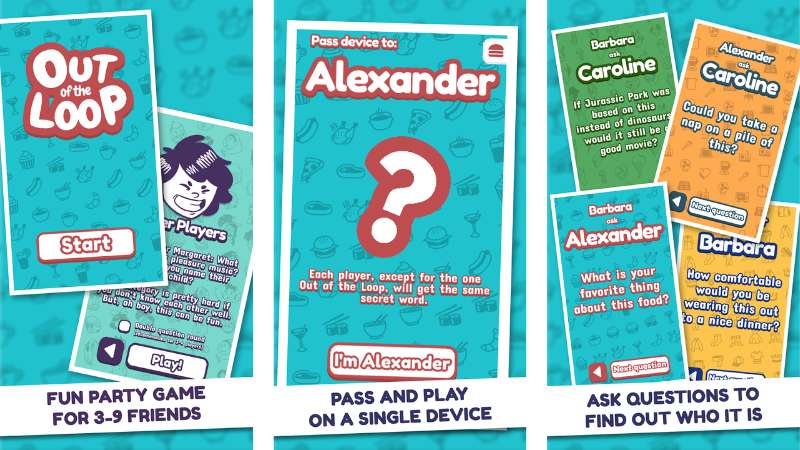
Out of the Loop is a mobile party game for 3-9 players that centers around figuring out which player is “out of the loop.” The game is easy to pick up and play, requiring only one device. Players are given a secret word from a chosen category, except for one player who is “out of the loop” and has no clue what the word is. Each player answers a question about the secret word, and everyone must figure out who doesn’t know the word based on their answers. If the “out of the loop” player can guess the secret word, they win, adding an extra layer of suspense.

Download Out of the Loop: Android  |   iOS

12. Evil Apples

Evil Apples

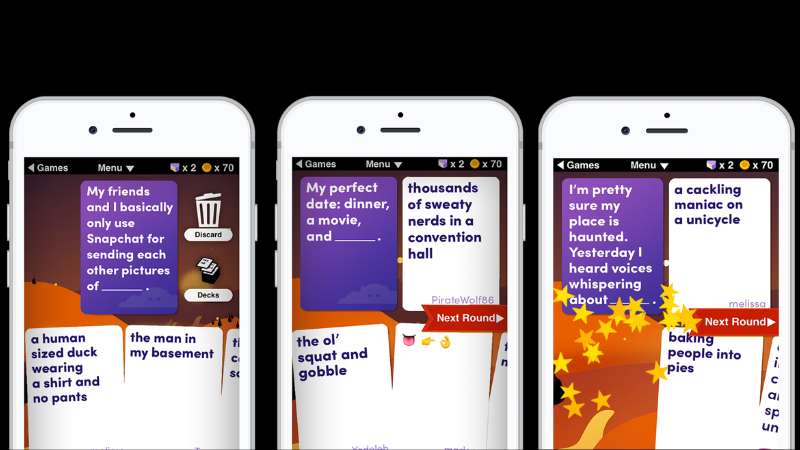
Evil Apples is an adult-oriented, hilarious card game where players match funny, often outrageous, answer cards to question cards in a similar style to Cards Against Humanity. The game is packed with over 6,000 answer cards and 1,000 question cards, providing endless entertainment. Players can compete online with friends or random people, using in-game chat to banter and strategize.

Download Evil Apples: Android  |   iOS

15 Must-Have Free Android Icon Packs to Transform Your Home Screen

Free Android Icon Packs

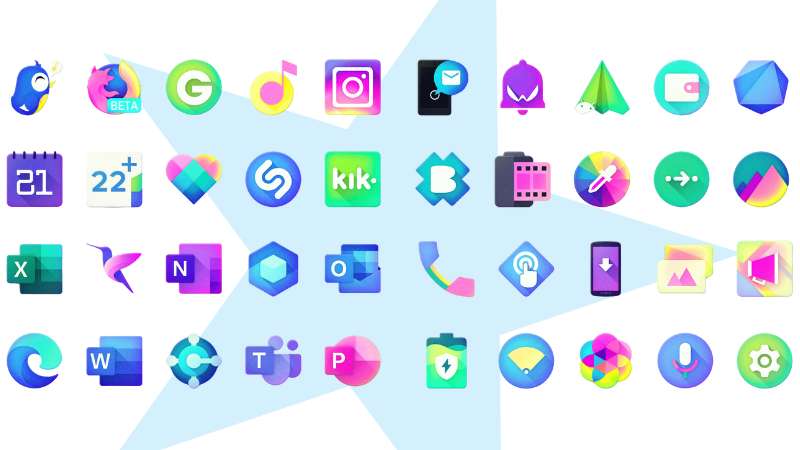
One of Android’s standout features compared to iOS is its remarkable level of customization. If you’ve installed a launcher on your Android device and are looking to refresh its appearance with custom icons, you’re in the right place.

However, keep in mind that icon packs aren’t as simple as a direct install; they need to be compatible with your chosen launcher. Fortunately, most icon packs work seamlessly with popular launchers like Nova Launcher and Apex Launcher. If you’re unsure about compatibility, opting for one of these widely supported launchers can help you avoid any potential issues.

Best Free Custom Icon Packs for Android

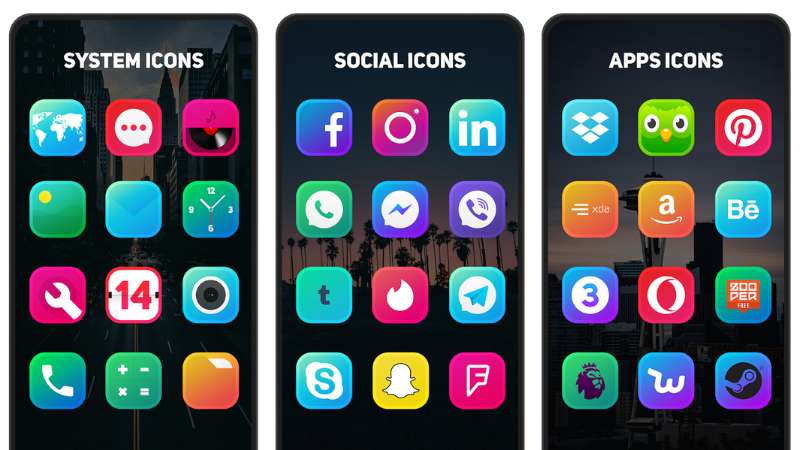
We’ve curated a list of the top 15 free icon packs available for Android devices today. Additionally, many of these packs offer premium versions that provide even more features and a wider selection of icons.

1. Juno Icon Pack

Juno Icon Pack

Juno Icon Pack offers Android users a sleek, iOS-inspired aesthetic with its beautifully designed icons featuring modern gradients and vibrant colors. The free version includes over 3,065 high-quality icons and 14 stunning wallpapers, with monthly updates based on user requests and premium feedback. Additionally, it includes five KWGT widgets and supports dynamic calendar icons, enhancing both functionality and style on your home screen.

Juno Icon Pack | Download on Google Play

2. Rad Pack

Rad Pack

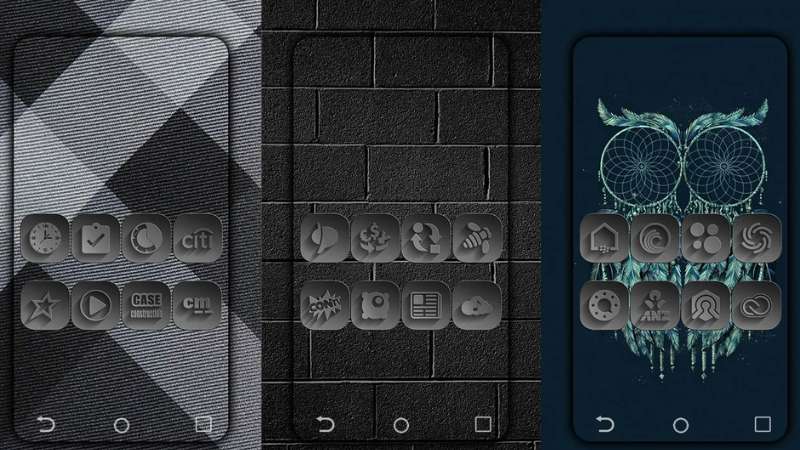
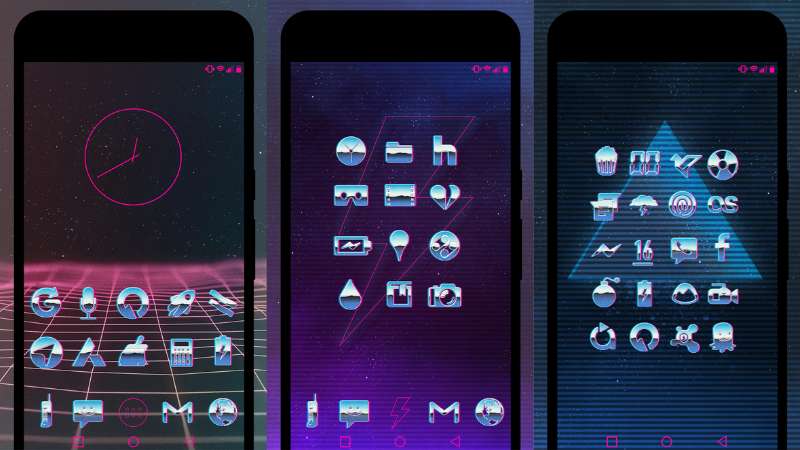
Rad Pack brings the vibrant and nostalgic vibe of the 1980s to your Android device with its striking chrome and neon pink icons. The free version features over 2,200 high-definition icons designed to emulate the retro 80’s aesthetic, ensuring your home screen stands out with crisp and colorful details. Accompanied by a collection of 20+ HD retro-themed wallpapers, Rad Pack allows you to fully immerse your device in a classic yet modern look. Additionally, it includes a minimalistic analog clock widget and supports Muzei for rotating wallpapers, enhancing both functionality and style.

Rad Pack | Download on Google Play

3. Verticons

Verticons icon pack

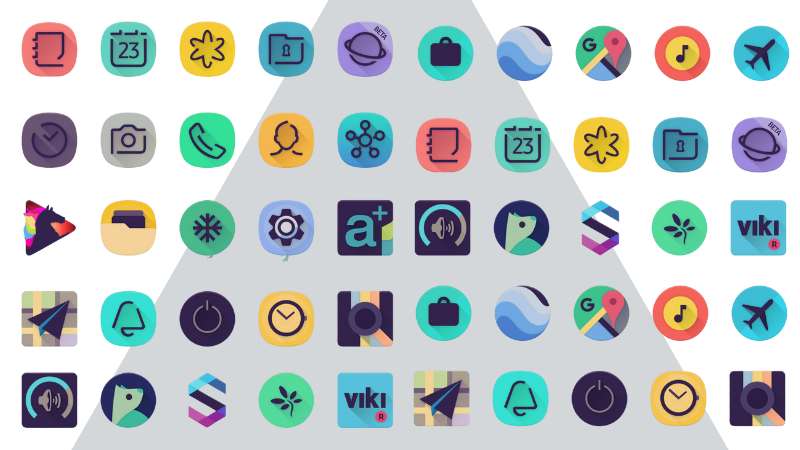
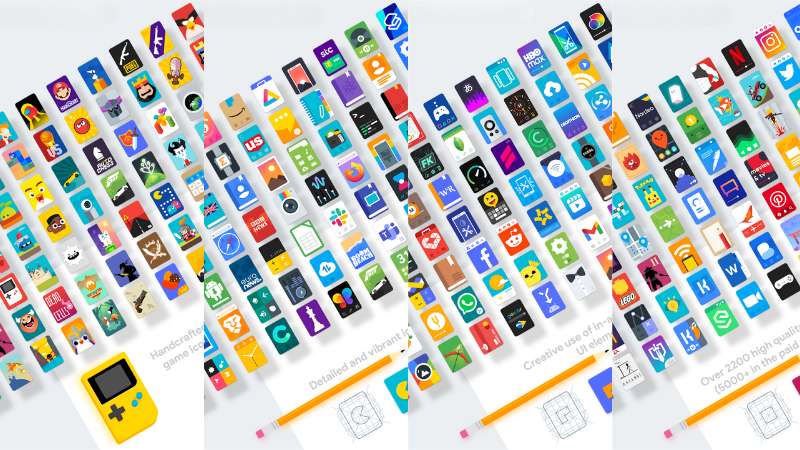
Verticons brings a fresh twist to Android customization by moving away from traditional circular icons. The free version includes around 2,350 beautifully designed icons that follow material design principles while incorporating rectangular card styles, vivid colors, and dynamic drop shadows. This icon pack is especially suited for smartphones with 18:9 or higher aspect ratios, ensuring a perfect fit for modern screens. For the best visual experience, it’s recommended to adjust the icon size to between 125% and 140% and use full square icons if your launcher supports it.

Verticons | Download on Google Play

4. BASIT Icon Pack

BASIT Icon Pack

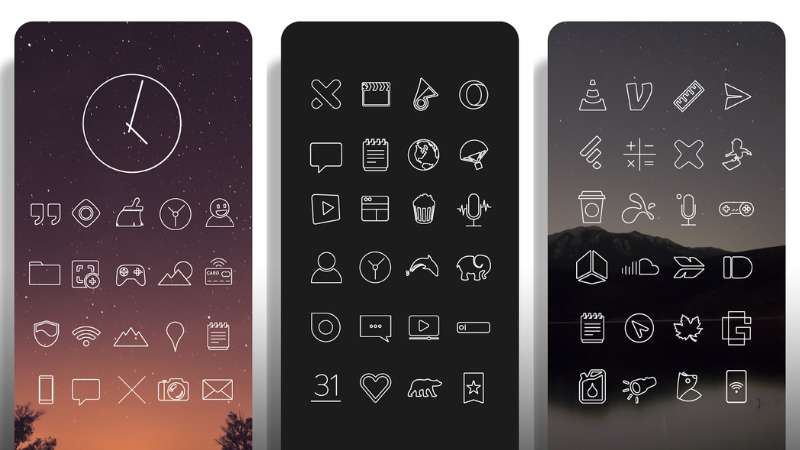
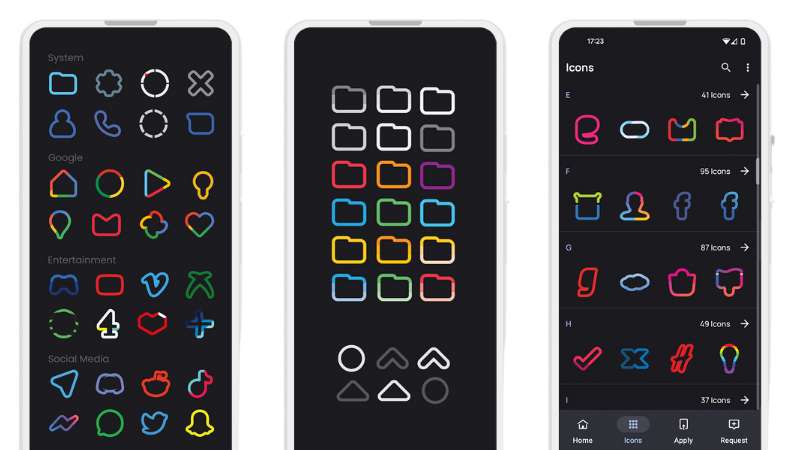
BASIT is a standout icon pack that brings a unique twist to minimalistic design, perfect for Android users seeking a sleek and modern look. With over 1,800 regularly updated icons, BASIT transforms your favorite app icons into outlined masterpieces while preserving their original colors and distinctive features. This pack includes not only standard icons but also dock and folder icons, ensuring a cohesive and polished home screen experience. BASIT offers user-friendly features such as alphabetical categorization and the ability to request custom icons directly through the app, making navigation and personalization effortless.

BASIT Icon Pack | Download on Google Play

5. The Grid

The Grid

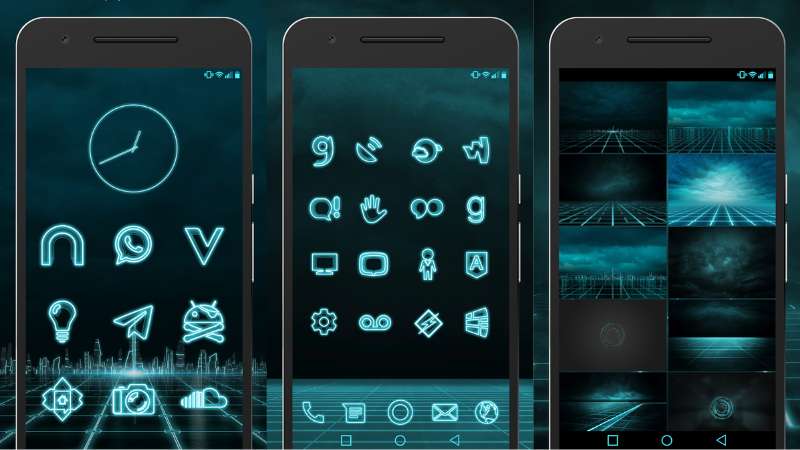
The Grid is a standout free icon pack perfect for Android users who love a futuristic, sci-fi aesthetic. Featuring a vibrant neon blue and teal palette, the icons are meticulously crafted with 3D effects and transparent designs that seamlessly blend with any wallpaper. Whether you stick with the included 30+ high-definition wallpapers or use your own, The Grid allows you to create a truly personalized and dynamic home screen.

The Grid | Download on Google Play

6. Flight Lite

Flight Lite - Minimalist Icons

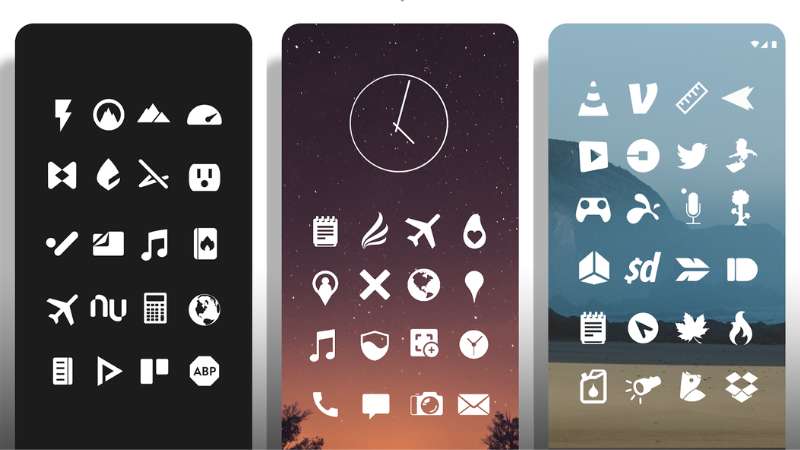
Flight Icon Pack elevates your Android device with its simple and minimalist design, featuring clean, flat white icons that add a touch of sophistication to any home screen. The free version includes over 2,500 meticulously crafted icons, each with transparent elements that seamlessly blend with your chosen wallpapers of skies, clouds, and landscapes. Accompanied by a matching analog clock widget and more than 200 hand-picked wallpapers, Flight ensures a cohesive and elegant appearance for your device.

Flight Lite | Download on Google Play

7. Tha_Black

Tha_Black

Tha_Black icon pack delivers a sleek and modern aesthetic with over 2,600 high-definition icons meticulously designed for both smartphones and tablets. The icons boast crisp details and a minimalist flat style, complemented by vivid colors and dynamic drop shadows that enhance any home screen. In addition to the extensive icon collection, the pack includes 39 cloud-based HD wallpapers and a minimalistic analog clock widget, allowing for a cohesive and stylish setup. Features like MUZEI live wallpaper support and dynamic calendar icons add further functionality, while regular weekly updates keep the icon library fresh and up-to-date.

Tha_Black | Download on Google Play

8. Glass Pack

Glass Pack

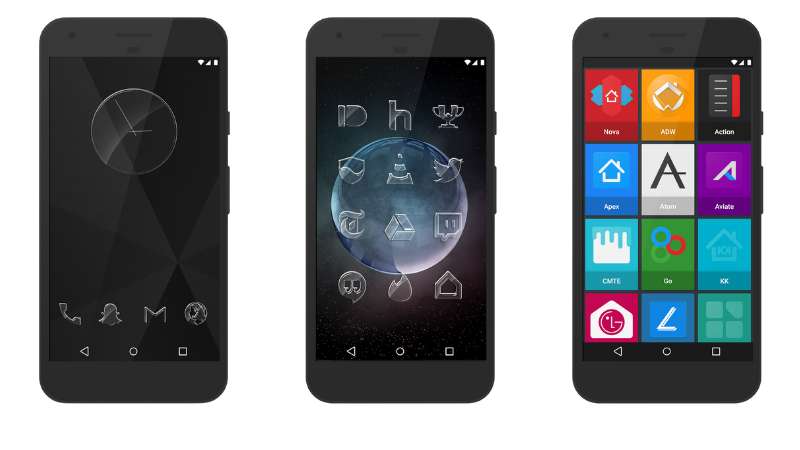
Glass Pack offers a stunning collection of translucent, glossy icons that bring a sleek, glass-like aesthetic to your Android device. The free version includes over 2,500 meticulously crafted icons, each designed in high-definition XXXHDPI resolution to ensure they look sharp on any screen size. Complementing the icons are more than 200 dark-themed wallpapers and a matching analog clock widget, allowing you to create a cohesive and elegant home screen. The transparent design of the icons lets your chosen wallpaper shine through, adding depth and sophistication to your device’s appearance.

Glass Pack | Download on Google Play

9. Moonshine

Moonshine

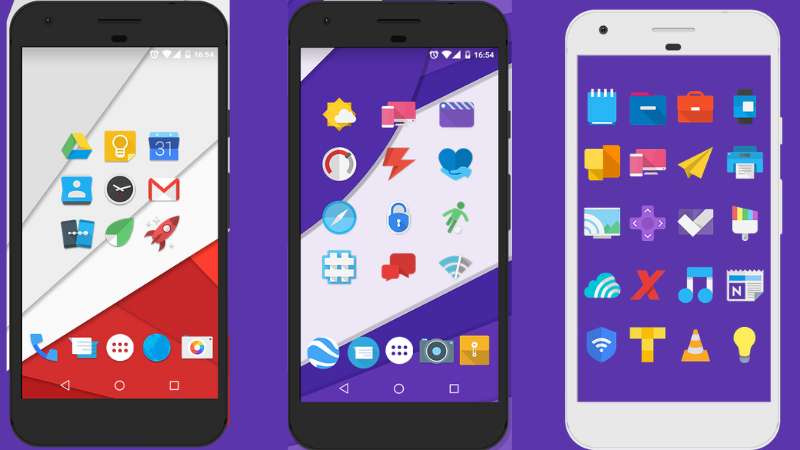
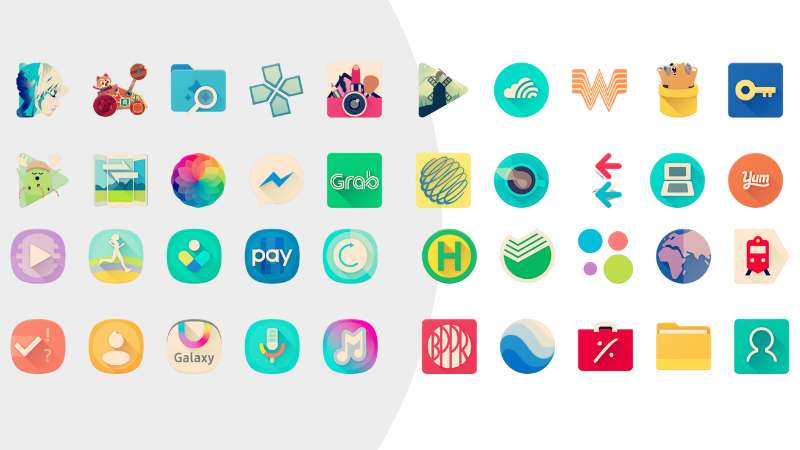
Moonshine introduces a fresh and dynamic look to your Android device. This free icon pack features over 925 vector-designed icons that blend flat styles with vibrant pops of color and subtle long shadows, creating a unique “free form” aesthetic that breaks away from traditional consistency. Accompanied by 28 homemade wallpapers, Moonshine allows you to customize your home screen with both stunning icons and eye-catching vector backgrounds. Additionally, it supports Muzei live wallpapers and includes a material design dashboard app for enhanced functionality.

Moonshine | Download on Google Play

10. Lines

Lines - Icon Pack

Lines icon pack is perfect for Android users who appreciate a minimalist and sophisticated aesthetic. This free version features over 2,100 hand-crafted, flat white outline icons that provide a clean and modern look to your device’s home screen. The transparent design of each icon allows your chosen wallpaper to shine through, creating a seamless and elegant appearance. Accompanied by more than 200 carefully selected wallpapers showcasing skies, clouds, and landscapes, Lines ensures your icons are beautifully complemented by stunning backgrounds.

Lines | Download on Google Play

11. Viral Icon Pack

Viral Icon Pack

Viral Icon Pack offers a fresh and vibrant twist to your Android device with its new-age vintage uniform design and dark, stylized icons. Boasting over 6,000 true-to-stock shapeless style icons, this pack ensures that your home screen remains both functional and visually appealing. The ultra HD filter color design, enhanced with beautiful glow effects, brings each icon to life, while dynamic calendar support allows your icons to change daily, keeping your interface dynamic and engaging. Complemented by hundreds of matching wallpapers, including skies, clouds, and landscapes, Viral Icon Pack creates a cohesive and stunning aesthetic for your device.

Viral Icon Pack | Download on Google Play

12. Halo Icon Pack

Halo Icon Pack

Halo Icon Pack breathes new life into your Android device with its vibrant pastel filters and smooth, airy glow effects. Featuring over 6,500 meticulously designed shapeless style icons, Halo offers a sleek and modern aesthetic that seamlessly integrates with any home screen. The pack includes hundreds of matching wallpapers, allowing you to create a cohesive and visually stunning interface.

Halo Icon Pack | Download on Google Play

13. Unicorn Icon Pack

Unicorn Icon Pack

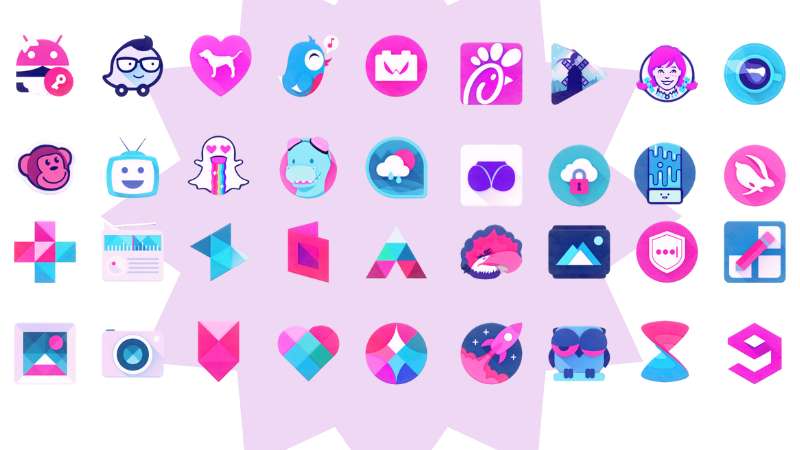
Unicorn Icon Pack enchants your Android device with a magical blend of purple, pink, blue, and teal hues. Featuring over 6,000 meticulously designed shapeless icons, this pack transforms your home screen into a colorful and dynamic display. The multi-colored unicorn theme is complemented by beautiful effects and dynamic calendar support, allowing your icons to change daily and keep your interface fresh. Alongside the extensive icon collection, Unicorn offers hundreds of matching wallpaper. For those who prefer a darker aesthetic, a dark version of Unicorn Icon Pack is also available, providing even more versatility to suit your personal style.

Unicorn Icon Pack | Download on Google Play

14. Mermaid Icon Pack

Mermaid Icon Pack

Mermaid Icon Pack infuses your Android device with a beautiful blend of purple, green, and blue gradients, accented by sunny yellow and pink hues. Featuring over 5,000 meticulously crafted shapeless icons, this pack transforms your home screen into a vibrant and enchanting underwater paradise. The unique glittering sand and water reflection effects add depth and realism, making each icon stand out with stunning detail.

Mermaid Icon Pack | Download on Google Play

15. Icon Pack Studio

Icon Pack Studio

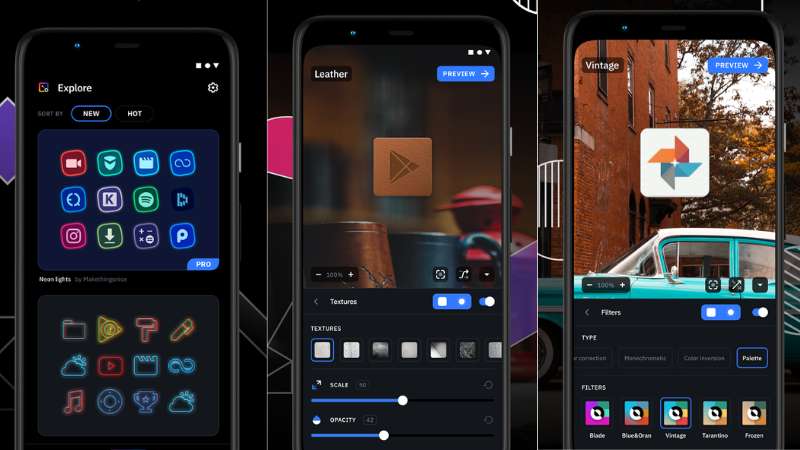
Icon Pack Studio is the ultimate tool for Android enthusiasts who crave complete control over their icon customization. This innovative app allows you to create your own icon packs from scratch or browse and apply thousands of community-uploaded designs daily. With its advanced editor, you can easily resize and move elements, and enhance your icons with special filters like lights, shadows, textures, and bezels to achieve the perfect look. Icon Pack Studio also lets you import and tweak any icon pack installed on your device, ensuring that your home screen remains uniquely yours. Designed primarily for Smart Launcher, it remains compatible with almost any launcher, providing extensive flexibility for seamless integration.

Icon Pack Studio | Download on Google Play

Graphics Memory Explained: What It Does, How Much You Need, and Why It Matters

Graphics Memory VRAM EXPLAINED

Graphics memory, often called VRAM, is something many PC users have questions about. It’s an essential part of both dedicated graphics cards and integrated GPUs, though there are some key differences between the two.

Dedicated graphics cards usually come with a lot more VRAM because they have more space and power to work with. Integrated GPUs, which are built into the processor, have limited room and generally use much less memory. There are some exceptions — like Intel’s chips with Radeon RX Vega graphics that include 1GB of HBM2 memory — but most integrated GPUs only have around 128MB to 512MB of their own VRAM.

When an application needs more graphics memory than what’s available, integrated GPUs borrow some of the system’s regular RAM. However, this RAM is slower than the memory used in modern graphics cards. As a result, performance takes a hit because the data can’t move as quickly. Plus, since the GPU is sharing the system’s RAM, it reduces the amount left for other tasks. For example, if you have 8GB of RAM and the integrated GPU uses 2GB, you’re left with only 6GB for the rest of the system.

Dedicated graphics cards don’t have this problem. They come with their own VRAM. Even budget models these days usually have at least 4GB of GDDR6 memory, which allows them to handle higher bandwidth — even with a 64-bit bus. Mid-range cards often use a 128-bit or 192-bit bus for even better performance.

What is graphics memory and what does it do?

Graphics memory, or VRAM, is a special kind of memory designed to handle graphics-heavy tasks, like video games or 3D applications. It runs much faster than regular RAM and works with wider data buses — sometimes up to 512 bits. Most high-end cards, though, usually have buses between 256 and 384 bits.

To give you an idea, a typical dual-channel DDR4 setup has a 128-bit bus and runs at around 3,200 Mbps. But a graphics card like the GeForce RTX 4070 uses a 192-bit bus, and its GDDR6X memory can reach speeds of 21,000 Mbps. This makes a big difference in performance, especially when dealing with large textures and demanding visuals.

VRAM is also considered complementary memory because it works alongside the system’s RAM. It stores everything the GPU needs to do its job, including textures, shaders, and other visual data. The operating system also uses it — how much depends on things like your screen resolution and the graphical interface — and it helps when opening images, videos, and similar content.

To put it simply, VRAM for the GPU is like RAM for the CPU. Both are essential for smooth performance, so the size and speed of your graphics memory matter a lot.

How much graphics memory do I need? And what if I don’t have enough?

There’s no one-size-fits-all answer — it really depends on how you plan to use your computer. If your main tasks are watching high-resolution videos or doing basic office work, then an integrated GPU with 8GB of RAM is usually enough for a smooth experience on Windows 10. But if you want to play modern games, that setup just won’t cut it.

For gaming, it’s best to have a dedicated graphics card with GDDR6 memory. While the amount of VRAM doesn’t directly make a GPU more powerful, not having enough can seriously hold back performance. The GPU’s speed, the type of memory it uses, and the width of its data bus also play a big role in how well it performs — especially when running demanding games or applications.

Let’s take a practical example. The GeForce GT 1030 comes in two versions — one with 2GB of GDDR5 memory running at 6,000 Mbps, and another with 2GB of slower DDR4 memory running at 2,100 Mbps. On paper, the two may look almost the same. The only real differences are in memory speed and a slightly lower GPU speed in the DDR4 version.

At first, these differences might not seem like a big deal. But in reality, the GDDR5 version performs twice as well as the DDR4 version. This simple comparison shows just how much impact memory speed can have on performance.

The type of graphics memory and the width of the graphics card’s data bus together determine the available bandwidth — that is, how fast the GPU can exchange data with its memory. More bandwidth means better performance. This is especially important for tasks like gaming at high resolutions, using ray tracing, or running powerful GPUs.

A high-end GPU needs high bandwidth to reach its full performance potential. That’s why top-tier graphics cards come with faster memory and wider buses. For instance, the GeForce RTX 4090 has a bandwidth of 1,001 GB/s, while the RTX 4070 offers 504.2 GB/s.

Memory speed is important — but so is memory size. When you play a game, it uses a certain amount of VRAM based on your settings and resolution. Most games will try to adjust their memory use depending on how much VRAM your graphics card has.

Let’s take DOOM 2016 as an example. It’s not the newest game out there, but when played at 1080p on maximum settings, it uses around 3GB of VRAM on graphics cards that have up to 4GB of memory. Interestingly, if your graphics card has 6GB or more, the game might use up to 4.5GB. But that extra usage doesn’t mean the game needs more — it’s just filling up the available space ahead of time.

This is called preemptive occupancy. It happens when a game sees that you have more VRAM than necessary, so it loads extra data in advance to try and boost performance. It’s similar to how RAM works. That’s why it’s important to understand the difference between memory occupancy and memory usage:

  • Preemptive memory usage: This is optional data the game loads just in case, to help performance.
  • Memory usage: This is the actual amount needed to run the game smoothly.

Now, if you bump the resolution up to 1440p in DOOM 2016, the memory usage goes up. On cards with 4GB or less, usage averages around 3.5GB. On cards with more VRAM, it can reach 4.8GB — again because of preemptive loading.

Now let’s talk about a more demanding title: DOOM Eternal. It uses a newer engine (id Tech 7) and is much heavier on graphics. At 1080p, if you set the graphics to Ultra Nightmare (the highest setting), it can use up to 6.7GB of VRAM. To run the game at that level, you need a graphics card with at least 8GB of memory. If your card doesn’t have enough, the game will force you to lower the settings so it can run properly.

Over time, the amount of graphics memory needed for games has gone up a lot. These days, it’s not unusual to see some games using 8GB of VRAM or even more—just at 1080p resolution. While this is still only true for certain games, and sometimes it’s the result of poor optimization, it’s something gamers should be aware of.

Take The Last of Us Part I for PC, for example. When it first launched, it required a huge amount of VRAM but gave players surprisingly low-quality textures in return. It was poorly optimized and, honestly, felt more like a game still in early testing than a finished product.

If your graphics card doesn’t have enough VRAM to handle a game’s demands, the best thing you can do is lower some of the settings — especially texture quality, shadow details, and filtering. These are the features that typically use the most memory. If you don’t adjust them, you might run into problems like:

  • Drops in performance and stuttering
  • Textures loading slowly or looking blurry
  • Sudden pop-in of objects or textures as you move through the game
  • Graphics looking low-quality even when set to high settings

Some games still let you choose high settings even if they go beyond your available VRAM, but others won’t. For instance, as mentioned earlier, DOOM Eternal won’t let you enable its top-quality settings unless your graphics card meets the VRAM requirements.

Resident Evil 4 Remake is a good example of the opposite approach to what we saw in DOOM Eternal. It lets you set graphics options that go beyond your GPU’s available VRAM. It’s also known for showing high graphics memory usage, but in reality, those numbers are often inflated and don’t reflect the actual memory being used.

Now let’s look at a more recent and technically advanced game — DOOM: The Dark Ages. This title shows how important good optimization really is when it comes to resource use. Despite using heavy features like ray tracing, which normally eats up a lot of VRAM, the game runs smoothly thanks to smart design and efficient performance.

id Software packed in all the major upscaling technologies — NVIDIA DLSS, AMD FSR, and Intel XeSS — as well as multi-frame generation. Upscaling helps reduce VRAM usage, while multi-frame generation increases it slightly by storing data needed to build extra frames.

One of the best things about DOOM: The Dark Ages is how well it scales. You can tweak the texture settings to control how much graphics memory the game uses. For example, if you’re playing at 1440p on max settings with 4096-sized textures, DLAA, and multi-frame generation, the game uses about 10.59 GB of VRAM. But if you switch to DLSS in quality mode, it drops to around 9.9 GB.

And if you lower the texture pool size to 1,536 using the same settings, VRAM usage falls further to about 7.34 GB. That means you could still enjoy high-quality visuals at 1440p on an 8GB graphics card — just by tweaking a few settings.

All of this highlights an important truth: games that demand 8GB or more of VRAM at just 1080p resolution are usually poorly optimized. Thankfully, these games are rare and shouldn’t be taken as the standard. Instead, they show what can go wrong when a game isn’t built efficiently.

By now, we’ve learned which settings to adjust to lower VRAM usage and what problems can happen if we don’t. But the big question remains: how much graphics memory do you actually need? The answer depends mostly on the resolution you play at and the visual quality settings you prefer. Here’s a quick guide to help you out:

  • Below 1080p: 4GB of GDDR5 is usually enough. Most older or less demanding games will run smoothly — even at 1080p — with this amount.
  • 1080p (Full HD): At this resolution, it’s best to have at least 6GB of GDDR5. But for a better experience without compromising quality, 8GB of GDDR6 is ideal.
  • 1440p (QHD): You can still get by with 8GB of GDDR6, but for smoother performance in modern games, especially at higher settings, 12GB is recommended.
  • 2160p (4K): In most situations, 12GB of GDDR6 should be enough. However, if you plan to turn on ray tracing or run games at ultra settings, 16GB of VRAM is the ideal choice.

In short, more VRAM doesn’t always mean better performance — but having the right amount for your needs can make a big difference in your gaming experience.

When it comes to graphics settings, the biggest factors that affect how much VRAM your system uses are screen resolution, texture quality, and the size of the texture memory allocation.

A common mistake people make is lowering the resolution below the screen’s native setting to save memory. But this usually makes the image look blurry and less sharp. Instead of reducing resolution, it’s better to use upscaling technologies, like DLSS or FSR, which help lower memory usage without sacrificing image quality.

If you’re running into performance issues because of limited VRAM, a simple fix can go a long way. For example, changing texture quality from ultra to high and cutting the texture memory reserve in half can free up 2GB or more of graphics memory. That small tweak might be just what you need to get smoother performance — with barely any noticeable drop in visuals.

As we’ve seen, some advanced graphics features like ray tracing, path tracing, and frame generation can significantly increase the amount of VRAM a game uses. For example, Resident Evil 4 Remake uses around 9.3 GB of VRAM at 1080p on max settings — but when ray tracing is turned on, it jumps to 10.3 GB. That’s an extra 1 GB just for adding realistic lighting effects.

Frame generation also increases VRAM usage because it needs to store extra data in a buffer to generate smoother frames. On the other hand, upscaling technologies (like DLSS or FSR) do the opposite—they help reduce VRAM usage by rendering fewer pixels and then scaling the image up.

This difference can really matter. By freeing up graphics memory, upscaling can sometimes let you run games at higher settings that would normally be too heavy for your system. The higher the resolution you’re playing at, the more memory upscaling can save — making it a great option for gamers trying to get the most out of their hardware.

Other factors that can affect VRAM usage

Besides resolution and graphics settings, here are a few more things that can influence how much VRAM you need:

  • Multi-Monitor Setups: If you use more than one monitor, your system may require more VRAM, especially if each screen runs at high resolution. For example, gaming on two 1080p screens is not the same as using one; the total VRAM demand increases.
  • Modded Games: Some older games, when heavily modded (like with high-resolution texture packs), can end up needing as much VRAM as modern AAA titles. Skyrim, GTA V, or Minecraft with ultra mods can easily consume 6–8 GB of VRAM or more.
  • Professional Applications: VRAM isn’t just about gaming. If you work with 3D modeling, video editing, CAD software, or machine learning, having more VRAM (8 GB and above) is often necessary for handling complex projects smoothly.

How to check your VRAM usage

Many users aren’t aware they can monitor their VRAM usage in real time. Here’s how:

  • In Windows: Open Task Manager → Performance tab → GPU section. It shows dedicated GPU memory usage.
  • In Games: Most modern games display VRAM usage in their graphics settings menu.
  • Third-party tools: Apps like MSI Afterburner or GPU-Z give detailed insights into VRAM usage during gameplay or work.

While more VRAM gives you more room to breathe, balance is key. There’s no need to buy a graphics card with 24 GB of VRAM if you’re only gaming at 1080p. On the flip side, if you’re future-proofing or plan to play high-end titles at 1440p or 4K with ray tracing, going for 12–16 GB is a smarter long-term investment.