Home Blog Page 148

Official Specifications Of The Intel Arc Alchemist A770, A750 And A580 Desktop Graphics Cards Are No Longer A Secret

Intel Arc A-Series graphics cards

Intel has officially declassified the specifications of Arc Alchemist desktop graphics cards — we are talking about the models A770, A750 and A580.

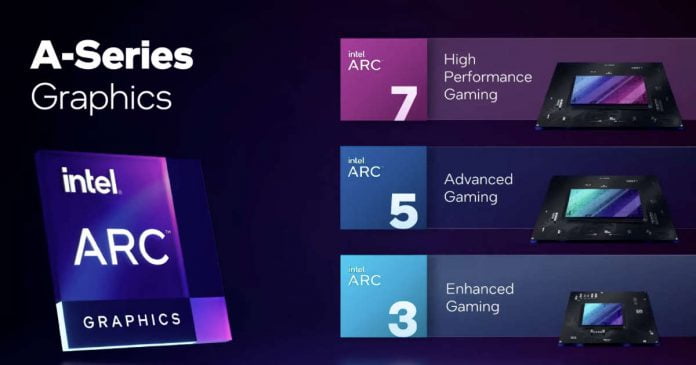
The chips continue to follow the pattern already known from the Core i processors — the Arc A300 series represents the entry-level, Arc A500 is the middle class, and at the high end, there is the Arc A700 graphics card.

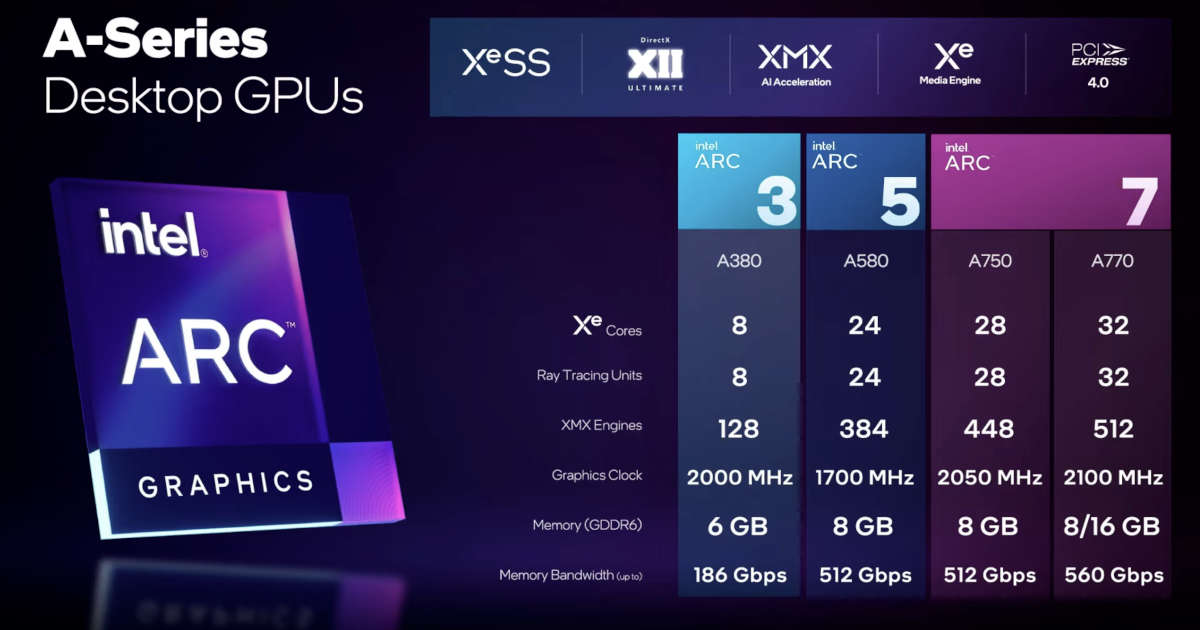
Intel Arc A-Series desktop GPUs

The flagship A770 received an ACM-G10 GPU with 32 Xe cores, 32 ray tracing units and 512 XMX matrix engines. It will have 8 or 16 GB of GDDR6 memory with a maximum memory bandwidth of 560 GB/s, and the video card will operate at a frequency of 2100 MHz.

The Arc A750 model will use the same ACM-G10 processor but with 28 Xe cores, 28 ray tracing units, and 448 XMX matrix engines. It will have 8 GB of GDDR6 memory at 512GB/s bandwidth.

The Arc A580 is also based on the ACM-G10 GPU but with 24 Xe cores, 1700MHz clock speed, 8GB GDDR6 memory and up to 512GB/s bandwidth.

In addition, Intel has not announced any specific start date for sales and no price information for the models. Earlier Intel has officially announced its first dedicated Arc family GPUs.

Which Are The 5 Best Linux Distributions For VPS?

Linux news and stories

Many users who migrate a website to a VPS and have the ability to create their disk environment often choose the Linux operating system. While it’s free, a huge community, libraries of software and documents allow you to configure the server as efficiently as possible for your specific needs. The first step to running a Linux VPS is to choose the OS version. 

Free, open-source software allows you to take any of the available distributions and modify them to create your version. But that also makes the user’s choice difficult. Which distribution is better? Not even IT experts can unanimously answer this question. But we will talk about the five most popular Linux distributions. 

Ubuntu 

Ubuntu is a common Linux distribution. The reasons for this are as follows: 

  • interactive graphical interface;
  • reliability of the software;
  • large selection of software;
  • built-in VPN service.

Updates are not frequent – once every five years. This is a plus because you do not need to constantly monitor updates and install them. Ubuntu provides the possibility of creating your cloud platform.

Debian

It is one of the first Linux distributions, a robust operating system whose updates are necessarily tested at length before being released to the general public. Stability is a plus, but it is also a disadvantage. After all, it is impossible to find the latest software in the repositories. As long as it is tested for any bugs, it often loses relevance. If novelties are not important for you, but stability and reliability are the main parameters of your choice, then this option is perfect for you. 

RHEL 

If you are interested in new products and the most advanced software, consider RHEL (Red Hat Enterprise Linux). It is a paid distribution that is offered for use by a commercial organization. This means that a professional, paid development team works on improving Red Hat. The specialists, understanding that this is a commercial project, make every effort to make the distribution not only reliable but also innovative. By the way, this distribution is most often chosen by corporate customers. 

CentOS

CentOS is similar to Debian in stability and reliability. The conservative distribution does not offer the latest software but will work without the glitches that occur when installing updates. However, CentOS is compatible with Red Hat Linux. And that makes it possible to buy enterprise-level software that will be able to run on CentOS.

Of the pluses of CentOS, the following features can be highlighted:

  • high level of security, allowing it to be used for mission-critical servers;
  • the ability to install Red Hat Linux packages;
  • large community of both private and corporate users.

Managing CentOS, especially if enterprise software is used, may require a skill set. 

Fedora

Another popular distribution is Fedora. This operating system is oriented toward free software. The advanced IT project includes the latest versions of software. It is worth noting that the latest Fedora updates are tested in the real world. After a successful test, they are hosted on Red Hat Enterprise Linux.

Fedora provides a platform that hosts the source code without the addition of special tools. It is worth realizing that no version of Fedora is supported for a long time. Among the pluses – is complete freedom of action for your in-house programmers. Minus – you can not count on stability. 

The main differences between Linux distributions

All Linux distributions are offered as open source. This is what they have in common. But some differences should not be overlooked. 

Release Schedule

Linux is stable and most distributions are not updated as often. For example, updates are published every six months for Ubuntu and every few years for Debian. The frequency of updates affects how often you will need to reinstall your software. 

Initialization system

The set of programs that are run at kernel startup differs from distribution to distribution. A popular initialization option is systemd. It is installed in Debian, Ubuntu, Fedora, and CentOS. The Gentoo distribution has the OpenRC initialization system.

Desktop environment

The Linux differences in the desktop environment can be described as follows: 

  • Memory consumption. For some consumers even today, the amount of memory used by a Linux distribution is important. It varies from version to version. 
  • The tools offered by different Linux distributions. You have to choose your version according to your needs and preferences. For example, the package manager, used for installation, configuration, and even remote administration, appears differently in different distributions. The package manager needs to be evaluated when choosing a version.

Code

Linux is open source. Therefore, not all closed-source packages are compatible with Linux distributions. This can cause problems when installing them. For example, Ubuntu did not support mp3 for a long time. Take into account which software package you plan to upload to the server when choosing your operating system and its compatibility. 

Tasks

Linux distributions are created for specific purposes. For example, Debian is designed to provide free software, other variants are created for graphic artists, and others are created for musicians. It is worth keeping this in mind when choosing a Linux distribution.

File System

The Linux file system is a root directory with similar subdirectories. But there are minor differences between distributions. For example, there are four directories for executable files: /bin/, /usr/bin/, /sbin, /usr/sbin. In Debian, applications launched by the administrator are stored in /sbin. In Ubuntu, they are not hidden from the average user in a separate subdirectory. 

Conclusion

We offered to learn a little bit more about the five most popular Linux distributions suitable for VPS server use. Of course, it is difficult to describe all the pros and cons in one article. If you have any questions, you can always contact an experienced system administrator who will explain the details. Such consultation will be useful for you when you choose the optimal operating system for your VPS server.


Intel and Broadcom Announced The First Wi-Fi 7 Wireless Data Transmission At Speeds Greater Than 5 Gbps

first cross-vendor demonstration of Wi-Fi 7

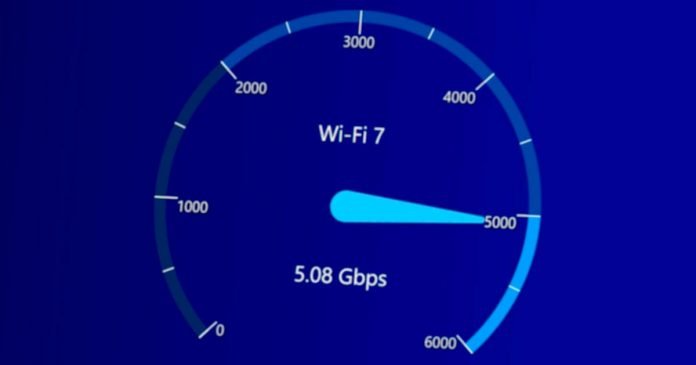
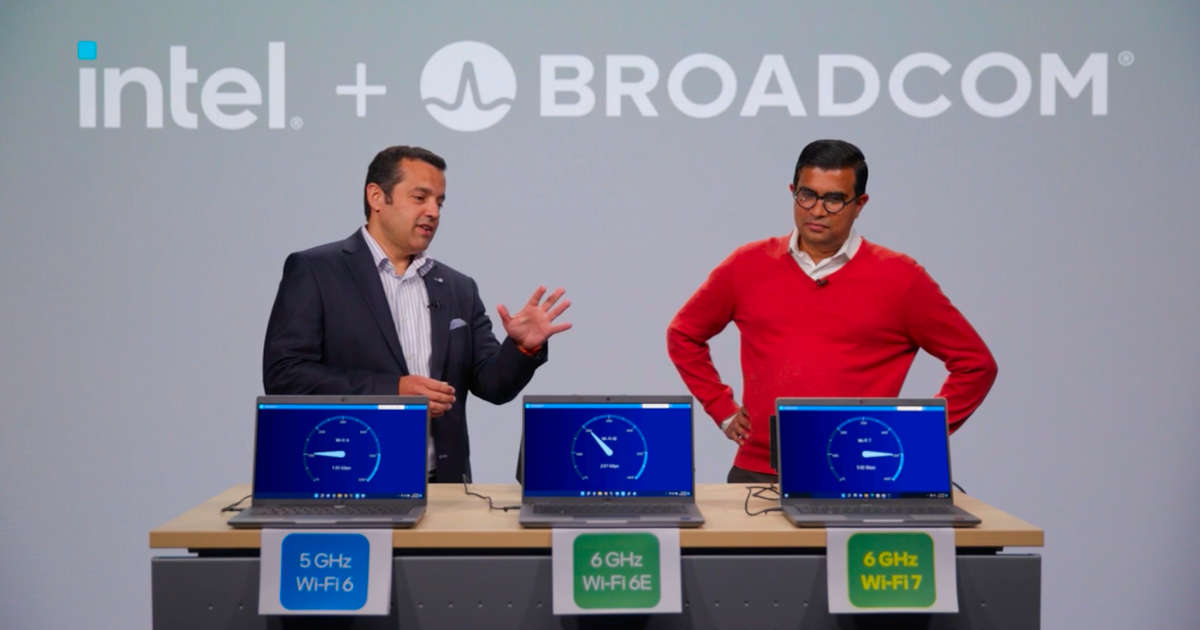
Intel and Broadcom are working together to bring Wi-Fi 7 to the real world as quickly as possible, starting with notebooks. The two companies released the video of the first “cross-vendor” demonstration of Wi-Fi 7 at over 5 Gbps.

The test was carried out with Dell’s Latitude 5430 notebooks with 12th generation Core i5 processors and the Wi-Fi 7 solution connected to a Broadcom Wi-Fi 7 access point.

Systems with Wi-Fi 6 and Wi-Fi 6E were also used for the demonstration to illustrate the higher transmission speed of Wi-Fi 7. A little over 1 Gbps was achieved with Wi-Fi 6, but 2 Gbps with Wi-Fi 6E and the new 6 GHz band that this standard offers. Wi-Fi 7 thus achieves 2.5 times the speed of Wi-Fi 6E.

Intel and Broadcom Wi-Fi 7 test

The test was performed with Iperf 3.11, with one of the notebooks working as the remote station for the measurement and using 10 Gbit/s for it —Thunderbolt adapter is connected to the respective router. A standard Asus ROG Rapture GT-AXE16000 is used for the older standards, and a Broadcom Tri-Band AP for Wi-Fi 7, which is still under development.

According to the two companies, the interoperability between Intel and Broadcom for Wi-Fi 7 that has now been demonstrated should also be used for the development of products for the official certification of the standard.

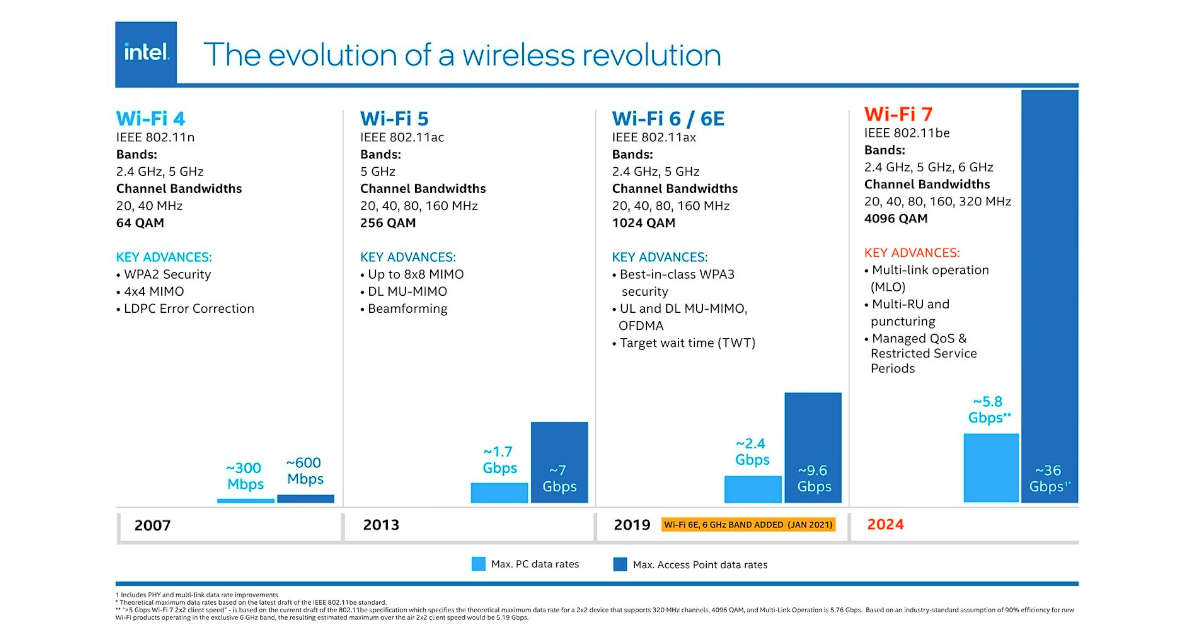
Wi-Fi 7, the marketing name for IEEE 802.11be, is set to become the wireless standard for the next 10 years, which requires higher transmission speeds and lower latency. Wi-Fi 7 should offer both, for which, among other things, wider frequency bands with 320 MHz in the still unlicensed 6 GHz range and multi-link operation for the simultaneous connection over several bands are used. Wi-Fi 6E currently uses a maximum of channels with a width of 160 MHz. In addition, the QAM-1024 modulation is changed to a QAM-4096 modulation.

Evloution of Wi-Fi

However, end customers will have to wait a little longer for the new standard because devices with Wi-Fi 7 will probably not be available in stores until the second half of 2023. As always, the expensive devices will be equipped with it first before the mass market is gradually addressed.

Competitor Qualcomm presented the first Wi-Fi 7 chipsets at the end of February this year at the MWC in Barcelona. Also, MediaTek showed the world’s first demo of Wi-Fi 7 technology.

5 Tips To Vet Investors For Startup Founders

Important Gadgets to Have When Starting an Online Business

If you’re heading up a startup, chances are that you’re going to need investors to fund your business. When you’re getting financial help for someone, you’re, in some ways bringing a business partner on. You want to learn as much as you can about the person to ensure that they’re going to be someone you can see yourself working with. You also want to check out the background of investors so that you feel comfortable with them and trust them. 

The following are five tips for startup founders to keep in mind to thoroughly vet their investors. 

1. Ensure Your Goals Are Aligned

When you give up equity in your company, it can create problems in decision-making because the new investors might want partners to be more aggressive. An owner needs to understand the expectations of an investor before taking their funding, ensuring there’s alignment in your visions. 

A good investor is someone who becomes your strategic partner. They’re helping fuel the growth of the business. A bad investor is someone who might push only for what will serve their own agenda. 

When you’re talking to possible investors, try and figure out not only their goals but also their exit timeline and how they want to get from one point to the next. Then, you’re in a position to assess whether that’s going to align with your vision or not. 

2. Determine Their Value

When you’re vetting investors, what value do they bring to you, and how are they going to be able to help you? Along with sharing your mission and values, if they don’t bring something unique and distinctive to the table, they could end up being more trouble than they’re worth for your business. 

As a small business owner, you need to go into the process of vetting a partner by understanding that just about the money. Yes, money is important, but without investors who support your vision, you’re not likely to achieve success. You want investors who can play an advisory role, so their experience, reputation, and education are things to consider.

3. Understand Their Risk Aversion

A good investor is one who’s going to be risk-averse. That’s because they should have knowledge and experience that leads them to that point. An investor needs to understand how to handle the possible risks that can come from investing without jumping ship if things aren’t going well. 

Before you seal a deal, take steps to analyze and understand their risk aversion. 

Then, you’ll be able to enter a partnership based on mutual understanding and trust. 

4. Check Them Out Online

Above, it was mentioned that you should check out possible investors online. You might run their name through a people finder to see what comes up. These search tools will consolidate things like social media profiles, email addresses, and phone numbers. 

Looking at someone’s online footprint, and especially their social media, can help you learn a lot. You can spot potential red flags that you wouldn’t otherwise uncover until later in your relationship. See what they post on social media and who they’re following. 

If someone has a troubled or problematic personal history, or they get a lot of negative media or public attention, this isn’t something you want to associate your business with. It’s also possible that trouble doesn’t just follow this person—it could be that they’re the ones creating it. Unless there’s a good explanation for negative press, if you uncover it, consider walking away from the deal. 

5. Ask About Their Successes and Failures

A lot of the vetting that you’ll do to assess potential investors for your startup will rely on the conversations you have with them. As a founder, you want to ask investors to provide you with examples of their success cases and their failures. You want to see how the investors helped in both situations and how they dealt with the failure. 

It’s easy for someone to talk about their success but much harder to disclose their failures. 

Once you have the conversation about successes and failures, you can do your research to compare what they told you with what you found out, indicating their reliability. Everyone’s going to try to make a good impression, of course, but honesty is needed because you have to feel like you’re doing business with someone you trust. 

 Finally, always meet more than once with potential investors. You need to talk about strategy and goals. You could end up meeting as many as five times before you decide how you both want to proceed. 

Apple Presented iPhone 14 Series: iPhone 14, iPhone 14 Plus, iPhone 14 Pro and iPhone 14 Pro Max

iPhone 14 series

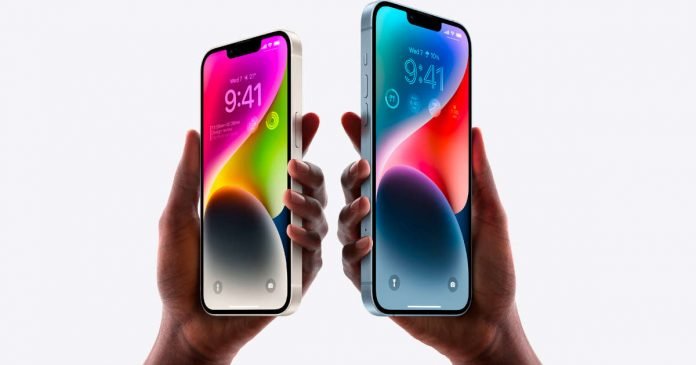
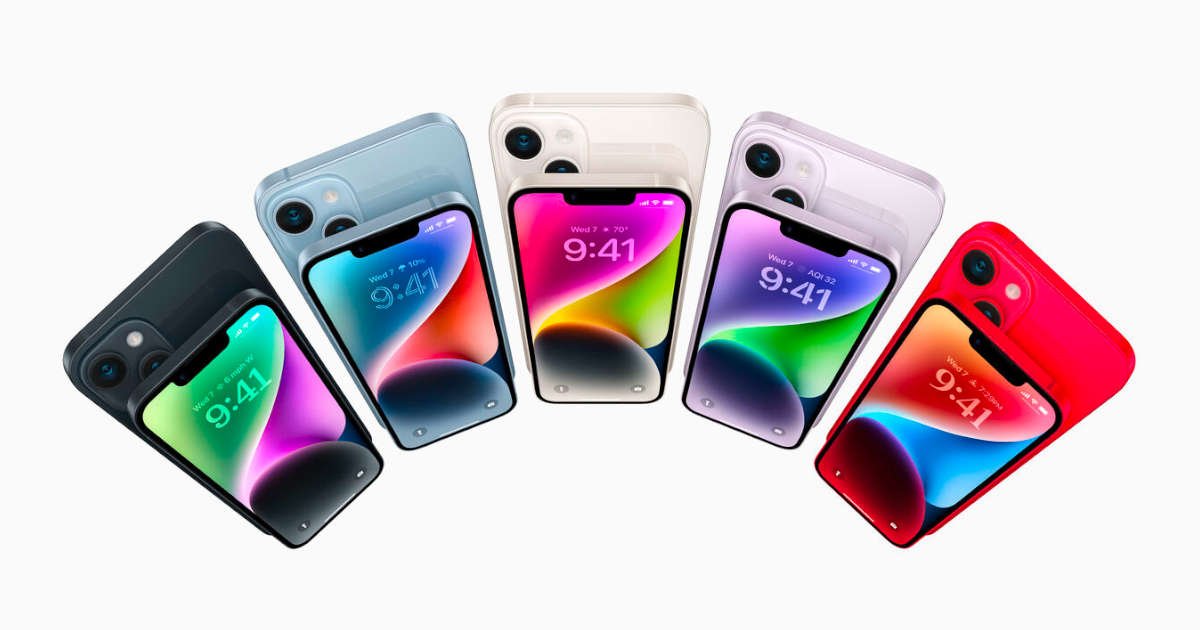
Apple has introduced the new iPhone 14 series — basic iPhone 14 and iPhone 14 Plus with a larger screen, and the “notch” will disappear in the Pro models.

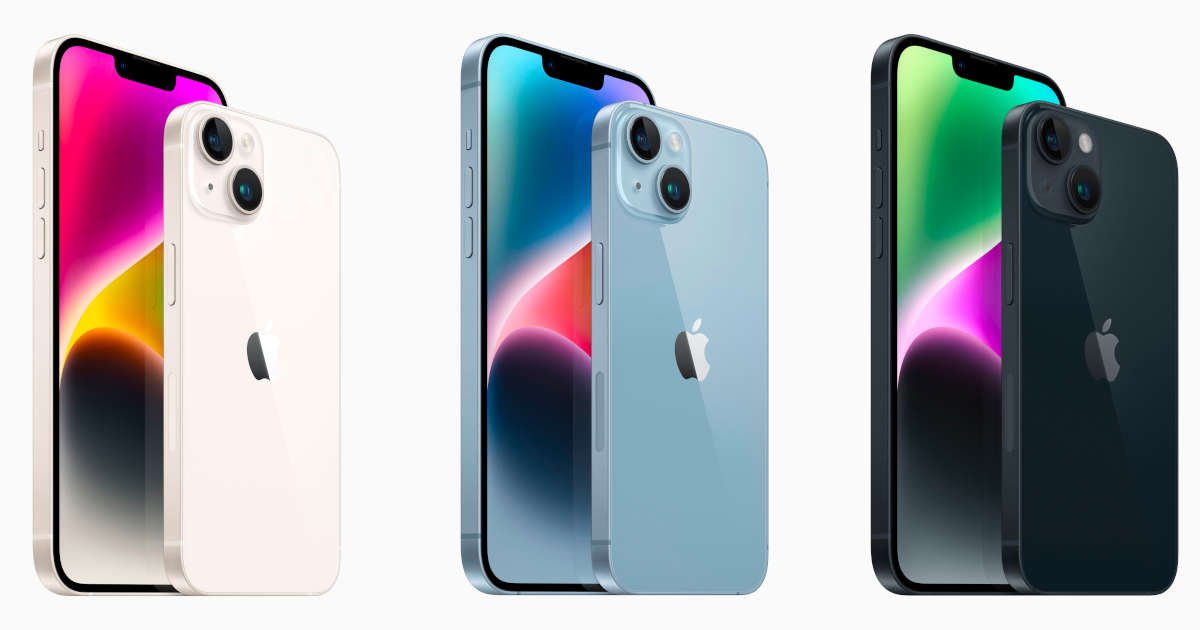
iPhone 14 and iPhone 14 Plus

The iPhone 14 and 14 Plus each has a Retina display with up to 1,200 cd/m² and a size of 6.1 and 6.7 inches. The battery should last for a day; with the Plus model, the runtime should be a little longer. The two models use the A15 Bionic SoC, which was already installed in the iPhone 13.

iPhone 14 and iPhone 14 Plus

The iPhone 14 and 14 Plus have a dual camera; the main camera has 12 megapixels and a sensor with 1.9 µm pixels. The light sensitivity is said to be improved by 49 percent compared to the iPhone 13. The front camera is housed in a notch, and has 12 megapixels and autofocus.

The new Action Mode is said to offer even better video stabilization than before. The dynamic improvement in photos should be applied earlier than before and improve the exposure of images accordingly.

Apple presents iPhone 14 and iPhone 14 Plus

The US models of the iPhone 14 no longer have a SIM card tray — instead, only the eSIM is used. The iPhone 14 has crash detection, as does the Apple Watch Series 8. In addition, the new iPhones support satellite communication, which means that help can be called in an emergency even without a network connection. The iPhone 14 shows users in which direction it needs to be held to get a satellite connection.

Outside of emergencies, the satellite feature can also be used to share your position. The satellite feature is coming in November 2022 and is available in the US and Canada for now.

The iPhone 14 can be pre-ordered from September 9th. The iPhone 14 will go on sale on September 16, 2022, and the Plus model on October 7.

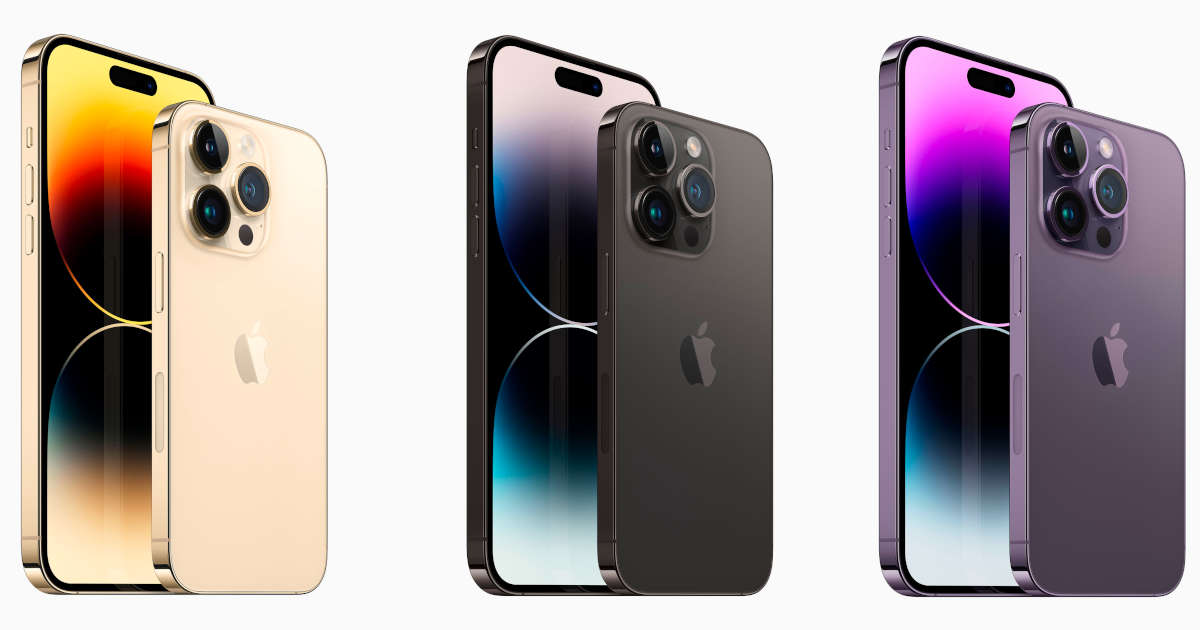
iPhone 14 Pro and iPhone 14 Pro Max

iPhone 14 Pro and iPhone 14 Pro Max

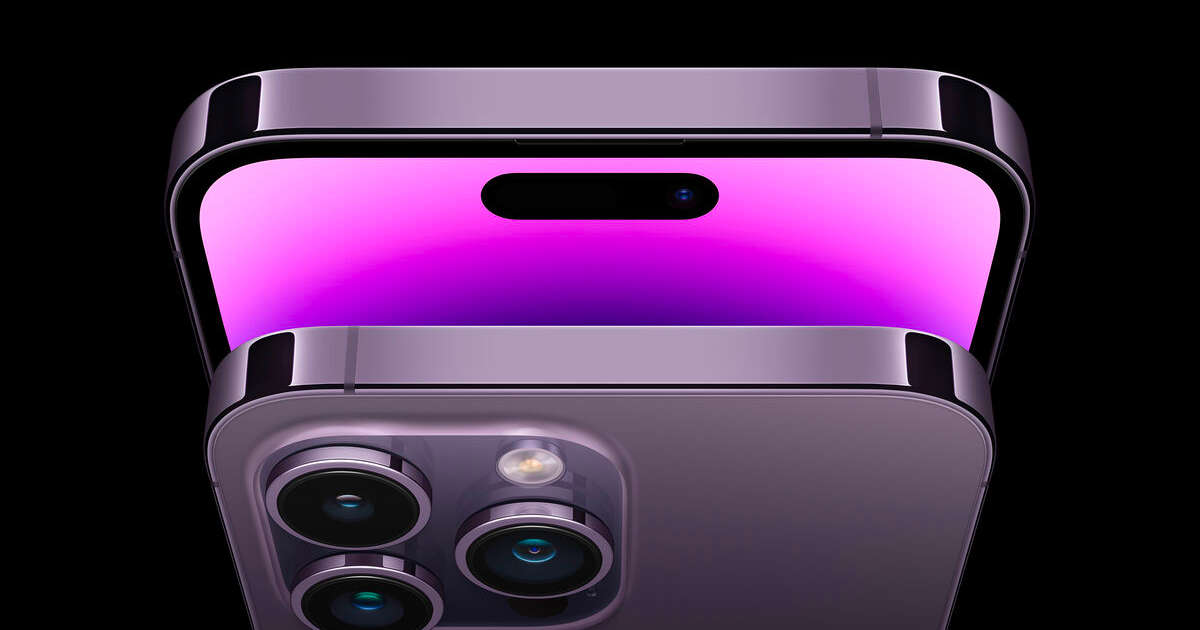
iPhone 14 Pro has a 6.1-inch display, while the iPhone 14 Pro Max comes with a 6.7-inch screen. The maximum HDR brightness of the XDR Pro displays is said to be 1,600 cd/m², and even 2,000 cd/m² in sunlight. The missing notch is striking: Apple has installed the front camera and the Face Unlock technology in a smaller opening in the display. The proximity sensor is installed behind the glass.

Apple calls the area with the cameras Dynamic Island. Notifications use the hole in the display as a starting point for notification animations. For music apps, the album cover is displayed next to the hole, but thanks to the black background, the area doesn’t look like a camera hole. Other apps also access the space, such as the timer or ride-sharing apps. When users tap the notification, it enlarges.

iPhone 14 Pro and iPhone 14 Pro Max Notch area

The new Pro models finally have an always-on display. The wallpaper images are dimmed while the colors are retained. The frame rate can be lowered down to 1 Hz.

New A16 Bionics

Apple uses the new SoC A16 Bionic in the Pro models. The chip is manufactured in a 4 nm process and is said to be 40 percent faster than the best chip from the competition. The chip has two high-performance cores and four efficiency cores. The GPU has five cores, and there is also a new image processor.

Both Pro models have three cameras on the back, the main camera is now 48 megapixels. The camera uses quadruple pixel binning for better light output, standard images are made with 12 megapixels. The sensor is said to be twice as sensitive to light as that of the iPhone 13. Full-resolution photos can also be taken.

Apple presents iPhone 14 Pro and iPhone 14 Pro Max

The new main camera is said to offer good quality recordings with double the magnification. In addition, there is again a telephoto lens with 12 megapixels and triple magnification. Pro-Raw shots can be taken thanks to the new 48-megapixel sensor.

The new super wide-angle camera has 12 megapixels again, but is said to be sharper and more sensitive to light. The flash should adjust its light intensity to the zoom level. The new photonic engine should fundamentally improve light sensitivity. The Pro models also have the new action mode for videos. The cinematic mode now enables recordings in 4K with 30 fps.

The battery of the iPhone 14 Pro should last for a day. Apple does not provide any information about the Max model in the presentation. The iPhone 14 Pro and Pro Max can be ordered from September 9, 2022 and will be available from September 16.

Apple Presented Apple Watch Series 8, Apple Watch Ultra, and Apple Watch SE 2nd Generation

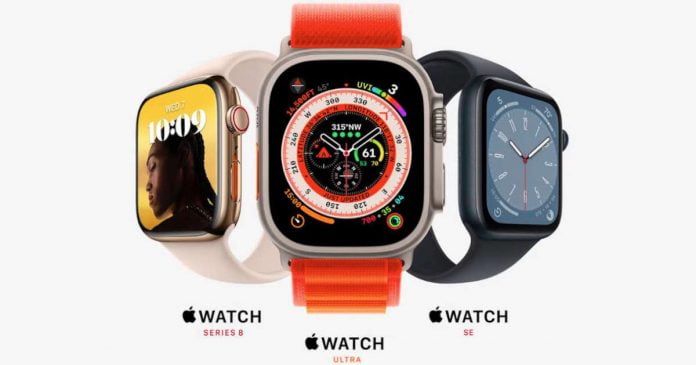
Apple Watch Series 8, Apple Watch Ultra, and Apple Watch SE 2nd Generation

Apple has introduced a new line of smartwatches, which includes the Apple Watch Series 8, the second generation of Apple Watch SE and the Apple Watch Ultra.

Apple Watch Series 8

Apple Watch Series 8

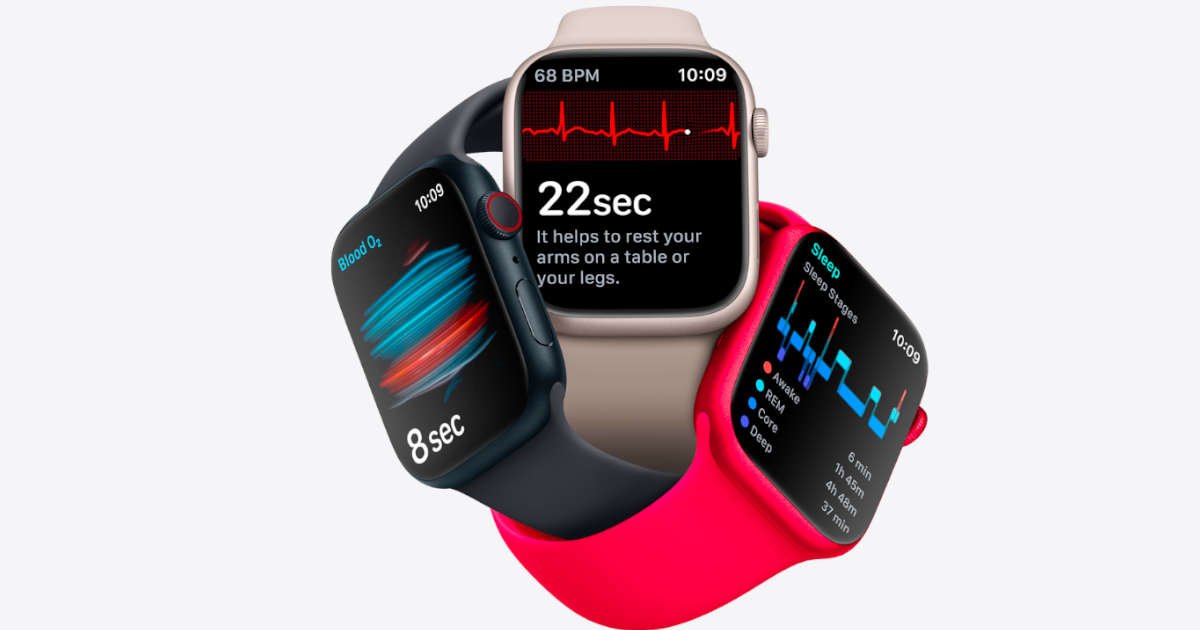
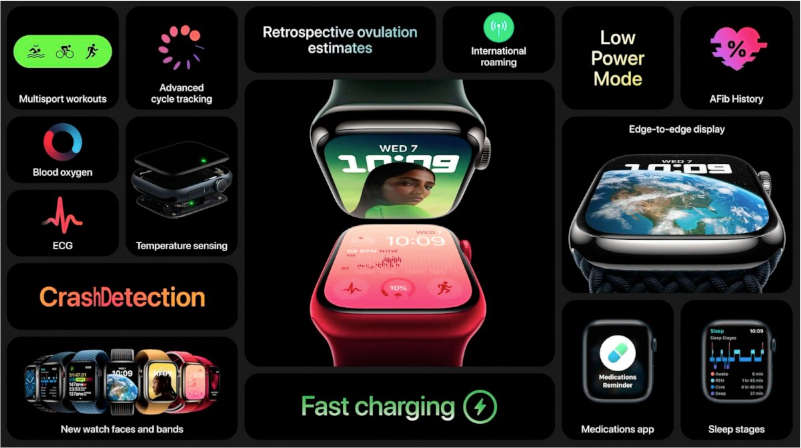
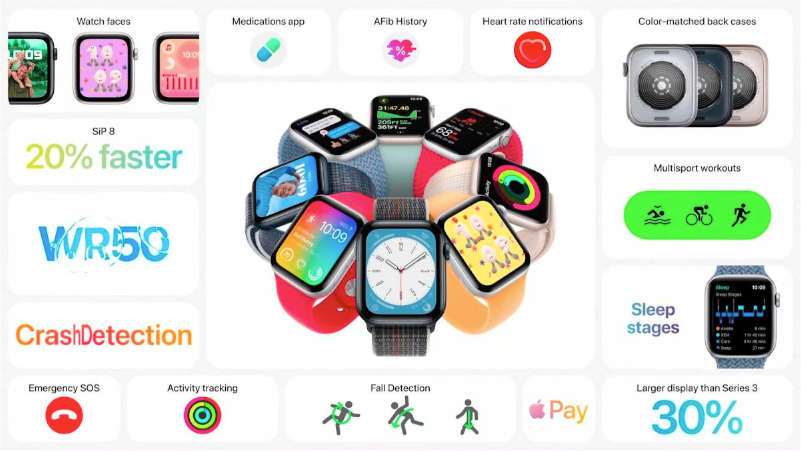
Visually, the smart gadget is practically no different from the Series 7. Like its predecessors, the Apple Watch Series 8 has a sleep tracker, a heart rate monitor, an EKG and a blood oxygen meter. The new temperature sensor is designed to help women monitor their menstrual cycle, in addition to previous cycle tracking. With the help of the sensor, it should be possible to determine the time of ovulation; the clock measures the temperature during the night.

The Apple Watch 8 can detect a car accident. When detected, the emergency call is automatically notified. Two new sensors are designed to recognize the forces that make up an accident. The gravitational force meter is said to be able to process data four times faster than the sensor before it. Frontal and side collisions, as well as overturning of the vehicle, are detected. The data is processed with the help of artificial intelligence. The accident detection only works when driving and processes data directly on the watch.

Apple Watch Series 8 features

The battery of the watch should last 18 hours; inside is the S8 sensor. A new low-power mode should enable a further 36 hours of runtime. Activity tracking and fall detection continue to work, and the always-on display, among other things, is switched off. The Apple Watch 8 is said to enable international roaming with the built-in eSIM.

The Series 8 is made from 100% aluminum and is available in midnight, starlight, silver and red. The Apple Watch Series 8 (GPS version) will cost $399. The option with GPS + Cellular is priced at $499. Sales of new items will start on September 16.

Apple Watch SE 2nd Generation

Apple Watch SE 2nd Generation

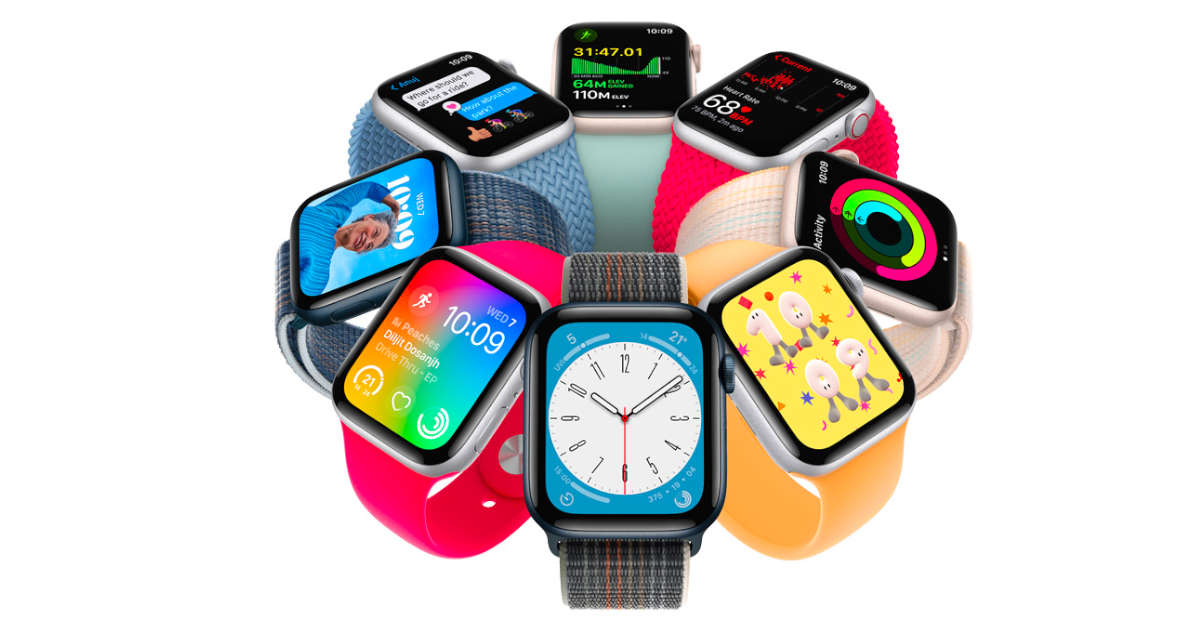
The second generation of the Apple Watch SE can track activities, monitor the heart rate and detect falls and car accidents. The display is 30 percent brighter than the Series 3 and comes with the same S8 sensor as the Apple Watch 8.

Apple Watch SE second generation has accelerated performance — the chip runs 20% faster than the previous version. Available in three colors — black, silver, and starlight.

Apple Watch SE 2nd Generation features

For Apple Watch SE 2 it is $249 with built-in GPS and $299 with the cellular connection

Apple Watch Ultra

Apple Watch Ultra

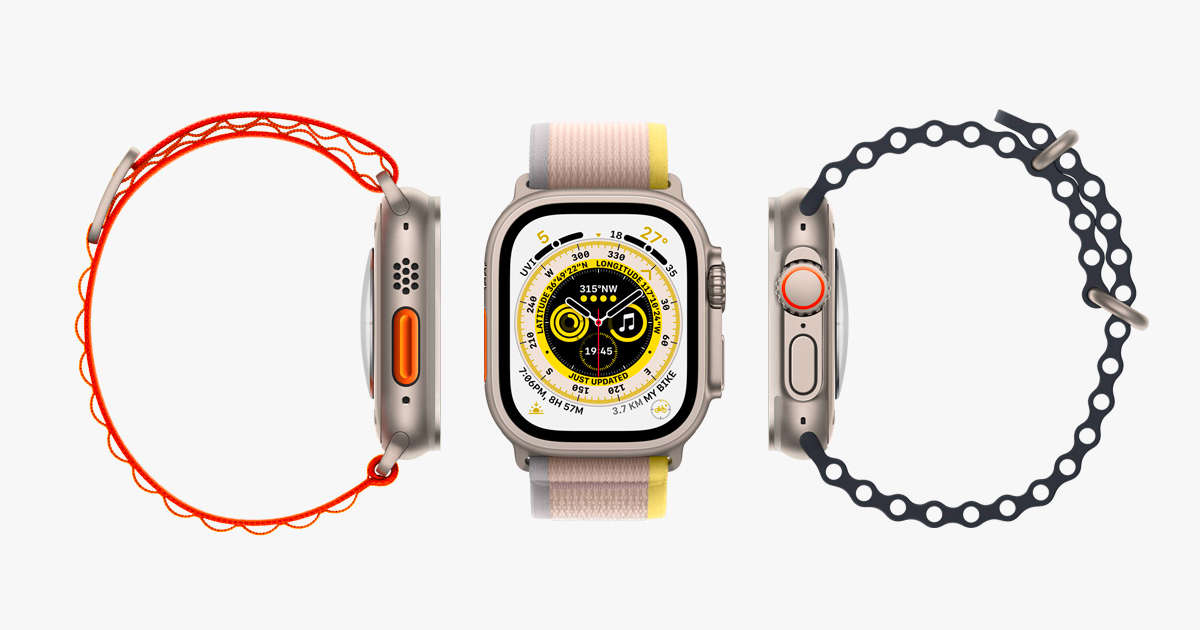
For the first time, the Apple Watch is also available in a more robust version for users who do more serious sports. With the Apple Watch Ultra, Apple continues on its way of moving the smartwatch more and more into the sports sector.

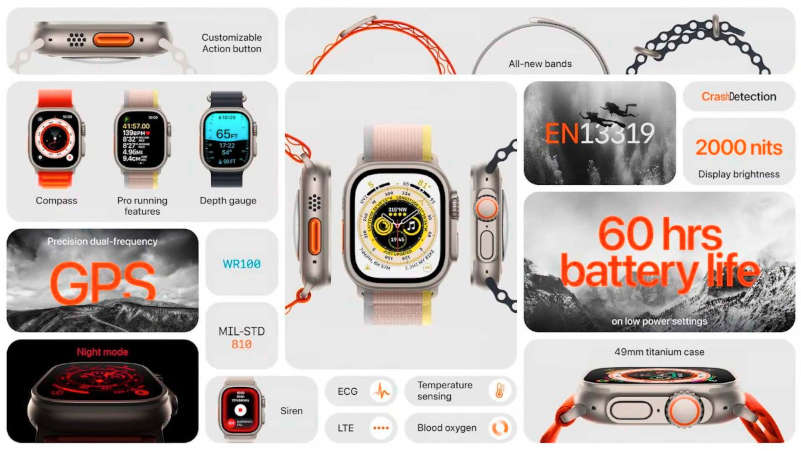
The Apple Watch Ultra model has a titanium case and a flat 49mm screen, a 36-hour battery that can last up to 60 hours, and the display is the brightest of all Apple Watches to date.

An additional button can be assigned an individual function. The watch has a second speaker and three microphones. The Apple Watch Ultra is only available with eSIM.

Apple Watch Ultra features

The watch also has a Wayfinder function designed for travel. This includes a compass, night mode and other innovations such as an audible alert up to 190m away. The GPS in the Apple Watch Ultra is the most accurate. 

The Apple Watch 8 will be available in aluminum and stainless steel. In addition to new standard straps, there are also two new Hermès straps. At the same time, the Apple Watch Ultra model in any version will cost $799.

Qualcomm Announces Snapdragon 6 Gen 1 And Snapdragon 4 Gen 1 For Mid-Range And Entry-Level 5G Smartphones

Qualcomm Announces Snapdragon 6 Gen 1 And Snapdragon 4 Gen 1

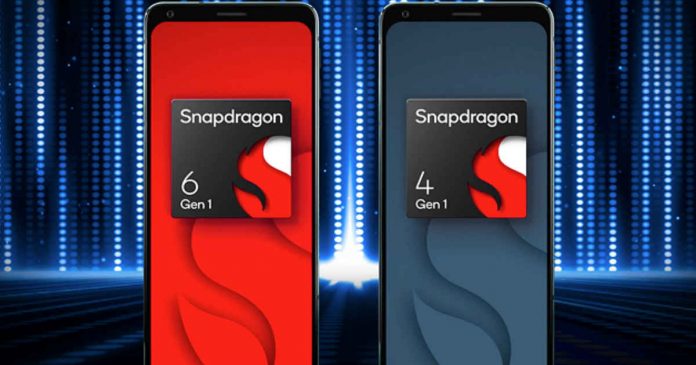
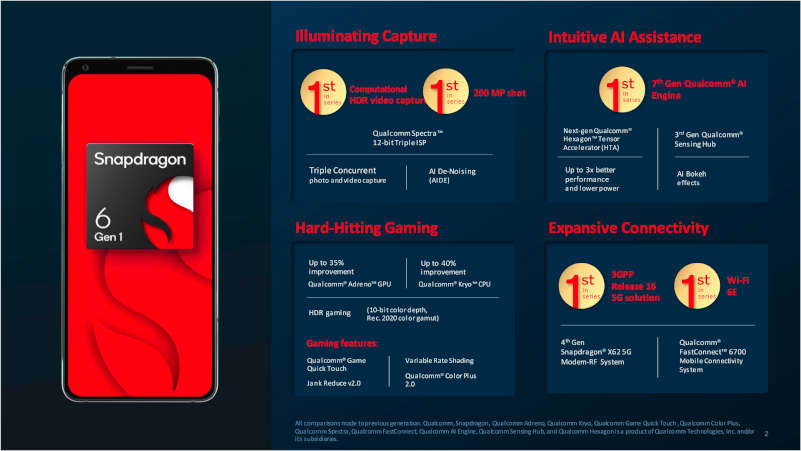
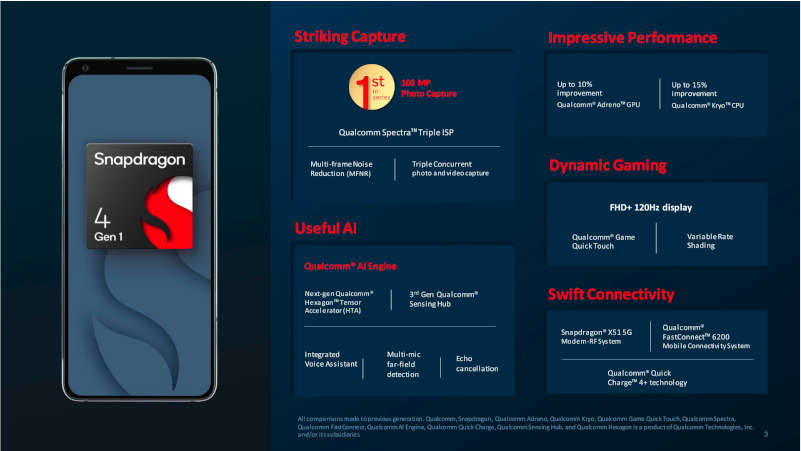
Qualcomm has introduced two new mobile SoCs — Snapdragon 6 Gen 1 And Snapdragon 4 Gen 1 — that are primarily intended for smartphones in the mid-range and entry-level segments.

Snapdragon 6 Gen 1

Snapdragon 6 Gen 1 is manufactured in a 4nm process and equipped with 4 Cortex-A78 cores with a maximum clock speed of 2.2 GHz and 4 Cortex-A55 cores with 1.8 GHz. It has 40% better overall performance and 35% better graphics than the previous generation. The 5G modem is a Snapdragon X62 with mmWave and sub-6 GHz and a maximum download rate of 2.9 Gbps.

Qualcomm Snapdragon 6 Gen 1

The processor is equipped with a triple image signal processor (ISP), supports an image sensor with up to 108 million pixels, staggered HDR, 4K video shooting, and Wi-Fi 6E.

Snapdragon 4 Gen 1

Qualcomm Snapdragon 4 Gen 1

Snapdragon 4 Gen 1 is manufactured in the 6nm process and equipped with 2 Cortex-A78 cores clocked at 2 GHz and 6 Cortex-A55 cores clocked at 1.8 GHz. The chip offers 15% more CPU performance and 10% more GPU performance than the previous generation. It also supports a 108-megapixel image sensor, but 4K video shooting is not available. A Snapdragon X51 with sub-6 GHz and a maximum download rate of 2.5 Gbps is used as the modem.

The Snapdragon 6 Gen 1 is expected to arrive in smartphones as early as Q1 2023 and the Snapdragon 4 Gen 1 as early as Q3 2022. In the second half of this year and next year, the camera performance of inexpensive Android smartphones is likely to improve significantly.

Huawei Announced Mate 50 Series With Satellite Connectivity

Huawei Mate 50 Series

Huawei has announced its high-end smartphone Mate 50 series in China. The highlighted features include satellite communication support and a variable aperture camera.

Equipped with satellite communication 

The biggest feature of the Mate 50 series is that it supports satellite communication. Huawei has obtained a new patent through which they use satellites to improve cellular communication performance with lesser power consumption. 

It supports the BeiDou Satellite Message 3 protocol, allowing users to send text messages and location information via satellite communications even in areas where radio waves from network towers do not reach, such as when you are in a remote area or when you are in danger abroad, or when you need help in an earthquake or any other disaster.

Apple is expected to announce the latest iPhone 14, also equipped with satellite communication, at its latest launch event on September 7. But Huawei announced the Mate 50 series smartphone with satellite communication function one day earlier than Apple. Also, Google recently confirmed that Android 14 would come with support for satellite connectivity.

Variable aperture camera

In addition, both Mate 50 and Mate 50 pro have the same camera setup — a main 50MP rear camera with a variable aperture. You can change the aperture from 1.4 to 4.0 and adjust the degree of blurring in the photo to make it more attractive. A new feature called the 6-blade aperture is used, which helps you shoot the sun and the light beams in a beautiful way.

Both models also have 13MP ultrawide with an f/2.2 aperture and a telephoto lens too; while the Mate 50 has a 12MP with 100x digital zoom, and the Pro version has a badass 64 MP telephoto lens with 200x digital zoom.

The RS Porche design version swaps the telephoto lens with a 48MP Periscope telephoto camera that can even take macro shots. On the front, it has a 13MP ultrawide lens with 3D ToF sensor and advanced face ID unlock.

Equipped with Snapdragon 8+ Gen 1 that does not support 5G communication

The Mate 50, Mate 50 Pro, and Mate 50 RS Porsche Design all are powered by Qualcomm’s Snapdragon 8+ Gen 1. As the sanctions from the United States have not been lifted, it’s not 5G compatible.

The Mate 50 sports a 6.7-inch 90hz OLED display, but the pro version comes with a 6.74-inch 120hz display. Another highlight of the Mate 50 series is the “Emergency Battery Mode”, which automatically activates when the battery level reaches 1%. In this mode, the battery will last for 3 hours in standby mode and 12 minutes in talk mode. Battery capacity on the spec sheet is almost similar to Mate 50, having 4460mah, and the Pro version has 4700mah with the support for 66 Watt wired and 50 Watt wireless fast charging.

Black, Orange, and Silver are the available colors for Mate 50. And Pro version and the Mate 50RS come in two colors — blue and purple in ceramic effect. 

The price in China is 4,999 yuan (about $720) for the Mate 50, 6,799 yuan (about $975) for the Mate 50 Pro, and 12,999 yuan (about $1860) for the Mate 50 RS Porsche Design.