Home Blog Page 206

Snapdragon With Nuvia CPU: Qualcomm Intends To Enter The ARM Chip Market For PC

Snapdragon with Nuvia CPU

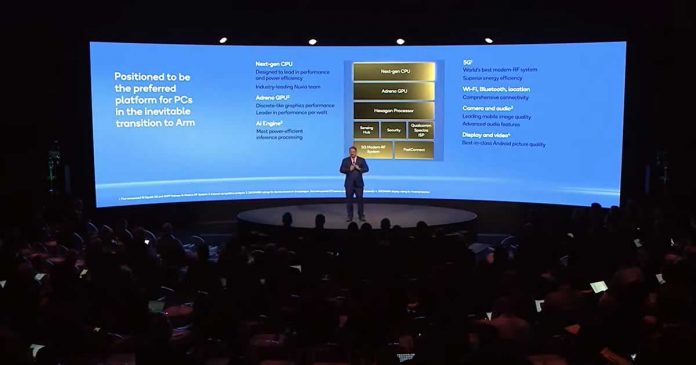
At Qualcomm Investor Day 2021, CEO Cristiano Amon made a far-reaching announcement about the PC ecosystem — “The transition to ARM is inevitable.” — and added that the company’s own Snapdragon platforms should be predestined for future computers with Windows 11 on ARM.

Qualcomm will move beyond SoCs for smartphones and tablets. According to a roadmap that Qualcomm released at an investor event, the company intends to pressent a new SoC in 2023, that will become a new benchmark for Windows notebooks.

This would not be the manufacturer’s first experience with computer chips, as they currently have the Snapdragon 8cx Gen 3. However, by 2023 they want to launch a proposal that is capable of standing up to Apple’s M series and Intel and AMD’s SoCs.

Amon went even further and said that the next generation of CPUs should become the “benchmark in performance for Windows PCs.” The new Nuvia CPU will be the benchmark for performance and efficiency and want to scale their own Adreno GPUs to the level of dedicated desktop GPUs.

How Sales Teams Can Use Data Intelligence To Boost Engagement With Leads

Boost Engagement With Leads

Are you looking for ways to convert more leads into paying customers? Do your sales reps struggle with nurturing leads who aren’t even interested in your products/services and brand? Wouldn’t it be great if you could gain a deeper insight into the buyer’s journey of your leads?

Is your answer to any of the above questions an emphatic “yes”? Then it’s high time you start integrating data intelligence into your lead nurturing strategy. The right sales engagement data can go a long way to help you move qualified leads down the conversion funnel.

Also, it’ll help you strike the right conversations with relevant leads and influence their purchase decisions.

In this article, we’ll take a closer look at the role of data intelligence in lead nurturing. Also, we’ll discuss how sales teams can use data intelligence to skyrocket conversions and revenue. Let’s get started.

Data Intelligence in Sales: A Closer Look

The integration of data into sales tactics isn’t a new concept per se. Sales teams often monitor metrics, such as conversion rates and revenue growth, to evaluate the quality of the strategy. Similarly, managers can track relevant data to assess and optimize the performance of sales reps.

But the use of data analytics in sales has always involved a retrofitting approach. Sales reps and managers deploy various strategies and monitor relevant data to maximize the results.

But what if there was a way to make data an ingrained part of your sales strategy? Wouldn’t it be helpful if you could use data-driven insights while making key decisions instead of waiting to see the results?

That’s where data intelligence steps into the picture. It combines the power of customer relationship management (CRM) and data analytics with artificial intelligence and machine learning. It means data intelligence software provides you with real-time insights at every step of the sales process.

Whether you’re looking to improve lead generation or sales engagement, data intelligence plays a crucial role.

Data Intelligence and Sales Engagement: Understanding the Connection

Lead generation is an important part of every sales strategy. But flooding your sales funnel with a plethora of leads is a job half done. You need to use various techniques to engage with these leads, handhold them through the buyer’s journey, and convert them into loyal customers.

Here’s how sales reps and managers can use data intelligence for better lead nurturing and engagement:

1. Enhanced Buyer Profiling

Outlining target buyer profiles is one of the most important steps of your sales pipeline. Leveraging sales intelligence data provides you with a better understanding of your target buyers. 

This, in turn, can be instrumental in improving the quality of leads generated through your sales process.

2. Improved Lead Scoring and Prospecting

If a lead isn’t interested in your offerings, even the best engagement tactics will fail to impress them. The last thing you want to do is invest your time and resources to chase such leads. That’s why lead scoring plays a key role in better understanding new leads.

Data intelligence empowers with a plethora of useful information, including buying signals and intent. You can use the information to evaluate whether a lead is worth nurturing. Also, you can understand how far along they’ve progressed in the buyer’s journey. It’ll help you position them in the right stage of the sales funnel.

3. Personalized Content and Product Recommendations

It is likely the most important benefit of leveraging sales intelligence data for engaging with new leads. Lead nurturing is a complex process that involves providing qualified leads with all the tools and resources they need to make an informed purchase decision.

That requires extensive coordination between sales and marketing departments. Unfortunately, these teams often work in isolation, thus providing leads with generic product guides and other content.

You can use data intelligence to bridge the gap, and help both sales and marketing teams gain a deeper understanding of target buyers. Apart from demographic data, marketing professionals can use other information, such as psychographic and firmographic data, to identify the pain points of individual leads.

It’ll help them develop personalized content that addresses the requirements of specific leads. Similarly, sales reps can utilize data-driven insights to provide leads with relevant product recommendations that’ll resolve their challenges.

The integration of data intelligence in your sales strategy improves the quality of leads. Also, it facilitates a personalized approach to sales engagement, thus skyrocketing conversion, retention, and revenue.

What is NFT: The Blockchain System That Certifies Digital Files

NFT

Buying a painting or sculpture at auction with its stamp of authenticity is a guarantee that we are taking home a unique and original piece. But what about a digital file?

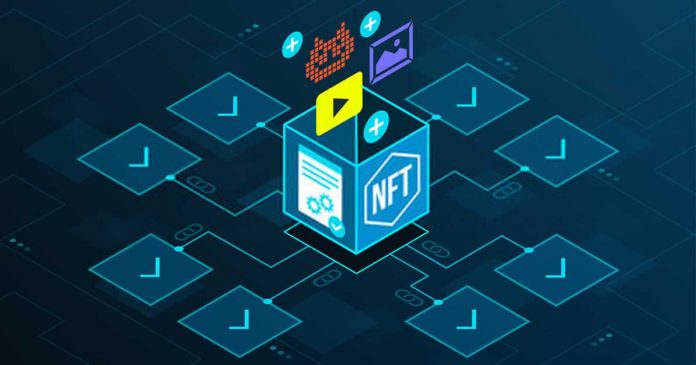
The technology supported by blockchain, called NFT (Non-Fungible Token), is here to fix that problem. NFT certifies the digital art or any digital file that what we are acquiring is completely original, although it belongs to the intangible world of digital.

Videos, images, GIFs, all kinds of digital art, and even the first tweet on Twitter have recently been auctioned as NFT. Absolutely anything on the entire internet, just like physical objects, can be certified with NFT to confirm authenticity. In this sense, and taking into account the ‘magic’ of computing that allows almost everything to be duplicated, it takes on a special relevance to be able to show that we have a unique image before us.

As we already mentioned, the creator of Twitter, Jack Dorsey, sold the first tweet on Twitter published in 2006 for $2.9 million as NFT. Also, on March 11, the auction house Christie’s sold the first fully digital work of art — a JPG Collage — titled “Everydays: The First 5000 Days “created by an American artist Mike Winkelmann, known under the pseudonym Beeple for a record $69 million.

What is an NFT?

To understand how NFT works, you have to know what a blockchain is. Blockchain is a technology that appeared in 2009 together with the cryptocurrency bitcoin. The most important characteristic is that it allows the decentralization of services and transactions.

One of the clearest examples for the decentralization of payments is — Traditionally, we have needed banks to manage payments made in electronic format. Either by passing the credit card in an establishment or buying online. Not with cryptocurrencies, the blockchain is a shared database among users where monetary transactions are recorded. Directly and without intermediaries in the mode of banking entities.

The cryptocurrencies like bitcoin are fungible tokens, which means that an asset is exchanged for another one as they are equal. And now is where we come to the second turn of the screw — NFT.

Someone thought of making non-fungible tokens, that is, that one token is really different from another. More similar to trading cards and not so much to coins.

Bitcoin and NFT share many other properties typical of the crypto world — they are based on a blockchain, they contain metadata and other information that ensure their authenticity and ownership by an individual, are stored in a digital wallet, and, in fact, remain exclusively digital.

A digital asset that can be owned and unique. Like if you have an image and we associate it with an NFT, someone can be the owner of that image and have it recorded as such on the blockchain. Then the owner can do whatever he wants with it, from assigning the rights to record an advertisement or any other application that may occur to us.

Photographs are just one example of what can be sold within the universe of digital art. In the case of artists, the digital work is associated with an NFT. When the buyer goes to the checkout, the same creator must pass him the digital artwork together with the unique code that certifies the authenticity.

Any content creator — truly anyone — can register their creation on the blockchain and get their NFT using different platforms.

Most important features of NFT:

Uniqueness

In an NFT, metadata allows you to describe the uniqueness of the asset, as happens for a given identity card, to better understand the idea. Put simply, the NFT consists of a permanent, unalterable blockchain record that describes what that single NFT data represents — a bit like the certificate of authenticity you would get for a rare painting or the certificate of ownership of your own car.

Scarcity

Scarcity is a major ingredient in the recipe that makes NFT so attractive. On the one hand, developers have the freedom to generate an infinite supply of certain virtual goods; on the other, the NFT is the tool that allows you to limit the number of unique assets to just one unit.

Indivisibility

For the most part, NFTs cannot be broken down into smaller denominations — they can only be bought, sold, and stored as a whole. In fact, you cannot buy a 10% cut out of a plane ticket in your name, as well as half of a collectible soccer card. The NFT allows you to have this feature digitally.

But there are at least three other key points that can help us understand the potential of NFT.

Ownership

NFT is part of the blockchain architecture, and this makes things very interesting when it comes to ownership. For example, the NFT can allow you to prove the intellectual property of a piece of content — a video, a novel, a project, or other. Wherever your content is published, being originally represented by an NFT allows you to retain ownership, an element that can be verified by those who receive or use the content.

Transferability

The above leads us to the next point. NFTs can be freely traded on marketplaces equipped with suitable technology — therefore, with a change of ownership that also becomes irrefutable.

Authenticity

The association of the blockchain architecture with the NFTs makes it possible to verify the authenticity, an element of sure interest if we think, for example, of a potential buyer of the asset or a person who intends to use it as a guarantee for a loan.

We are seeing more and more top-tier sports clubs form partnerships to launch tokenized player cards with varying degrees of rarity. Globally, there are firms that are experimenting with NFTs to provide customers with proof of ownership and control of personal DNA data, while others are planning to roll out peer-to-peer markets for token-based mortgages and leases NFT. NFTs are also used to generate journalistic content with the aim of limiting the spread of fake news.

Overall, the NFT token environment continues to grow. Users begin to understand that NFTs can represent almost anything in the virtual world and can even be tied to the real world.


Instagram Will Ask For A Video Selfie To Verify Users Identity

Instagram Video Selfie Verification

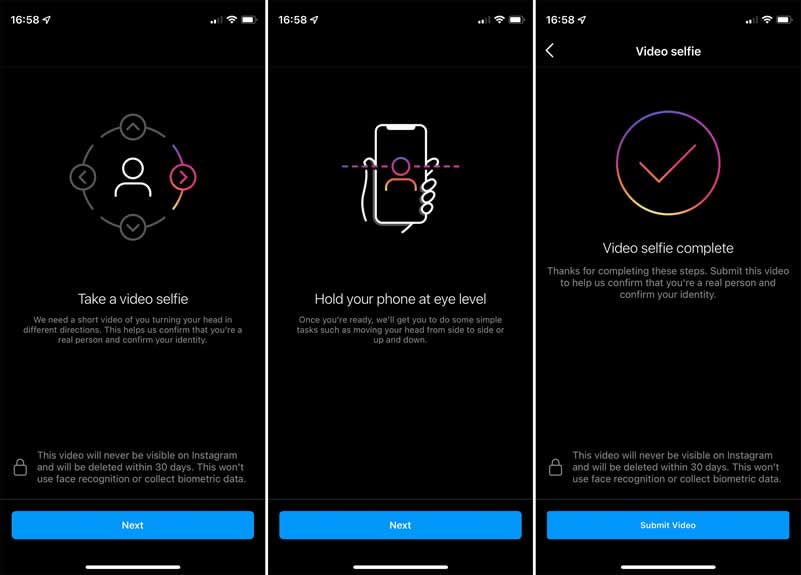
In its quest to fight fake, illegitimate accounts or bots, Instagram is beginning to ask users who log in to the app to take a video selfie to verify their identity.

As consultant Matt Navara points out, Instagram will ask users to record a 30-second video of their face to verify their identity.

Instagram Video Selfie Verification screen

The company that owns Instagram, Meta, promises not to collect the biometric data from that video or to use the facial recognition technology developed by the company. In other words, once the process has been carried out, not even the user himself will be able to see it, and it will be deleted after 30 days.

Instagram began testing selfie verification about a year ago in the United States. Now it seems to be expanding to all users who want to create a new account on the platform. Those who fail to pass the security test will not be able to have a profile on the platform.

Technological Trends in Fleet Management

GPS Fleet Tracking System

As we are ending 2021 in a few months and beginning a new one, it’s important to look back and see the trends that took place this year in fleet management. Looking bad at the current trends and the old ones should give you a better picture of the trends that are yet to come. 

Technological trends in fleet management are important to consider so you can track your progress and make your company better and more effective at its duties. 

Dispatch Routing 

Dispatch routing software has become one of the main trends in 2021 and it’s not going anywhere anytime soon. If you haven’t already been using a dispatch routing software, you should consider using one as soon as possible. It will allow you to have a more efficient routing system. 

All your drivers need to know where they are going, or you might find that their delivery time takes much longer than normal. If you use dispatch software though, you will have added benefits including:

  • Being able to efficiently plan and optimize driver routes for the fastest deliveries 
  • Monitor deliveries and track driver progress
  • Automate recipient notifications 

Dispatch routing is perhaps the largest growing trend in technological fleet management, but there are many more as well. 

GPS Tracking 

GPS tracking is great for the customer and for the employee. GPS tracking will give your employers large improvements when it comes to safety, health, and performance. It can also allow you to know when scheduled maintenance is due for certain vehicles. This allows you to keep your company’s cars in good shape and allows for less downtime in the case that you need to suddenly reschedule your employee’s work rotation because of car repairs that you didn’t know needed to happen. 

Expansion of 5G Network 

With a 5G network, the GPS and the routing systems in your cars will work much better. The 5G network in the United States is continuing to grow and will be growing even quicker than the 3G and LTE Networks. 

With the 5G networks growing, all your software and other platforms should perform better and more efficiently. It also allows for more smart devices to be connected at the same time. So, your drivers will be able to use their phones, GPS, and other smart navigations all at the same time. 

This makes their job much easier and more enjoyable, so they will be more willing to stay working with you. 

EV and AV Vehicles 

AV vehicles are autonomous vehicles. This simple means self-driving. While we may not be seeing a lot of these yet, they are becoming more common than you think. Having AV cars that work properly and that are preprogrammed with route data and other software make fleet driving and delivery much easier. 

EV or electric vehicles are also becoming more common because they have a smaller carbon footprint than traditional cars. More charging stations are being added worldwide and faster charging options, which means more and more of these cars are quickly being added to fleet management. 

How Has COVID-19 Affected Fleet Management? 

With the world battling COVID-19, fewer people have wanted to go out and buy things for themselves. More and more people want to have the safe option of delivery. This means fleet driving is only expected to grow exponentially as people are realizing the convenience and possibilities that come with it, despite the fact that life is slowly, but surely returning to normal. 

As the need for fleet driving grows, the technology also needs to grow. Using the right software and tracking systems is one sure way to make fleet tracking management systems much more effective. 

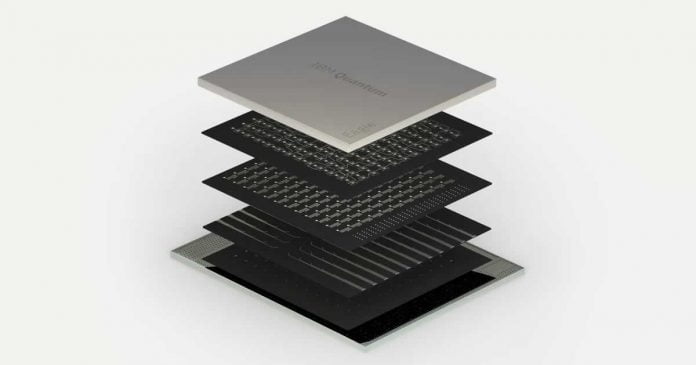
IBM Unveiled Eagle: A 127-Qubit Quantum Processor

IBM Eagle quantum processor

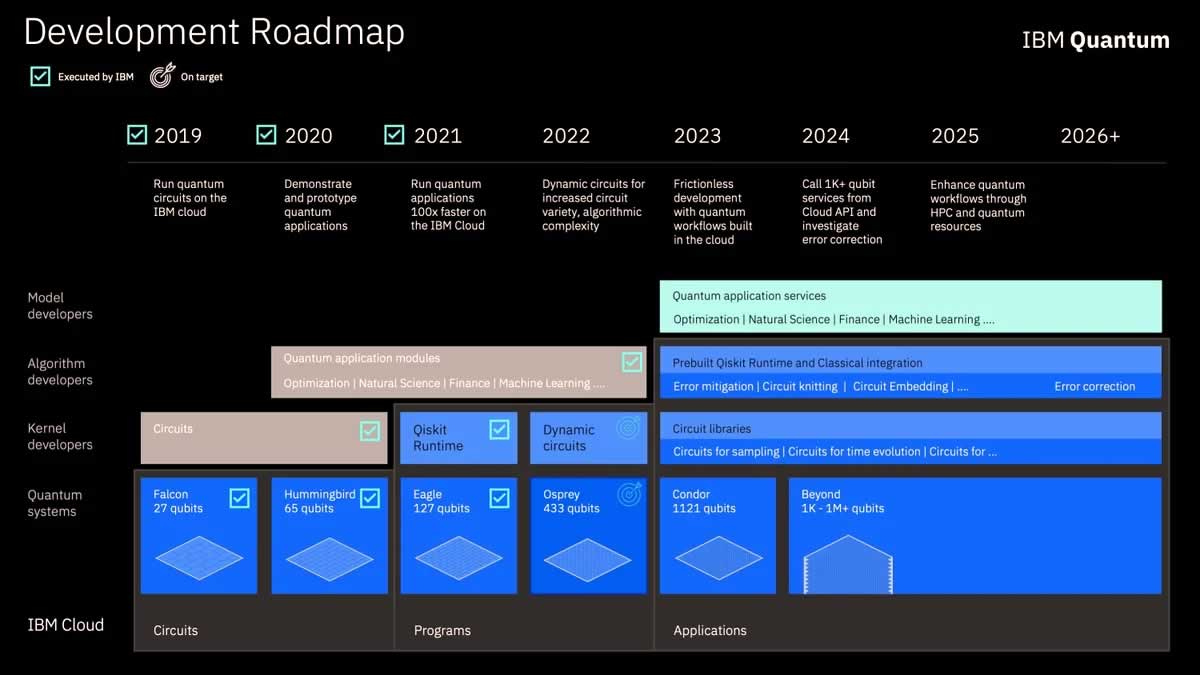
IBM is advancing in quantum computing by presenting a chip called Eagle, with 127 qubits. The announcement was made at the company’s Quantum Summit and shows the progress made, as well as its roadmap.

IBM has already made quantum computing an important part of its future commitment. Eagle is its first quantum processor with more than 100 qubits.

IBM quantum processor development roadmap

Bob Sutor, Vice President of Artificial Intelligence, Blockchain and Quantum Solutions at IBM, points out, “Eagle marks the point where we are, and that everything continues according to what was planned.”

Eagle, which has not been manufactured in large numbers, has been developed entirely in IBM facilities. This processor uses new techniques, which places the processor control components on multiple physical layers while the qubits are on a single layer. Eagle incorporates a 3D packaging architecture, and as Sutor has confirmed, there is no conventional computer that can fully simulate it.

The 3D architecture allows more usable qubits and reduces errors due to interference. IBM specifies that the Eagle processor will be made available to certain members of Quantum Networks in December.

They have also proposed the launch of their Quantum System Two, a modular quantum computer that is expected to be launched in 2023 and will work with processors of more than 1000 qubits.

Chatbots and the Future of Conversational Interfaces

Chatting and chat bots

Investments of companies in powerful artificial intelligence technologies such as neural networks, deep learning, and virtual simulators could spark a digital revolution in both manufacturing and customer service. At first glance, chatbots do not seem like progressive technology: they do not look like real interlocutors. However, technology is evolving, mostly behind the scenes.

Micro-Innovation and Global Change

A new player in the market — chatbot services — provides companies with a huge potential for learning and development in real conditions. Human behavior in the digital world can change forever. Instead of opening a search engine, going to a website with a weather forecast, and choosing your city, you just need to use a chatbot. It will instantly give you an accurate forecast for your location on a simple verbal or written request. Imagine finding court documents, scheduling your monthly business meetings, and providing the right feedback to your clients would be just as easy.

Using phone for business

Business Benefits

It is impossible to predict exactly how and at what time chatbots will change communications. However, we can already provide examples of their potential business benefits:

  • Full-scale customer service: Chatbots can completely replace the customer service department. Instead of directly interacting with consumers, employees will optimize the chatbot and connect only when needed.
  • Improving customer base analysis: In addition to increasing the number of shoppers, chatbots can collect essential data to personalize the buying process further and optimize product development.
  • Improving the competitiveness of small businesses: Thanks to cloud technology and remote services, small businesses have gained access to resources that large businesses have been using for many years, such as video conferencing and big data analytics. Likewise, delegating routine tasks to chatbots will enable staff to perform strategic business functions, accelerating company growth.
  • A new way to search: Finding information in a string or drop-down list will be a thing of the past, giving way to conversational interfaces. Companies will be able to use the responses they receive to increase the speed of their websites. The effect will be similar to the transition from “likes” to more detailed “emoticons”. We are entering an era when just “like” is not enough for human online communication.
  • Personalization of marketing and sales: Dialogue creates a sense of closer connection and improves customer relationships. Marketing and sales teams will benefit from campaigns to increase customer loyalty and drive out competitors.

Imagine a world where communicating with a company online is as easy as communicating with a friend or family member. Chatbots will pave the way for the further development of artificial intelligence. They will streamline autonomous vehicle management, change the way people find jobs, and become part of a new, human-like digital ecosystem. 

This technology is developing fast enough to be interesting for businesses and individuals. Perhaps very soon, you will be chatting about the weather with a chatbot like an old friend.

Qualcomm Announces Snapdragon Spaces XR Developer Platform For AR Experiences

Qualcomm Snapdragon Spaces XR Developer Platform

At the Augmented World Expo, Qualcomm unveiled the Snapdragon Spaces XR Developer Platform.

It is a legacy augmented reality developer kit designed to create immersive experiences that blur the lines between physical and digital realities. Snapdragon Spaces XR is in early access by select developers and is expected to go public in spring 2022.

According to Qualcomm, Snapdragon Spaces allows developers to create 3D AR glasses apps from scratch, or simply add jaded AR features to existing Android smartphone apps to provide a unified multi-screen experience between a smartphone’s 2D screen and the real world in 3D.

Today’s announcement contains no mention of hardware. However, Qualcomm is building partnerships to shape the future of mixed reality that it has envisioned over the past decade. These include Niantic and its recently unveiled Lightship platform, as well as consumer device OEMs including Lenovo, Motorola, Oppo, and Xiaomi. Qualcomm Snapdragon Spaces supports tools familiar to developers working with Unreal Engine 4 and Unity.