Home Blog Page 232

Realme Flash With MagDart: First Android Mobile With Magnetic Wireless Charging

Realme Flash With MagDart

Less than a year after Apple equipped magnetic wireless charging technology, MagSafe, for the iPhone 12, Realme will be the first manufacturer to present an Android phone with similar functionality.

As the manufacturer belonging to the Chinese company BBK announced on Twitter, the first Android smartphone with magnetic wireless charging will be called Flash.

Realme Flash will arrive accompanied by a charger that would have certain similarities with the MagSafe for the iPhone 12, although the approach of the Chinese brand would differ a lot from that of Apple.

According to GSM Arena, the magnetic wireless charging technology will be called MagDart, and its technology would resemble that of the MagSafe.

The Realme Flash can be charged by cable or wirelessly, but you can also use the new accessories that the company prepares, which allow you to connect the charger with magnets to make the experience much more comfortable.

The accessory to equip the Realme Flash with magnetic wireless charging would have a USB Type-C port and would feature a fan to dissipate heat. This is because it would offer more than 15W to power the mobile battery. In fact, it would be the fastest magnetic charger in the world when launched.

Realme Flash With MagDart charging

As for the specifications of the Realme Flash, the Android mobile would incorporate a curved screen and a Qualcomm Snapdragon 888 processor. It would have 12 GB of RAM and 128 GB of internal storage, and a configuration of triple camera on the rear. There is no specific release date for the Realme Flash with magnetic wireless charging yet.

Intel Roadmap: Intends To Regain The Leadership It Has Lost Against AMD

Intel Iris Xe MAX

Intel has presented its objectives for the next five years, a roadmap with which it intends to regain the leadership it has lost against AMD and Apple Silicon.

At the Intel Accelerated event, CEO Pat Gelsinger provided detailed information about Intel roadmap of future production technologies that it will adopt for the production of its processors, as well as solutions built for customers within the recently announced Intel Foundry Services.

The initial change proposed by the company is a reissue of the nomenclature of its processors, with which they say they will get “a more accurate view of the process nodes throughout the industry.” This means that the new third-generation 10-nanometer chips will be called Intel 7, leaving behind names such as the 10-nm SuperFin chip.

The purpose is for Intel’s 10nm chips to match AMD’s 7nm products and Apple’s 5nm M1 chips. At first glance, it may seem like an unfair marketing stunt, but it is important to note that modern processors stopped referring to transistor size in their names decades ago, and other aspects such as the technologies used in their production are taken into account.

In this way, Intel’s 10nm chips can be measured against the latest generation 7nm Ryzen chips from AMD or other manufacturers by using a density of transistors and similar technologies in the manufacturing process.

Intel intends to make this comparison more clear to consumers with the new nomenclature:

  • Intel 7 — picks up on Intel’s third-generation 10nm technology and promises 10-15% more performance per watt and higher efficiency than previous generations. This range of products will appear this year, with the Alder Lake chips planned for consumer products.
  • Intel 4 — It will be the name for the 7nm architecture that Intel has delayed until 2023. It is the next big leap for the company that will adopt the EUV technology already used by brands such as Samsung and TSMC in the 5nm nodes. This improvement promises a transistor density of 200 or 250 million per square millimeter on Intel 4 processors. TSMC’s 5nm chips reach 171.30 million per square millimeter.  
  • Sapphire Rapids is the codename for the next generation of Intel Xeon processors for data centers. Intel 7 process will also be adopted for these CPUs, exploited in this case for a product with a multi-die design that will see side by side up to a maximum of 4 dies mounted on the same package.

Production of the Intel 4s is scheduled for the second half of 2022 and will hit the market in 2023 with Meteor Lake in consumer products. In short, increased market competition and Intel’s comeback might give consumers improved performance and lower battery consumption in the future computers they buy.

Nothing Presents The Ear (1): First Device From New Startup Of Carl Pei To Compete Directly Against The AirPods Pro

Nothing Ear (1)

Nothing, the startup led by Carl Pei, former co-founder of OnePlus, has announced its first device — the Ear (1), true wireless earbuds with active noise cancellation that come to compete directly against the AirPods Pro.  

Nothing Ear (1) comes with a striking aesthetic and commitment to quality as well as for an attractive price — a significantly lower price: $99 and Rs 5,999 in India and will go on sale on Flipkart from August 17.

Although there are many wireless earbuds, and almost every company has its own, the Ear (1) are unlike any that can be found on the market. Something that they make crystal clear from their design.

Nothing Ear (1) earbuds

On the outside, the Nothing Ear (1) attracts attention due to the transparency of both its body and the charging case. A feature that allows you to see all the internal components and gives it a different aesthetic than other headphones on the market.

When it comes to sound, Nothing has collaborated with the Teenage Engineering company, known for its synthesizers and audio products. The Ear (1) also have a 11.6-millimeter driver and Bluetooth 5.2 connectivity. All this, together, offers an exceptional sound, according to the London company.

Ear (1) weigh only 4.6g per earphone and have touch controls that allow you to change songs or adjust their volume. They also have an opening that regulates the pressure inside the ear, which should contribute to greater comfort when using the earbuds for long periods of time.

The Nothing Ear (1) also have active noise cancellation. To do this, it relies on both the silicone pads — which isolate the inner pavilion — and the three microphones located in each earpiece. Nothing explains that it has also developed an algorithm that analyzes sound and isolates the voice to silence up to 40 km/hr winds during conversations. 

Users can choose between three levels of cancellation — a mild cancellation mode, a maximum cancellation mode, and the transparency mode.

Battery life is estimated by the company at 4 hours with active noise cancellation and 5.7 hours when deactivated. The case, in transparent plastic, allows you to extend the battery life up to 24 hours (34 with ANC deactivated) and allows you to get 8 hours of music with only 10 minutes of charge. It is also equipped with wireless charging with the Qi standard.

The Nothing Ear (1) is accompanied by an application — from which various parameters can be adjusted. This is available on both Android and iOS. The earbuds are also compatible with Google Fast Pair, which simplifies pairing with Android devices.

Why Do You Need Automation Testing: Benefits for Your App

Google Play Store Android Apps update

Mobile apps undoubtedly reshaped the way we do business today. Apps are considered as one of the top enablers of every major business you can imagine. Across the globe, users of smartphones are increasing at an unprecedented rate. To take advantage of this fact, and in the efforts to remain relevant, all expansion efforts are geared towards businesses developing their mobile applications.

This is true across different industries. The size of the mobile app market globally is at 106 billion dollars in 2018 and is forecasted to quadruple in 2026. That is a growth of 18.4 percent at CAGR between the years 2019 and 2026. Undeniably, the best way to penetrate the market and catch your targets’ attention is via their mobile phones, tablets, and computers.

These numbers are pandemic-proof. While people are under lockdown, the rate by which they consume data increased due to remote work, the hunger for information, and the lack of better things to do during the rise of the pandemic. With this, more and more households are easily exposed to the possibility of downloading any app.

There are way too many misses during this period of rapid growth – apps that are downloaded only to be deleted a few minutes after. This is why any app developer should be extra mindful about the user experience (UX) as a direct result of their app performance. User experience is directly affected by several factors, but it all boils down to minimizing the possibilities of making the users frustrated.

An app developer should fix all possible bugs to avoid releasing any defective mobile app. Therefore, it is wise to invest in ensuring that the app’s useability and performance are in their top form. Mobile automation testing is one of the best ways to make sure that your mobile app will perform well and ensure that a great UX is delivered.

Definition of Mobile Automation Testing

Before launching any app, it requires a pilot stage wherein all software testing procedures are conducted. The app is subjected to numerous standard tests to ensure that it will run well on its intended device. The complexity of the testing depends highly on the features of the app, but in general, what is covered are the time required to load, overall UX, function-form-useability, security and trustworthiness, accessibility, and compatibility and performance across different operating systems and browsers.

It is more complex than it seems. No matter how well-versed you are in the field of mobile app development, some things can easily be missed. Therefore, availing of test automation services is highly recommended.

Such services ensure that mobile application testing and piloting are completed using a wide range of tools. This is a stress test of sorts to see if the app’s performance is flawless despite varying conditions and data load-up.

The automated nature of testing is helpful because it is pre-programmed to spot bugs that need to be flagged and fixed to avoid major app failures. By subscribing to automated test services, you can be sure that your app is ready to be launched.

Major benefits for your app

Businesses who leverage the use of mobile app testing enjoy the following benefits:

  1. Better Mobile App Functionality: Automated tests help make sure that all elements introduced to the app are well-planned and have a function to serve.
  2. Upgraded Mobile App Performance: Calculated stress tests help gauge the application’s capacity to operate, lead time to respond to user inputs, readiness and scalability of the mobile application, and speed and quality of performance when there are varying numbers of users accessing the app.
  3.  Heightened Mobile App Security: Subscribing to automated app testing would ensure that all data being collected are handled with the utmost integrity, and all storage issues are resolved. All activity logs are also well-monitored, and at the same time, tainted inputs are ranked and assessed as per significance.
  4.  Easier Mobile App Usability: At the end of the day, it is the UX that will be the most important factor, arguably. With app usability tests that are done automatically, the mobile app will be tested for user preference benchmarking against current industry standards. By testing for useability, you will also put a tick mark on factors like accessibility and user satisfaction.
  5.  Next-Level Mobile App Accessibility: Speaking of accessibility and user satisfaction, it is now a mandatory factor for all apps to put into consideration the differently-abled users when developing the interface and other features. The advantage of using automated tests is that they have a way to get updated on the current norms, regulations, and standards set.
  6.  Guaranteed compatibility with different mobile browsers, devices, and operating systems: With automated app testing, all possible failure points are explored and all potential bugs are triggered across other platforms. This is to ensure that the app can be used by the widest possible range of users.

 Final Word

Mobile test automation is an effective way for businesses to test for the app’s level of efficiency and ensure that all the possible testing areas are covered. Once these are in place, your business has the necessary safety net to launch the app safely and quickly in the market.

Even on Macs: Apple Plans To Bring Face ID To Its All Devices

Face ID coming to Mac

Apple would be planning to include FaceID, its facial recognition system, in iPhone SE, cheaper iPads, and Macs.

Mark Gurman, a Bloomberg journalist, revealed in his weekly newsletter, via 9to5Mac, that Apple plans to introduce secure Face ID to all iPhone, iPad and Mac models within a couple of years.

According to Gurman, “implementing Face ID in all of its major devices is the company’s ultimate goal. If it were possible, Apple would have already nixed Touch ID. But it has had to stick around for a couple of reasons. On the iPhone SE and non-Pro iPads, it’s a cheaper alternative that lets Apple cut costs while still offering security.”

However, Face ID has an extra function compared to fingerprint unlocking — it can be used for augmented reality functions. One of the most practical examples is Memojis, which can detect our gestures thanks to the TrueDepth camera sensors. Touch ID, on the other hand, only serves as a security measure for unlocking the device, logging in or paying through Apple Pay.

Gurman highlights how complex it is to include a TrueDepth system in devices such as Macs, where the screen is too thin to introduce a depth of field lens. Gurman, however, believes that Apple will bring this technology to its computers in the coming years.

Although, the inclusion of FaceID in low-cost Macs and iPads will not arrive until 2022. However, Gurman is expecting the new redesigned MacBook Pros arriving this year could have FaceID integrated.

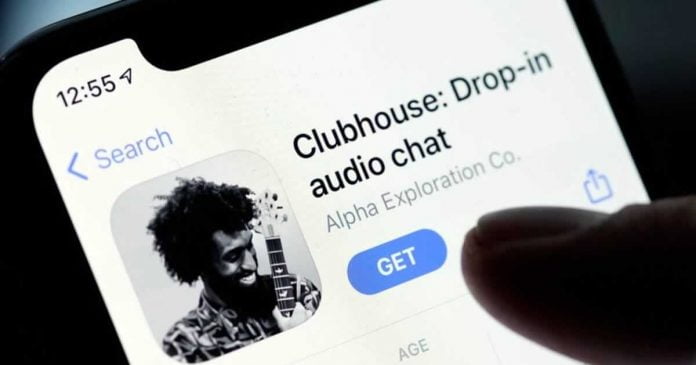
Massive Clubhouse Leak: 3.8 Billion Phone Numbers Are For Sale On The Darknet

Clubhouse

Apparently, an attacker was able to gain access to all telephone numbers that were registered with the Clubhouse app — the application that has grown the most in recent months due to its popularity in creating online audio chat rooms.

The huge database of phone numbers has appeared for sale on a so-called darknet internet forum. Security researcher Marc Ruef reports on Twitter that the data set comprises a total of 3.8 billion telephone numbers.

Although the application only has a few tens of millions of users, the hacker ensures that the platform synchronizes the contact list of its customers and automatically adds the numbers to the “secret base” of the Clubhouse.

Clubhouse itself commented on the case. No data leak was noticed at the company. “There was no data leak at ClubhouseThere are a series of bots generating billions of random phone numbers. In the event that one of these random numbers happens to exist on our platform due to mathematical coincidence, Clubhouse’s API returns no user identifiable information.”

It is not the first time that the Clubhouse databases are compromised. Just over 3 months ago, at the beginning of April, it was made public that the company had a data breach problem affecting more than a million user accounts.

Top Places to Find Prospects & Boost Brand Awareness

Brand Awareness

No matter where on the highway of success you currently are, there is always room for improvement. Passivity is the enemy of success. One needs to move forward, especially in business, to keep giving something of value to the community. It’s not enough to sell just one item to a single client; you need a steady line of return customers that want your brand.

For this reason and more, this article will deal with online tools and websites that help increase the number of prospects in your CRM. We will talk about strategies that help increase your marketing strategies and bring new (and old) clients to your business.

Use LinkedIn to expand your mailing list

LinkedIn is the premier website for business-oriented users. It works similarly to other social networks such as Facebook, meaning that this is a platform designed for connecting people. LinkedIn has a user base of several million, making it one of the most common business tools that can be used for free. It’s the perfect place to start finding new prospects. 

While not your typical place for conducting B2C business, LinkedIn caters to the B2B (business-to-business) niche. There is an untapped goldmine of prospects out there just looking for someone with the right idea to come along.

Every user on LinkedIn has one thing in common: they want to be successful. As such, over 90% of users have publicly available contact information. Why? Because building a successful business relationship with others and expanding your email marketing campaign can bring more prospects. If you believe in your brand and your product, sharing it with others will create an avalanche effect. All it takes is for one person to talk about your product for the buzz to be created. 

To interact with other users, you need to ‘connect’ with them. LinkedIn allows you to create a network of users with similar business and professional objectives. Inside every user profile is a Contact Info section which often includes an email and a phone number. You can use this info to expand your email marketing list. Luckily, you don’t have to do so manually. There are many email finders online that can pull contact data from LinkedIn, for example, https://www.signalhire.com/

Use entertaining social media sites to find prospects

Besides LinkedIn, you have Facebook, Twitter, and Reddit. Even if you don’t use any of these platforms (which is unlikely), it’s creating a business page on any of these platforms — especially in the B2C segment. Having a Facebook account with your business’s name, logo, purpose, and contact information can promote your company message and boost brand credibility. 

A properly maintained Facebook page will leave a lasting impression on anybody who visits it. You might have noticed that many celebrities have their own fan pages on Facebook. This isn’t a coincidence. Unlike personal social accounts, business accounts allow you to interact with customers in an entirely different way. Using a Facebook business account, you can:

  • Update your clients on upcoming changes to your business;
  • Announce raffles or discounts on products;
  • Generate publicity by sharing insights;
  • Engage with your audience by answering questions;
  • Post polls;
  • Participate in studies;
  • Start ad campaigns and more.

Honestly, the sky is the limit when it comes to customer engagement. The more transparent your business looks, the more trust it will generate. Trust in a brand leads to the excitement that spreads from long-term customers to new prospects. Still, do not forget that the term on your mind should be ‘customer retention.’ It’s not enough to attract a single person to your business; instead, you should aim to build a lasting chain of new and returning prospects.

Some social media platforms offer marketing ad plans where you pay a fee, and the website will feature your page to other users. The price can be as low as $5 to $10 per campaign. The bonus of advertising with sites such as Facebook and Twitter is that you can reach out to an unlimited amount of users. Whether you are selling or increasing brand awareness (to sell more in the future), it’s a good idea to look into.

Use Pay-per-Click advertising

Launching a full force advertising campaign costs tens of thousands of dollars. Even if you successfully land a few hundred new prospects, the amount you will earn will likely not cover the expenses. It’s always better to start small in advertising, even if the results will be humbler. Depending on the type of ad that you want to display, costs can rank up exponentially. For this reason, it’s better to aim for a smaller (cheaper) and tighter plan to get the word out. Pay-per-click advertising plans allow you to get your message across without upfronting thousands of dollars in advance. Similar to how Facebook advertises, other companies allow smaller businesses to reach a demographic for a fraction of the fee that an entire marketing team would cost.

Google Contextual Ads is one of the most popular PPC solutions out there. It’s used by large and small companies as an alternative marketing method. You might have wondered what those ads in front of YouTube videos are – they are most likely advertisements enabled by the content creator using Google Adwords. The basics of PPC is that, whenever a search is done and your online prospect ad appears, there is a chance that the client will click on that ad. You will then be charged a token fee depending on your plan. This fee could range from 0.01 cents to $1. The more people who see and click on the ad, the more you will have to pay. As they say, you can’t make money without spending money.

Google Ads is a relatively simple way to have a powerful presence online where your ads are shown to a select section of customers. The plan can help you set an uprising curve to increase brand recognition. There really isn’t a limit on what you can advertise as long as it complies with Google’s terms of service. 

It’s worth mentioning that Google Ads and PPC campaigns aren’t completely user-friendly. While you can pay someone from Google to manage your campaign for you, it’s always better to oversee what you are actually paying for. Because of this, complete newbies might find this type of advertising off-putting or even daunting. It requires time to grow an online marketing campaign, so do not expect results overnight. Most Search Engine Optimization strategies that come bundled with PPC campaigns offer a 1000% interest increase in your brand in 6 to 12 months. That is a lot of time spent wondering whether you have made the right choice.

Try professional contact finders to reach new prospects

One of the tried and tested methods of expanding brand recognition is through email. Virtually anybody on the planet has one or more email addresses under their name. The reason is that almost every major service online requires its users to sign up with an active email address. In addition to finding the right contacts, it’s equally important to understand how to effectively reach and engage them. Implementing smart Google search strategies can significantly enhance your approach to finding and connecting with potential clients or partners. Out of 7+ billion people on the planet, most have a valid email address.

Building a sizable email marketing campaign can take time. That’s why you should use simple yet powerful email finder tools, such as SignalHire, that already came up earlier in this article. SignalHire is a Chrome extension that attaches itself to your browser and retrieves personal information from social networking websites. From there, you can extract a valid email address that you can add to your email marketing campaign. The best part is that it works super-fast.

One more benefit of using SignalHire to reach new prospects is that the extracted emails have a surprisingly low chance of bouncing back. No one needs to tell you how important that is for any email marketing campaign. You rarely see such a versatile tool that also guarantees high accuracy rates. Besides, its online database supports bulk email search by industries and other parameters, which can prove very useful while building an email list from scratch. 

The right combination of these tools should help you increase your prospect list quickly and without spending enormous amounts of money. Even if your business is small, you should take time to figure out methods that work for you and start from there. 

DuckDuckGo Launches Email Protection Service To Protect Your Email Privacy

DuckDuckGo Email Protection
Image Credits: Spread Privacy

Privacy-focused search engine DuckDuckGo has launched a new Email Protection service to prevent trackers from spying on you.

DuckDuckGo is known for its complete anonymity. The search engine does not collect user metadata and does not exchange it with sites, does not create an advertising profile and does not track his movements on the network. Now the developers have gone even further and decided to create a service to protect your email privacy.

For now, Email Protection is available in the beta version. The feature comes to protect the personal information of internet users and prevent it from being leaked to third parties. 

To use this feature, you need to download the DuckDuckGo browser, then open Settings > Beta Features > Email Protection, and then click Join Waiting List. 

When you enable this Email Protection feature, the user gets a free, personal @duck.com email address. Next time you have to use this email address instead of the personal email, and DuckDuckGo receives emails to its servers, cleans them of advertising and tracking trackers, and redirects the clutter-free mails to your personal address. Also, a cleared letter will be shown contain information about how many trackers were removed from it and which companies they belonged to. 

1 Pixels v6

To do this, it removes hidden trackers in incoming emails and then forwards them to the user’s usual address without having to switch applications.

Also, the new service will provide unique and disposable mailboxes to use on untrusted sites that can obsessively spam messages or share email addresses with someone else.

4 Proof of Trackers.v4

This tool is similar to the anti-tracker feature in iOS 14 and iOS 15, but DuckDuckGo’s solution can be used on iOSAndroid, and all major browsers.

DuckDuckGo claims that it does not store user emails, analyze them for personal gain, and does not sell information. The recipient’s final address is the only personal information that DuckDuckGo will retain.