Home Blog Page 208

Third-Gen Apple Silicon Processors To Arrive With 3nm And Up To 40 Cores

Third-Gen Apple Silicon

The M1 Pro and M1 Max — the new Apple Silicon processors, are proving to be one of the most powerful SoCs today. However, the next generation promises to make an even bigger leap.

A report by The Information gives an insight into Apple’s alleged processor roadmap. The roadmap for Apple Silicon processors begins with what could be the M2 or M2 Pro chip. This SoC, initially, will be integrated into MacBook Pros and Mac desktops released next year. In this case, it is expected that the 5 nm architecture of the manufacturer TSMC will be maintained, but with an improved process that will allow the inclusion of more cores and, therefore, higher performance compared to current Apple chips.

As per the report, Apple’s processor roadmap provides for three chips developed under the code names Ibiza, Lobos and Palma, which should form the M3 generation for 2023. The third-generation Apple Silicon processors would arrive with a new 3-nanometer manufacturing process, also thanks to TSMC, the main chip supplier for the Cupertino company.

We are talking about processors with up to four dies, which provide a total of up to 40 CPU cores. That would be a multi-chip module architecture, as you can currently find at AMD Ryzen, Threadripper or Epyc — which use up to eight dies and are also equipped with a separate I/O die.

For Apple, the presumably powerful processors could be of particular importance in the upcoming iMac Pro and Mac Pro. Judging by the M1 processor, in the future, Apple processors will break even further with Intel processors.

Amazon To Launch First Two Prototype Satellites For Its Kuiper Broadband Constellation In 2022

Amazon Project Kuiper

Along with SpaceX’s Starlink, Amazon has joined the battle to control broadband satellite internet connections with Project Kuiper — a constellation of 3,236 satellites that aims to provide “high-speed and affordable” broadband to tens of millions of people around the world.

Former CEO Jeff Bezos’ company has been developing its solutions over the past few years, and 2022 could see the official debut of the first two Project Kuiper satellites.

The latest information on the new satellite constellation dedicated to high-speed internet connectivity comes from a New York Times article. According to reports, the first two satellite prototypes that will be part of Project Kuiper could be launched at the end of 2022. Amazon will invest approximately $10 billion in this project which will become an integral part of its business.

Project Kuiper has already received approval from the FCC (in 2020), and, according to plans, half of the constellation will be in orbit by 2026. Amazon plans to launch the first two satellites — code, KuiperSat-1 and KuiperSat-2 — on the new ABL Space Systems RS1 rocket from the Cape Canaveral Space Force Station in Florida.

This will allow to reduce the initial launch costs without using larger and more expensive carriers — useless in this experimental phase. This will also allow ABL Space Systems, which is still in the early stage, to gain experience and capital.

The purpose of the first satellites will be to test the connections between Space and Earth with the peripherals that will be distributed to consumers. Areas such as Asia Pacific, Central Texas and South America will initially be covered.

Microsoft Announces Its Own Metaverse: Prepare For Meetings With 3D Avatars In Teams

Microsoft Metaverse in Teams 1

Everyone is now talking about the metaverse, recently fueled mainly by Meta, Facebook’s parent company. While the concept dates back several years, and now it became a trend after Mark Zuckerberg put it in the crosshairs of millions of people. As always, like any other tech innovation, other companies are also planning to jump on the metaverse train, including Microsoft.

This Tuesday, they announced that Microsoft Teams will allow users to use animated avatars instead of their webcam image.

During Microsoft Ignite, the annual conference designed for IT professionals and developers, proposed the creation of a metaverse but connected to many aspects of the physical world and with areas to be promoted slightly different from those of Meta.

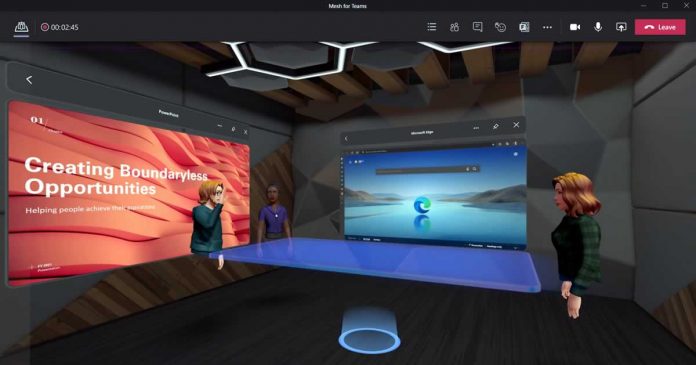
Microsoft updates Teams with a new function to make video communications more immersive — Mesh — the new feature, announced at the Ignite 2021 annual event, will mark the shift from 2D to 3D. Instead of the flat images captured by cameras, Microsoft Mesh introduces 3D avatars, customizable according to user preferences. Avatars that will gather in three-dimensional virtual spaces designed to reproduce conference rooms, lounges, meeting rooms or in general any space a company decides to use for meetings.

Microsoft Metaverse in Teams

Mesh also includes functions for sharing and common editing of documents within these virtual rooms, which will be accessible via computers, mobile devices.

The good news is that they won’t need an augmented reality headset or additional hardware. Microsoft will use artificial intelligence to animate the avatar. This is a new step towards a kind of ‘metaverse’ that will be deepened with Mesh.

Microsoft tested the technology with Accenture even before the pandemic by building the Nth Floor, a virtual campus for employees. However, the company’s vision also encompasses Xbox and gaming in general. Can you imagine a metaverse from Halo or Minecraft?

Meta Will Shut Down Facebook’s Facial Recognition System

Meta and Facebook announcement

Facebook will stop using the facial recognition system on its platform, and stored data to identify the faces of more than a billion people would be deleted. It is the first big announcement after the creation of the new parent company Meta.

Facebook facial recognition system was introduced in December 2010, and that is capable of identifying users in photos and videos. “There are many concerns about the place of facial recognition technology in society, and regulators are still in the process of providing a clear set of rules governing its use. Amid this ongoing uncertainty, we believe that limiting the use of facial recognition to a narrow set of use cases is appropriate.” — Jerome Pesenti, VP of AI at Facebook, described.

It wasn’t until March 2021, after years of legal proceedings, that Facebook had to pay $650 million to plaintiffs in a dispute over the use of facial recognition.

According to Facebook, a third of active users recently activated this function. People who would have opted for face recognition would no longer be automatically recognized in photos and videos; the corresponding template for recognition would be deleted. Nothing will change for users who have not activated the function, as no facial recognition data would have to be deleted.

Other changes underway affect the Automatic Alt Text (AAT) tool, which creates image descriptions for the visually impaired and will no longer include the names of recognized people in photos after facial recognition is removed.

Ending the use of Facebook’s facial recognition system is part of the new strategy with Meta to achieve “a company-wide move away from this kind of broad identification, and toward narrower forms of personal authentication.” 

Is There a Perfect Server Type for Your Business?

Perfect Server Type for Your Business

Server virtualization in the data center is constantly changing. Now customers are demanding more flexibility in how they deploy and manage application workloads throughout their environment. With server consolidation becoming an integral part of IT strategies, how should customers proceed?

It is difficult to know if there is a perfect server type for your business. Choosing a business server type is difficult even with the proper guidance. A customer’s decision should be driven by their workload requirements, not by what others are doing or saying.

The following are considerations to make to find the perfect server for your business:

Remote Vs. Traditional File Servers

Traditional file servers do not have virtualization in mind and typically require dedicated hardware for each server. On the other hand, your business can run remote web file servers in a web-hosting environment or a virtual database machine with application sharing across multiple systems. 

You will find the features of remote web file servers on this page. The choice between remote and traditional file servers is a complex decision and depends on your needs, the number of users, and risk tolerance.

Node Servers

Node servers are designed for high availability applications in which there is no tolerance for downtime. Critical applications with zero downtime cannot be disrupted even temporarily with node servers. 

Node servers can also provide load balancing, caching, and hardware partitioning. Authority DNS, an enterprise-level solution for authoritative name services, is an ideal example of node servers.

Virtualized (x86) vs. Non-virtualized (RISC/Itanium) Servers

virtualized architecture can be crucial to a customer if they benefit from server consolidation and dynamic resource management. With this in mind, running your business on non-virtualized servers might not be the best choice for you because it would require buying new hardware for each new application.

SQL Servers

SQL servers are typically required for business data warehousing, financial accounting, and other complex database applications. While choosing between virtualized SQL servers and non-virtualized RISC/Itanium-based servers is more about the demands of the workload than anything else. 

You will generally find that many customers need to consolidate their existing databases before upgrading to new servers. Customers with five or more SQL servers might consider virtualizing their servers to reduce costs and maximize resources.

Virtual Private Servers

Virtual private servers help control costs by allowing resources to be more efficiently shared. Each virtualized server is isolated from other virtual private servers.

There are no limits to how many applications share the same system RAM, disk space, and network bandwidth. Virtual private servers provide a secure intranet for business-critical information and backend processing needs.

Storage Servers (RAID)

Opting for storage servers (RAID) requires careful study of your business data volume, type, number of workstations, and degree of criticality.

A RAID solution is best suited for businesses that need high availability, high performance, and capacity. Dedicated servers from Rack SRV will help you get the best possible uptime for storage servers.

Hybrid vs. Dedicated Servers

Even though RackSRV offers dedicated servers, customers who want to take advantage of our fully managed server solutions will benefit from choosing a hybrid model. 

With the help of the RackSRV support and management team and through the use of self-learning technology, you can get more out of your business server. Dedicated servers require less hands-on management, but when your team is available for support 24/7, the hybrid model offers the best of both worlds.

When it comes to choosing between server options, the most crucial factor is your business’s applications. Virtualized servers provide a cost-effective solution for business applications that have little or no tolerance for downtime.

Non-virtualized RISC/Itanium servers are suitable for the most demanding workloads and multiple application types but require additional hardware as your business expands. Finally, node servers offer a high availability solution that is ideal for critical applications with zero tolerance for downtime, but they are also more expensive than most other models.

Netflix Games Begins The Global Rollout On Android Via Its App

Netflix Games launched

After a test phase in Poland and Spain, Netflix is now opening its own brand new games category to users around the world.

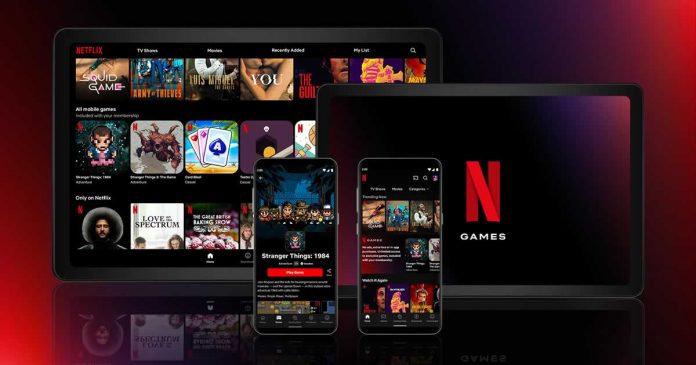
Netflix officially enters the world of video games by offering its subscribers, through its app, games to download for free on Android smartphones. At the moment, the service is not available on iOS, but the company is working on it.

During its global launch, Netflix Games announced only five games — Stranger Things 3, Stranger Things: 1984, Card Blast, Shooting Hoops and Teeter Up.

It should be noted that this game service comes completely free (or at least for now), allowing users to download any of these games on any associated device as long as they are subscribers of Netflix and then launch them directly through the Netflix app.

Whether you’re craving a casual game you can start from scratch or an immersive experience that lets you dig deeper into your favorite stories, we want to begin to build a library of games that offers something for everyone. We’re in the early days of creating a great gaming experience, and we’re excited to take you on this journey with us.” — said Mike Verdu, Vice President of Game Development at Netflix.

There are no advertising, in-game buyers or other additional fees. The games can also be used on several different end devices and with different user accounts within one account. If the maximum permitted number of devices on which a game is used is exceeded, Netflix will inform users — the company does not specify a hard limit. Child profiles cannot access games.

For now, Netflix is ​​taking the first step to establishing itself definitively as an alternative for mobile gaming. We will see how this proposal progresses, both in a variety of catalogs and compatible platforms.

Apple’s New App Privacy Policy Cost Social Media Companies $10 Billion In Ad Revenue

Apple App Tracking Transparency policy

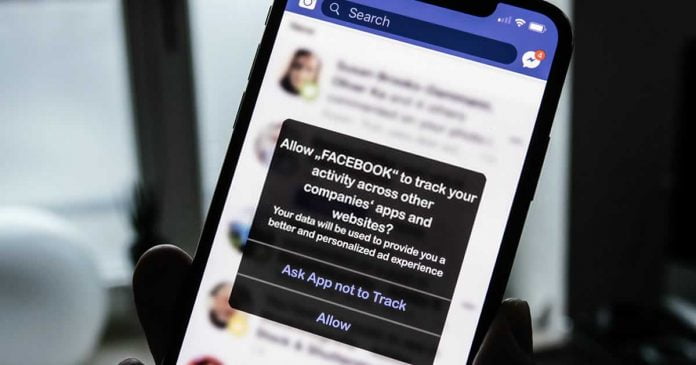
Apple’s decision to implement its new app tracking guidelines — App Tracking Transparency (ATT) — in the course of 2021 is said to have cost numerous social media companies billions in potential ad revenues.

As reported by the Financial Times, popular social media companies — Snap, Facebook, Twitter and YouTube are losing $9.85 billion in advertising revenue in the second half of 2021 due to the new iPhone privacy settings. That would correspond to twelve percent of the revenue in the third and fourth quarters.

Thanks to the implementation of ATT, apps that track and evaluate user data for targeted advertising must ask users for permission the first time they start the application. Users can then deny tracking access, which many do. As a result, the company receives far less accurate data. Correspondingly, advertisements can then no longer be so precisely aligned.

Facebook has to change its entire advertising system in order to respond to ATT. Facebook initially underestimated this step. It could take a good year for Facebook to develop new tools.

Advertising agencies are said to have reduced their spending on ads on Facebook, Snap, Twitter and Youtube on iOS devices. According to an analyst, advertising should be now more focused on Android devices in the future — advertising spending is increasing overall. TikTok is also to be used more intensively as a new target for advertising measures since the costs for the advertisements are lower.

Among those least affected by Apple’s new privacy policy were Alphabet and Twitter. Alphabet has an advantage, analysts say — the company has enough data on its own, so it doesn’t need to track users in third-party apps. 

Google Task Mate Pays Users To Perform Certain Tasks From Their Smartphone

Google Task Mate

We have even seen applications like Google Rewards, which pays us to answer surveys, although that money is only valid for the Google Play Store. Now the company is introducing the Task Mate application — which is currently only available in India.

Task Mate maintains the essence of paying for small actions but does it in a more general way. Although there are surveys that we can fill out, there are also specific tasks that appear as objectives and that we can complete.

After we complete each task, they enter into the review mode, and once it is verified that they have been executed, we are paid the amount previously marked, which is added to our account in the app.

The biggest difference with Google Rewards is that these tasks can be created by companies, which offer a reward to the user who performs them. An example can be taking a photo of a nearby restaurant, answering survey questions, or helping translate sentences from English to your local language.

Users can participate in tasks that they are interested in or choose to skip tasks. Tasks can be completed at any time. After completing the tasks accurately and you can withdraw the earnings in your local currency from the Task Mate app.